David W. Levy - Böcker
Visar alla böcker från författaren David W. Levy. Handla med fri frakt och snabb leverans.
11 produkter
11 produkter
Herbert Croly of the New Republic
The Life and Thought of an American Progressive
Häftad, Engelska, 2014
550 kr
Skickas inom 7-10 vardagar
Here is the first full-length biography of Herbert Croly (1869-1930), one of the major American social thinkers of the twentieth century. David W. Levy explains the origins and impact of Croly's penetrating analysis of American life and tells the story of a career that included his founding of one of the most influential journals of the period, The New Republic, in 1914 and his writing of The Promise of American Life (1909), a landmark in the history of American ideas. Originally published in 1984. The Princeton Legacy Library uses the latest print-on-demand technology to again make available previously out-of-print books from the distinguished backlist of Princeton University Press. These editions preserve the original texts of these important books while presenting them in durable paperback and hardcover editions. The goal of the Princeton Legacy Library is to vastly increase access to the rich scholarly heritage found in the thousands of books published by Princeton University Press since its founding in 1905.
Herbert Croly of the New Republic
The Life and Thought of an American Progressive
Inbunden, Engelska, 2016
1 467 kr
Skickas inom 7-10 vardagar
Here is the first full-length biography of Herbert Croly (1869-1930), one of the major American social thinkers of the twentieth century. David W. Levy explains the origins and impact of Croly's penetrating analysis of American life and tells the story of a career that included his founding of one of the most influential journals of the period, The New Republic, in 1914 and his writing of The Promise of American Life (1909), a landmark in the history of American ideas. Originally published in 1984. The Princeton Legacy Library uses the latest print-on-demand technology to again make available previously out-of-print books from the distinguished backlist of Princeton University Press. These editions preserve the original texts of these important books while presenting them in durable paperback and hardcover editions. The goal of the Princeton Legacy Library is to vastly increase access to the rich scholarly heritage found in the thousands of books published by Princeton University Press since its founding in 1905.
430 kr
Skickas inom 5-8 vardagar
David Levy's widely acclaimed Debate Over Vietnam examines the bitter national discussion that raged over the propriety, the necessity, and the morality of America's longest war. Levy begins with a brief history of Vietnam under foreign rule and recounts the growing American military presence--and the increasing reaction it provoked. He explores the fundamental values and assumptions of Americans on both sides of the growing debate, contrasting Republican consensus with Democratic division and the split between intellectuals of the left and right.
224 kr
Skickas inom 7-10 vardagar
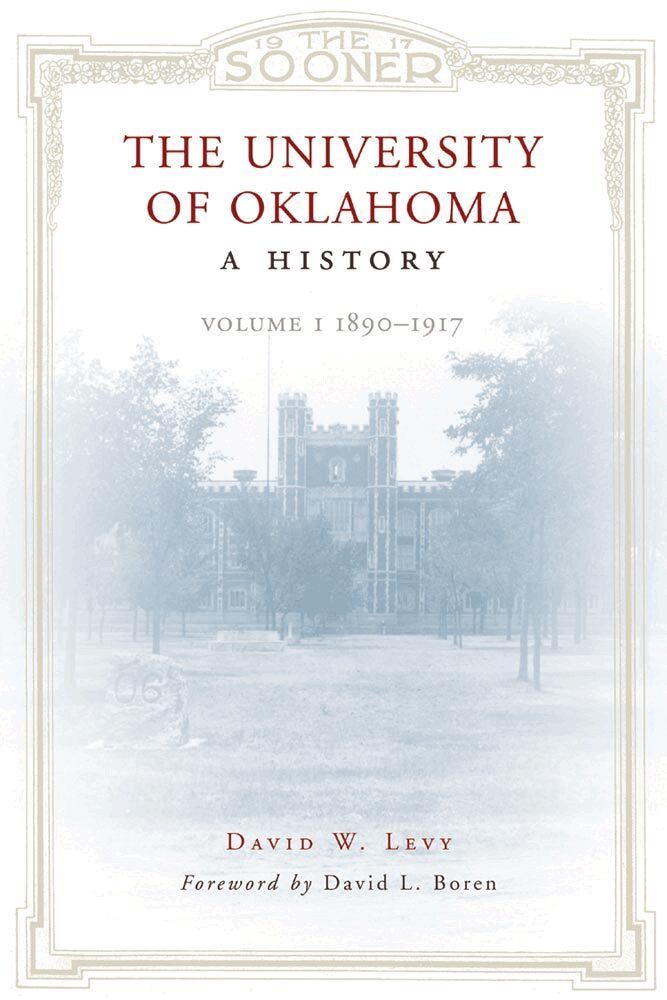
This book, the first in a projected three-volume definitive history, traces the University's progress from territorial days to 1917. David W. Levy examines the people and events surrounding the school's formation and development, chronicling the determined ambition of pioneers to transform a seemingly barren landscape into a place where a worthy institution of higher education could thrive.The University of Oklahoma was established by the territorial legislature in 1890. With that act, Norman became the educational center of the future state. Levy captures the many factors - academic, political, financial, religious - that shaped the University. Drawing on a great depth of research in primary documents, he depicts the University's struggles to meet its goals as it confronted political interference, financial uncertainty, and troubles ranging from disastrous fires to populist witch hunts. Yet he also portrays determined teachers and optimistic students who understood the value of a college education.Written in an engaging style and enhanced by an array of historical photographs, this volume is a testimony to the citizens who overcame formidable obstacles to build a school that satisfied their ambitions and embodied their hopes for the future.
446 kr
Skickas inom 10-15 vardagar
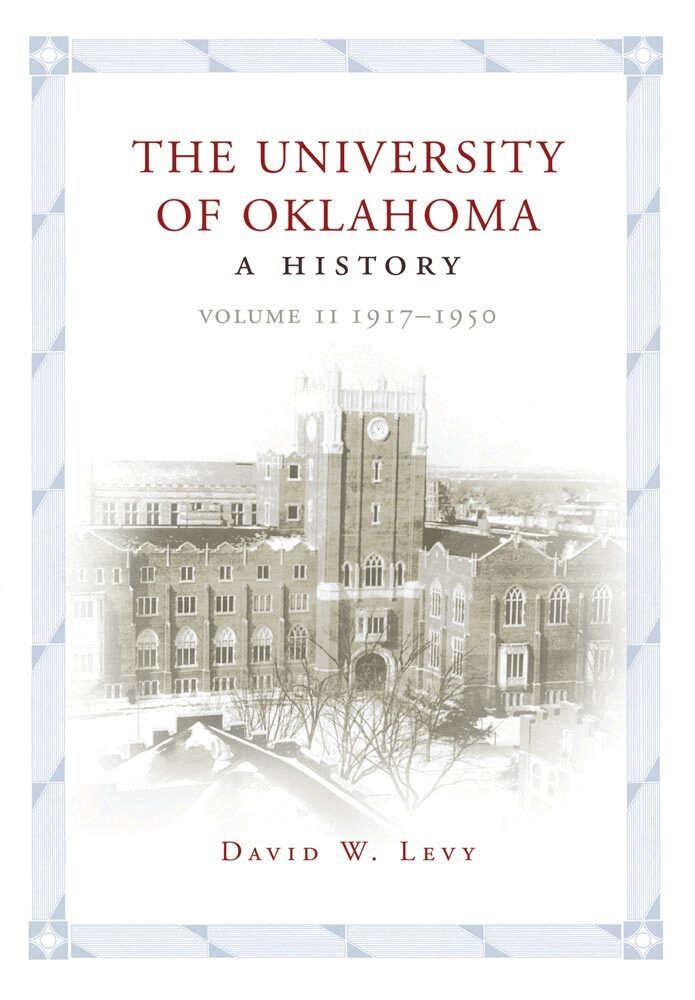
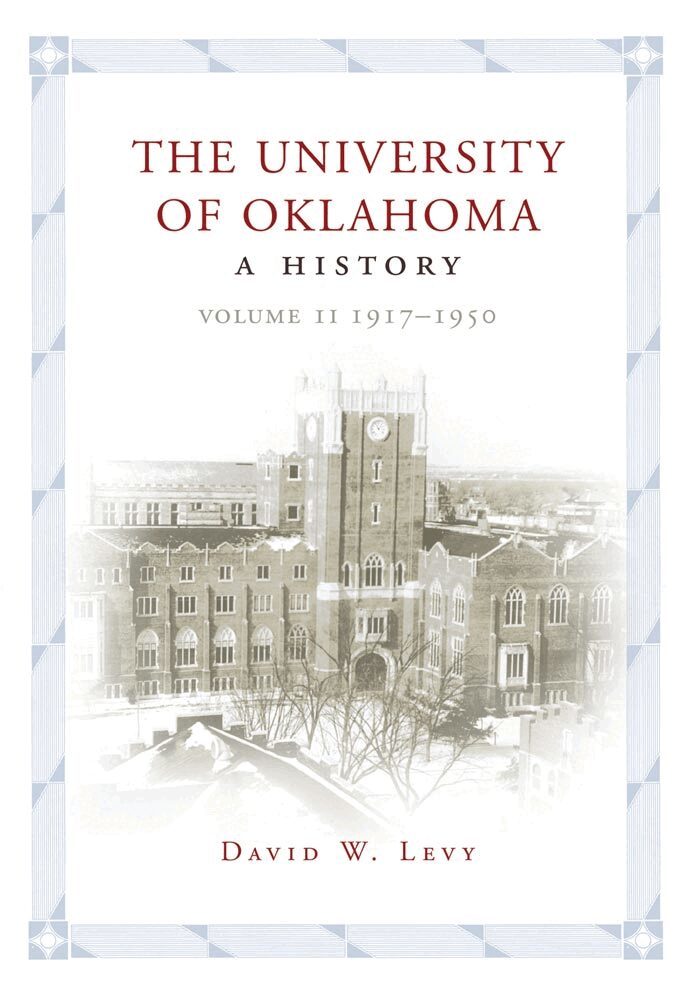
In 1917 it was still possible for the University of Oklahoma's annual Catalogue to include a roster of every student's name and hometown. A compact and close-knit community, those 2,500 students and their 130 professors studied and taught at a respectable (though small, relatively uncomplicated, and rather insular) regional university. During the following third of a century, the school underwent changes so profound that their cumulative effect amounted to a transformation. This second volume in David Levy's projected three-part history chronicles these changes, charting the University's course through one of the most dramatic periods in American history.Following Oklahoma's flagship school through decades that saw six U.S. presidents, eleven state governors, and five university presidents, Volume 2 of The University of Oklahoma: A History documents the institution's evolution into a complex, diverse, and multifaceted seat of learning. By 1950 enrollment had increased fivefold, and by every measure - the number of colleges and campus buildings, degrees awarded and programs offered, volumes in the library, faculty publications, out-of-state and foreign students in attendance - the University was on its way to becoming a world-class educational institution.Levy weaves together human and institutional history as he describes the school's remarkable - sometimes remarkably difficult - development in response to unprecedented factors: two world wars, the cultural shifts of the 1920s, the Great Depression, the rise of the petroleum industry, the farm crisis and Dust Bowl, the emergence of new technologies, and new political and social forces such as those promoting and resisting racial justice.National and world events, state politics, campus leadership, the ever-changing student body: in triumph and defeat, in small successes and grand accomplishments, all come to varied and vibrant life in this second installment of the definitive history of Oklahoma's storied center of learning.
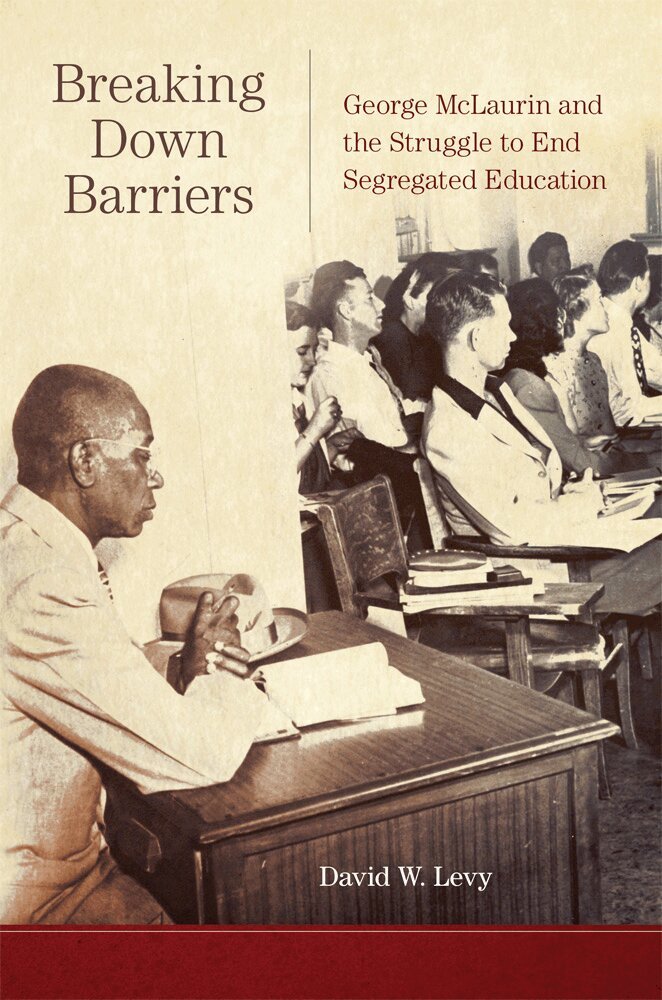
Breaking Down Barriers
George McLaurin and the Struggle to End Segregated Education
Häftad, Engelska, 2020
231 kr
Skickas inom 5-8 vardagar
For nearly sixty years, the University of Oklahoma, in obedience to state law, denied admission to African Americans. Only in October 1948 did this racial barrier start to break down, when an elderly teacher named George McLaurin became the first African American to enroll at the university. McLaurin's case, championed by the NAACP, drew national attention and culminated in a U.S. Supreme Court decision. In Breaking Down Barriers, distinguished historian David W. Levy chronicles the historically significant - and at times poignant - story of McLaurin's two-year struggle to secure his rights.Through exhaustive research, Levy has uncovered as much as we can know about George McLaurin (1887-1968), a notably private person. A veteran educator, he was fully qualified for admission as a graduate student in the university's School of Education. When the university denied his application, solely on the basis of race, McLaurin received immediate assistance from the NAACP and its lead attorney Thurgood Marshall, who brilliantly defended his case in state and federal courts.On his very first day of class, as Levy details, McLaurin had to sit in a special alcove, separate from the white students in the classroom. Photographs of McLaurin in this humiliating position set off a firestorm of national outrage. Dozens of other African American men and women followed McLaurin to the university, and Levy reviews the many bizarre contortions that university officials had to perform, often against their own inclinations, to accord with the state's mandate to keep black and white students apart in classrooms, the library, cafeterias and dormitories, and the football stadium.Ultimately, in 1950, the U.S. Supreme Court, swayed by the arguments of Marshall and his co-counsel Robert Carter, ruled in McLaurin's favor. The decision, as Levy explains, stopped short of toppling the decades-old doctrine of 'separate but equal.' But the case led directly to the 1954 landmark decision in Brown v. Board of Education, which finally declared that flawed policy unconstitutional.
322 kr
Skickas inom 10-15 vardagar
In 1917 it was still possible for the University of Oklahoma’s annual Catalogue to include a roster of every student’s name and hometown. A compact and close-knit community, those 2,500 students and their 130 professors studied and taught at a respectable (though small, relatively uncomplicated, and rather insular) regional university. During the following third of a century, the school underwent changes so profound that their cumulative effect amounted to a transformation. This second volume in David Levy’s projected three-part history chronicles these changes, charting the University’s course through one of the most dramatic periods in American history.Following Oklahoma’s flagship school through decades that saw six U.S. presidents, eleven state governors, and five university presidents, Volume 2 of The University of Oklahoma: A History documents the institution’s evolution into a complex, diverse, and multifaceted seat of learning. By 1950 enrollment had increased fivefold, and by every measure—the number of colleges and campus buildings, degrees awarded and programs offered, volumes in the library, faculty publications, out-of-state and foreign students in attendance—the University was on its way to becoming a world-class educational institution.Levy weaves together human and institutional history as he describes the school’s remarkable—sometimes remarkably difficult—development in response to unprecedented factors: two world wars, the cultural shifts of the 1920s, the Great Depression, the rise of the petroleum industry, the farm crisis and Dust Bowl, the emergence of new technologies, and new political and social forces such as those promoting and resisting racial justice.National and world events, state politics, campus leadership, the ever-changing student body: in triumph and defeat, in small successes and grand accomplishments, all come to varied and vibrant life in this second installment of the definitive history of Oklahoma’s storied center of learning.
336 kr
Skickas inom 10-15 vardagar
Days before the armistice was signed ending World War I, Stratton D. Brooks, third president of the University of Oklahoma, sent a letter to every student, former student, and faculty member serving in the armed forces. He had a request: would each man write a letter in reply, describing his experiences and impressions during his wartime service? Dozens of them responded in late 1918 and early 1919. Now, more than a century later, historian David W. Levy has selected and annotated fifty-three of these letters. Sooner Doughboys Write Home is a richly detailed—and often poignant—record of what these young men thought about the war and what they witnessed firsthand.As Levy explains in his thorough introduction, most of these young men, or “doughboys” as they were called, came from small Oklahoma towns and farms. Suddenly thrust into strange and often dangerous circumstances after the United States entered the war in 1917, they betray in their letters an appealing innocence of this wider world. For some of them, it is a world of dreary inactivity and boredom, punctuated by moments of breathtaking violence and danger. Others marvel at sights in Paris and in Germany. All the while, they keep a sharp eye out for their Sooner classmates from Norman, eager to share a quick drink or hurried chat. Although these Sooner doughboys, as Levy acknowledges, were not “ordinary,” given their privileged status as college students, they observed the war from the field and not from some more remote vantage point.Drawing on his expertise as an American historian and his extensive knowledge of the university’s history, Levy identifies and explains in ample footnotes the numerous people and places mentioned by the letter writers. In so doing, he ties the experience of everyday Oklahomans to a global conflict that changed the course of history.
972 kr
Tillfälligt slut
The letters in this volume record an important transition in Brandeis's life. In July 1907, when the letters begin, Louis D. Brandeis was merely an unusually successful local reformer. His earlier victories against the Boston Elevated and the Boston Consolidated Gas Company, even his stunning success in the achievement of the Savings Bank Life Insurance law in Massachusetts, all centered exclusively upon Boston or Massachusetts problems. But by December 1912, when this book ends, Brandeis was one of the best known social activists in the United States.He received regular national attention in popular periodicals and advised the newly elected President of the United States. As these letters show, Brandeis always kept one eye on Massachusetts affairs-supervising the inauguration of the insurance reform, continuing to oppose long-term franchises for the subway, and advising Massachusetts governors on proposed bills and prospective appointments. But he devoted the major part of his energy in this five-and-a-half-year period to a series of crusades of crucial national importance.He attacked the attempt of Mellen and Morgan to gain a monopoly hold over new England transportation as he strenuously and doggedly opposed the merger of the Boston & Maine with the New Haven railroad. He entered, in a leading role, the most celebrated conservation battle of his generation, the Pinchot-Ballinger controversy, and he emerged as a major spokesman for the preservation and orderly development of natural resources. He helped to hammer together an arbitration mechanism to maintain industrial peace within the New York garment trades, a mechanism he believed would have broad implications for the future of industrial democracy in America. He battled the demands of the railroads for increased rates; he joined the crusade for efficiency and scientific management; and he directed repeated blows against the huge concentrations of economic power within the national economy.It should not be surprising that Brandeis and Robert M. LaFollette were drawn together, and these letters will show both the extent of that relationship and the way in which Brandeis's influence spread to other progressives in Congress. Other matters-his earliest Zionist activities, his achievement in defending progressive state legislation before the Supreme Court, his interest in Alaskan development along conservationist lines, his plan for the regularity of employment, his role in the Presidential campaign of 1912-are all part of his work during these turbulent years and are all touched upon in greater or lesser detail in these letters.
972 kr
Tillfälligt slut
With the election of Woodrow Wilson in 1912, Louis D. Brandeis emerged as the undisputed intellectual leader of those reformers who were trying to recreate a democratic society free from the economic and political depradations of monopolistic enterprise. But now these reformers had a champion in the White House, and direct access to him through one of his most trusted advisers. In this volume we see what was probably the high point of progressive reform-the first three years of the Wilson Administration. During these years Brandeis was considered for a Cabinet position, consulted frequently on matters of patronage, and called in at key junctures to determine policy.But he still kept up his many obligations to different reform groups: arguing cases before the Supreme Court, acting as public counsel in rate hearings, writing Other People's Money, one of the key exposés of the era, as well as advising his good friend Robert M. LaFollette and other reform leaders.Yet at the height of his career as a reformer, Brandeis suddenly took on another heavy obligation, the leadership of the American Zionist movement, and helped marshal Jews in this country to aid their brethren in war-ravaged Europe and Palestine. Carrying over his democratic ideals, he challenged the established American Jewish aristocracy in the Congress movement, in order to broaden the base of Jewish participation in important issues. At the end of 1915, Brandeis was an important figure not only in domestic reform and Jewish affairs, but on the international scene as well. And although no one knew it at the time, he stood at the brink of nomination to the nation's highest court.As in the earlier volumes, these letters indicate the inner workings of American reform, and they also show how American Zionism, under the leadership of Brandeis and his lieutenants, assumed those characteristics that would make it a unique and powerful instrument in world politics.
972 kr
Tillfälligt slut
Covers the later years of his life, closing with his death.This volume, which opens after the great schism in the Zionist movement and closes with Brandeis's death, depicts him trying, in a variety of ways, to make the world a better place. Once again, the scope of his interests and the intensity of his involvement is astounding. He writes on Zionism, Palestine, the liberal press, economics, the University of Louisville, family affairs, Savings Bank Life Insurance, the Harvard Law School, unemployment compensation, prohibition enforcement, civil liberties, and much more. The book also includes a cumulative index to all five volumes that will make it easier for students and scholars to trace the various threads that were woven together in the quite remarkable life of this one man.