David W. Stephens - Böcker
Visar alla böcker från författaren David W. Stephens. Handla med fri frakt och snabb leverans.
4 produkter
4 produkter
503 kr
Skickas inom 7-10 vardagar
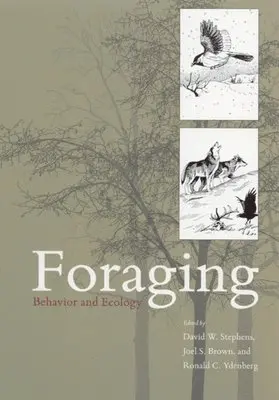
Foraging is fundamental to animal survival and reproduction, yet it is much more than a simple matter of finding food; it is a biological imperative. Animals must find and consume resources to succeed, and they make extraordinary efforts to do so. For instance, pythons rarely eat, but when they do, their meals are large - as much as 60 percent larger than their own bodies. The snake's digestive system is normally dormant, but during digestion metabolic rates can increase fortyfold. A python digesting quietly on the forest floor has the metabolic rate of a thoroughbred in a dead heat. This and related foraging processes have broad applications in ecology, cognitive science, anthropology, and conservation biology - and they can be further extrapolated in economics, neurobiology, and computer science. "Foraging" is the first comprehensive review of the topic in more than twenty years. A monumental undertaking, this volume brings together twenty-two experts from throughout the field to offer the latest on the mechanics of foraging, modern foraging theory, and foraging ecology.The fourteen essays cover all the relevant issues, including cognition, individual behavior, caching behavior, parental behavior, anti-predator behavior, social behavior, population and community ecology, herbivory, and conservation. Considering a wide range of taxa, from birds to mammals to amphibians, "Foraging" will be the definitive guide to the field.
266 kr
Skickas inom 5-8 vardagar
176 kr
Skickas inom 5-8 vardagar
887 kr
Skickas inom 7-10 vardagar
This account of the current state of foraging theory is also a valuable description of the use of optimality theory in behavioral ecology in general. Organizing and introducing the main research themes in economic analyses of animal feeding behavior, the authors analyze the empirical evidence bearing on foraging models and answer criticisms of optimality modeling. They explain the rationale for applying optimality models to the strategies and mechanics of foraging and present the basic "average-rate maximizing" models and their extensions. The work discusses new directions in foraging research: incorporating incomplete information and risk-sensitive behavior in foraging models; analyzing trade-offs, such as nutrient requirements and the threat of being eaten while foraging; formulating dynamic models; and building constrained optimization models that assume that foragers can use only simple "rules of thumb." As an analysis of these and earlier research developments and as a contribution to debates about the role of theory in evolutionary biology.Foraging Theory will appeal to a wide range of readers, from students to research professionals, in behavioral ecology, population and community ecology, animal behavior, and animal psychology, and especially to those planning empirical tests of foraging models.