John R. Krebs – författare
657 kr
Skickas
957 kr
Skickas inom 5-8 vardagar
1 274 kr
Läs direkt efter köp
This account of the current state of foraging theory is also a valuable description of the use of optimality theory in behavioral ecology in general. Organizing and introducing the main research themes in economic analyses of animal feeding behavior, the authors analyze the empirical evidence bearing on foraging models and answer criticisms of optimality modeling. They explain the rationale for applying optimality models to the strategies and mechanics of foraging and present the basic "average-rate maximizing" models and their extensions.The work discusses new directions in foraging research: incorporating incomplete information and risk-sensitive behavior in foraging models; analyzing trade-offs, such as nutrient requirements and the threat of being eaten while foraging; formulating dynamic models; and building constrained optimization models that assume that foragers can use only simple "rules of thumb." As an analysis of these and earlier research developments and as a contribution to debates about the role of theory in evolutionary biology. Foraging Theory will appeal to a wide range of readers, from students to research professionals, in behavioral ecology, population and community ecology, animal behavior, and animal psychology, and especially to those planning empirical tests of foraging models.
956 kr
Skickas inom 5-8 vardagar
1 107 kr
Läs direkt efter köp
680 kr
Läs direkt efter köp
The third edition of this successful textbook looks again at the influence of natural selection on behavior - an animal''s struggle to survive by exploiting resources, avoiding predators, and maximizing reproductive success.
In this edition, new examples are introduced throughout, many illustrated with full color photographs. In addition, important new topics are added including the latest techniques of comparative analysis, the theory and application of DNA fingerprinting techniques, extensive new discussion on brood parasite/host coevolution, the latest ideas on sexual selection in relation to disease resistance, and a new section on the intentionality of communication. Written in the lucid style for which these two authors are renowned, the text is enhanced by boxed sections illustrating important concepts and new marginal notes that guide the reader through the text. This book will be essential reading for students taking courses in behavioral ecology.
The leading introductory text from the two most prominent workers in the field. Second colour in the text. New section of four colour plates. Boxed sections to ilustrate difficult and important points. New larger format with marginal notes to guide the reader through the text. Selected further reading at the end of each chapter.872 kr
Läs direkt efter köp
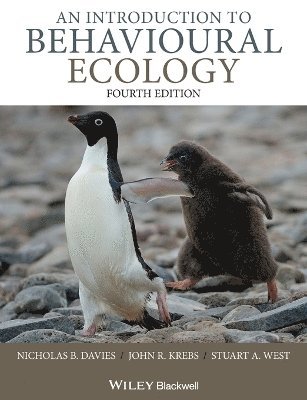
This textbook helped to define the field of Behavioural Ecology. In this fourth edition the text has been completely revised, with new chapters and many new illustrations and full colour photographs. The theme, once again, is the influence of natural selection on behaviour – an animal''s struggle to survive and reproduce by exploiting and competing for resources, avoiding predators, selecting mates and caring for offspring, – and how animal societies reflect both cooperation and conflict among individuals.
Stuart A. West has joined as a co-author bringing his own perspectives and work on microbial systems into the book.
Written in the same engaging and lucid style as the previous editions, the authors explain the latest theoretical ideas using examples from micro-organisms, invertebrates and vertebrates. There are boxed sections for some topics and marginal notes help guide the reader. The book is essential reading for students of behavioural ecology, animal behaviour and evolutionary biology.
Key Features:
Long-awaited new edition of a field-defining textbook New chapters, illustrations and colour photographs New co-author Focuses on the influence of natural selection on behavior, and how animal societies reflect both cooperation and conflict among individuals"The long-awaited update to a classic in this field is now here, presenting new directions in thinking and addressing burning questions. Richly informed by progress in many other disciplines, such as sensory physiology, genetics and evolutionary theory, it marks the emergence of behavioural ecology as a fully fledged discipline.... This is a marvellous book, written in a lucid style. A must-read for those in the field, it is also a cornucopia of new thinking for anyone interested in evolution and behaviour."—Manfred Milinski, Nature, 2012
872 kr
Läs direkt efter köp
This textbook helped to define the field of Behavioural Ecology. In this fourth edition the text has been completely revised, with new chapters and many new illustrations and full colour photographs. The theme, once again, is the influence of natural selection on behaviour – an animal''s struggle to survive and reproduce by exploiting and competing for resources, avoiding predators, selecting mates and caring for offspring, – and how animal societies reflect both cooperation and conflict among individuals.
Stuart A. West has joined as a co-author bringing his own perspectives and work on microbial systems into the book.
Written in the same engaging and lucid style as the previous editions, the authors explain the latest theoretical ideas using examples from micro-organisms, invertebrates and vertebrates. There are boxed sections for some topics and marginal notes help guide the reader. The book is essential reading for students of behavioural ecology, animal behaviour and evolutionary biology.
Key Features:
Long-awaited new edition of a field-defining textbook New chapters, illustrations and colour photographs New co-author Focuses on the influence of natural selection on behavior, and how animal societies reflect both cooperation and conflict among individuals"The long-awaited update to a classic in this field is now here, presenting new directions in thinking and addressing burning questions. Richly informed by progress in many other disciplines, such as sensory physiology, genetics and evolutionary theory, it marks the emergence of behavioural ecology as a fully fledged discipline.... This is a marvellous book, written in a lucid style. A must-read for those in the field, it is also a cornucopia of new thinking for anyone interested in evolution and behaviour."—Manfred Milinski, Nature, 2012