David Whyte – författare
Visar alla böcker från författaren David Whyte. Handla med fri frakt och snabb leverans.
47 produkter
Consolations
The Solace, Nourishment and Underlying Meaning of Everyday Words
Av David Whyte
Inbunden, 2019
4,8 utav 5 stjärnor. Totalt antal röster: (4)
187 kr
Lägg i varukorg
In Consolations David Whyte unpacks aspects of being human that many of us spend our lives trying vainly to avoid - loss, heartbreak, vulnerability, fear - boldly reinterpreting them, fully embracing their complexity, never shying away from paradox in his relentless search for meaning.Beginning …
Essentials
Av David Whyte
Inbunden, 2022
190 kr
Lägg i varukorg
'Great poems,' David Whyte has said, 'are not about experience, but are the experience itself, felt in the body.' Essentials is a collection of his own best poems, each in their way about capturing the experience itself, whether that is in the daily shifts, the ever-turning seasons or the bigger …
Consolations II
The Solace, Nourishment and Underlying Meaning of Everyday Words
Av David Whyte
Inbunden, 2024
208 kr
Lägg i varukorg
David Whyte's Consolations use everyday words to present us with a prism through which to better understand ourselves and the lives we walk through. At the request of readers globally, Whyte returns with fifty-two short, elegant meditations on a single word ranging from 'Anxiety' to 'Body', …
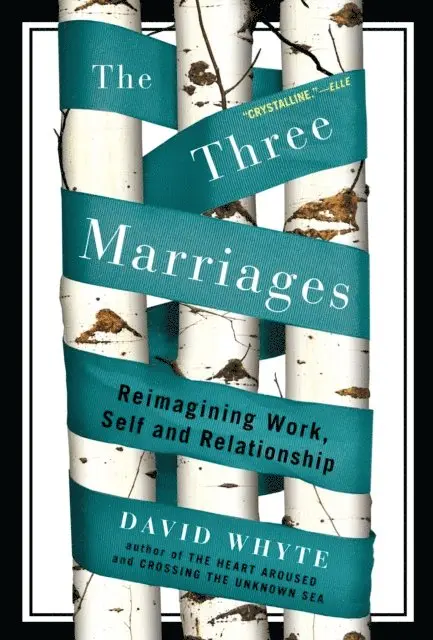
Three Marriages
Reimagining Work, Self and Relationship
Av David Whyte
Häftad, 2010
274 kr
Lägg i varukorg
Everything Is Waiting for You
Av David Whyte
Häftad
5,0 utav 5 stjärnor. Totalt antal röster: (1)
277 kr
Lägg i varukorg
Crossing the Unknown Sea
Work as a Pilgrimage of Identity
Av David Whyte
Häftad, 2002
196 kr
Lägg i varukorg
Crossing the Unknown Sea is about reuniting the imagination with our day to day lives. It shows how poetry and practicality, far from being mutually exclusive, reinforce each other to give every aspect of our lives meaning and direction. For anyone who wants to deepen their connection to their …
Three Marriages
Reimagining Work, Self and Relationship
Av David Whyte
E-bok, 2009
160 kr
Lägg i varukorg
A radical, "crystalline" ( Elle ) approach to integrating our work, relationships, and inner selves from the bestselling author, poet, and speaker. The author of Crossing the Unknown Sea and The Heart Aroused encourages readers to reimagine how they inhabit the worlds of love, work, and …
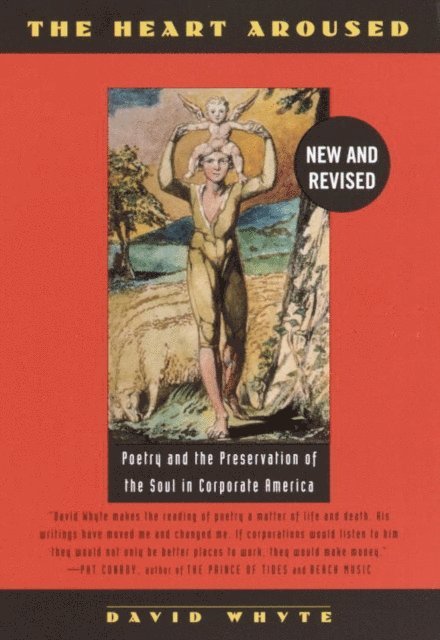
Heart Aroused
Poetry and the Preservation of the Soul in Corporate America
Av David Whyte
E-bok, 2007
136 kr
Lägg i varukorg
In the middle of the road of my life I awoke in a dark wood where the true way was wholly lost - DANTE Like Dante, many of today''s corporate workers find themselves lost in the day-to-day duties of their jobs. Our lives seem shaken by the events of September 11 and the seemingly endless examples …
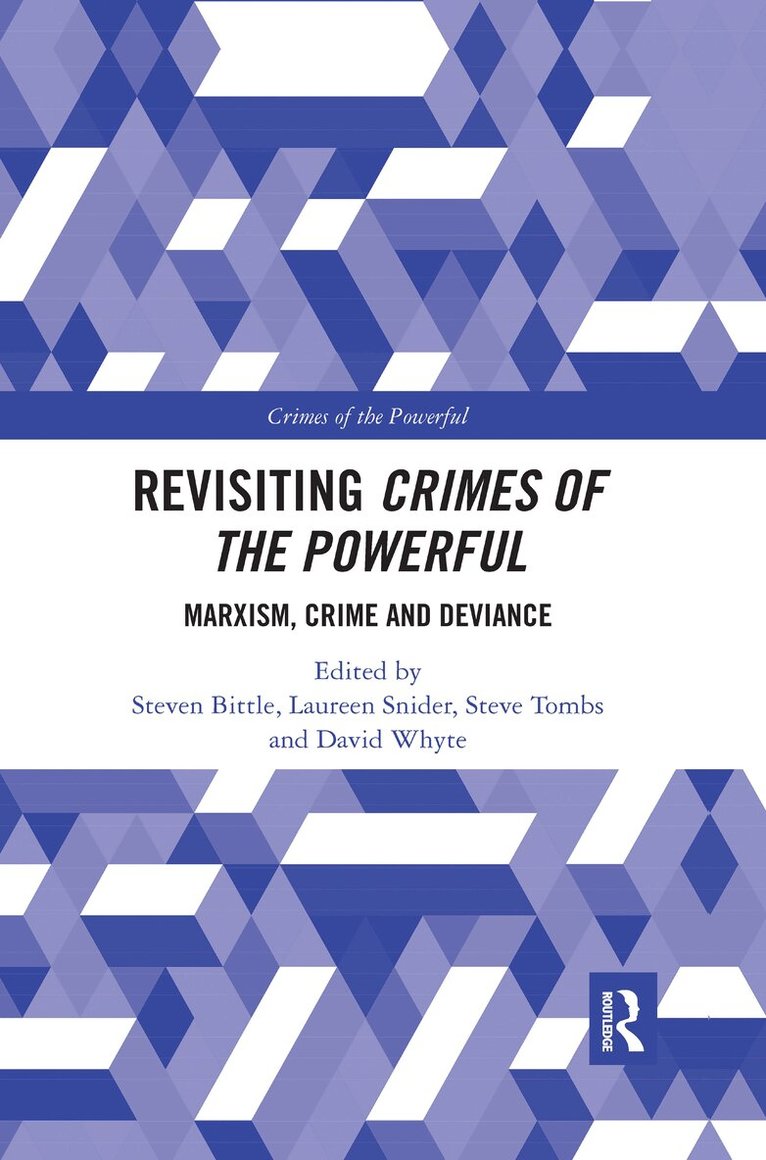
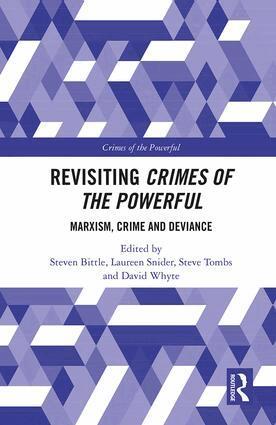
Revisiting Crimes of the Powerful
Marxism, Crime and Deviance
Av Steven Bittle, Laureen Snider m. fl.
Häftad, 2021
723 kr
Lägg i varukorg
Frank Pearce was the first scholar to use the term 'crimes of the powerful.' His ground-breaking book of the same name provided insightful critiques of liberal orthodox criminology, particularly in relation to labelling theory and symbolic interactionism, while making important contributions to …
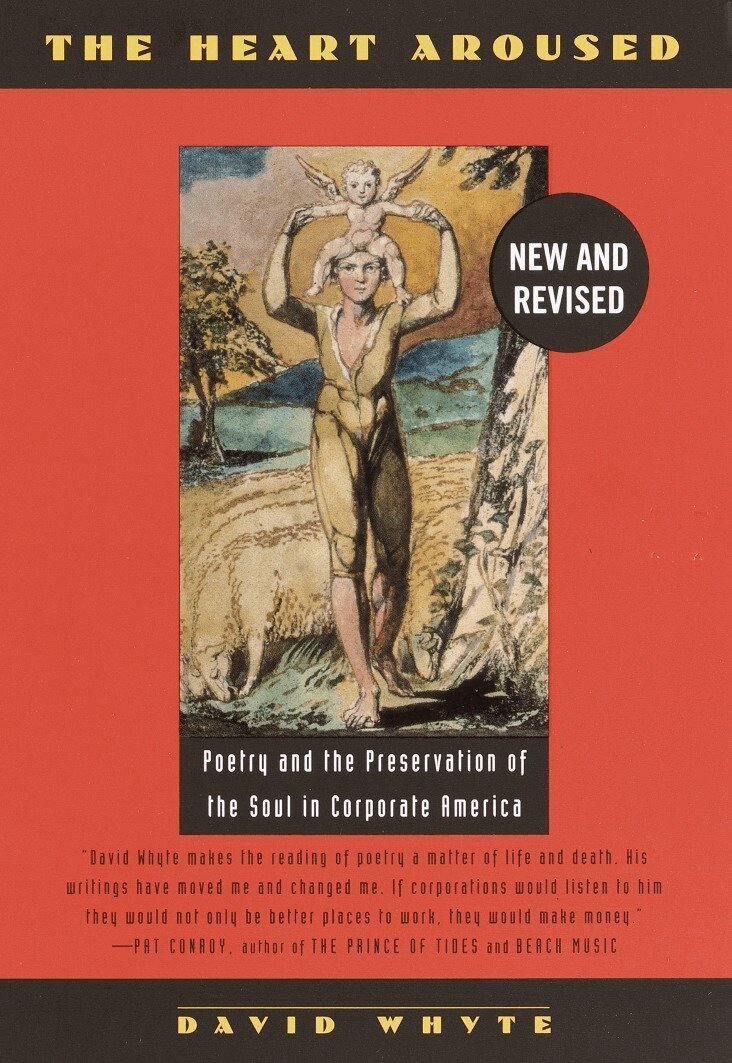
Heart Aroused
Poetry and the Preservation of the Soul in Corporate America
Av David Whyte
Häftad, 1996
249 kr
Lägg i varukorg
“With this insightful book, David Whyte offers people in corporate life an opportunity to reach into the forgotten and ignored creative life (their own and the corporation’s) and literally water their souls with it. The result is a very well written book that can truly heal.”—Clarissa Pinkola …
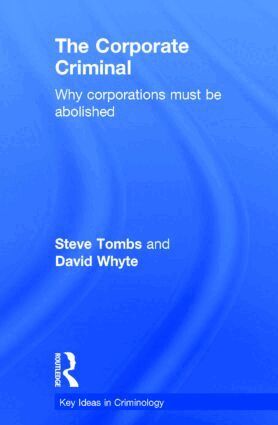
Corporate Criminal
Why Corporations Must Be Abolished
Inbunden, 2015
2516 kr
Lägg i varukorg
Drawing upon a wide range of sources of empirical evidence, historical analysis and theoretical argument, this book shows beyond any doubt that the private, profit-making, corporation is a habitual and routine offender. The book dissects the myth that the corporation can be a rational, responsible, …
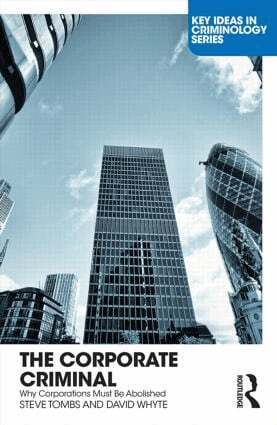
Corporate Criminal
Why Corporations Must Be Abolished
Häftad, 2015
4,0 utav 5 stjärnor. Totalt antal röster: (1)
649 kr
Lägg i varukorg
Drawing upon a wide range of sources of empirical evidence, historical analysis and theoretical argument, this book shows beyond any doubt that the private, profit-making, corporation is a habitual and routine offender. The book dissects the myth that the corporation can be a rational, responsible, …
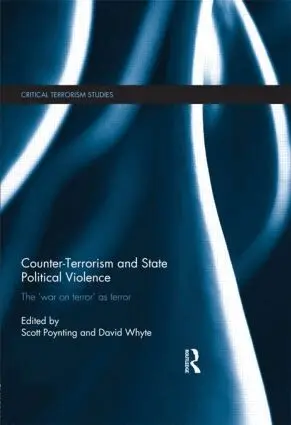
Counter-Terrorism and State Political Violence
The 'War on Terror' as Terror
Av Scott Poynting, David Whyte
Inbunden, 2012
2516 kr
Lägg i varukorg
This edited volume aims to deepen our understanding of state power through a series of case studies of political violence arising from state ‘counter-terrorism’ strategies. The book examines how state counter-terrorism strategies are invariably underpinned by terror, in the form of state political …
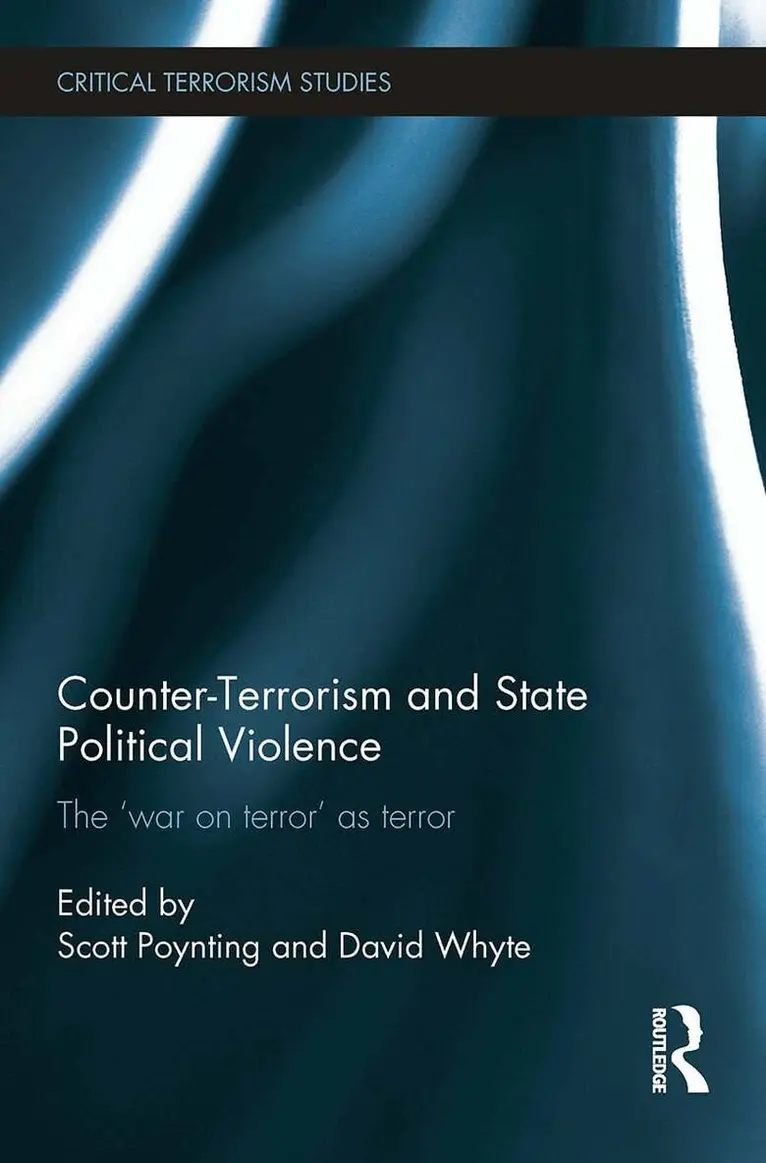
Counter-Terrorism and State Political Violence
The 'War on Terror' as Terror
Av Scott Poynting, David Whyte
Häftad, 2013
853 kr
Lägg i varukorg
This edited volume aims to deepen our understanding of state power through a series of case studies of political violence arising from state ‘counter-terrorism’ strategies. The book examines how state counter-terrorism strategies are invariably underpinned by terror, in the form of state political …
Revisiting Crimes of the Powerful
Marxism, Crime and Deviance
Av Steven Bittle, Laureen Snider m. fl.
Inbunden, 2018
2516 kr
Lägg i varukorg
Frank Pearce was the first scholar to use the term 'crimes of the powerful.' His ground-breaking book of the same name provided insightful critiques of liberal orthodox criminology, particularly in relation to labelling theory and symbolic interactionism, while making important contributions to …
How Corrupt is Britain?
Av David Whyte
Inbunden, 2015
1219 kr
Lägg i varukorg
Banks accused of rate-fixing. Members of Parliament cooking the books. Major defence contractors investigated over suspect arms deals. Police accused of being paid off by tabloids. The headlines are unrelenting these days. Perhaps it's high time we ask: just exactly how corrupt is Britain?David …
How Corrupt is Britain?
Av David Whyte
Häftad, 2015
290 kr
Lägg i varukorg
Banks accused of rate-fixing. Members of Parliament cooking the books. Major defence contractors investigated over suspect arms deals. Police accused of being paid off by tabloids. The headlines are unrelenting these days. Perhaps it's high time we ask: just exactly how corrupt is Britain?David …
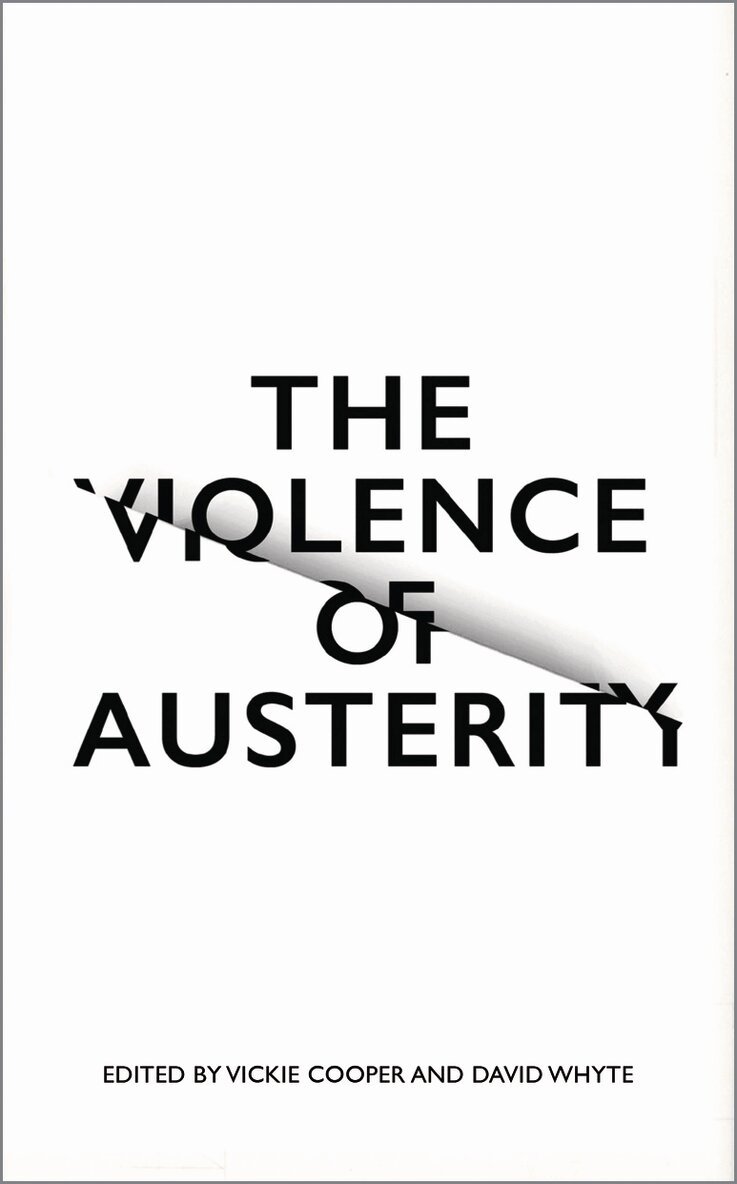
Violence of Austerity
Av Vickie Cooper, Vickie Cooper m. fl.
Inbunden, 2017
1219 kr
Lägg i varukorg
Austerity, a response to the aftermath of the financial crisis, continues to devastate contemporary Britain.In The Violence of Austerity, Vickie Cooper and David Whyte bring together the voices of campaigners and academics including Danny Dorling, Mary O'Hara and Rizwaan Sabir to show that rather …
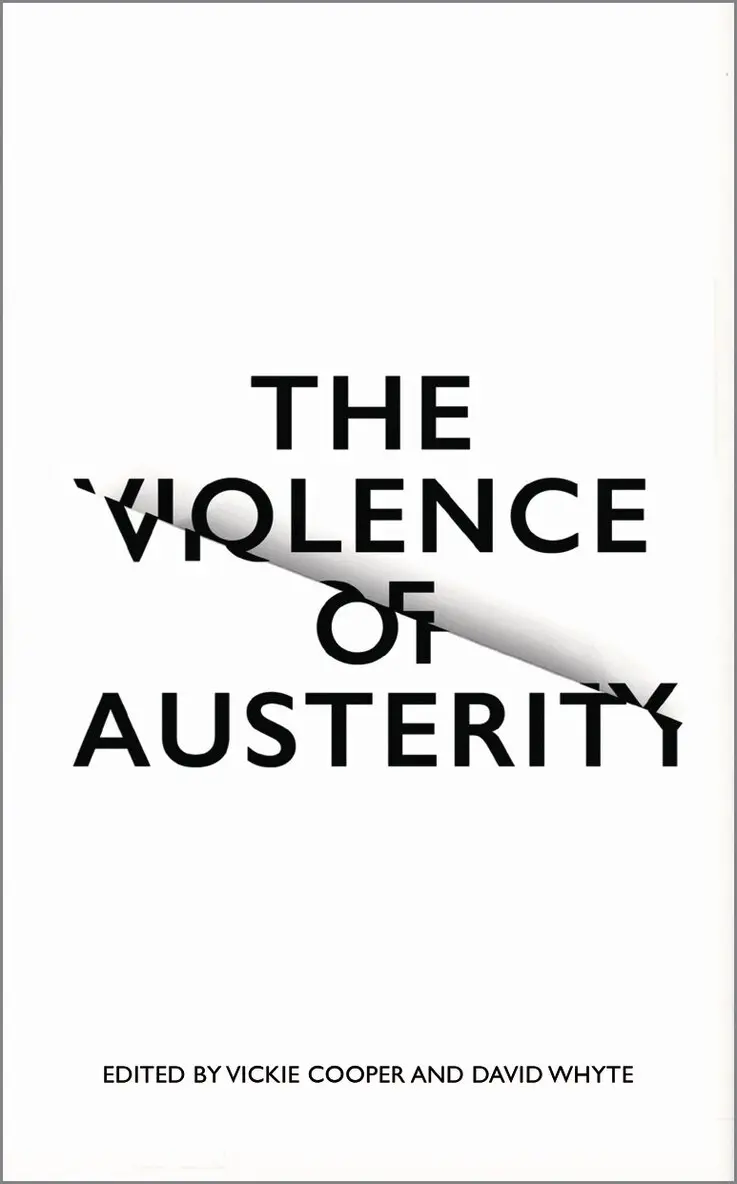
Violence of Austerity
Häftad, 2017
208 kr
Lägg i varukorg
Austerity, a response to the aftermath of the financial crisis, continues to devastate contemporary Britain.In The Violence of Austerity, Vickie Cooper and David Whyte bring together the voices of campaigners and academics including Danny Dorling, Mary O'Hara and Rizwaan Sabir to show that rather …
Ontario High School Physical Geography
Av George A Cornish, David Whyte
Inbunden, 2026
442 kr
Lägg i varukorg
Ontario High School Physical Geography
Av George A Cornish, David Whyte
Häftad, 2026
304 kr
Lägg i varukorg
Corporate Criminal
Why Corporations Must Be Abolished
E-bok, 2015
701 kr
Lägg i varukorg
Drawing upon a wide range of sources of empirical evidence, historical analysis and theoretical argument, this book shows beyond any doubt that the private, profit-making, corporation is a habitual and routine offender. The book dissects the myth that the corporation can be a rational, responsible, …
Corporate Criminal
Why Corporations Must Be Abolished
E-bok, 2015
701 kr
Lägg i varukorg
Drawing upon a wide range of sources of empirical evidence, historical analysis and theoretical argument, this book shows beyond any doubt that the private, profit-making, corporation is a habitual and routine offender. The book dissects the myth that the corporation can be a rational, responsible, …
Neoliberalism and the Moral Economy of Fraud
Häftad, 2017
824 kr
Lägg i varukorg
There is evidence that economic fraud has, in recent years, become routine activity in the economies of both high- and low-income countries. Many business sectors in today's global economy are rife with economic crime.Neoliberalism and the Moral Economy of Fraud shows how neoliberal policies, …
Corporate Human Rights Violations
Global Prospects for Legal Action
Av Stefanie Khoury, David Whyte
Häftad, 2018
570 kr
Lägg i varukorg
This book develops an analysis of the historical, political and legal contexts behind current demands by NGOs and the United Nations Human Rights Council to hold corporations accountable for their human rights violations. Based on an analysis of the range of mechanisms of accountability that …
Corporate Human Rights Violations
Global Prospects for Legal Action
Av Stefanie Khoury, David Whyte
Inbunden, 2016
2319 kr
Lägg i varukorg
This book develops an analysis of the historical, political and legal contexts behind current demands by NGOs and the United Nations Human Rights Council to hold corporations accountable for their human rights violations. Based on an analysis of the range of mechanisms of accountability that …
Neoliberalism and the Moral Economy of Fraud
Inbunden, 2016
2521 kr
Lägg i varukorg
There is evidence that economic fraud has, in recent years, become routine activity in the economies of both high- and low-income countries. Many business sectors in today's global economy are rife with economic crime.Neoliberalism and the Moral Economy of Fraud shows how neoliberal policies, …
Corporate Human Rights Violations
Global Prospects for Legal Action
Av David Whyte, Stefanie Khoury
E-bok, 2016
706 kr
Lägg i varukorg
This book develops an analysis of the historical, political and legal contexts behind current demands by NGOs and the United Nations Human Rights Council to hold corporations accountable for their human rights violations. Based on an analysis of the range of mechanisms of accountability that …