Jörg Wiegratz - Böcker
Visar alla böcker från författaren Jörg Wiegratz. Handla med fri frakt och snabb leverans.
11 produkter
11 produkter
2 088 kr
Skickas inom 10-15 vardagar
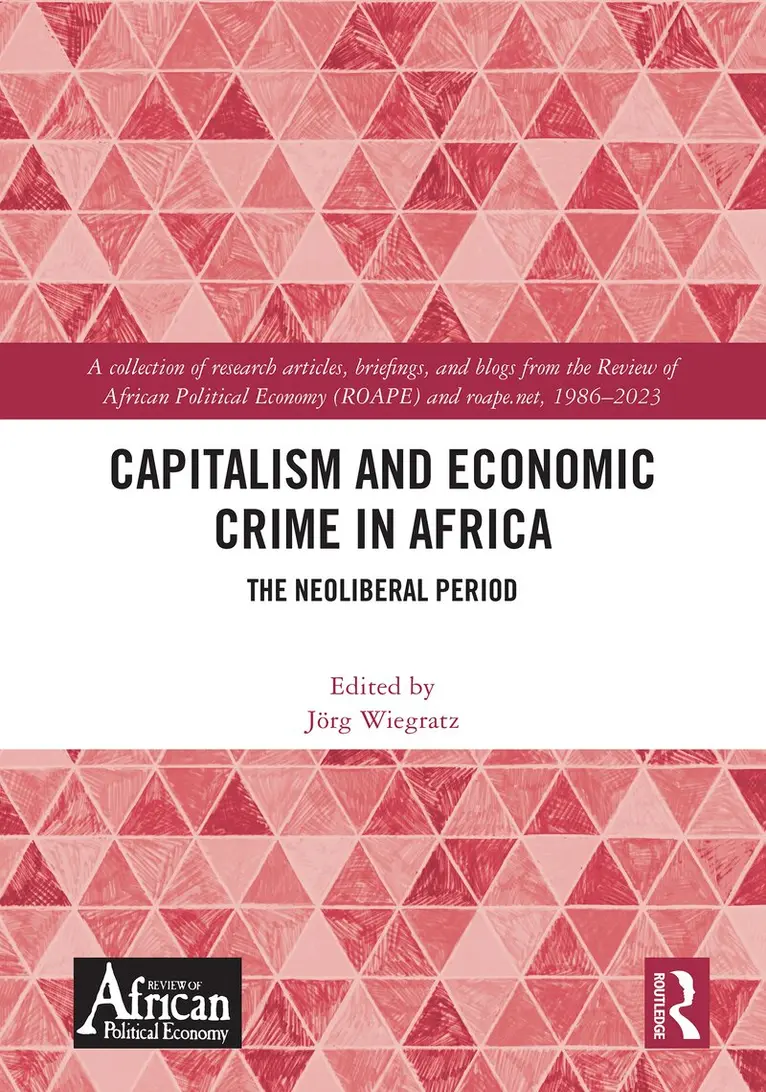
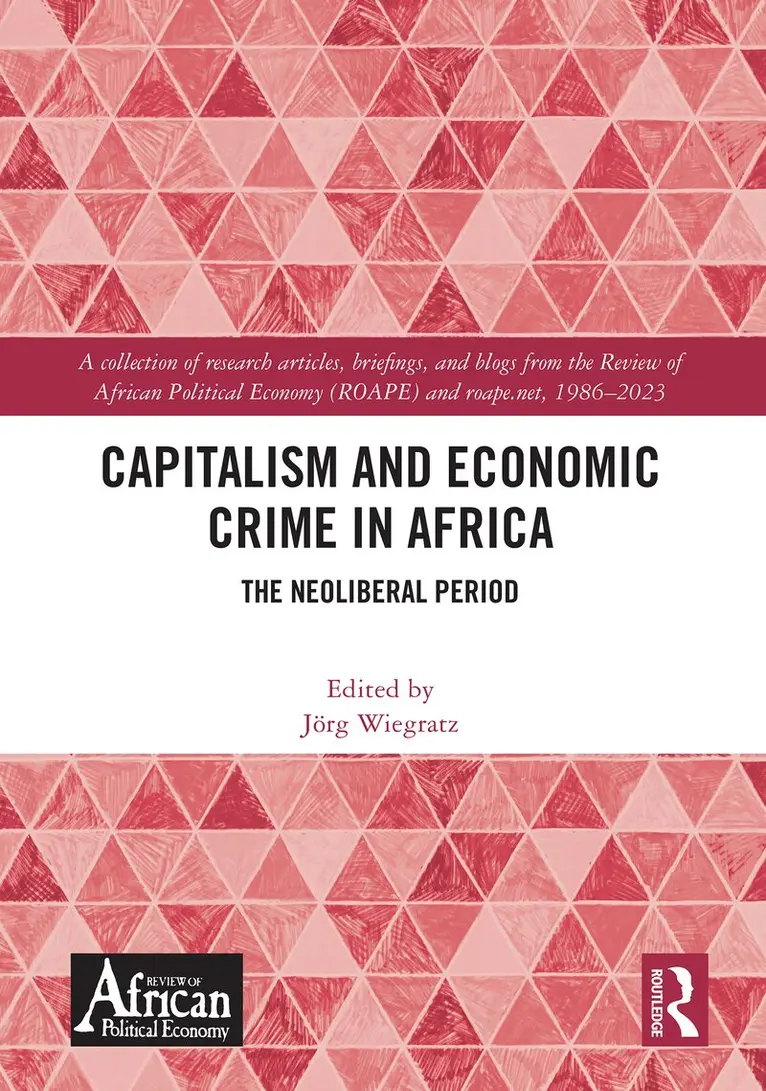
This book offers a comprehensive analysis of economic crimes and market irregularities, including matters of trickery, illicit trade, parallel economy, economies of violence and criminalisation of the poor in neoliberal Africa. It interrogates economic crime as a product of neoliberal reform and transformation (as well as of historical structures). It unpacks crime as a social – and particularly as a political-economic – phenomenon of capitalism. The book brings together a collection of research articles, briefings and blog posts that were published over a period of nearly 40 years (1986–2023), in the acclaimed journal Review of African Political Economy (ROAPE) and on its website roape.net.Featuring contributions from leading experts in the field, including a foreword by Yusuf K. Serunkuma and an afterword by Laureen Snider, the volume explores what these economic crimes have to do with, and can tell us about power, class, accumulation, dependency, (under)development, state–business relations and capitalist transformation on the continent. In so doing, it sheds new light on the co-production of these crimes by a range of actors from the realms of economy, politics and international development, including international financial institutions and other donors. It responds to the imperative to advance the analysis of the link between capitalism and crime in Africa as more countries across the continent become fully capitalist societies.Illustrating the relevance of African cases to debates in and across various disciplines – concerning, for example, corporate and white-collar crimes, state crimes, crimes of the powerful, (il)legality, regulation and social harm – this volume engages with a variety of literature to explain economic crimes as phenomena of global and local capitalism. It provides readers from academia, government, business, media, civil society and education with a striking source of information and analysis.
2 021 kr
Skickas inom 10-15 vardagar
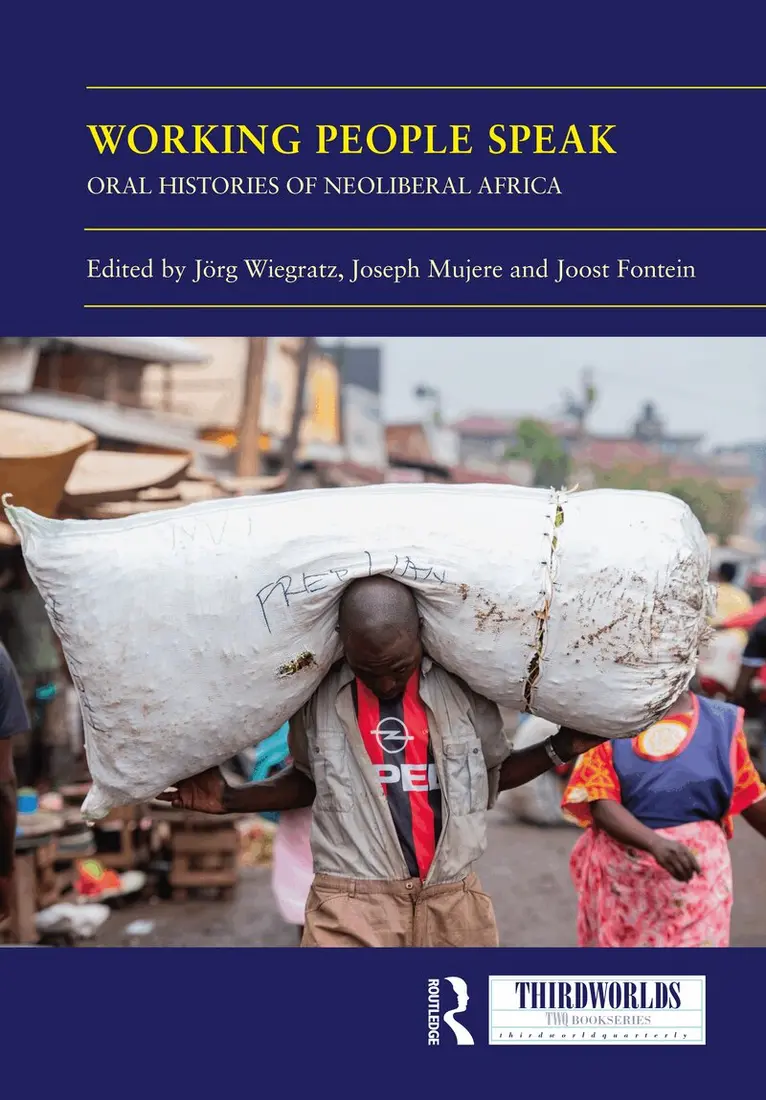
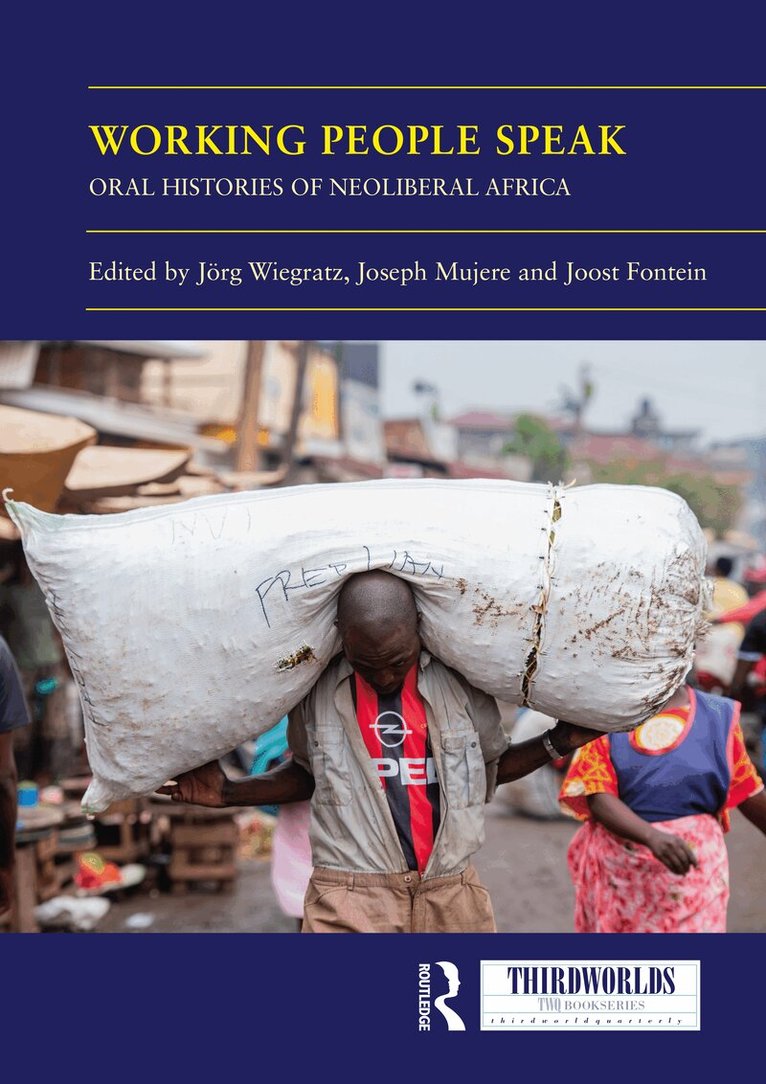
This book presents a re-engagement with oral histories as a way of documenting, understanding, and discussing experiences of work and economic life in Africa under neoliberal capitalism. It draws on seven case studies in South Africa, Zimbabwe, Uganda, and South Sudan, from the late 1980s to the present, to offer a critical analysis of neoliberal transformations and realities at the incisive level of peoples’ biographies.The last few decades have witnessed unprecedented changes in the working lives of people across the African continent. Oral historical accounts of working lives can offer unique and productive insights into these changes by allowing analyses of neoliberalism that focuses on personal experiences over the longue durée. Yet, there has been a surprising dearth of oral histories of work since the emergence of neoliberalism in the 1980s. Compared to scholarship published more than half a century ago, there has been a decline in the use of oral histories to explore experiences of living and working under capitalism. By grounding analysis in biographical details, histories, and dynamics, the chapters in this book seek better understandings of the wider life contexts, challenges, and circumstances in which people’s ‘agency’ emerges, unfolds, gains traction, and gets (re)shaped; and a better grasp of the multiple, entangled layers and temporalities of life and work in capitalist Africa. This book will be indispensable to students and researchers interested in political economy, development studies, anthropology, sociology, history and African Studies.The chapters in this book were originally published as a special issue of Third World Thematics and are accompanied by a new Foreword and Afterword.
649 kr
Skickas inom 10-15 vardagar
This book presents a re-engagement with oral histories as a way of documenting, understanding, and discussing experiences of work and economic life in Africa under neoliberal capitalism. It draws on seven case studies in South Africa, Zimbabwe, Uganda, and South Sudan, from the late 1980s to the present, to offer a critical analysis of neoliberal transformations and realities at the incisive level of peoples’ biographies.The last few decades have witnessed unprecedented changes in the working lives of people across the African continent. Oral historical accounts of working lives can offer unique and productive insights into these changes by allowing analyses of neoliberalism that focuses on personal experiences over the longue durée. Yet, there has been a surprising dearth of oral histories of work since the emergence of neoliberalism in the 1980s. Compared to scholarship published more than half a century ago, there has been a decline in the use of oral histories to explore experiences of living and working under capitalism. By grounding analysis in biographical details, histories, and dynamics, the chapters in this book seek better understandings of the wider life contexts, challenges, and circumstances in which people’s ‘agency’ emerges, unfolds, gains traction, and gets (re)shaped; and a better grasp of the multiple, entangled layers and temporalities of life and work in capitalist Africa. This book will be indispensable to students and researchers interested in political economy, development studies, anthropology, sociology, history and African Studies.The chapters in this book were originally published as a special issue of Third World Thematics and are accompanied by a new Foreword and Afterword.
617 kr
Skickas inom 10-15 vardagar
This book offers a comprehensive analysis of economic crimes and market irregularities, including matters of trickery, illicit trade, parallel economy, economies of violence and criminalisation of the poor in neoliberal Africa. It interrogates economic crime as a product of neoliberal reform and transformation (as well as of historical structures). It unpacks crime as a social – and particularly as a political-economic – phenomenon of capitalism. The book brings together a collection of research articles, briefings and blog posts that were published over a period of nearly 40 years (1986–2023), in the acclaimed journal Review of African Political Economy (ROAPE) and on its website roape.net.Featuring contributions from leading experts in the field, including a foreword by Yusuf K. Serunkuma and an afterword by Laureen Snider, the volume explores what these economic crimes have to do with, and can tell us about power, class, accumulation, dependency, (under)development, state–business relations and capitalist transformation on the continent. In so doing, it sheds new light on the co-production of these crimes by a range of actors from the realms of economy, politics and international development, including international financial institutions and other donors. It responds to the imperative to advance the analysis of the link between capitalism and crime in Africa as more countries across the continent become fully capitalist societies.Illustrating the relevance of African cases to debates in and across various disciplines – concerning, for example, corporate and white-collar crimes, state crimes, crimes of the powerful, (il)legality, regulation and social harm – this volume engages with a variety of literature to explain economic crimes as phenomena of global and local capitalism. It provides readers from academia, government, business, media, civil society and education with a striking source of information and analysis.
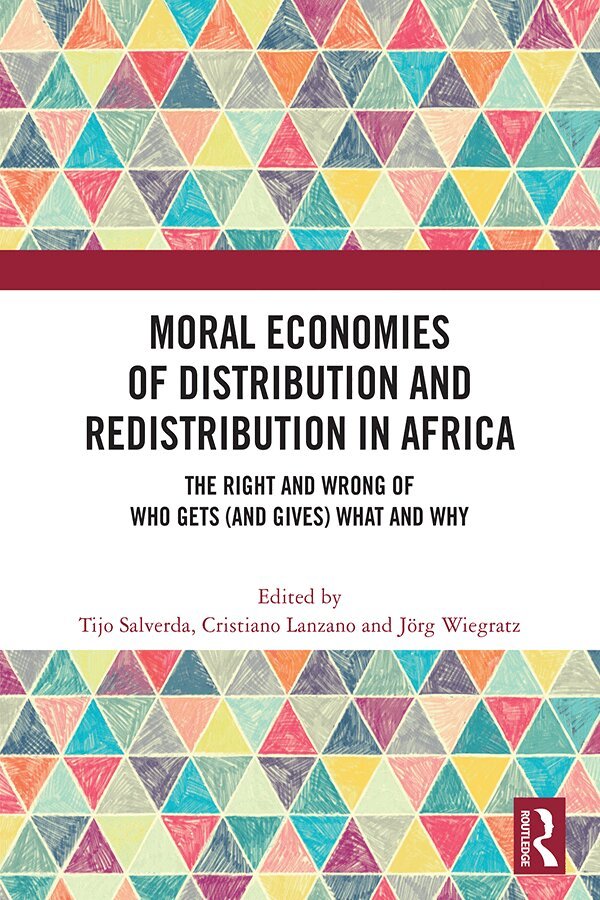
Moral Economies of Distribution and Redistribution in Africa
The Right and Wrong of Who Gets (and Gives) What and Why
Inbunden, Engelska, 2025
2 150 kr
Skickas inom 10-15 vardagar
This book examines how moralities of distribution and redistribution operate and intertwine in everyday African economic life, enhancing current understandings of capitalism on the continent. Through rich ethnographic studies spanning eight countries—Ghana, Nigeria, Burkina Faso, Equatorial Guinea, Ethiopia, Uganda, Kenya, and Zimbabwe—the volume reveals how these moral perspectives of right and wrong connect macro political economies with micro-level social norms and expectations.As debates about economic inequality intensify globally, this timely work illuminates how African actors navigate complex (re)distributional dynamics, duties, and pressures in contemporary capitalist contexts. The contributors provide nuanced analyses of socioeconomic inequalities that often remain obscured in scholarly and public discourse, making a significant contribution to the growing field of moral economy research in Africa and beyond.This book is essential reading for scholars of African studies, economic anthropology, political economy, development studies and anyone interested in understanding how moral frameworks shape economic relations, practices and outcomes across diverse African settings.The chapters in this book were originally published in Journal of Contemporary African Studies.
725 kr
Skickas inom 10-15 vardagar
There is evidence that economic fraud has, in recent years, become routine activity in the economies of both high- and low-income countries. Many business sectors in today's global economy are rife with economic crime.Neoliberalism and the Moral Economy of Fraud shows how neoliberal policies, reforms, ideas, social relations and practices have engendered a type of sociocultural change across the globe which is facilitating widespread fraud. This book investigates the moral worlds of fraud in different social and geographical settings, and shows how contemporary fraud is not the outcome of just a few ‘bad apples’. Authors from a range of disciplines including sociology, anthropology and political science, social policy and economics, employ case studies from the Global North and Global South to explore how particular values, morals and standards of behaviour rendered dominant by neoliberalism are encouraging the proliferation of fraud.This book will be indispensable for those who are interested in political economy, development studies, economics, anthropology, sociology and criminology.
2 155 kr
Skickas inom 10-15 vardagar
There is evidence that economic fraud has, in recent years, become routine activity in the economies of both high- and low-income countries. Many business sectors in today's global economy are rife with economic crime.Neoliberalism and the Moral Economy of Fraud shows how neoliberal policies, reforms, ideas, social relations and practices have engendered a type of sociocultural change across the globe which is facilitating widespread fraud. This book investigates the moral worlds of fraud in different social and geographical settings, and shows how contemporary fraud is not the outcome of just a few ‘bad apples’. Authors from a range of disciplines including sociology, anthropology and political science, social policy and economics, employ case studies from the Global North and Global South to explore how particular values, morals and standards of behaviour rendered dominant by neoliberalism are encouraging the proliferation of fraud.This book will be indispensable for those who are interested in political economy, development studies, economics, anthropology, sociology and criminology.
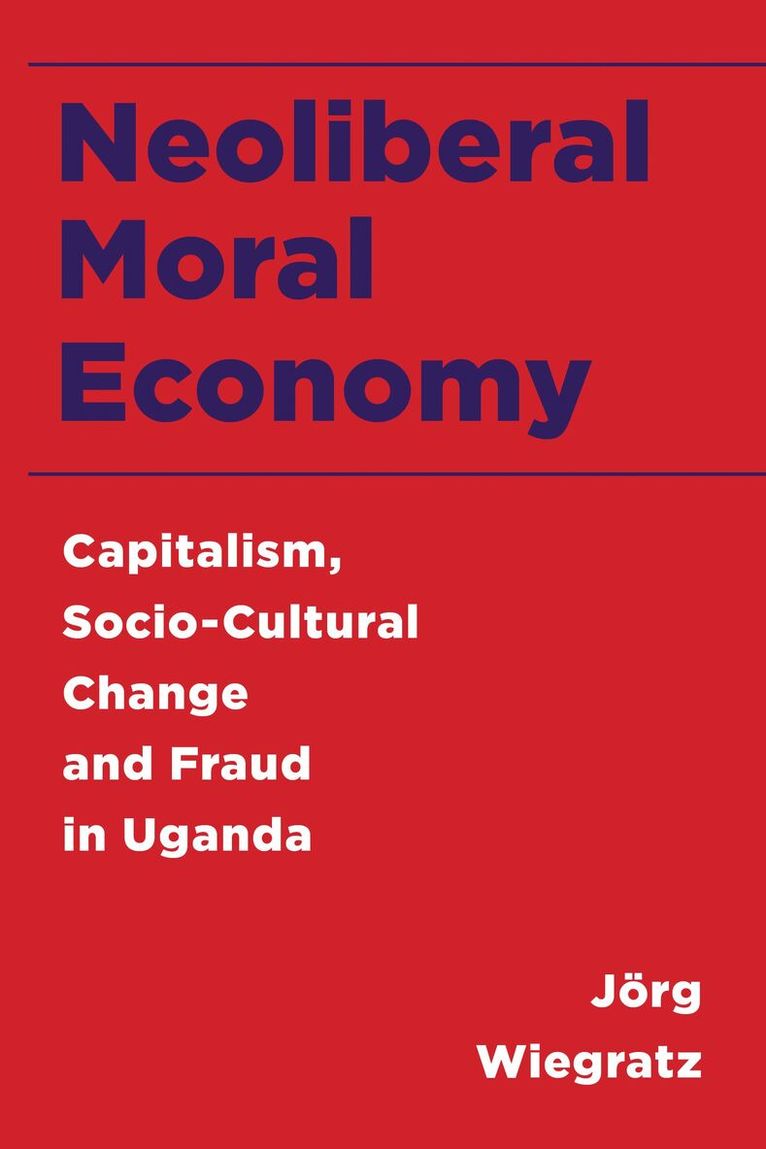
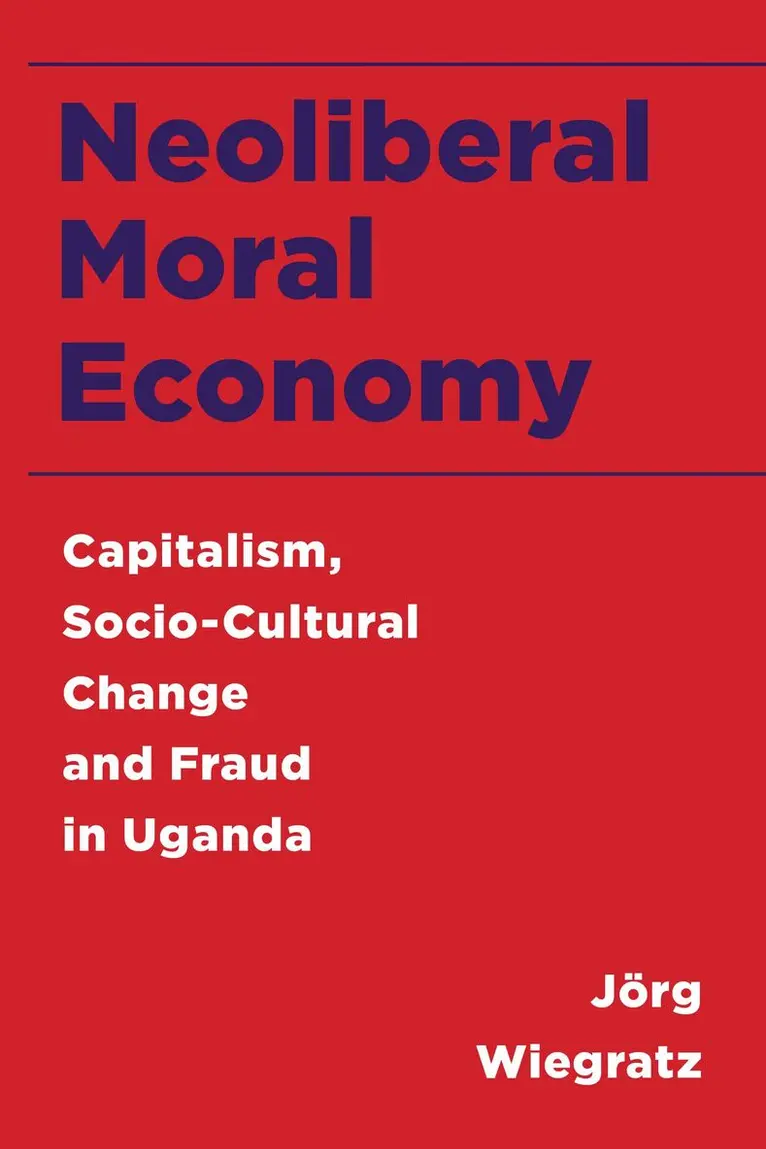
Neoliberal Moral Economy
Capitalism, Socio-Cultural Change and Fraud in Uganda
Inbunden, Engelska, 2016
1 859 kr
Skickas inom 10-15 vardagar
This book offers a fresh take on a major question of global debate: what explains the rise in economic fraud in so many societies around the world? The author argues that the current age of fraud is an outcome of not only political-economic but also moral transformations that have taken place in societies reshaped by neoliberalism.Using the case of Uganda, the book traces these socio-cultural and especially moral repercussions of embedding neoliberalism. Uganda offers an important case of investigation for three reasons: the high level of foreign intervention by donors, aid agencies, international organisations, NGOs and corporations that have tried to produce the first fully-fledged market society in Africa there; the country’s reputation as having adopted neoliberal reforms most extensively, and the intensification of fraud in many sectors of the economy since the early 2000s. The book explores the rise and operation of the neoliberal moral economy and its world of hard and fraudulent practices. It analyses especially the moral-economic character of agricultural produce markets in eastern Uganda. It shows that neoliberal moral restructuring is a highly political, contested and conflict-ridden process, predominantly works via recalibrating the political-economic structure of a country, and deeply affects how people think and go about earning a living and treat others with whom they do business. The book offers an in-depth, data-based analysis of the moral climate of a market society in motion and in so doing offers insights and lessons for elsewhere in the Global South and North.
675 kr
Skickas inom 10-15 vardagar
This book offers a fresh take on a major question of global debate: what explains the rise in economic fraud in so many societies around the world? The author argues that the current age of fraud is an outcome of not only political-economic but also moral transformations that have taken place in societies reshaped by neoliberalism.Using the case of Uganda, the book traces these socio-cultural and especially moral repercussions of embedding neoliberalism. Uganda offers an important case of investigation for three reasons: the high level of foreign intervention by donors, aid agencies, international organisations, NGOs and corporations that have tried to produce the first fully-fledged market society in Africa there; the country’s reputation as having adopted neoliberal reforms most extensively, and the intensification of fraud in many sectors of the economy since the early 2000s. The book explores the rise and operation of the neoliberal moral economy and its world of hard and fraudulent practices. It analyses especially the moral-economic character of agricultural produce markets in eastern Uganda. It shows that neoliberal moral restructuring is a highly political, contested and conflict-ridden process, predominantly works via recalibrating the political-economic structure of a country, and deeply affects how people think and go about earning a living and treat others with whom they do business. The book offers an in-depth, data-based analysis of the moral climate of a market society in motion and in so doing offers insights and lessons for elsewhere in the Global South and North.
354 kr
Skickas inom 10-15 vardagar
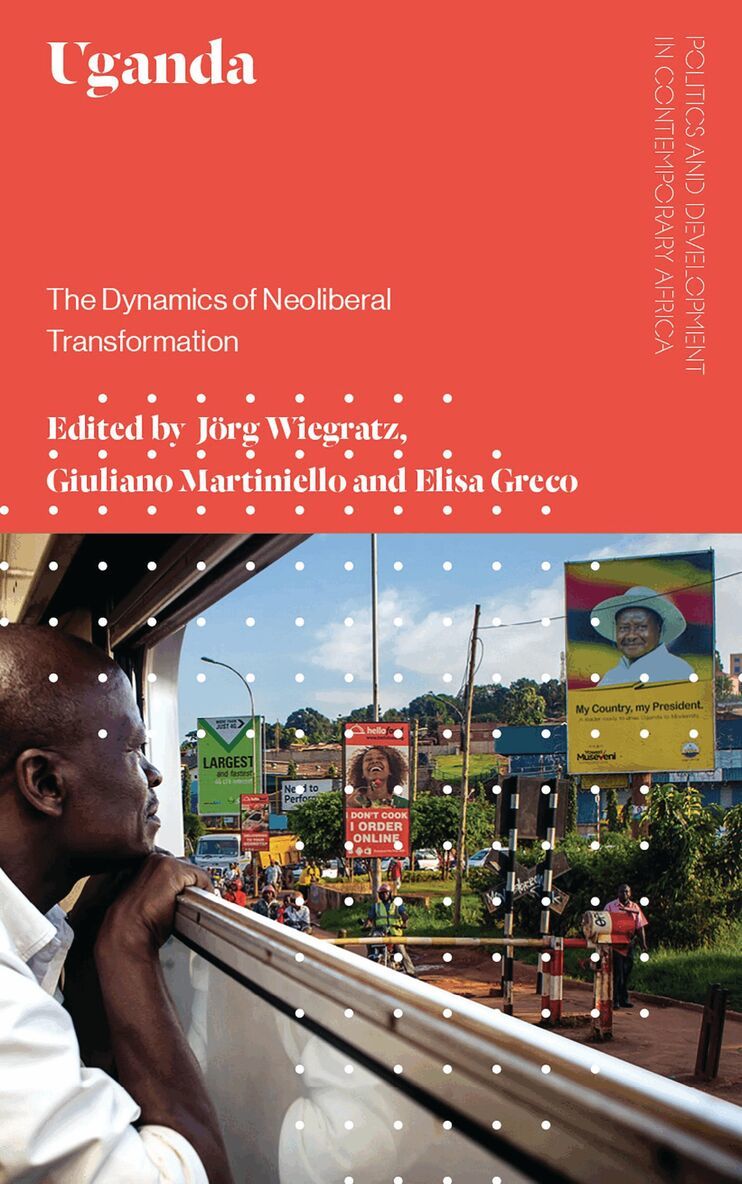
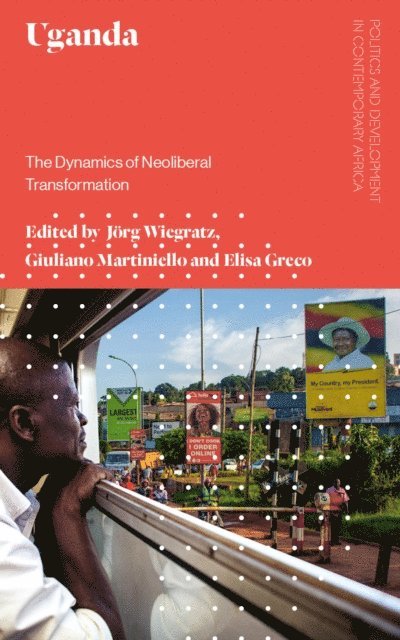
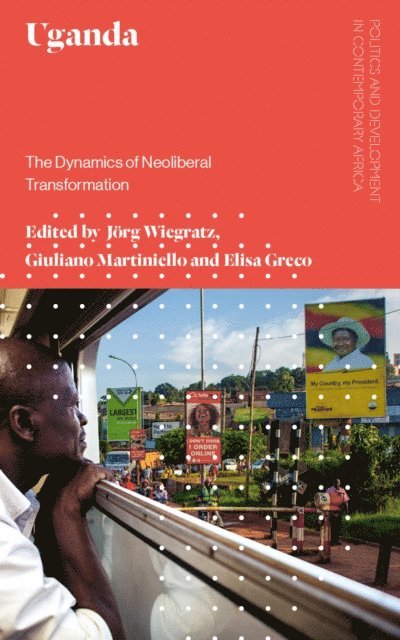
For the last three decades, Uganda has been one of the fastest growing economies in Africa. Globally praised as an African success story and heavily backed by international financial institutions, development agencies and bilateral donors, the country has become an exemplar of economic and political reform for those who espouse a neoliberal model of development. The neoliberal policies and the resulting restructuring of the country have been accompanied by narratives of progress, prosperity, and modernisation and justified in the name of development.But this self-celebratory narrative, which is critiqued by many in Uganda, masks the disruptive social impact of these reforms and silences the complex and persistent crises resulting from neoliberal transformation. Bringing together a range of leading scholars on the country, this collection represents a timely contribution to the debate around the New Uganda, one which confronts the often sanitised and largely depoliticised accounts of the Museveni government and its proponents.Harnessing a wealth of empirical materials, the contributors offer a critical, multi-disciplinary analysis of the unprecedented political, socio-economic, cultural and ecological transformations brought about by neoliberal capitalist restructuring since the 1980s. The result is the most comprehensive collective study to date of a neoliberal market society in contemporary Africa, offering crucial insights for other countries in the Global South.
1 209 kr
Skickas inom 10-15 vardagar
For the last three decades, Uganda has been one of the fastest growing economies in Africa. Globally praised as an African success story and heavily backed by international financial institutions, development agencies and bilateral donors, the country has become an exemplar of economic and political reform for those who espouse a neoliberal model of development. The neoliberal policies and the resulting restructuring of the country have been accompanied by narratives of progress, prosperity, and modernisation and justified in the name of development.But this self-celebratory narrative, which is critiqued by many in Uganda, masks the disruptive social impact of these reforms and silences the complex and persistent crises resulting from neoliberal transformation. Bringing together a range of leading scholars on the country, this collection represents a timely contribution to the debate around the New Uganda, one which confronts the often sanitised and largely depoliticised accounts of the Museveni government and its proponents.Harnessing a wealth of empirical materials, the contributors offer a critical, multi-disciplinary analysis of the unprecedented political, socio-economic, cultural and ecological transformations brought about by neoliberal capitalist restructuring since the 1980s. The result is the most comprehensive collective study to date of a neoliberal market society in contemporary Africa, offering crucial insights for other countries in the Global South.