David Witwer - Böcker
Visar alla böcker från författaren David Witwer. Handla med fri frakt och snabb leverans.
4 produkter
4 produkter
1 354 kr
Skickas inom 7-10 vardagar
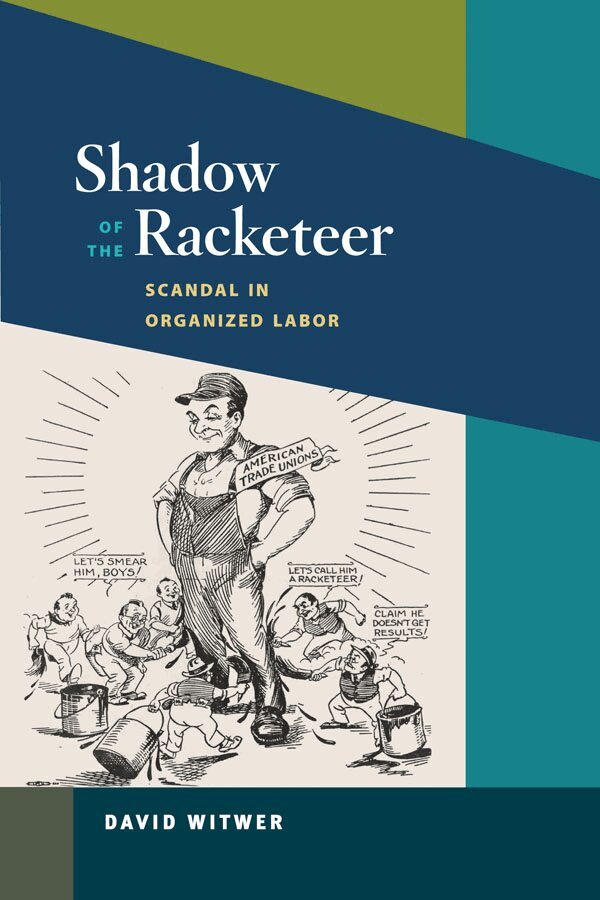
Shadow of the Racketeer: Scandal in Organized Labor tells the story of organized crime's move into labor racketeering in the 1930s, focusing on a union corruption scandal involving payments from the largest Hollywood movie studios to the Chicago mob to ensure a pliant labor supply for their industry. The book details the work of crusading journalist Westbrook Pegler, whose scorching investigative work dramatically exposed the mob connections of top labor leaders George Scalise and William Bioff and garnered Pegler a Pulitzer Prize for reporting. From a behind-the-scenes perspective, David Witwer describes how Pegler and his publisher, the politically powerful Roy W. Howard, shaped the news coverage of this scandal in ways that obscured the corrupt ties between employers and the mob while emphasizing the perceived menace of union leaders empowered by New Deal legislation that had legitimized organized labor. Pegler, Howard, and the rest of the mainstream press pointedly ignored evidence of the active role that business leaders took in the corruption, which badly tarnished the newly reborn labor movement. Because he was more concerned with pursuing political gains for the conservative movement, Pegler's investigative journalism did little to reform union governance or organized crime's influence on labor unions. The union corruption scandal only undercut the labor movement. Pegler's continuing campaign against labor corruption framed the issue in ways that set the stage for postwar political defeats, culminating with the 1947 Taft-Hartley Act, which greatly limited the power of labor unions in the United States. Demonstrating clearly and convincingly how journalism is wielded as a political weapon, Witwer studies a broad range of forces at play in the labor union scandal and its impact, including the influence of the press, organized crime, political corruption, and businessmen following their own economic imperatives.
277 kr
Skickas inom 7-10 vardagar
Almost since its creation, recurring problems with corruption bedeviled the Teamsters Union. David Witwer provides the first in-depth historical study of the forces that contributed to the Teamsters' troubled past and the mechanisms the union employed--from top-down directives to grassroots measures--to combat corruption. Witwer draws on the perspectives of rank-and-file members, union leaders, and the criminal element to explain the processes that allowed organized crime to seize power inside the union. His account includes the infamous links between the Mafia and union head Jimmy Hoffa, but he also tells the little-known story of the McClellan Committee investigation that first brought those links to light. Witwer also examines how anti-labor forces used the Teamsters' unsavory reputation to influence popular and legislative opinion in a broad attack on workers' rights.
344 kr
Skickas inom 7-10 vardagar
Shadow of the Racketeer: Scandal in Organized Labor tells the story of organized crime's move into labor racketeering in the 1930s, focusing on a union corruption scandal involving payments from the largest Hollywood movie studios to the Chicago mob to ensure a pliant labor supply for their industry. The book details the work of crusading journalist Westbrook Pegler, whose scorching investigative work dramatically exposed the mob connections of top labor leaders George Scalise and William Bioff and garnered Pegler a Pulitzer Prize for reporting. From a behind-the-scenes perspective, David Witwer describes how Pegler and his publisher, the politically powerful Roy W. Howard, shaped the news coverage of this scandal in ways that obscured the corrupt ties between employers and the mob while emphasizing the perceived menace of union leaders empowered by New Deal legislation that had legitimized organized labor. Pegler, Howard, and the rest of the mainstream press pointedly ignored evidence of the active role that business leaders took in the corruption, which badly tarnished the newly reborn labor movement. Because he was more concerned with pursuing political gains for the conservative movement, Pegler's investigative journalism did little to reform union governance or organized crime's influence on labor unions. The union corruption scandal only undercut the labor movement. Pegler's continuing campaign against labor corruption framed the issue in ways that set the stage for postwar political defeats, culminating with the 1947 Taft-Hartley Act, which greatly limited the power of labor unions in the United States. Demonstrating clearly and convincingly how journalism is wielded as a political weapon, Witwer studies a broad range of forces at play in the labor union scandal and its impact, including the influence of the press, organized crime, political corruption, and businessmen following their own economic imperatives.
Murder In The Garment District
The Grip of Organized Crime and the Decline of Labor in the United States
Inbunden, Engelska, 2020
242 kr
Skickas inom 5-8 vardagar
In 1949, in New York City's crowded Garment District, a union organizer named William Lurye was stabbed to death by a mob assassin. Through the lens of this murder case, prize-winning authors David Witwer and Catherine Rios explore American labor history at its critical turning point, drawing on FBI case files and the private papers of investigative journalists who first broke the story. A narrative that originates in the garment industry of mid-century New York, which produced over 80 percent of the nation's dresses at the time, Murder in the Garment District quickly moves to a national stage, where congressional anti-corruption hearings gripped the nation and forever tainted the reputation of American unions.