Davide Panagia - Böcker
Visar alla böcker från författaren Davide Panagia. Handla med fri frakt och snabb leverans.
9 produkter
9 produkter
1 486 kr
Skickas inom 5-8 vardagar
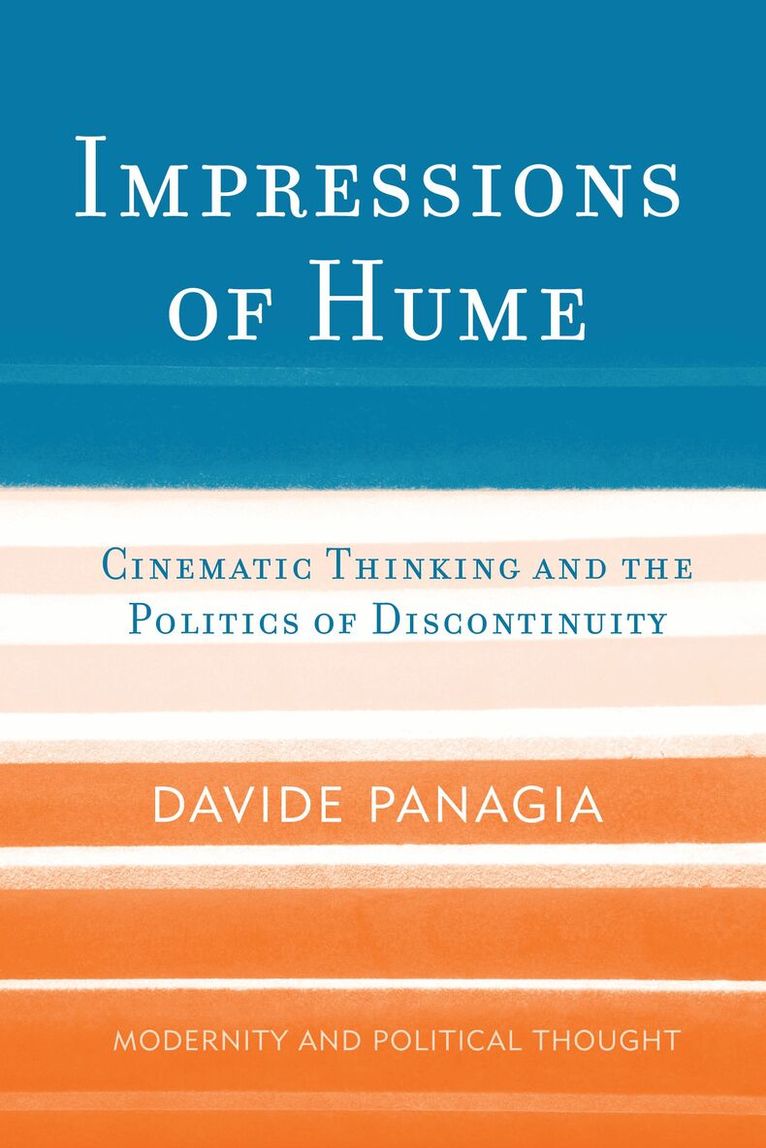
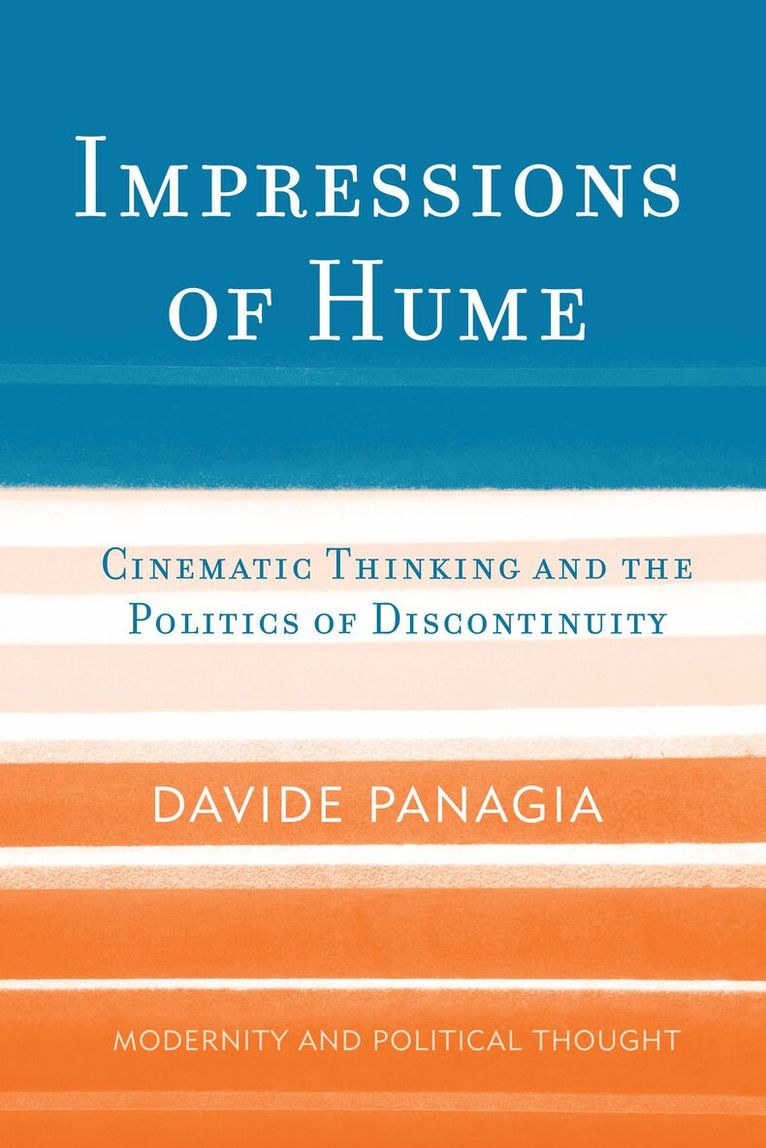
Davide Panagia’s Impressions of Hume: Cinematic Thinking and the Politics of Discontinuity is volume fifteen of Modernity and Political Thought, the Rowman & Littlefield series in contemporary political theory. Through close attention to Hume’s theories of sensation, Davide Panagia conceptualizes the modern even more radically (though also more literally) than many of the previous authors in this series. While devoting attention to how a historical thinker such as Hume is read and misread, used and abused in the modern intellectual world, Panagia also focuses on developing a theory of Humean perception and by so doing emphasizes the contemporaneity of Hume’s thought. In what at first seems to be an anachronistic as well as wildly curious claim about a philosopher of the eighteenth century, Panagia holds that Hume was a cinematic thinker.
364 kr
Skickas inom 7-10 vardagar
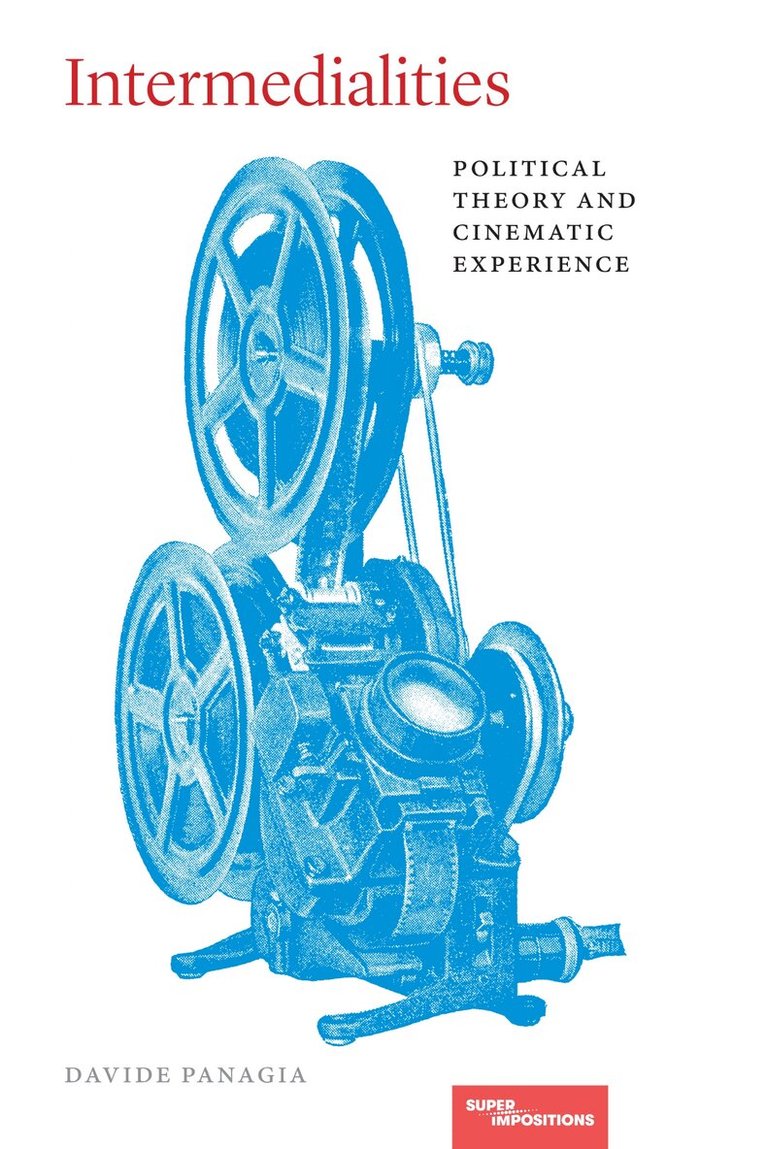
Understanding democracy through film philosophy and political theoryShining new light on our understanding of cinema’s ways of political thinking, Intermedialities: Political Theory and Cinematic Experience puts modern political theory in conversation with the philosophy of film. Davide Panagia argues that there are no natural laws of association that can guarantee a template for democratic participation, as democracy is predicated not on stabilizing foundations but rather on the formation of expansive collectivities and institutions that are responsive to alterability. Instead, democracy requires a relational ontology, one that he elucidates by turning to philosophers of film like Stanley Cavell, Gilles Deleuze, Miriam Hansen, and Jean-Luc Godard—all of whom have articulated a political aesthetic of cinematic experience that is at once aspectual and compositional. Panagia reads these thinkers alongside a counter tradition of modern political thought, represented by David Hume, Ludwig Wittgenstein, and Gilbert Simondon. His articulation of cinematic experience thus allows for a political aesthetic that is rooted in the migratory realities of undetermined relations.
324 kr
Skickas inom 7-10 vardagar
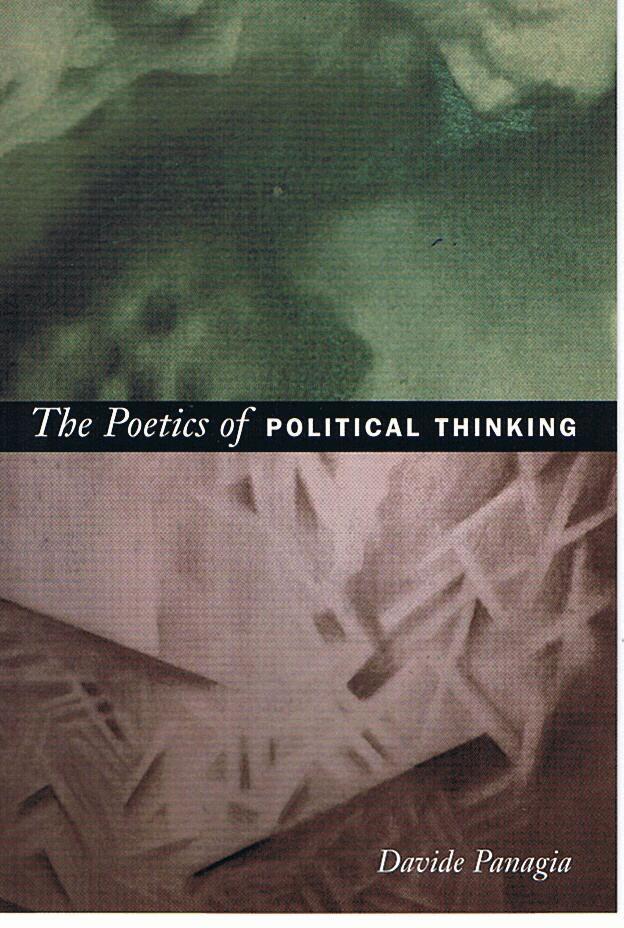
In The Poetics of Political Thinking Davide Panagia focuses on the role that aesthetic sensibilities play in theorists’ evaluations of political arguments. Examining works by thinkers from Thomas Hobbes to Jacques RanciÈre, Panagia shows how each one invokes aesthetic concepts and devices, such as metaphor, mimesis, imagination, beauty, and the sublime. He argues that it is important to recognize and acknowledge these poetic forms of representation because they provide evaluative standards that theorists use in appraising the value of ideas-ideas about justice, politics, and democratic life. An investigation into the intertwined histories of aesthetic and political accounts of representation-such as Panagia presents here-sheds light on how modes of poetic thinking delimit the questions of unity and diversity that continue to animate contemporary political theory.Panagia not only illuminates the structure of much contemporary political theory but also shows why understanding the poetics of political thinking is vital to contemporary society. Drawing on Gilles Deleuze’s critique of negation and his privileging of paradox as the source of political thought, Panagia suggests that a non-teleological concept of difference might generate insight into pressing questions about foreignness and citizenship. Turning to the liberal/poststructural debate that dominates contemporary political theory, he compares John Rawls’s concept of justice to RanciÈre’s ideas about political disagreement in order to demonstrate how, despite their differences, both thinkers comprehend aesthetic and moral reasoning as part and parcel of political writing. Considering the writings of William Hazlitt and JÜrgen Habermas, he describes how the essay has become the exemplary genre of what is considered rational political argument. The Poetics of Political Thinking is a compelling reappraisal of the role of representation within political thought.
1 026 kr
Skickas inom 10-15 vardagar
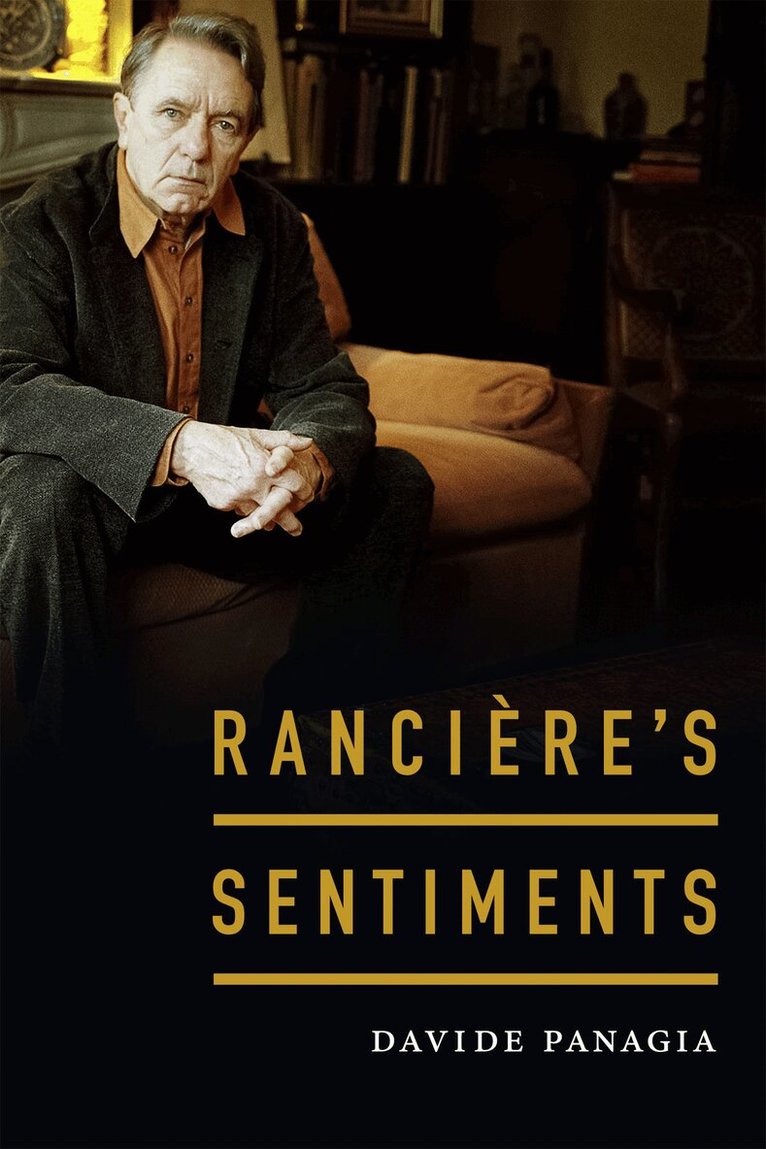
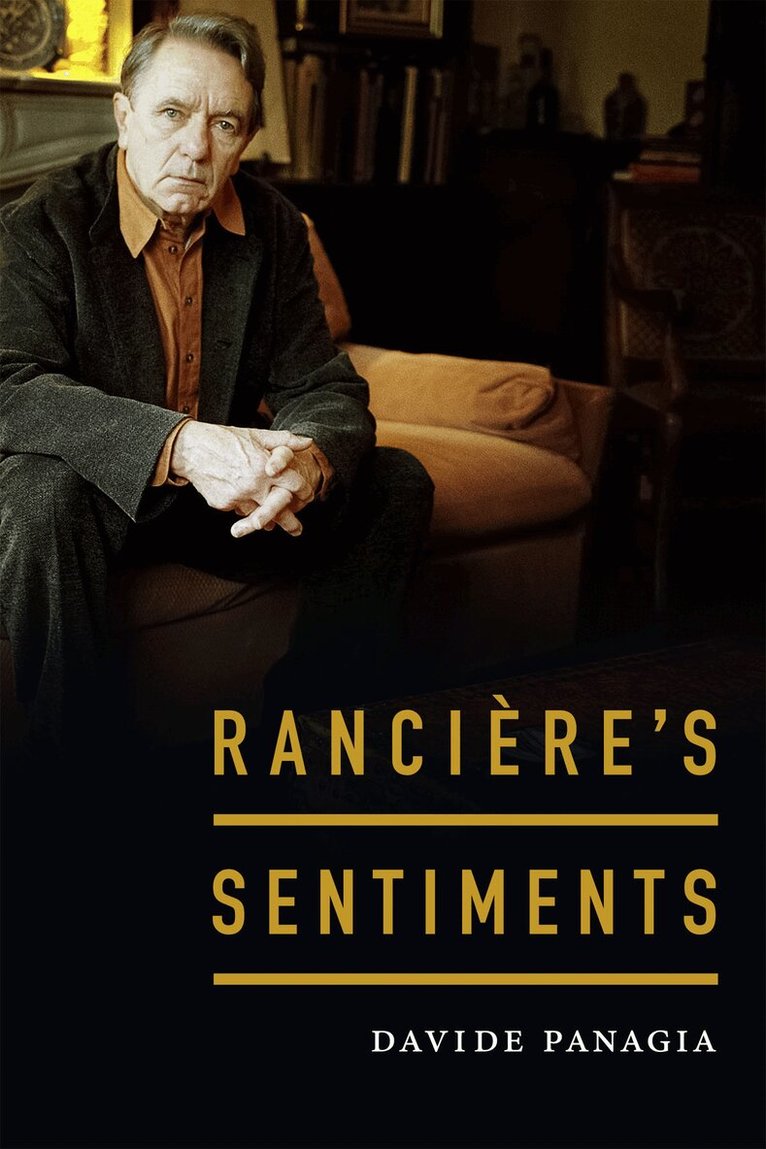
In RanciÈre’s Sentiments Davide Panagia explores Jacques RanciÈre’s aesthetics of politics as it informs his radical democratic theory of participation. Attending to diverse practices of everyday living and doing-of form, style, and scenography-in RanciÈre’s writings, Panagia characterizes RanciÈre as a sentimental thinker for whom the aesthetic is indistinguishable from the political. Rather than providing prescriptions for political judgment and action, RanciÈre focuses on how sensibilities and perceptions constitute dynamic relations between persons and the worlds they create. Panagia traces this approach by examining RanciÈre’s modernist sensibilities, his theory of radical mediation, the influence of Gustave Flaubert on RanciÈre’s literary voice, and how RanciÈre juxtaposes seemingly incompatible objects and phenomena to create moments of sensorial disorientation. The power of RanciÈre’s work, Panagia demonstrates, lies in its ability to leave readers with a disjunctive sensibility of the world and what political thinking is and can be.
262 kr
Skickas inom 10-15 vardagar
In RanciÈre’s Sentiments Davide Panagia explores Jacques RanciÈre’s aesthetics of politics as it informs his radical democratic theory of participation. Attending to diverse practices of everyday living and doing-of form, style, and scenography-in RanciÈre’s writings, Panagia characterizes RanciÈre as a sentimental thinker for whom the aesthetic is indistinguishable from the political. Rather than providing prescriptions for political judgment and action, RanciÈre focuses on how sensibilities and perceptions constitute dynamic relations between persons and the worlds they create. Panagia traces this approach by examining RanciÈre’s modernist sensibilities, his theory of radical mediation, the influence of Gustave Flaubert on RanciÈre’s literary voice, and how RanciÈre juxtaposes seemingly incompatible objects and phenomena to create moments of sensorial disorientation. The power of RanciÈre’s work, Panagia demonstrates, lies in its ability to leave readers with a disjunctive sensibility of the world and what political thinking is and can be.
528 kr
Skickas inom 10-15 vardagar
Davide Panagia’s Impressions of Hume: Cinematic Thinking and the Politics of Discontinuity is volume fifteen of Modernity and Political Thought, the Rowman & Littlefield series in contemporary political theory. Through close attention to Hume’s theories of sensation, Davide Panagia conceptualizes the modern even more radically (though also more literally) than many of the previous authors in this series. While devoting attention to how a historical thinker such as Hume is read and misread, used and abused in the modern intellectual world, Panagia also focuses on developing a theory of Humean perception and by so doing emphasizes the contemporaneity of Hume’s thought. In what at first seems to be an anachronistic as well as wildly curious claim about a philosopher of the eighteenth century, Panagia holds that Hume was a cinematic thinker.
125 kr
Skickas inom 7-10 vardagar
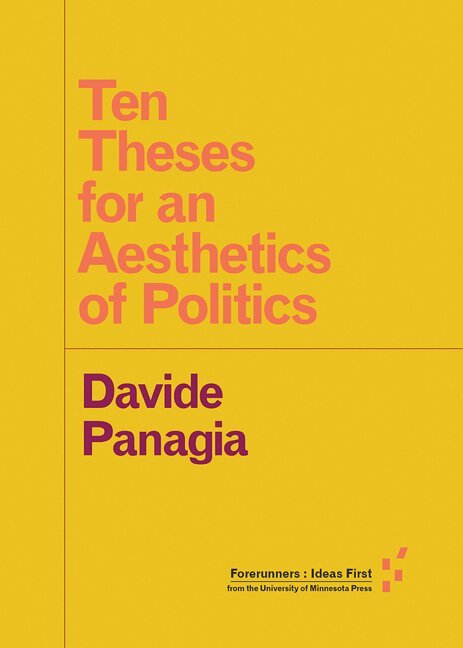
Ten Theses for an Aesthetics of Politics is an invitation to culture makers, political thinkers of all kinds, and everyday spectators to reconsider their love of the world of appearances. Inspired by Jacques Rancie8res Ten Theses on Politics and work by Hannah Arendt, Stanley Cavell, and Roland Barthes, Davide Panagia offers conceptual provocations that emphasize the sense of conviction one has when facing the frictions of aesthetic experience. Rooted in varied and variable experiences of border crossings, Panagia invites readers to reflect on the relational practices that appearances engender. Forerunners: Ideas First is a thought-in-process series of breakthrough digital publications. Written between fresh ideas and finished books, Forerunners draws on scholarly work initiated in notable blogs, social media, conference plenaries, journal articles, and the synergy of academic exchange. This is gray literature publishing: where intense thinking, change, and speculation take place in scholarship.
1 181 kr
Skickas inom 10-15 vardagar
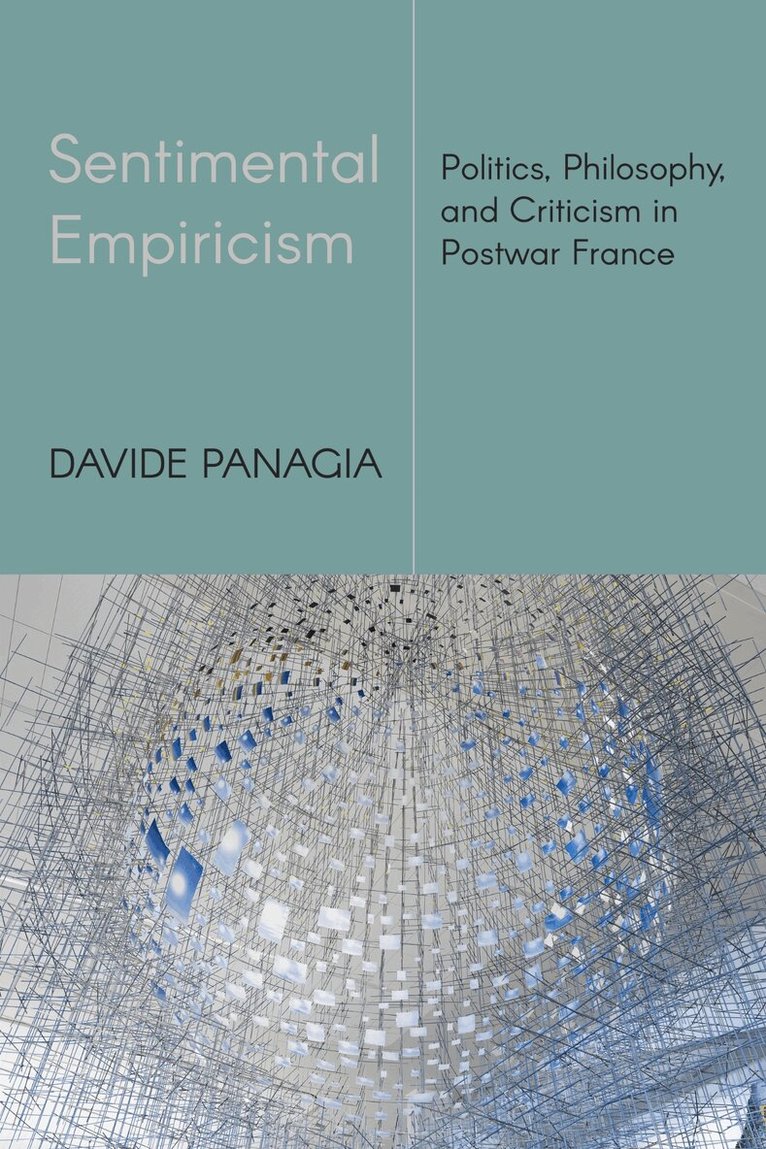
Sentimental Empiricism reconsiders the legacy of eighteenth and nineteenth century empiricism and moral sentimentalism for the intellectual formation of the generation of postwar French thinkers whose work came to dominate Anglophone conversations across the humanities under the guise of "French theory." Panagia's book first shows what was missed in the reception of this literature in the Anglophone academy by attending to how France's pedagogical milieu plays out church and state relations in the form of educational debates around reading practices, the aesthetics of mimesis, French imperialism, and republican universalism. Panagia then shows how such thinkers as Jean Wahl, Simone de Beauvoir, Gilbert Simondon, Gilles Deleuze, and Michel Foucault develop a sentimental empiricist critical philosophy that distances itself from dialectical critique and challenges the metaphysical premise of inherent relations, especially as it had been articulated in the tradition of Aristotelian scholasticism.Panagia develops the long disputed political legacy of French theory through an exploration of how these thinkers came to understand an aesthetic of mimesis as a credentialing standard for selection to political participation. Since, in France, the ability to imitate well is a state qualification necessary to access offices of elite power, the political, aesthetic, and philosophical critique of mimesis became one of the defining features of sentimental empiricist thought. By exploring the historical, intellectual, cultural, and philosophical complexities of this political aesthetic, Panagia shows how and why postwar French thinkers turned to a tradition of sentimental empiricism in order to develop a new form of criticism attentive to the dispositional powers of domination. This book is available from the publisher on an open access basis.
327 kr
Skickas inom 10-15 vardagar
Sentimental Empiricism reconsiders the legacy of eighteenth and nineteenth century empiricism and moral sentimentalism for the intellectual formation of the generation of postwar French thinkers whose work came to dominate Anglophone conversations across the humanities under the guise of "French theory." Panagia's book first shows what was missed in the reception of this literature in the Anglophone academy by attending to how France's pedagogical milieu plays out church and state relations in the form of educational debates around reading practices, the aesthetics of mimesis, French imperialism, and republican universalism. Panagia then shows how such thinkers as Jean Wahl, Simone de Beauvoir, Gilbert Simondon, Gilles Deleuze, and Michel Foucault develop a sentimental empiricist critical philosophy that distances itself from dialectical critique and challenges the metaphysical premise of inherent relations, especially as it had been articulated in the tradition of Aristotelian scholasticism.Panagia develops the long disputed political legacy of French theory through an exploration of how these thinkers came to understand an aesthetic of mimesis as a credentialing standard for selection to political participation. Since, in France, the ability to imitate well is a state qualification necessary to access offices of elite power, the political, aesthetic, and philosophical critique of mimesis became one of the defining features of sentimental empiricist thought. By exploring the historical, intellectual, cultural, and philosophical complexities of this political aesthetic, Panagia shows how and why postwar French thinkers turned to a tradition of sentimental empiricism in order to develop a new form of criticism attentive to the dispositional powers of domination. This book is available from the publisher on an open access basis.