Davide Schiffer - Böcker
Visar alla böcker från författaren Davide Schiffer. Handla med fri frakt och snabb leverans.
4 produkter
4 produkter
1 640 kr
Skickas inom 10-15 vardagar
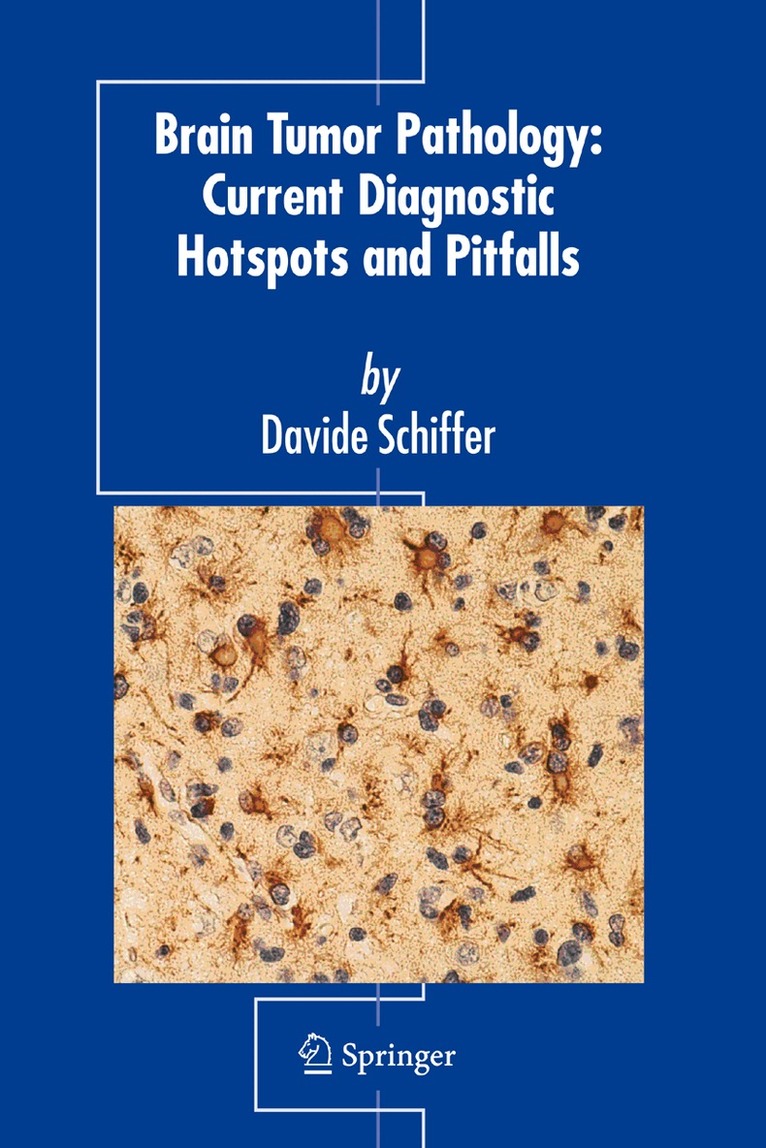
Since Bailey and Cushing (1926), all brain tumor classifications have been called histogenetic. The nosographic position that the tumor types progressively acquired in the classification systems derived from the resemblance of tumor cells to those of the cytogenesis, modified whenever new information became available from different biological research fields and especially from molecular genetics. Classically, on the basis of the rough correspondence between the mature/immature aspect of tumor cells and the benign/malignant biological behavior of the tumors, the histological labels contained a prognostic significance. The supposed origin of the tumors was thus a factor for prognosis. Later on, with the concept of anaplasia (Cox, 1933; Kernohan et al., 1949) new criteria were introduced for establishing the malignancy grades of tumors. Immunohistochemistry and later molecular genetics further refined the prognostic diagnoses, substantially increasing the opportunities to recognize the cell origin of tumors, beside revealing the pathogenetic mechanisms. Prognoses became more accurate, as required by the greater and more targeted possibilities of therapy.
1 096 kr
Skickas inom 10-15 vardagar
Neurooncology has become a science of such great proportions and indefinite limits as to include branches which widely diverge from one another. Therefore, it is not an easy task to fit it all into the narrow framework of a book, though the collaboration among scientists compensates partly for the varying depths of knowledge and ex perience in the individual disciplines. The principal characteristic of this work, how ever, is in casting "pathology" as the common nosographic link. Though scientific progress has brought us well past the nosography of brain tu of departure, the area of mutual understanding to mors, pathology remains the point which all students of neurooncology refer when laying out diagnostic, therapeutic, and research schedules. Neurologists, neurosurgeons, and neuroradiologists orient themselves only by referring to tumor types. Neurooncology treatises require ever greater numbers of authors in order to cover the different subject areas with uniform authority. Excellent texts are available today for this purpose. The present book is not, and does not wish to be, a treatise but rather aims at presenting different aspects of neurooncology from the perspective of pathology and its biological and clinical correlates. It expresses the author's experi ence in the study of brain tumors and their pathology and clinical characteristics. The emphasis dedicated to the subjects relates to the clinicopathological and theore tical importance.
249 kr
Skickas inom 10-15 vardagar
Il libro prende le mosse dai pensieri di un giovane che alla maturità liceale si trova affascinato dalla cultura dei classici greco-latini, dai rudimenti filosofici e dall’impatto con le scienze fisiche e naturali.
1 640 kr
Skickas inom 10-15 vardagar
Since Bailey and Cushing (1926), all brain tumor classifications have been called histogenetic. The nosographic position that the tumor types progressively acquired in the classification systems derived from the resemblance of tumor cells to those of the cytogenesis, modified whenever new information became available from different biological research fields and especially from molecular genetics. Classically, on the basis of the rough correspondence between the mature/immature aspect of tumor cells and the benign/malignant biological behavior of the tumors, the histological labels contained a prognostic significance. The supposed origin of the tumors was thus a factor for prognosis. Later on, with the concept of anaplasia (Cox, 1933; Kernohan et al., 1949) new criteria were introduced for establishing the malignancy grades of tumors. Immunohistochemistry and later molecular genetics further refined the prognostic diagnoses, substantially increasing the opportunities to recognize the cell origin of tumors, beside revealing the pathogenetic mechanisms. Prognoses became more accurate, as required by the greater and more targeted possibilities of therapy.