Dawid Rogacz - Böcker
Visar alla böcker från författaren Dawid Rogacz. Handla med fri frakt och snabb leverans.
3 produkter
3 produkter
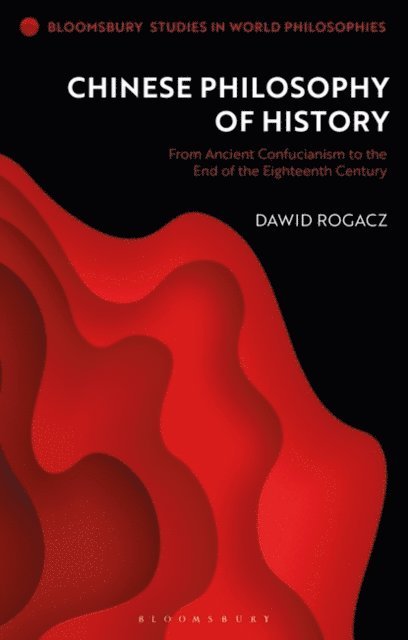
Chinese Philosophy of History
From Ancient Confucianism to the End of the Eighteenth Century
Inbunden, Engelska, 2020
1 476 kr
Skickas inom 10-15 vardagar
Challenging the Eurocentric misconception that the philosophy of history is a Western invention, this book reconstructs Chinese thought and offers the first systematic treatment of classical Chinese philosophy of history. Dawid Rogacz charts the development from pre-imperial Confucian philosophy of history, the Warring States period and the Han dynasty through to the neo-Confucian philosophy of the Tang and Song era and finally to the Ming and Qing dynasties. Revealing underexplored areas of Chinese thought, he provides Western readers with new insight into original texts and the ideas of over 40 Chinese philosophers, including Mencius, Shang Yang, Dong Zhongshu, Wang Chong, Liu Zongyuan, Shao Yong, Li Zhi, Wang Fuzhi and Zhang Xuecheng. This vast interpretive body is compared with the main premises of Western philosophy of history in order to open new lines of inquiry and directions for comparative study.Clarifying key ideas in the Chinese tradition that have been misrepresented or shoehorned to fit Western definitions, Rogacz offers an important reconsideration of how Chinese philosophers have understood history.
Chinese Philosophy of History
From Ancient Confucianism to the End of the Eighteenth Century
Häftad, Engelska, 2022
434 kr
Skickas inom 10-15 vardagar
Challenging the Eurocentric misconception that the philosophy of history is a Western invention, this book reconstructs Chinese thought and offers the first systematic treatment of classical Chinese philosophy of history. Dawid Rogacz charts the development from pre-imperial Confucian philosophy of history, the Warring States period and the Han dynasty through to the neo-Confucian philosophy of the Tang and Song era and finally to the Ming and Qing dynasties. Revealing underexplored areas of Chinese thought, he provides Western readers with new insight into original texts and the ideas of over 40 Chinese philosophers, including Mencius, Shang Yang, Dong Zhongshu, Wang Chong, Liu Zongyuan, Shao Yong, Li Zhi, Wang Fuzhi and Zhang Xuecheng. This vast interpretive body is compared with the main premises of Western philosophy of history in order to open new lines of inquiry and directions for comparative study.Clarifying key ideas in the Chinese tradition that have been misrepresented or shoehorned to fit Western definitions, Rogacz offers an important reconsideration of how Chinese philosophers have understood history.
4 263 kr
Skickas inom 7-10 vardagar
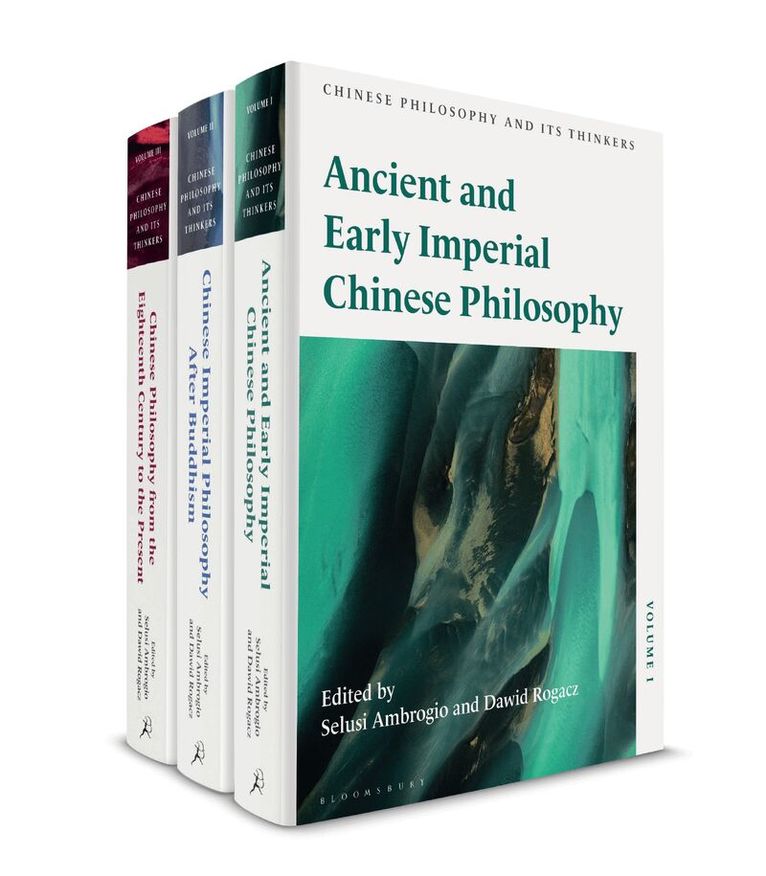
Across a set of three volumes spanning more than three thousand years, this is a survey of thinkers central to the development of philosophical thought in China. From the origins of Chinese thought in the Zhou dynasty to the contemporary Chinese environmental philosophy and bioethics, the three volumes, totalling 1,440 pages and bringing together a team of experts, cover:Volume I Chinese Ancient and Early Imperial PhilosophyVolume II Chinese Imperial Philosophy After BuddhismVolume III Chinese Philosophy from the Eighteenth Century to the PresentAlongside the giants of Chinese philosophy, such as Confucius, Zhu Xi, and Li Zehou, the selection includes philosophers often neglected from traditional surveys, figures such as Huan Tan, Cheng Xuanying, Ye Shi, Jiao Xun, Zhang Shenfu, and Li Xiaojiang. A focus on the rhetoric form and cultural background of Chinese philosophical thought runs through each volume, together with a discussion of seismic political, social, and economic events: the fall of dynasties, the rise of the imperial examination system, the modernization of Chinese academia, up to post-1978 politics. Thinkers and traditions are connected to broader, topical themes – Zhuangzi and the idea of perspectivism; Tiantai and the problem of evil; Zhang Junmai and models of democracy – and interconnections between theories and meditative, moral, and medical practices are explored.This is a history of Chinese philosophy that handles recently excavated bamboo texts, women philosophers in ancient China, Buddhist logic, medieval aesthetics, Sino-Muslim thought, and modern ethnic minority philosophy. Close attention is paid to the mutual exchange of ideas between China, East Asia, and Europe, providing a much-needed perspective that captures the monumental contribution of Chinese thinkers and builds a truly global history of philosophy.