
Debasis Neogi – författare
Visar alla böcker från författaren Debasis Neogi. Handla med fri frakt och snabb leverans.
2 produkter
2 produkter
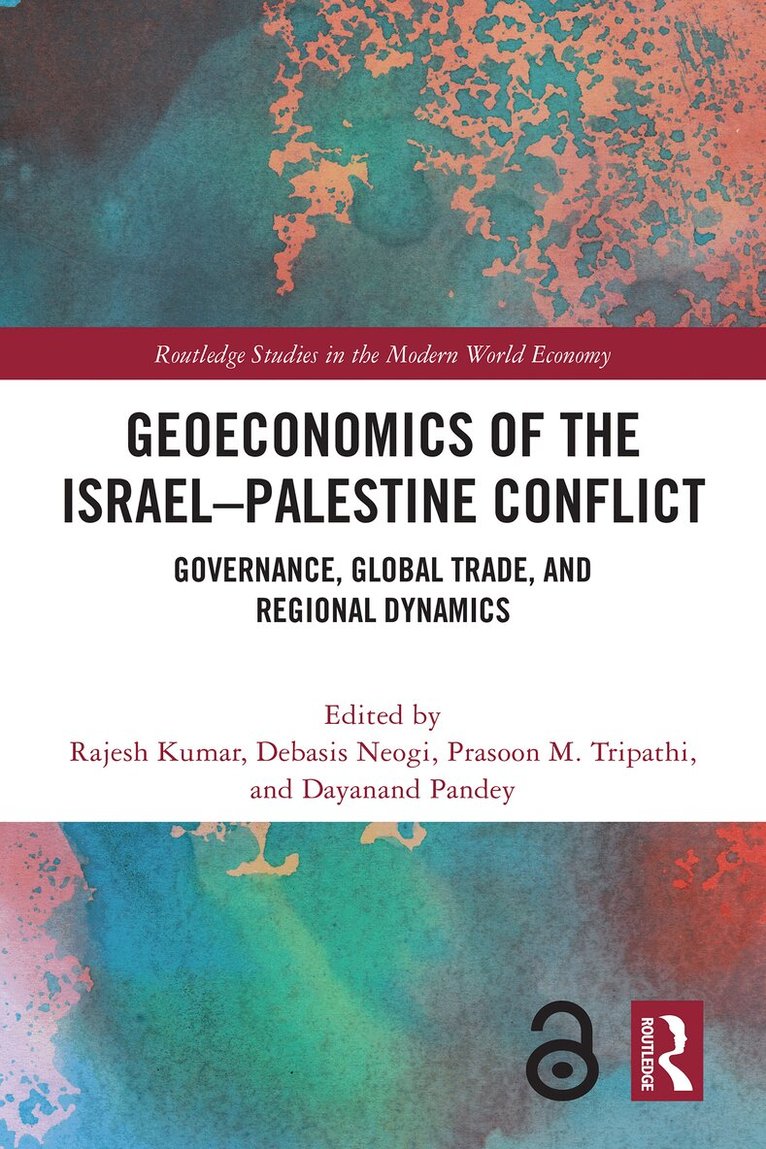
Geoeconomics of the Israel–Palestine Conflict
Governance, Global Trade, and Regional Dynamics
Inbunden, Engelska, 2025
2 187 kr
Skickas inom 10-15 vardagar
The Israel-Palestine conflict, a persistent geopolitical dilemma, wields substantial influence on the global economic landscape. With the potential to disrupt international trade, reconfigure intricate supply chains, and significantly impact macroeconomic indicators, this conflict stands as an underappreciated economic phenomenon. This book provides a comprehensive understanding of the multifaceted economic and geopolitical repercussions of the Israel-Palestine conflict on the global order, exploring its potential influence on issues related to governance, global trade, and regional dynamics.The book offers a thorough analysis of the various economic effects of the conflict between Israel and Palestine. With the help of insights from a variety of fields, such as economics, political science, international relations, and humanitarian studies, it provides a comprehensive explanation of how this geopolitical battle affects the world economy. It goes beyond theory to include real-world case studies that show the conflict's true economic repercussions. The book is current and discusses the state of the Israel-Palestine conflict, which is relevant given how geopolitical conflicts are constantly changing. It examines the financial ramifications in light of current affairs, making it an important and topical reference for everyone trying to figure out how this protracted battle affects the world economy.Scholars and researchers in fields such as international relations, economics, political science, global studies, and conflict resolution will find the book valuable for its in-depth analysis and research on the Israel-Palestine conflict's geopolitical and economic dimensions. Policymakers and international organisations looking for workable solutions to deal with the economic difficulties brought on by geopolitical tensions will learn from the insights presented in the book.The Open Access version of this book, available at www.taylorfrancis.com, has been made available under a Creative Commons Attribution-Non Commercial-No Derivatives (CC-BY-NC-ND) 4.0 International license.
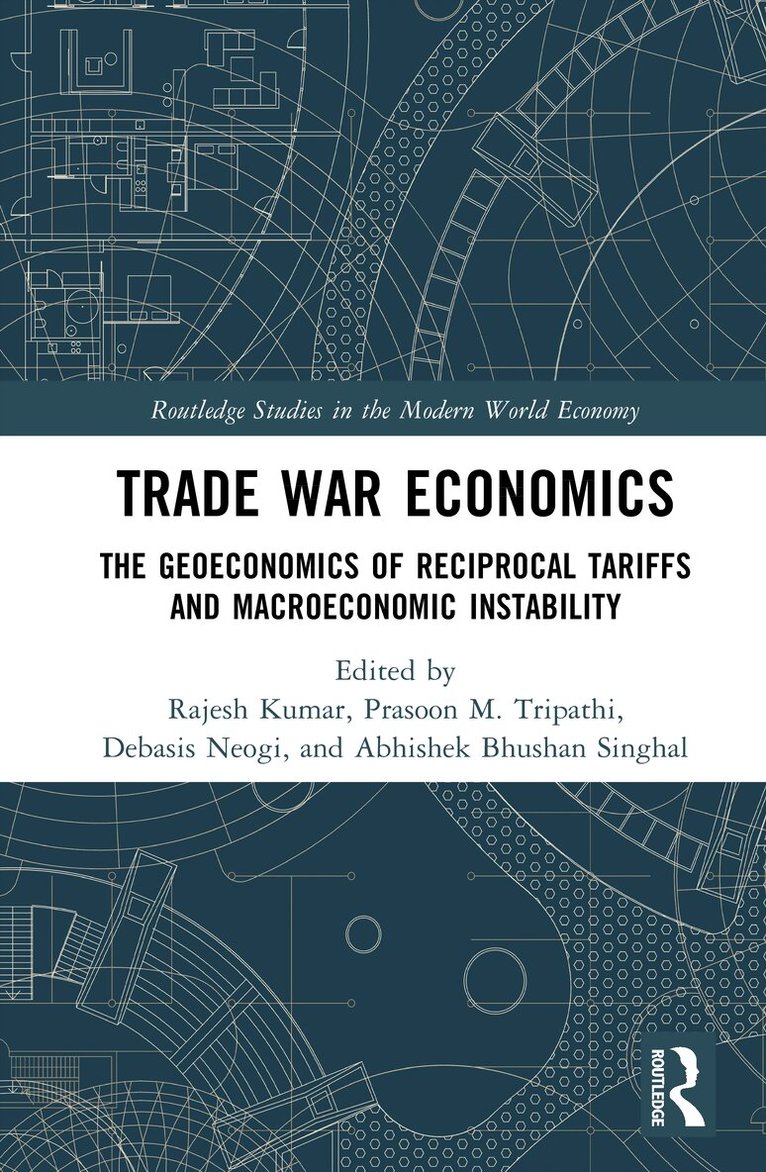
Trade War Economics
The Geoeconomics of Reciprocal Tariffs and Macroeconomic Instability
Inbunden, Engelska, 2026
2 245 kr
Kommande
In an era marked by multipolar power rivalries, pandemic-era protectionism, and institutional fragmentation, global trade is undergoing a strategic shift. This book investigates the resurgence of reciprocal tariff wars in the 21st century and assesses their implications for global macroeconomic stability. It is premised on the argument that we have entered a “new geoeconomic paradigm” in which nations increasingly use tariffs and other economic tools as instruments of power, leading to heightened volatility in trade relations and economic performance.By uniting perspectives from international economics and political economy, the book examines why these retaliatory trade conflicts have resurfaced, how they are unfolding across different regions, and what consequences they hold for the stability of the global economic order. It begins by grounding the reader in foundational theories of trade retaliation and geoeconomics. It then delves into institutional stress points, regional realignments, and systemic shifts—covering both developed and developing economies, including Asia, the West, Africa, and the Global South. Sectoral case studies on high-tech industries, digital trade conflicts, capital flows, and currency tensions illustrate how tariffs ripple through financial systems, reshape supply chains, and spark inflationary shocks. It concludes by offering forward-looking policy scenarios and institutional innovations, including bilateralism, minilateralism, and emerging digital governance frameworks. Further, it focuses on investor sentiment, financial market behaviour, and digital sovereignty conflicts, deepening the analysis beyond traditional trade balances.By framing tariff wars within a broader geoeconomic paradigm, the book contributes a critical and future-oriented lens to one of the most urgent challenges facing global economic stability today. It will appeal to scholars of international trade, macroeconomic governance, and global politics, as well as policymakers navigating a fractured trade order.