Deborah Cohn - Böcker
Visar alla böcker från författaren Deborah Cohn. Handla med fri frakt och snabb leverans.
6 produkter
6 produkter
1 407 kr
Skickas inom 7-10 vardagar
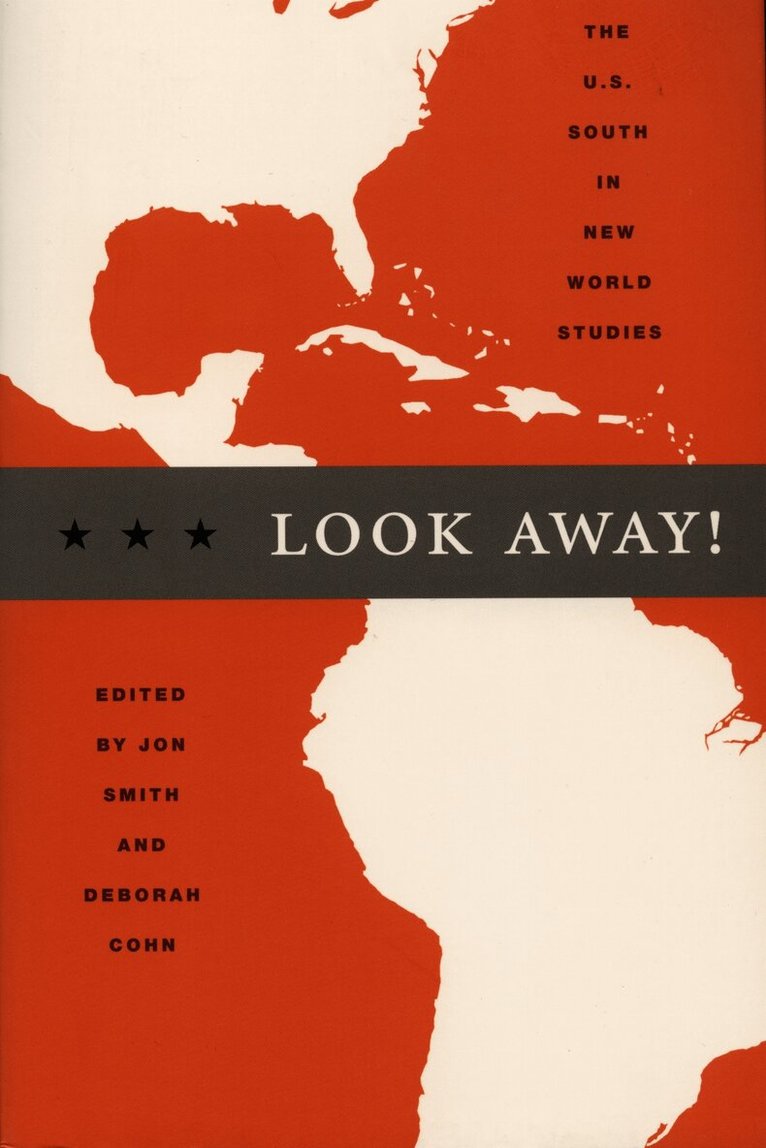
Look Away! considers the U.S. South in relation to Latin America and the Caribbean. Given that some of the major characteristics that mark the South as exceptional within the United States-including the legacies of a plantation economy and slave trade-are common to most of the Americas, Look Away! points to postcolonial studies as perhaps the best perspective from which to comprehend the U.S. South. At the same time it shows how, as part of the United States, the South-both center and margin, victor and defeated, and empire and colony-complicates ideas of the postcolonial. The twenty-two essays in this comparative, interdisciplinary collection rethink southern U.S. identity, race, and the differences and commonalities between the cultural productions and imagined communities of the U.S. South and Latin America. Look Away! presents work by respected scholars in comparative literature, American studies, and Latin American studies. The contributors analyze how writers-including the Martinican Edouard Glissant, the Cuban-American Gustavo PÉrez Firmat, and the Trinidad-born, British V. S. Naipaul-have engaged with the southern United States. They explore William Faulkner’s role in Latin American thought and consider his work in relation to that of Gabriel GarcÍa MÁrquez and Jorge Luis Borges. Many essays re-examine major topics in southern U.S. culture-such as race, slavery, slave resistance, and the legacies of the past-through the lens of postcolonial theory and postmodern geography. Others discuss the South in relation to the U.S.–Mexico border. Throughout the volume, the contributors consistently reconceptualize U.S. southern culture in a way that acknowledges its postcolonial status without diminishing its distinctiveness.Contributors. Jesse AlemÁn, Bob Brinkmeyer, Debra Cohen, Deborah Cohn, Michael Dash, Leigh Anne Duck, Wendy Faris, Earl Fitz, George Handley, Steve Hunsaker, Kirsten Silva Gruesz, Dane Johnson, Richard King, Jane Landers, John T. Matthews, Stephanie Merrim, Helen Oakley, Vincent PÉrez, John-Michael Rivera, Scott Romine, Jon Smith, Ilan Stavans, Philip Weinstein, Lois Parkinson Zamora
409 kr
Skickas inom 7-10 vardagar
Look Away! considers the U.S. South in relation to Latin America and the Caribbean. Given that some of the major characteristics that mark the South as exceptional within the United States-including the legacies of a plantation economy and slave trade-are common to most of the Americas, Look Away! points to postcolonial studies as perhaps the best perspective from which to comprehend the U.S. South. At the same time it shows how, as part of the United States, the South-both center and margin, victor and defeated, and empire and colony-complicates ideas of the postcolonial. The twenty-two essays in this comparative, interdisciplinary collection rethink southern U.S. identity, race, and the differences and commonalities between the cultural productions and imagined communities of the U.S. South and Latin America. Look Away! presents work by respected scholars in comparative literature, American studies, and Latin American studies. The contributors analyze how writers-including the Martinican Edouard Glissant, the Cuban-American Gustavo PÉrez Firmat, and the Trinidad-born, British V. S. Naipaul-have engaged with the southern United States. They explore William Faulkner’s role in Latin American thought and consider his work in relation to that of Gabriel GarcÍa MÁrquez and Jorge Luis Borges. Many essays re-examine major topics in southern U.S. culture-such as race, slavery, slave resistance, and the legacies of the past-through the lens of postcolonial theory and postmodern geography. Others discuss the South in relation to the U.S.–Mexico border. Throughout the volume, the contributors consistently reconceptualize U.S. southern culture in a way that acknowledges its postcolonial status without diminishing its distinctiveness.Contributors. Jesse AlemÁn, Bob Brinkmeyer, Debra Cohen, Deborah Cohn, Michael Dash, Leigh Anne Duck, Wendy Faris, Earl Fitz, George Handley, Steve Hunsaker, Kirsten Silva Gruesz, Dane Johnson, Richard King, Jane Landers, John T. Matthews, Stephanie Merrim, Helen Oakley, Vincent PÉrez, John-Michael Rivera, Scott Romine, Jon Smith, Ilan Stavans, Philip Weinstein, Lois Parkinson Zamora
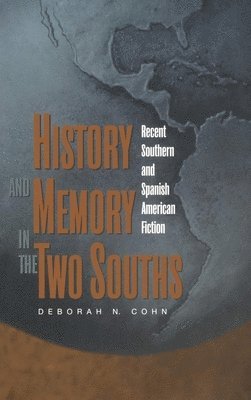
History and Memory in the Two Souths
Recent Southern and Spanish American Fiction
Inbunden, Engelska, 1999
1 437 kr
Skickas inom 3-6 vardagar
It is commonplace among literary critics to refer to William Faulkner's influence on Spanish American literature. Yet few studies have delved seriously into why the attraction of the writings of this southerner has been so powerful. In this bold new study, Deborah N. Cohn addresses this question squarely, from two perspectives.First, Cohn proposes that Faulkner's appeal derives from Spanish American authors' perception of similarities between the South's history and the experiences of their own respective nations. She delineates historical experiences common to the South and Spanish America, including civil wars, defeat and dispossession, regional marginalization, and socio-economic hardship. She also suggests that Spanish American authors found in Faulkner a set of concerns with which they could identify and that, as a result, they were inspired to take up the stylistic innovations characteristic of his writing. The resulting assimilation and adaptation of Euro-American modernism through Faulkner has been an indispensable part of what is known as la nueva narrativa, "the new narrative," as well as of successive movements in Spanish American literature.From another perspective, Cohn's book shows points of contact between works by other southern and Spanish American novelists without positing relations of influence. Specifically, after identifying common, recurrent themes in modern southern and Spanish American literature in general, Cohn reveals levels of a shared understanding of regional history in Faulkner and Mario Vargas Llosa, in Ralph Ellison and Isabel Allende, as well as in Katherine Anne Porter and Juan Rulfo. Her analyses compare and contrast these authors' shared attempts to provide correctives to official, mainstream historical discourse through alternate, parallel strategies for reconstructing, recording, and reclaiming the past.In yoking together the South and Spanish America as neighboring spaces with similar personalities, Cohn advances a daring and controversial thesis that both narrows and enhances the frame of comparison between the literatures of the South and Spanish America.
History and Memory in the Two Souths
Recent Southern and Spanish American Fiction
Häftad, Engelska, 1999
658 kr
Skickas inom 5-8 vardagar
It is commonplace among literary critics to refer to William Faulkner's influence on Spanish American literature. Yet few studies have delved seriously into why the attraction of the writings of this southerner has been so powerful. In this bold new study, Deborah N. Cohn addresses this question squarely, from two perspectives.First, Cohn proposes that Faulkner's appeal derives from Spanish American authors' perception of similarities between the South's history and the experiences of their own respective nations. She delineates historical experiences common to the South and Spanish America, including civil wars, defeat and dispossession, regional marginalization, and socio-economic hardship. She also suggests that Spanish American authors found in Faulkner a set of concerns with which they could identify and that, as a result, they were inspired to take up the stylistic innovations characteristic of his writing. The resulting assimilation and adaptation of Euro-American modernism through Faulkner has been an indispensable part of what is known as la nueva narrativa, "the new narrative," as well as of successive movements in Spanish American literature.From another perspective, Cohn's book shows points of contact between works by other southern and Spanish American novelists without positing relations of influence. Specifically, after identifying common, recurrent themes in modern southern and Spanish American literature in general, Cohn reveals levels of a shared understanding of regional history in Faulkner and Mario Vargas Llosa, in Ralph Ellison and Isabel Allende, as well as in Katherine Anne Porter and Juan Rulfo. Her analyses compare and contrast these authors' shared attempts to provide correctives to official, mainstream historical discourse through alternate, parallel strategies for reconstructing, recording, and reclaiming the past.In yoking together the South and Spanish America as neighboring spaces with similar personalities, Cohn advances a daring and controversial thesis that both narrows and enhances the frame of comparison between the literatures of the South and Spanish America.
1 620 kr
Skickas inom 5-8 vardagar
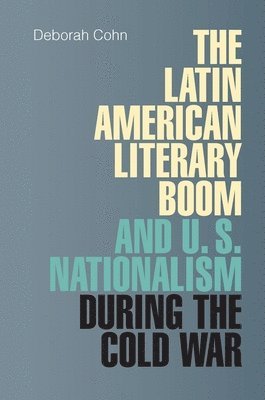
During the 1960s and 1970s, when writers such as Julio Cortazar, Carlos Fuentes, Gabriel Garcia Marquez, and Mario Vargas Llosa entered the international literary mainstream, Cold War cultural politics played an active role in disseminating their work in the United States. Deborah Cohn documents how U.S. universities, book and journal publishers, philanthropic organisations, cultural centres, and authors co-ordinated their efforts to bring Latin American literature to a U.S. reading public during this period, when interest in the region was heightened by the Cuban Revolution. She also traces the connections between the endeavours of private organisations and official foreign policy goals. The high level of interest in Latin America paradoxically led the U.S. government to restrict these authors' physical presence in the United States through the McCarran-Walter Act's immigration blacklist, even as cultural organisations cultivated the exchange of ideas with writers and sought to market translations of their work for the U.S. market.
658 kr
Skickas inom 5-8 vardagar
During the 1960s and 1970s, when writers such as Julio Cortazar, Carlos Fuentes, Gabriel Garcia Marquez, and Mario Vargas Llosa entered the international literary mainstream, Cold War cultural politics played an active role in disseminating their work in the United States. Deborah Cohn documents how U.S. universities, book and journal publishers, philanthropic organisations, cultural centres, and authors co-ordinated their efforts to bring Latin American literature to a U.S. reading public during this period, when interest in the region was heightened by the Cuban Revolution. She also traces the connections between the endeavours of private organisations and official foreign policy goals. The high level of interest in Latin America paradoxically led the U.S. government to restrict these authors' physical presence in the United States through the McCarran-Walter Act's immigration blacklist, even as cultural organisations cultivated the exchange of ideas with writers and sought to market translations of their work for the U.S. market.