
Debra Davidson – författare
Visar alla böcker från författaren . Handla med fri frakt och snabb leverans.
2 produkter
2 produkter

Häftad, Engelska, 2026
821 kr
Kommande
The second edition of Environment and Society: Concepts for a Just Transformation delivers a major, timely update to one of the field’s most respected concept‑driven environmental social science texts. Fully revised and significantly re-oriented to highlight concepts informing social projects in just transformation, this edition reshapes the book around an enhanced set of contemporary concepts—adding new chapters, removing outdated material, and thoroughly updating those retained—to reflect the dramatic shifts in how scholars, policymakers, and communities understand society–environment relations. With contributions from an even more globally diverse group of authors, the book now brings stronger representation from the Global South and a wider array of disciplinary perspectives.The book examines whether today’s dominant ideas and conceptual frameworks meaningfully support a “Just Transformation” in the face of deepening environmental and climatological crises. Across eleven concept‑focused chapters—ranging from justice, colonialism, and intersectionality to futures, metabolism, collective action, commons, footprints, and more—contributors offer accessible syntheses, illustrative examples, and end‑of‑chapter discussion topics designed for classroom use.This edition is designed for advanced undergraduate and graduate students across environmental studies, environmental sociology, geography, sustainability, and allied social sciences, as well as scholars seeking a clear, comparative resource on conceptual trends. It will also appeal to practitioners, NGO staff, and policy professionals who require a deeper understanding of the conceptual tools shaping environmental thinking today.
Häftad, Engelska, 2005
315 kr
Tillfälligt slut
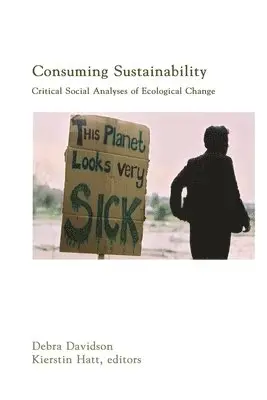
How do our consumption decisions affect ecosystems? Can we rely on governments to maintain environmental wellbeing? Do rural peoples “see” the environment differently from urban residents? Is sustainability possible? We are confronted with personal and political decisions every day that affect the environment, yet, we often do not know how to assess, much less understand, our individual role in them. In Consuming Sustainability, the authors examine several contemporary environmental controversies in Canada to illustrate how a critical perspective can aid in understanding the complex social, economic and political issues that characterize our relationship to the environment, and of the potential for change within them. Key concepts in environmental social science are introduced and used to clarify environmental and ecological controversies and to address broader questions regarding structure, human agency, activism and the potential for sustainability in Canada and the world.