Deirdre Loughridge – författare
Visar alla böcker från författaren Deirdre Loughridge. Handla med fri frakt och snabb leverans.
7 produkter
7 produkter
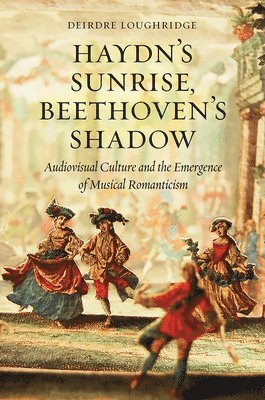
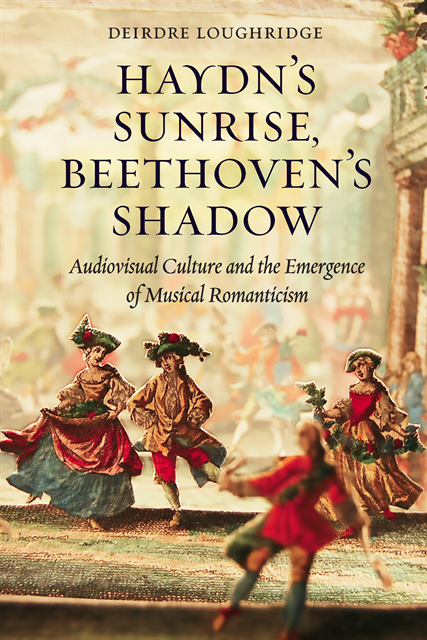
Haydn's Sunrise, Beethoven's Shadow
Audiovisual Culture and the Emergence of Musical Romanticism
Inbunden, Engelska, 2016
489 kr
Skickas inom 5-8 vardagar
The years between roughly 1760 and 1810, a period stretching from the rise of Joseph Haydn’s career to the height of Ludwig van Beethoven’s, are often viewed as a golden age for musical culture, when audiences started to revel in the sounds of the concert hall. But the latter half of the eighteenth century also saw proliferating optical technologies—including magnifying instruments, magic lanterns, peepshows, and shadow-plays—that offered new performance tools, fostered musical innovation, and shaped the very idea of “pure” music. Haydn’s Sunrise, Beethoven’s Shadow is a fascinating exploration of the early romantic blending of sight and sound as encountered in popular science, street entertainments, opera, and music criticism.Deirdre Loughridge reveals that allusions in musical writings to optical technologies reflect their spread from fairgrounds and laboratories into public consciousness and a range of discourses, including that of music. She demonstrates how concrete points of intersection—composers’ treatments of telescopes and peepshows in opera, for instance, or a shadow-play performance of a ballad—could then fuel new modes of listening that aimed to extend the senses. An illuminating look at romantic musical practices and aesthetics, this book yields surprising relations between the past and present and offers insight into our own contemporary audiovisual culture.
1 028 kr
Skickas inom 5-8 vardagar
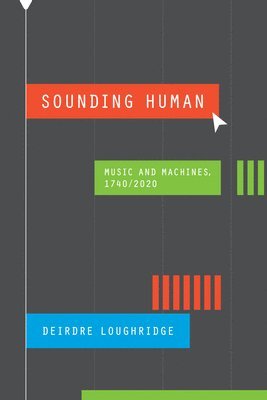
An expansive analysis of the relationship between human and machine in music. From the mid-eighteenth century on, there was a logic at work in musical discourse and practice: human or machine. That discourse defined a boundary of absolute difference between human and machine, with a recurrent practice of parsing “human” musicality from its “merely mechanical” simulations. In Sounding Human, Deirdre Loughridge tests and traverses these boundaries, unmaking the “human or machine” logic and seeking out others, better characterized by conjunctions such as and or with.Sounding Human enters the debate on posthumanism and human-machine relationships in music, exploring how categories of human and machine have been continually renegotiated over the centuries. Loughridge expertly traces this debate from the 1737 invention of what became the first musical android to the creation of a “sound wave instrument” by a British electronic music composer in the 1960s, and the chopped and pitched vocals produced by sampling singers’ voices in modern pop music. From music-generating computer programs to older musical instruments and music notation, Sounding Human shows how machines have always actively shaped the act of music composition. In doing so, Loughridge reveals how musical artifacts have been—or can be—used to help explain and contest what it is to be human.
293 kr
Skickas inom 5-8 vardagar
An expansive analysis of the relationship between human and machine in music. From the mid-eighteenth century on, there was a logic at work in musical discourse and practice: human or machine. That discourse defined a boundary of absolute difference between human and machine, with a recurrent practice of parsing “human” musicality from its “merely mechanical” simulations. In Sounding Human, Deirdre Loughridge tests and traverses these boundaries, unmaking the “human or machine” logic and seeking out others, better characterized by conjunctions such as and or with.Sounding Human enters the debate on posthumanism and human-machine relationships in music, exploring how categories of human and machine have been continually renegotiated over the centuries. Loughridge expertly traces this debate from the 1737 invention of what became the first musical android to the creation of a “sound wave instrument” by a British electronic music composer in the 1960s, and the chopped and pitched vocals produced by sampling singers’ voices in modern pop music. From music-generating computer programs to older musical instruments and music notation, Sounding Human shows how machines have always actively shaped the act of music composition. In doing so, Loughridge reveals how musical artifacts have been—or can be—used to help explain and contest what it is to be human.
1 291 kr
Kommande
An accessible history of music technology from the earliest days to the present.Over forty thousand years ago, humans fashioned flutes from bone. Ever since, music-making has continued to be motivated and shaped by technological innovations. The first book to offer a history of western music through the lens of tools, Bone Flute to Auto-tune explores the relationship between music and technology from the Paleolithic Age to the present day. Taking an expansive view of music technology, Deirdre Loughridge develops critical perspectives on how the past is built into the present, the affordances and constraints of tools, and the trade-offs made in adopting one tool rather than another. By examining music-technological transitions from across history, including the violin, piano, cymbal, electric guitar, and synthesizer, Bone Flute to Auto-tune thinks through how and why certain changes have taken place and shows how earlier eras have been built into later technologies, influencing not only the sound of our music but also what our tools help us and hinder us from doing. The result is a music history attuned to the possibilities that new technologies open up or reveal and those they foreclose or conceal, and that considers what is gained and lost in the transition from one technology to another. By identifying turning points and trade-offs, a long historical perspective enables us to see alternate paths along which music technologies might have developed, and to grapple with our own moment in the ongoing interplay between technological change and the enduring human need for music.
340 kr
Kommande
An accessible history of music technology from the earliest days to the present.Over forty thousand years ago, humans fashioned flutes from bone. Ever since, music-making has continued to be motivated and shaped by technological innovations. The first book to offer a history of western music through the lens of tools, Bone Flute to Auto-tune explores the relationship between music and technology from the Paleolithic Age to the present day. Taking an expansive view of music technology, Deirdre Loughridge develops critical perspectives on how the past is built into the present, the affordances and constraints of tools, and the trade-offs made in adopting one tool rather than another. By examining music-technological transitions from across history, including the violin, piano, cymbal, electric guitar, and synthesizer, Bone Flute to Auto-tune thinks through how and why certain changes have taken place and shows how earlier eras have been built into later technologies, influencing not only the sound of our music but also what our tools help us and hinder us from doing. The result is a music history attuned to the possibilities that new technologies open up or reveal and those they foreclose or conceal, and that considers what is gained and lost in the transition from one technology to another. By identifying turning points and trade-offs, a long historical perspective enables us to see alternate paths along which music technologies might have developed, and to grapple with our own moment in the ongoing interplay between technological change and the enduring human need for music.
843 kr
Skickas inom 5-8 vardagar
193 kr
Skickas
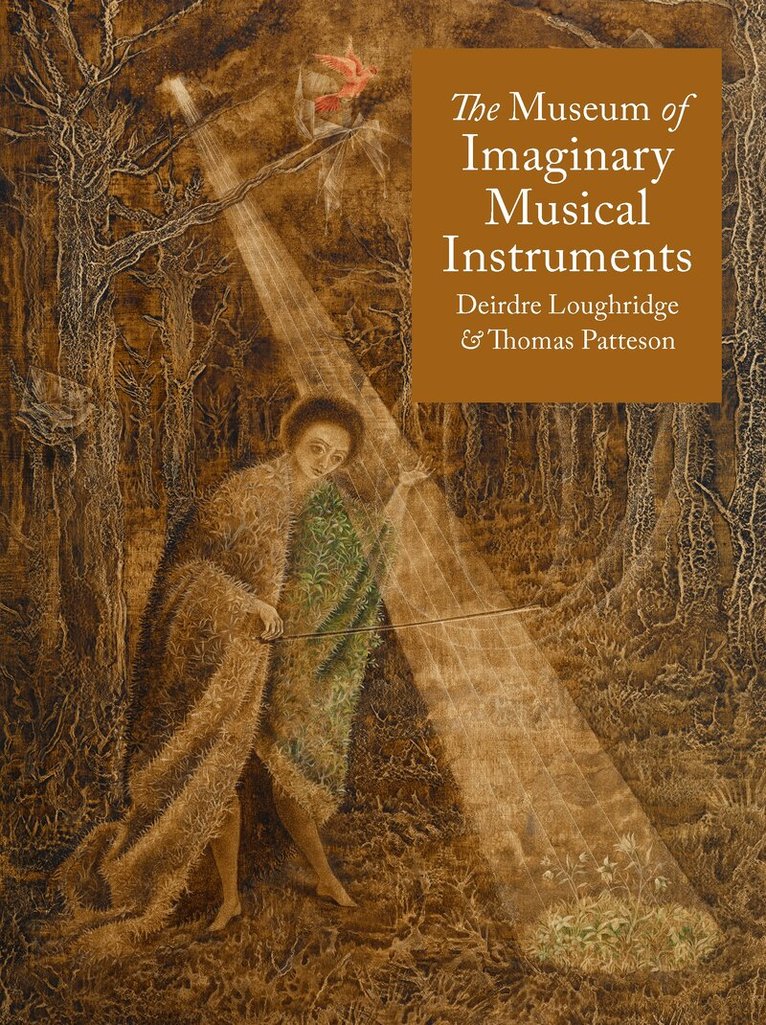
The Museum of Imaginary Musical Instruments is a guided tour through centuries of instruments that never existed. From ancient myths to futuristic media, these imagined devices appear in literature, theory, video games and art, at times echoing real instruments, other times pushing far beyond the bounds of technology. This book presents a wide-ranging collection of such creations, showing how they reflect changing ideas about sound, invention and the limits of the possible. At once a cultural history and a study of creative thought, it uncovers unexpected links between music, design and the human urge to make meaning through sound. These are not just fictional artefacts – they are windows into what music might mean, even when it cannot be played.