Thomas Patteson - Böcker
Visar alla böcker från författaren Thomas Patteson. Handla med fri frakt och snabb leverans.
2 produkter
2 produkter
330 kr
Skickas inom 7-10 vardagar
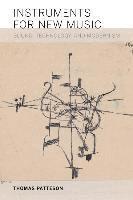
A free ebook version of this title is available through Luminos, University of California Press' new open access publishing program for monographs. Player pianos, radio-electric circuits, gramophone records, and optical sound film-these were the cutting-edge acoustic technologies of the early twentieth century, and for many musicians and artists of the time, these devices were also the implements of a musical revolution. Instruments for New Music traces a diffuse network of cultural agents who shared the belief that a truly modern music could be attained only through a radical challenge to the technological foundations of the art. Centered in Germany during the 1920s and 1930s, the movement to create new instruments encompassed a broad spectrum of experiments, from the exploration of microtonal tunings and exotic tone colors to the ability to compose directly for automatic musical machines. This movement comprised composers, inventors, and visual artists, including Paul Hindemith, Ernst Toch, Jorg Mager, Friedrich Trautwein, Laszlo Moholy-Nagy, Walter Ruttmann, and Oskar Fischinger.Patteson's fascinating study combines an artifact-oriented history of new music in the early twentieth century with an astute revisiting of still-relevant debates about the relationship between technology and the arts.
193 kr
Skickas
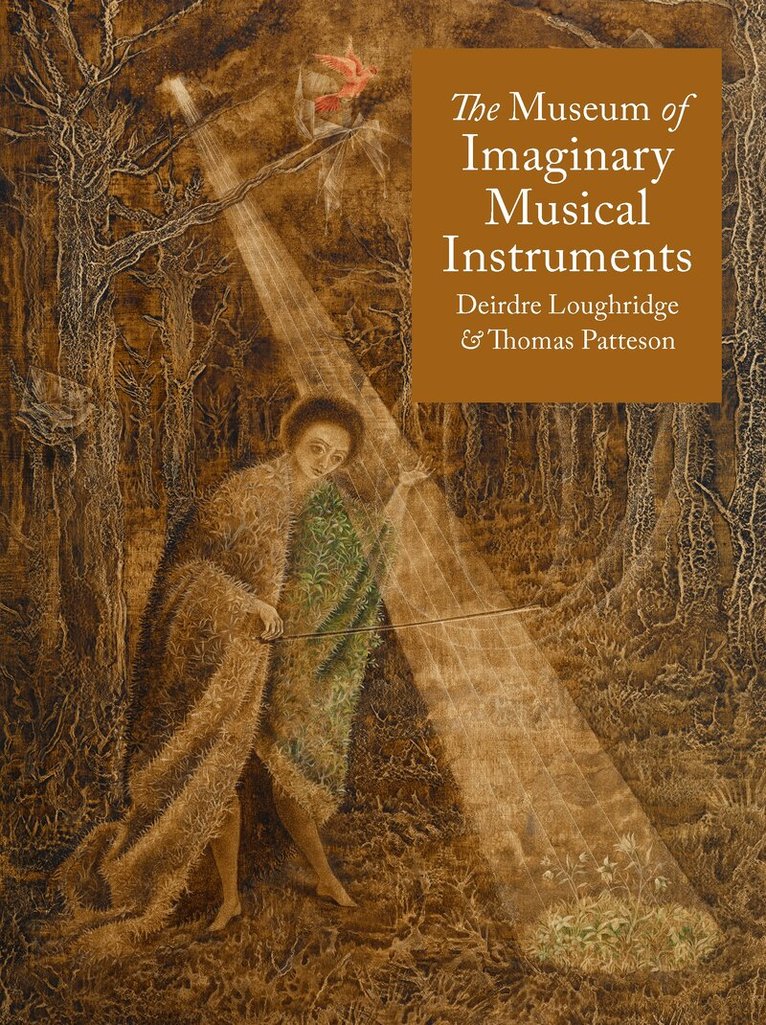
The Museum of Imaginary Musical Instruments is a guided tour through centuries of instruments that never existed. From ancient myths to futuristic media, these imagined devices appear in literature, theory, video games and art, at times echoing real instruments, other times pushing far beyond the bounds of technology. This book presents a wide-ranging collection of such creations, showing how they reflect changing ideas about sound, invention and the limits of the possible. At once a cultural history and a study of creative thought, it uncovers unexpected links between music, design and the human urge to make meaning through sound. These are not just fictional artefacts – they are windows into what music might mean, even when it cannot be played.