Dena Freeman - Böcker
Visar alla böcker från författaren Dena Freeman. Handla med fri frakt och snabb leverans.
7 produkter
7 produkter
2 300 kr
Skickas inom 7-10 vardagar
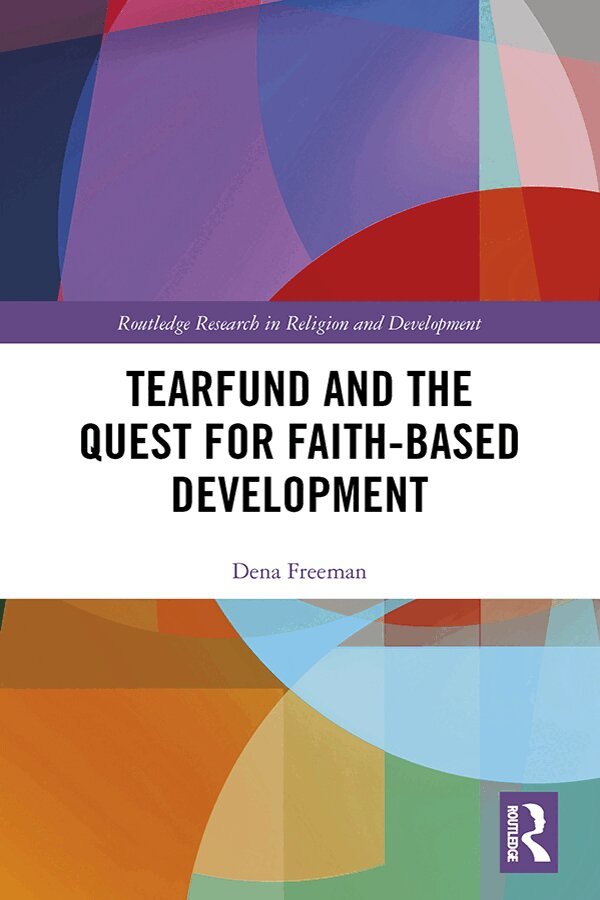
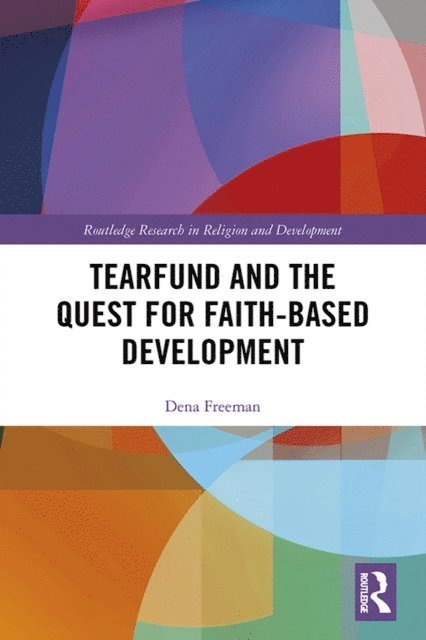
This book gives an in-depth analysis of the role of faith in the work of Tearfund, a leading evangelical relief and development NGO that works in over 50 countries worldwide.The study traces the changing ways that faith has shaped and influenced Tearfund’s work over the organisation’s 50-year history. It shows how Tearfund has consciously grappled with the role of faith in its work and has invested considerable time and energy in developing an intentionally faith-based approach t relief and development that in several ways is quite different to the approaches of secular relief and development NGOs. The book charts the different perspectives and possibilities that were not taken and the internal discussions about theology, development practices, and humanitarian standards that took place as Tearfund worked out for itself what it meant to be a faith-based relief and development organisation. There is a growing academic literature about religion and development, as well as increasing interest from development ministries of many Northern governments in understanding the role of religion in development and the specific challenges and benefits involved in working with faith-based organisations. However, there are very few studies of actual faith-based organisations and no book-length detailed studies showing how such an organisation operates in practice and how it integrates its faith into its work.In documenting the story of Tearfund, the book provides important insights into the practice and ethos of faith-based organisations, which will be of interest to other FBOs and to researchers of religion and development.
620 kr
Skickas inom 10-15 vardagar
This book gives an in-depth analysis of the role of faith in the work of Tearfund, a leading evangelical relief and development NGO that works in over 50 countries worldwide.The study traces the changing ways that faith has shaped and influenced Tearfund’s work over the organisation’s 50-year history. It shows how Tearfund has consciously grappled with the role of faith in its work and has invested considerable time and energy in developing an intentionally faith-based approach t relief and development that in several ways is quite different to the approaches of secular relief and development NGOs. The book charts the different perspectives and possibilities that were not taken and the internal discussions about theology, development practices, and humanitarian standards that took place as Tearfund worked out for itself what it meant to be a faith-based relief and development organisation. There is a growing academic literature about religion and development, as well as increasing interest from development ministries of many Northern governments in understanding the role of religion in development and the specific challenges and benefits involved in working with faith-based organisations. However, there are very few studies of actual faith-based organisations and no book-length detailed studies showing how such an organisation operates in practice and how it integrates its faith into its work.In documenting the story of Tearfund, the book provides important insights into the practice and ethos of faith-based organisations, which will be of interest to other FBOs and to researchers of religion and development.
125 kr
Skickas inom 7-10 vardagar
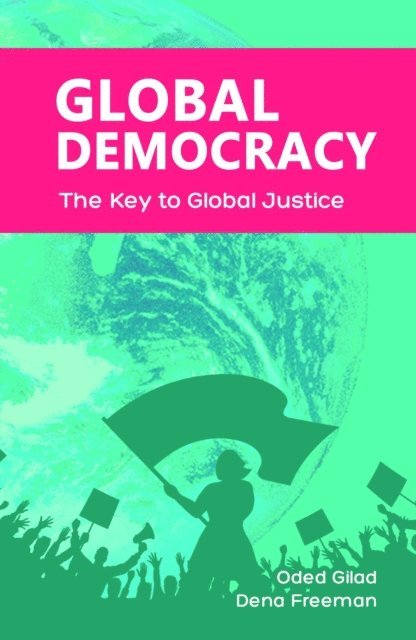
The expansion of capitalism and neoliberal ideologies have delivered economic integration between countries and brought global inter-connectedness to individuals. So why do so many people now feel that they are ‘citizens of nowhere’, disparaged by the ‘cosmopolitan elites’? Has democracy and the power of nation states been irredeemably weakened by unfettered global finance, opaque forms of global governance, and the power of transnational corporations? Can the huge rise in social and economic inequality be reversed? Can diverse cultural expression be maintained in a globalizing world? In the context of the current nationalist backlash and the momentous impacts of the COVID-19 pandemic, this thought-provoking volume considers whether globalization is dead or whether it will survive, and perhaps transform. Written in a clear and engaging style, the volume traces the development of economic globalization starting from the first wave of colonialization in the 15th century, through the first period of globalization at the end of the 19th century, and up to the contemporary period of globalization that started in the 1980s and appears today to be teetering on the brink of collapse. It explores the impacts of globalization on today’s world, from global supply chains and tax havens to rising economic inequality, climate change and pandemics, and assesses the different impacts on rich and poor countries, and on the rich and poor within countries. It then reviews the growing anti-globalization sentiment, starting from the anti-IMF protests that raged through developing countries in the 1980s and 1990s, to the emergence of the transnational anti-globalization movement of the 2000s, to more recent uprisings such as the Arab Spring, The Occupy Movement, the Gilets Jaunes, and to the current populist nationalist backlash led by President Trump and embodied in the 2016 Brexit vote. Sensing that globalization has reached a tipping point, the book considers a range of possible scenarios for the future world order, including nationalism, authoritarianism and democratic globalism. Finally, it explores whether globalization can be democratized in a world in which effective and inclusive global governance is crucial to solving global problems, such as tackling climate change, controlling global pandemics and upholding universal human rights.
Initiating Change in Highland Ethiopia
Causes and Consequences of Cultural Transformation
Häftad, Engelska, 2007
428 kr
Skickas inom 7-10 vardagar
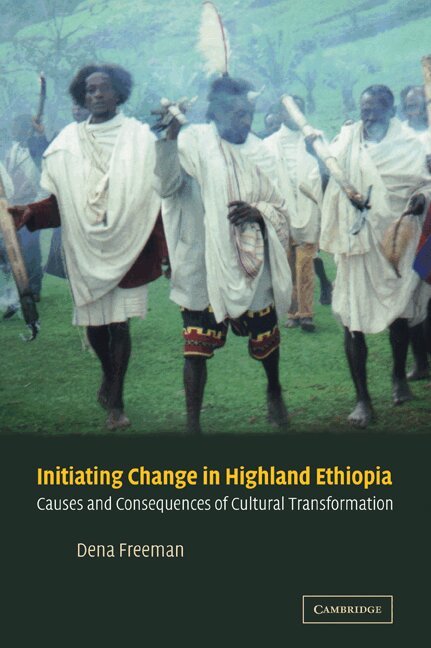
In a rural community in Southern Ethiopia, there are two types of rituals performed by the same people. Historical evidence suggests that one has shown remarkable stability over the years, while the other has undergone massive transformations. External factors are the same, so how is this to be explained? In this 2002 book, Dena Freeman focuses on ethnographical and historical data from the Gamo Highlands of Southern Ethiopia to tackle the question of cultural change and transformation. She uses a comparative perspective and contrasts the continuity in sacrificial rituals with the rapid divergence and differentiation in initiations. Freeman argues that although external change drives internal cultural transformation, the way in which it does is greatly influenced by the structural organization of the cultural systems themselves. This insight leads to a rethinking of the analytic tension between structure and agency that is at the heart of contemporary anthropological theory.
Initiating Change in Highland Ethiopia
Causes and Consequences of Cultural Transformation
Inbunden, Engelska, 2002
1 192 kr
Skickas inom 7-10 vardagar
In a rural community in Southern Ethiopia, there are two types of rituals performed by the same people. Historical evidence suggests that one has shown remarkable stability over the years, while the other has undergone massive transformations. External factors are the same, so how is this to be explained? In this 2002 book, Dena Freeman focuses on ethnographical and historical data from the Gamo Highlands of Southern Ethiopia to tackle the question of cultural change and transformation. She uses a comparative perspective and contrasts the continuity in sacrificial rituals with the rapid divergence and differentiation in initiations. Freeman argues that although external change drives internal cultural transformation, the way in which it does is greatly influenced by the structural organization of the cultural systems themselves. This insight leads to a rethinking of the analytic tension between structure and agency that is at the heart of contemporary anthropological theory.
Global Left in a Multipolar World
Towards a Planetary Politics of Justice and Survival
Inbunden, Engelska, 2026
2 258 kr
Kommande
The Global Left in a Multipolar World: Towards a Planetary Politics of Justice and Survival explores how a transformative global left politics might be advanced in the context of the emerging multipolar world order and the urgent climate crisis. The book argues that the era of the purely national left is over. Instead, the twenty-first century needs a new global left that will address the critical four elements of class, imperialism, ecology and democracy in a unified way, and that will combine ideas and interventions at a multiplicity of scales from the local to the global. Chapters written by leading left scholars from the global North and the global South explore different aspects of contemporary left thought and practice and articulate different visions of potential global lefts. They offer radical and inspiring suggestions for global left programmes that can tackle both the injustices of neoliberal globalisation as well as the new threats from an advancing global right, continued neo-imperialism and the increasingly critical climate-ecological planetary crisis. Taken together, they offer a compelling vision of a global left that seeks justice – for labour, for the global South and for oppressed peoples everywhere – and survival – for everyone on our warming planet – based on and secured by a truly democratic planetary politics. The Global Left in a Multipolar World injects new energy into left thinking and shows how the left can move from a politics of resistance towards a politics of alternatives. It will be of great interest to students and scholars of global politics, international relations and sociology and to left-wing activists seeking a better world.
137 kr
Skickas inom 5-8 vardagar