Dennis Broe - Böcker
Visar alla böcker från författaren Dennis Broe. Handla med fri frakt och snabb leverans.
6 produkter
6 produkter
329 kr
Skickas inom 10-15 vardagar
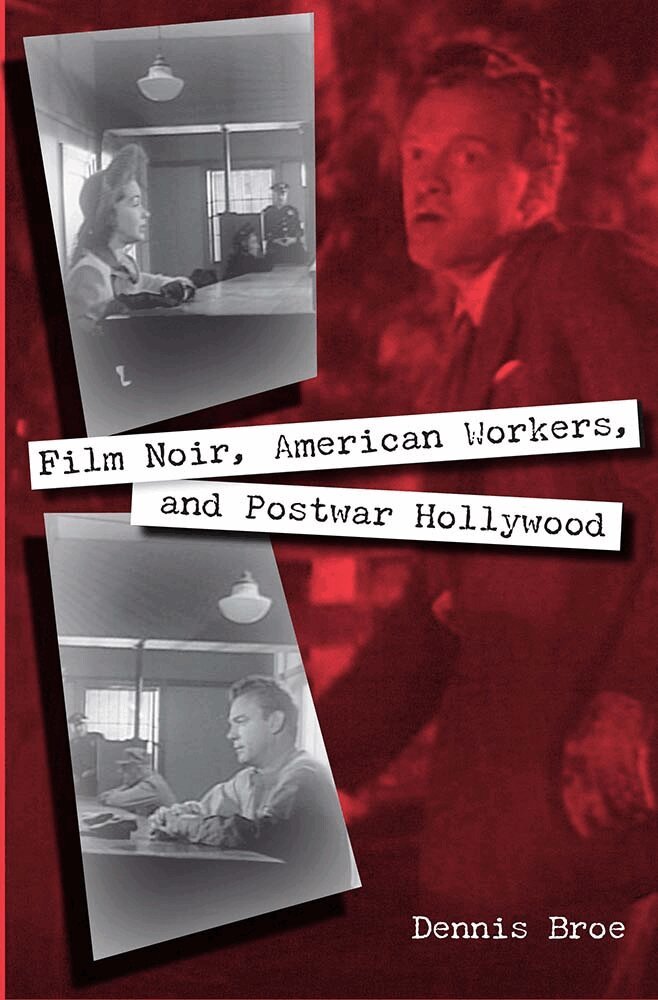
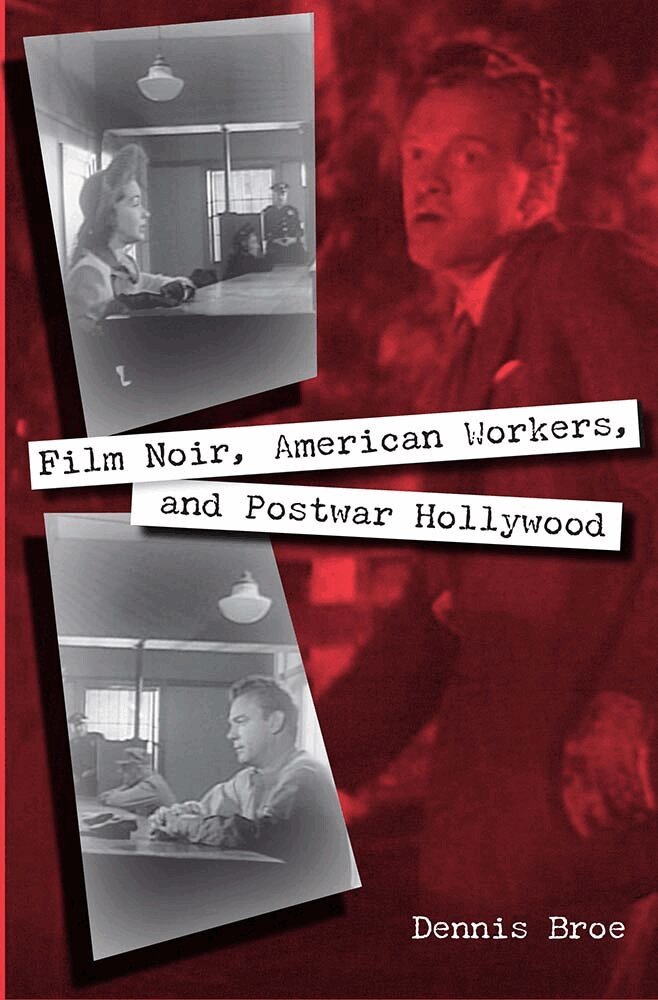
Film noir, which flourished in 1940s and 50s, reflected the struggles and sentiments of postwar America. Dennis Broe contends that the genre, with its emphasis on dark subject matter, paralleled the class conflict in labor and union movements that dominated the period.By following the evolution of film noir during the years following World War II, Broe illustrates how the noir figure represents labor as a whole. In the 1940s, both radicalized union members and protagonists of noir films were hunted and pursued by the law. Later, as labor unions achieve broad acceptance and respectability, the central noir figure shifts from fugitive criminal to law-abiding cop.Expanding his investigation into the Cold War and post-9/11 America, Broe extends his analysis of the ways film noir is intimately connected to labor history. A brilliant, interdisciplinary examination, this is a work that will appeal to a broad spectrum of readers.
260 kr
Skickas inom 10-15 vardagar
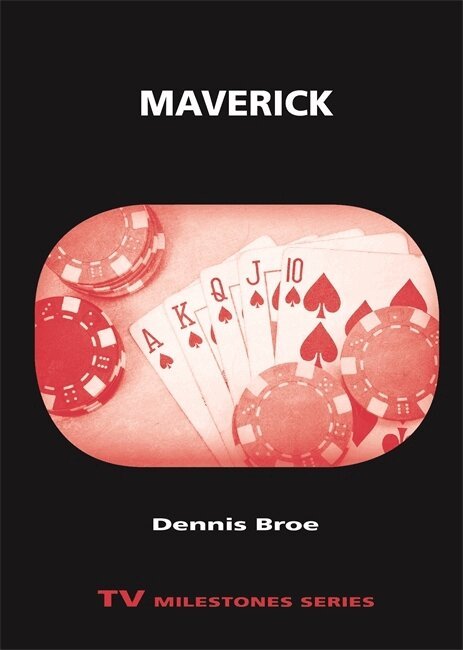
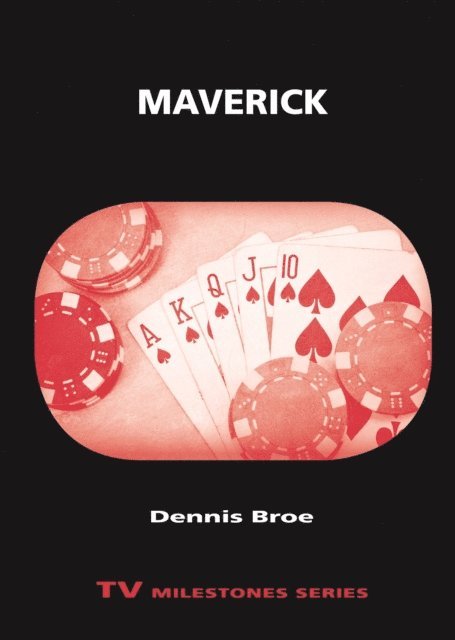
Airing on ABC from 1957 to 1962, Maverick appeared at a key moment in television Western history and provided a distinct alternative to the genre’s usual moralistic lawmen in its hero, Bret Maverick. A non-violent gambler and part-time con man, Maverick’s principles revolved around pleasure and not power, and he added humor, satire, and irony to the usually grim-faced Western. In this study of Maverick, author Dennis Broe details how the popular series mocked, altered, and undermined the characteristics of other popular Westerns, like Gunsmoke and Bonanza. Broe highlights the contributions made by its creators, its producer, Roy Huggins, and its lead actor, James Garner, to a format that was described as “the American fairy tale.” Broe describes how Garner and Huggins struck blows against a feudal studio system that was on its last legs in cinema but was being applied even more rigidly in television. He considers Maverick as a place where multiple counter-cultural discourses converged—including Baudelaire’s Flaneur, Guy DeBord’s Situationists, and Jack Kerouc’s Beats—in a form that was acceptable to American households. Finally, Broe shows how the series’ validation of Maverick’s outside-the-law status punctured the Cold War rhetoric promoted by the “adult” Western. Broe also highlights the series’ female con women or flaneuses, who were every bit the equal of their male counterparts and added additional layers to the traditional schoolteacher/showgirl Western dichotomy. Broe demonstrates the progressive nature of Maverick as it worked to counter the traditional studio mode of production, served as a locus of counter-cultural trends, and would ultimately become the lone outpost of anti–Cold War and anti-establishment sentiments within the Western genre. Maverick fans and scholars of American television history will enjoy this close look at the classic series.
366 kr
Skickas inom 10-15 vardagar
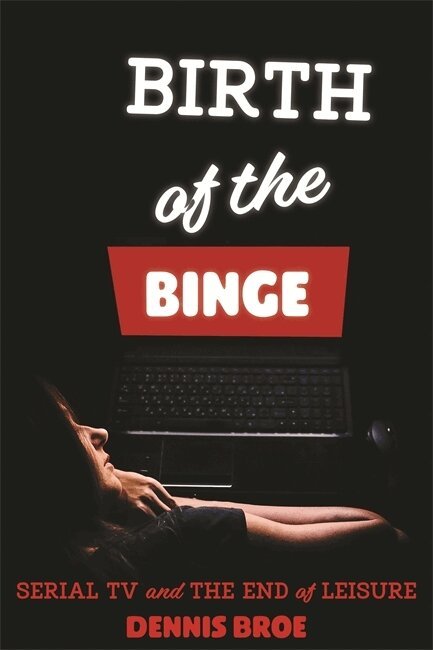
Birth of the Binge: Serial TV and the End of Leisure describes and details serial television and ""binge watching,"" the exceedingly popular form of contemporary television viewing that has come to dominance over the past decade. Author Dennis Broe looks at this practice of media consumption by suggesting that the history of seriality itself is a continual battleground between a more unified version of truth-telling and a more fractured form of diversion and addiction. Serial television is examined for the ways its elements (multiple characters, defined social location, and season and series arcs) are used alternately to illustrate a totality or to fragment social meaning. Broe follows his theoretical points with detailed illustrations and readings of several TV series in a variety of genres, including the systemization of work in Big Bang Theory and Silicon Valley; the social imbrications of Justified; and the contesting of masculinity in Joss Whedon's Buffy the Vampire Slayer, Firefly, and Dollhouse. In this monograph, Broe uses the work of Bernard Stiegler to relate the growth of digital media to a new phase of capitalism called ""hyperindustrialism,"" analyzing the show Lost as suggestive of the potential as well as the poverty and limitations of digital life. The author questions whether, in terms of mode of delivery, commercial studio structure, and narrative patterns, viewers are experiencing an entirely new moment or a (hyper)extension of the earlier network era. The Office, The Larry Sanders Show, and Orange Is the New Black are examined as examples of, respectively, network, cable, and online series with structure that is more consistent than disruptive. Finally, Broe examines three miniseries by J. J. Abrams - Revolution, Believe, and 11.22.63 - which employ the techniques and devices of serial television to criticize a rightward, neo-conservative drift in the American empire, noting that none of the series were able to endure in an increasingly conservative climate. The book also functions as a reference work, featuring an appendix of ""100 Seminal Serial Series"" and a supplementary index that television fans and media students and scholars will utilize in and out of the classroom.
899 kr
Skickas inom 10-15 vardagar
Birth of the Binge: Serial TV and the End of Leisure describes and details serial television and ""binge watching,"" the exceedingly popular form of contemporary television viewing that has come to dominance over the past decade. Author Dennis Broe looks at this practice of media consumption by suggesting that the history of seriality itself is a continual battleground between a more unified version of truth-telling and a more fractured form of diversion and addiction. Serial television is examined for the ways its elements (multiple characters, defined social location, and season and series arcs) are used alternately to illustrate a totality or to fragment social meaning. Broe follows his theoretical points with detailed illustrations and readings of several TV series in a variety of genres, including the systemization of work in Big Bang Theory and Silicon Valley; the social imbrications of Justified; and the contesting of masculinity in Joss Whedon's Buffy the Vampire Slayer, Firefly, and Dollhouse. In this monograph, Broe uses the work of Bernard Stiegler to relate the growth of digital media to a new phase of capitalism called ""hyperindustrialism,"" analyzing the show Lost as suggestive of the potential as well as the poverty and limitations of digital life. The author questions whether, in terms of mode of delivery, commercial studio structure, and narrative patterns, viewers are experiencing an entirely new moment or a (hyper)extension of the earlier network era. The Office, The Larry Sanders Show, and Orange Is the New Black are examined as examples of, respectively, network, cable, and online series with structure that is more consistent than disruptive. Finally, Broe examines three miniseries by J. J. Abrams - Revolution, Believe, and 11.22.63 - which employ the techniques and devices of serial television to criticize a rightward, neo-conservative drift in the American empire, noting that none of the series were able to endure in an increasingly conservative climate. The book also functions as a reference work, featuring an appendix of ""100 Seminal Serial Series"" and a supplementary index that television fans and media students and scholars will utilize in and out of the classroom.
239 kr
Skickas inom 5-8 vardagar
192 kr
Skickas inom 5-8 vardagar