Dennis Hale - Böcker
Visar alla böcker från författaren Dennis Hale. Handla med fri frakt och snabb leverans.
3 produkter
3 produkter
590 kr
Skickas inom 7-10 vardagar
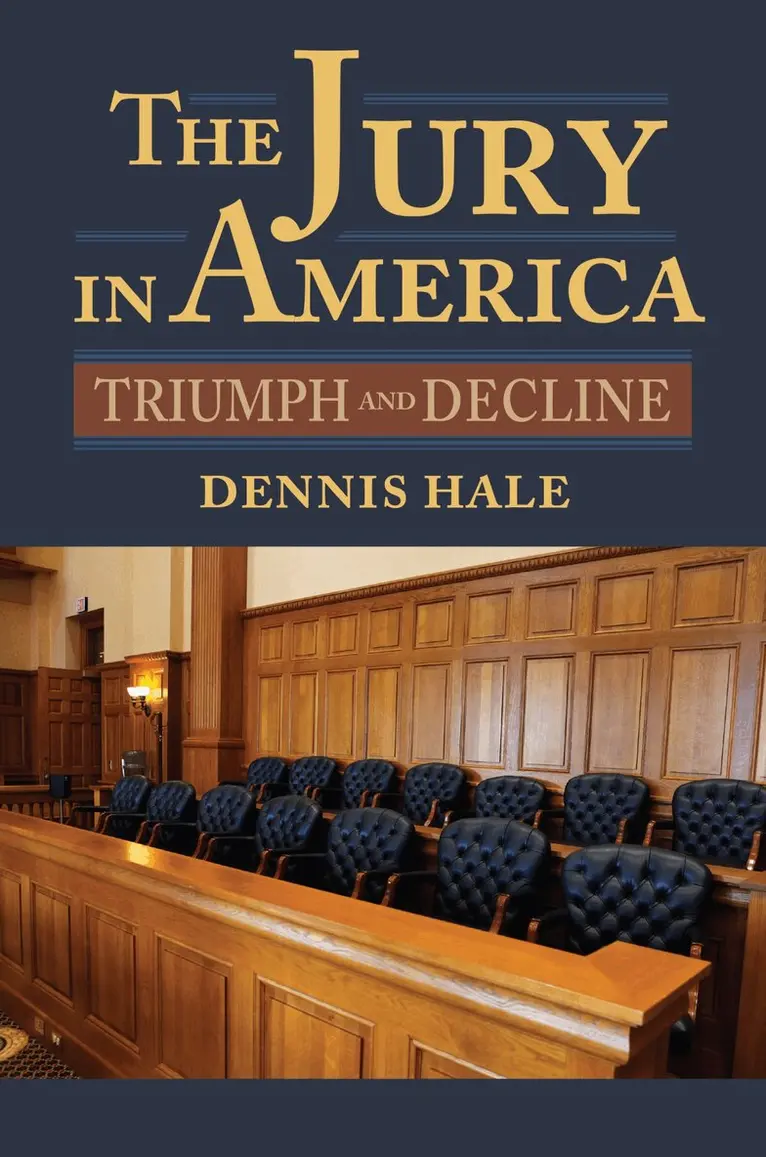
The jury trial is one of the formative elements of American government, vitally important even when Americans were still colonial subjects of Great Britain. When the founding generation enshrinedthe jury in the Constitution and Bill of Rights, they were not inventing something new, but protecting something old: one ofthe traditional and essential rights of all free men. Judgment by an “impartial jury” would henceforth put citizen panels at thevery heart of the American legal order. And yet at the dawn of the twenty-first century, juries resolve just two percent of the nation’slegal cases and critics warn that the jury is “vanishing” from both the criminal and civil courts. The jury’s critics point to sensational jury trials like those in the O. J. Simpson and Menendez cases, and conclude that the disappearance of the jury is no great loss. The jury’s defenders, from journeyman trial lawyers to members of the Supreme Court, take a different view, warning that the disappearance of the jury trial would be a profound loss.In The Jury in America, a work that deftly combines legal history, political analysis, and storytelling, Dennis Hale takes us to the very heart of this debate to show us what the American jury system was, what it has become, and what the changes in the jury system tell us about our common political and civic life. Because the jury is so old, continuously present in the life of the American republic, it can act as a mirror, reflecting the changes going on around it. And yet because the jury is embedded in the Constitution, it has held on to its original shape more stubbornly than almost any other element in the American regime. Looking back to juries at the time of America’s founding, and forward to the fraught and diminished juries of our day, Hale traces a transformation in our understanding of ideas about sedition, race relations, negligence, expertise, the responsibilities of citizenship, and what it means to be a citizen who is “good and true” and therefore suited to the difficult tasks of judgment. Criminal and civil trials and the jury decisions that result from them involve the most fundamental questions of right, and sogo to the core of what makes the nation what it is. In this light, in conclusion, Hale considers four controversial modern trialsfor what they can tell us about what a jury is, and about the fate of republican government in America today.
389 kr
Skickas inom 10-15 vardagar
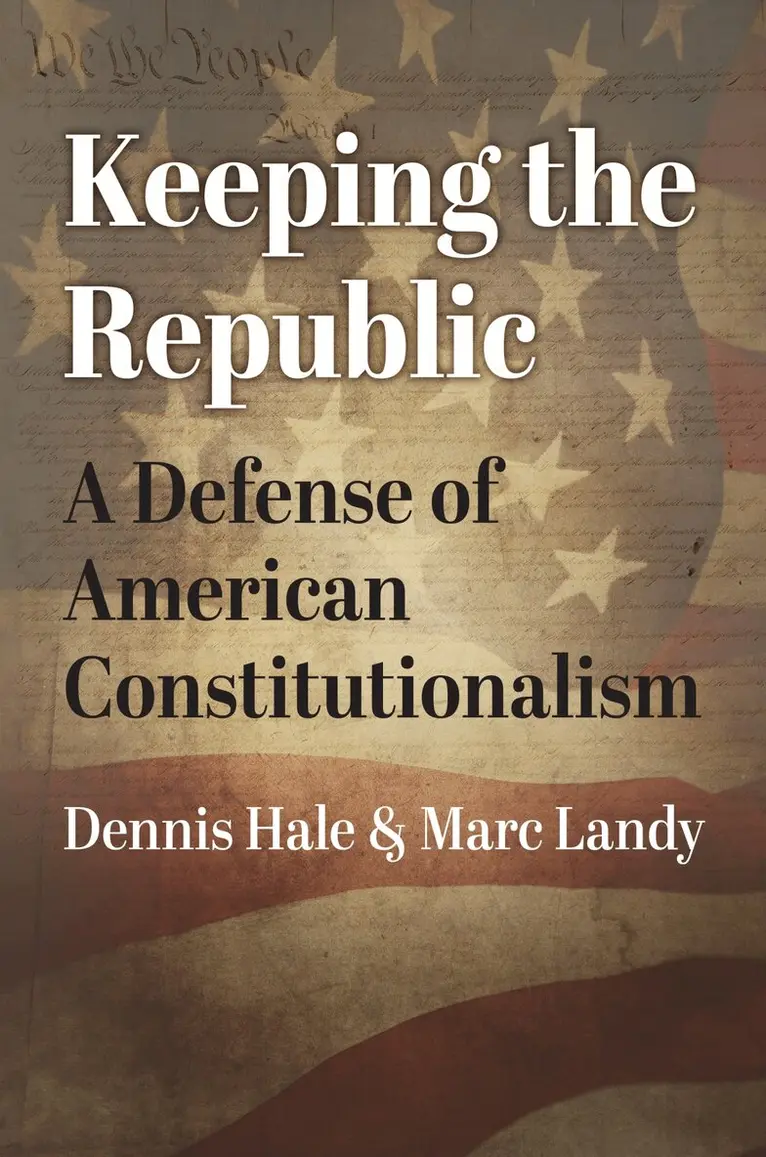
Keeping the Republic is an eloquent defense of the American constitutional order and a response to its critics, including those who are estranged from the very idea of a fixed constitution in which “the living are governed by the dead.” Dennis Hale and Marc Landy take seriously the criticisms of the United States Constitution. Before mounting their argument, they present an intellectual history of the key critics, including Thomas Paine, William Lloyd Garrison, Henry David Thoreau, Woodrow Wilson, Robert Dahl, Sanford Levinson, and the authors of The 1619 Project. Why, they ask, if the constitutional order is so well-designed, do so many American citizens have a negative view of the American political order? To address that question, they examine the most crucial episodes in American political development from the Founding to the present.Hale and Landy frame their defense of the Constitution by understanding America in terms of modernity, where small republics are no longer possible and there is a need to protect the citizens of a massive modern state while still preserving liberty. The Constitution makes large, popular government possible by placing effective limits on the exercise of power. The Constitution forces the people to be governed by the dead, both to pay the debt we owe to those who came before us and to preserve society for generations yet unborn.The central argument of Keeping the Republic is that the Constitution provides for a free government because it places effective limits on the exercise of power—an essential ingredient of any good government, even one that aims to be a popular government. That the people should rule is a given among republicans; that the people can do anything they want is a proposition that no one could accept with their eyes wide open. Thus, the limits that the Constitution place on American political life are not a problem, but a solution to a problem.Hale and Landy offer both a survey of American anti-constitutionalism and a powerful argument for maintaining the constitutional order of the nation’s Framers.
674 kr
Skickas inom 10-15 vardagar
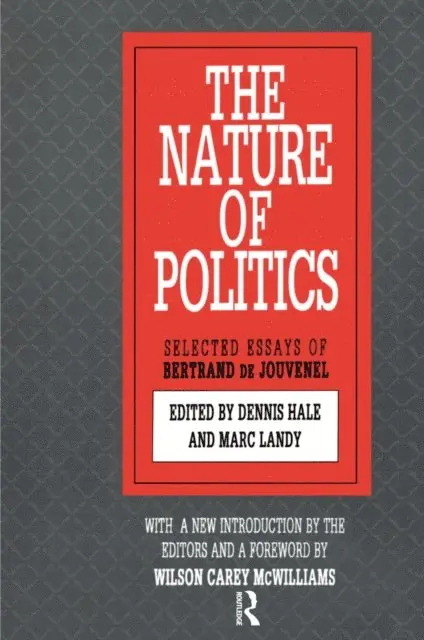
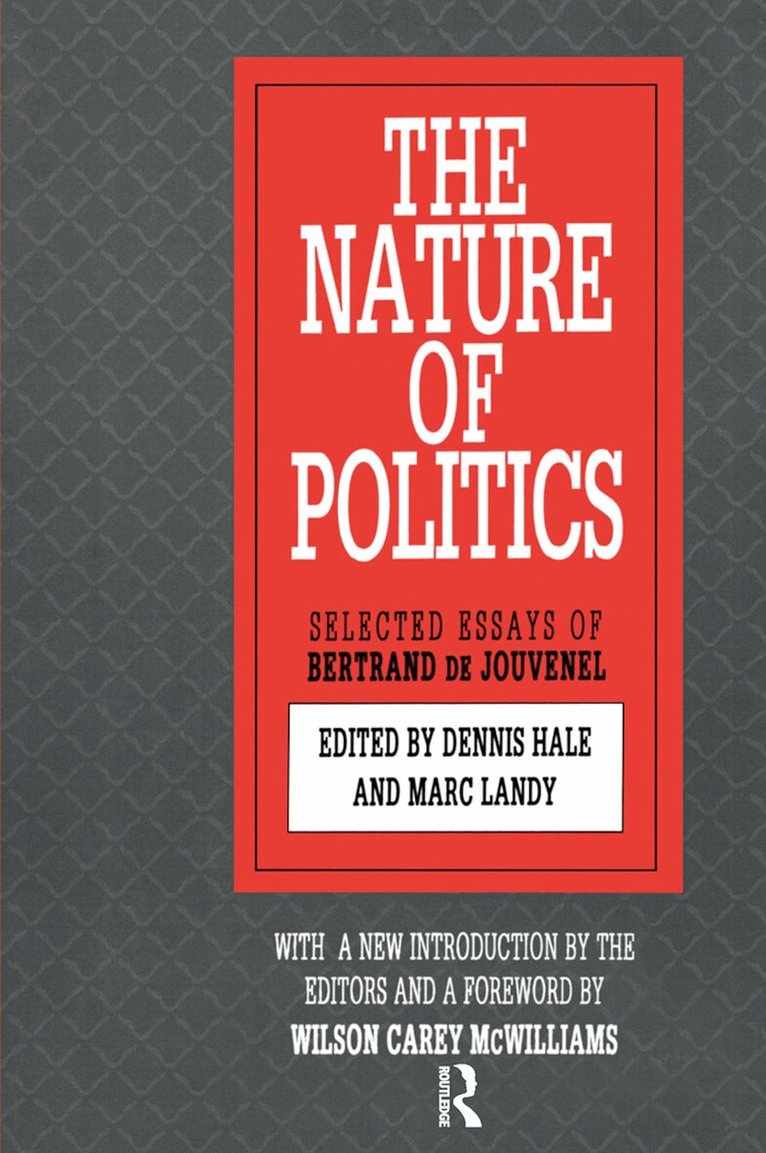
Bertrand de Jouvenel (1903-1987) was one of the great political thinkers of the twentieth century, but he left few disciples. The essays contained in this volume have been selected because they serve to clarify, elaborate, and expand upon the themes of his three masterworks: On Power, Sovereignty, and The Pure Theory of Politics.De Jouvenel's thought stands apart from the main branches of twentieth-century political philosophy and is largely independent of schools and ideologies. By drawing on an older, more persuasive philosophical tradition stretching from Plato to Rousseau, de Jouvenel sought to restore political science to its ancient function: the explanation of political things. With directness and originality, his work addresses questions that go to the heart of the political science enterprise, exploring its nature, its mission, and its attitude to theory, facts, and values.In the realm of political practice, de Jouvenel shares common ground with his contemporaries while remaining essentially independent. He shares with the left a deep concern for reducing human misery and ecological depredation and a belief in the need for government-directed economic planning. On the other hand, he shares the right's abiding suspicion of state power and its belief in the superiority of the market as the presumptive method for economic decision making.De Jouvenel's refreshing freedom from ideological blinders makes him worthy of comparison to Orwell, but his ambition stretches beyond the novelistic in that he attempts to develop a theory of the good state resting upon a clear-sighted understanding of the true nature of political behavior. Graced with a brilliant introduction by Dennis Hale and Marc Landy, this volume serves as an ideal introduction to de Jouvenel's thought. It will be of interest to political scientists, historians, and sociologists.