Dennis R. Cooley - Böcker
Visar alla böcker från författaren Dennis R. Cooley. Handla med fri frakt och snabb leverans.
7 produkter
7 produkter
371 kr
Skickas inom 5-8 vardagar
691 kr
Skickas inom 10-15 vardagar
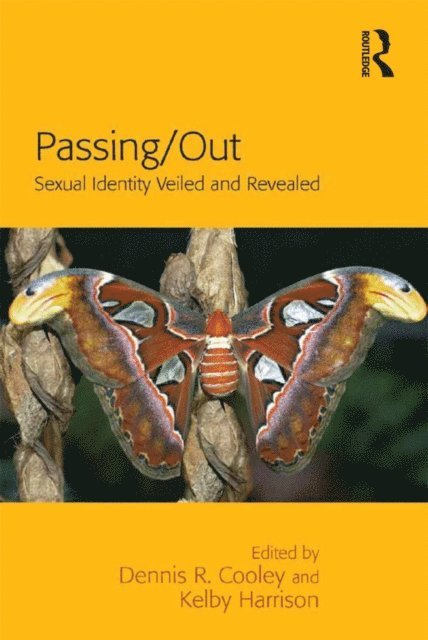
Passing/Out adopts an inter-generational, inter-disciplinary, and inter-subjective approach to the closeting and revelation of sexual identity, exploring questions of embodiment, ethics and identity in relation to 'passing' or being 'out'. Presenting the latest theoretical and empirical work from scholars working across a range of disciplines including sociology, cultural and media studies, philosophy, gender studies, literary studies and history, this book discusses the nature and history of sexual identity and the manner in which identity functions within social relationships. In recognition of the transformative impact of queer theory upon the study of sexuality and identity, Passing/Out constructs a dialogue between the work of scholars whose intellectual careers began prior to the advent of queer theory and those whose work has been more immediately and directly shaped by this approach, with a view to breaking new ground in the field of identity. Shedding light on the meaning of 'passing' and 'outing' in relation to identity, this volume will be of interest to social scientists and scholars of the humanities working on questions of sexuality, identity, embodiment and ethics.
2 219 kr
Skickas inom 10-15 vardagar
Passing/Out adopts an inter-generational, inter-disciplinary, and inter-subjective approach to the closeting and revelation of sexual identity, exploring questions of embodiment, ethics and identity in relation to 'passing' or being 'out'. Presenting the latest theoretical and empirical work from scholars working across a range of disciplines including sociology, cultural and media studies, philosophy, gender studies, literary studies and history, this book discusses the nature and history of sexual identity and the manner in which identity functions within social relationships. In recognition of the transformative impact of queer theory upon the study of sexuality and identity, Passing/Out constructs a dialogue between the work of scholars whose intellectual careers began prior to the advent of queer theory and those whose work has been more immediately and directly shaped by this approach, with a view to breaking new ground in the field of identity. Shedding light on the meaning of 'passing' and 'outing' in relation to identity, this volume will be of interest to social scientists and scholars of the humanities working on questions of sexuality, identity, embodiment and ethics.
1 064 kr
Skickas inom 10-15 vardagar
Most philosophers still like to feel that they have a special subject matter, well insulated from anything that the social scientists, and scientists in general, have to tell them. That is not healthy for philosophy; and it is all too likely to lead to an ethics that continues, as of old, to plead for its ultimates-the fact that one is totally ineffectual being decently concealed by an impressive terminology. (Stevenson 1963, pp. 114–5) Many so-called moral theories do not even attempt to explain or justify common morality but are used to generate guides to conduct intended to replace common morality. These p- posed moral guides, those generated by all of the standard consequentialist, contractarian, and deontological theories, are far simpler than the common moral system and sometimes yield totally unacceptable answers to moral problems. Since these philosophers who put forward these theories have usually dismissed common morality as confused, they are c- pletely unaware of the complexity involved in making moral decisions and judgments. It is not surprising that many who take morality seriously and try to apply it to real problems faced by actual people are so critical of moral theory. (Bernard Gert 1998, p. 6) As both Stevenson and Gert note, ethics requires social and other sciences for by its very nature, ethics is a practical enterprise.
1 064 kr
Skickas inom 10-15 vardagar
Most philosophers still like to feel that they have a special subject matter, well insulated from anything that the social scientists, and scientists in general, have to tell them. That is not healthy for philosophy; and it is all too likely to lead to an ethics that continues, as of old, to plead for its ultimates-the fact that one is totally ineffectual being decently concealed by an impressive terminology. (Stevenson 1963, pp. 114–5) Many so-called moral theories do not even attempt to explain or justify common morality but are used to generate guides to conduct intended to replace common morality. These p- posed moral guides, those generated by all of the standard consequentialist, contractarian, and deontological theories, are far simpler than the common moral system and sometimes yield totally unacceptable answers to moral problems. Since these philosophers who put forward these theories have usually dismissed common morality as confused, they are c- pletely unaware of the complexity involved in making moral decisions and judgments. It is not surprising that many who take morality seriously and try to apply it to real problems faced by actual people are so critical of moral theory. (Bernard Gert 1998, p. 6) As both Stevenson and Gert note, ethics requires social and other sciences for by its very nature, ethics is a practical enterprise.
536 kr
Skickas inom 10-15 vardagar
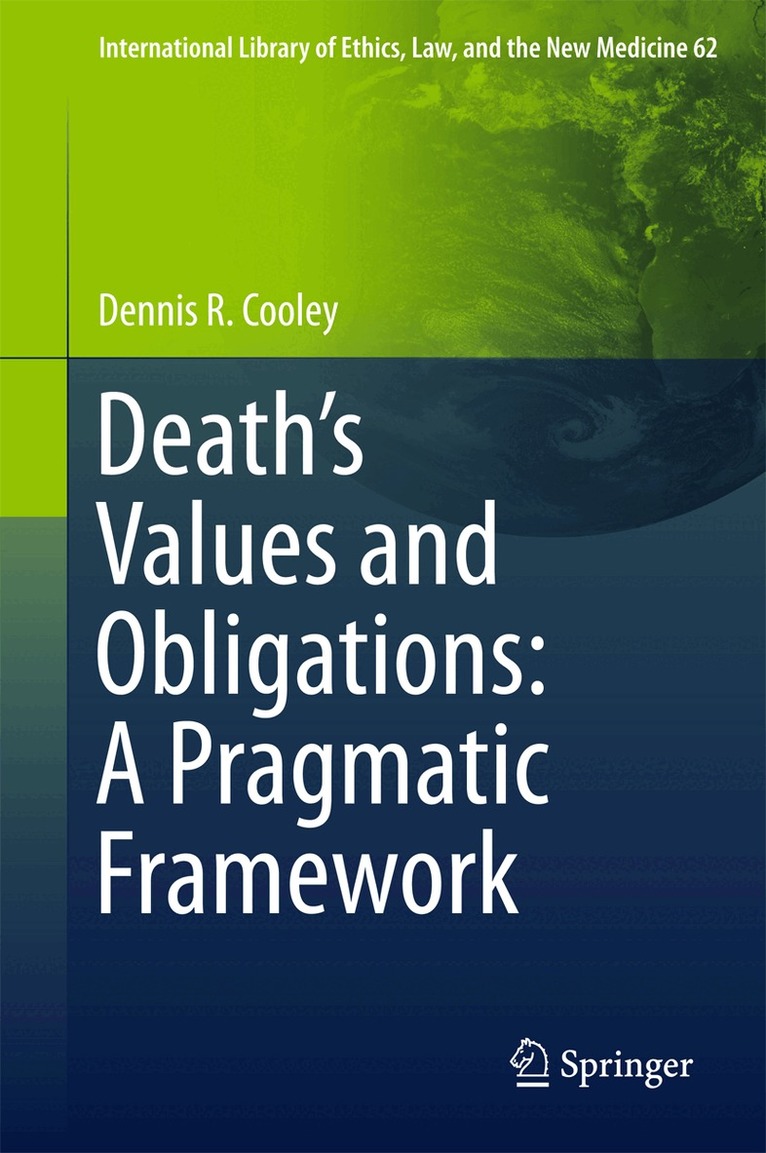
This book brings together the relevant interdisciplinary and method elements needed to form a conceptual framework that is both pragmatic and rigorous. By using the best and often the latest, work in thanatology, psychology, neuroscience, sociology, physics, philosophy and ethics, it develops a framework for understanding both what death is – which requires a great deal of time spent developing definitions of the various types of identity-in-the-moment and identity-over-time – and the values involved in death. This pragmatic framework answers questions about why death is a form of loss; why we experience the emotional reactions, feelings and desires that we do; which of these reactions, feelings and desires are justified and which are not; if we can survive death and how; whether our deaths can harm us; and why and how we should prepare for death. Thanks to the pragmatic framework employed, the answers to the various questions are more likely to be accurate and acceptable than those with less rigorous scholarly underpinnings or which deal with utopian worlds.
712 kr
Skickas inom 5-8 vardagar
This book brings together the relevant interdisciplinary and method elements needed to form a conceptual framework that is both pragmatic and rigorous. By using the best and often the latest, work in thanatology, psychology, neuroscience, sociology, physics, philosophy and ethics, it develops a framework for understanding both what death is – which requires a great deal of time spent developing definitions of the various types of identity-in-the-moment and identity-over-time – and the values involved in death. This pragmatic framework answers questions about why death is a form of loss; why we experience the emotional reactions, feelings and desires that we do; which of these reactions, feelings and desires are justified and which are not; if we can survive death and how; whether our deaths can harm us; and why and how we should prepare for death. Thanks to the pragmatic framework employed, the answers to the various questions are more likely to be accurate and acceptable than those with less rigorous scholarly underpinnings or which deal with utopian worlds.