Deon Filmer - Böcker
Visar alla böcker från författaren Deon Filmer. Handla med fri frakt och snabb leverans.
3 produkter
3 produkter
370 kr
Skickas inom 10-15 vardagar
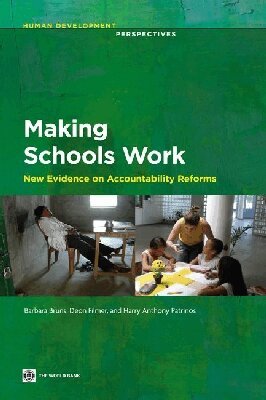
This book is about the threats to education quality in the developing world that cannot be explained by lack of resources. It reviews the observed phenomenon of service delivery failures in public education: cases where programs and policies increase the inputs to education but do not produce effective services where it counts – in schools and classrooms. It documents what we know about the extent and costs of such failures across low and middle-income countries. And it further develops the conceptual model posited in the World Development Report 2004: that a root cause of low-quality and inequitable public services - not only in education - is the weak accountability of providers to both their supervisors and clients.The central focus of the book, however, is a new story. It is that developing countries are increasingly adopting innovative strategies to attack these problems. Drawing on new evidence from 22 rigorous impact evaluations across 11 developing countries, this book examines how three key strategies to strengthen accountability relationships in developing country school systems have affected school enrollment, completion and student learning.The book reviews the motivation and global context for education reforms aimed at strengthening provider accountability. It provides the rationally and synthesizes the evidence on the impacts of three key lines of reform: (1) policies that use the power of information to strengthen the ability of clients of education services (students and their parents) to hold providers accountable for results; (2) policies that promote school-based management–that is increase schools’ autonomy to make key decisions and control resources, often empowering parents to play a larger role; (3) teacher incentives reforms that specifically aim at making teachers more accountable for results, either by making contract tenure dependent on performance, or offering performance-linked pay. The book summarizes the lessons learned, draws cautious conclusions about possible complementarities across different types of accountability-focused reforms if they are implemented in tandem, considers issues related to scaling up reform efforts and the political economy of reform, and suggests directions for future work.
274 kr
Skickas inom 10-15 vardagar
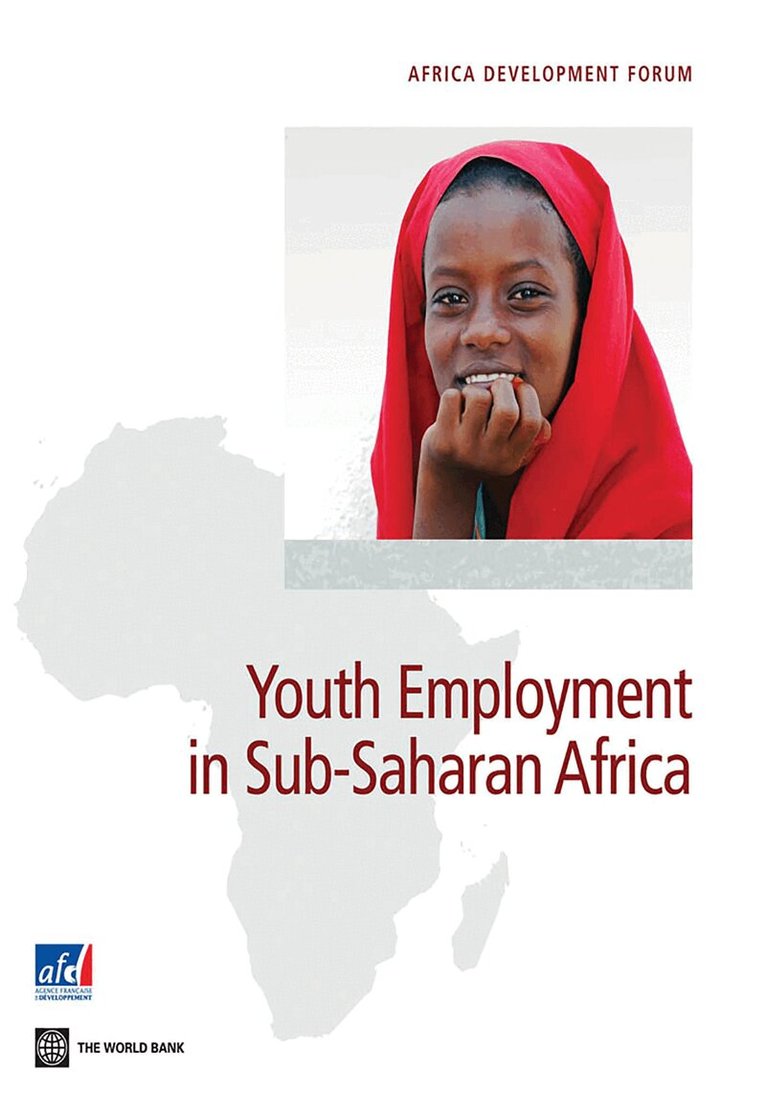
High fertility and declining mortality rates have led to a very young population in most Sub-Saharan African countries. The region's labour force is expected to increase by 11 million a year over the next 10 years. Most of this increase will be new entrants seeking their first job. While the younger generation is better educated than their parents, they often lack the means to translate that education into productive employment. Today, most work is in non-wage jobs in household farms and firms. Even if greater economic activity creates the conditions for robust growth and economic transformation, the private modern wage sector in low and lower-middle income countries cannot absorb all new entrants. The report focuses on how to improve the quality of all jobs with a view to meeting the aspirations of youth. It emphasises that building a strong foundation for human capital development can play an important role in boosting earnings and argues that a balanced approach that builds skills as well as the demand for labour is key.The report notes that many youth employment challenges are problems of employment in general. But, in addition, youth is a time of transitions and young people face particular constraints to accessing productive work. The report brings together original analysis of household and labour force surveys; it reviews the experience of a number of promising interventions across the continent; it draws from qualitative surveys in a number of countries; and it surveys the most up-to-date evidence from rigorous evaluations of policies and programmes. From this information base, the report provides guidance to policymakers on how to intervene along two dimensions - human capital and the business environment - and in three priority areas - agriculture, household enterprises and the modern wage sector. The ultimate goals are to increase productivity, improve livelihoods and multiply opportunities for young people.
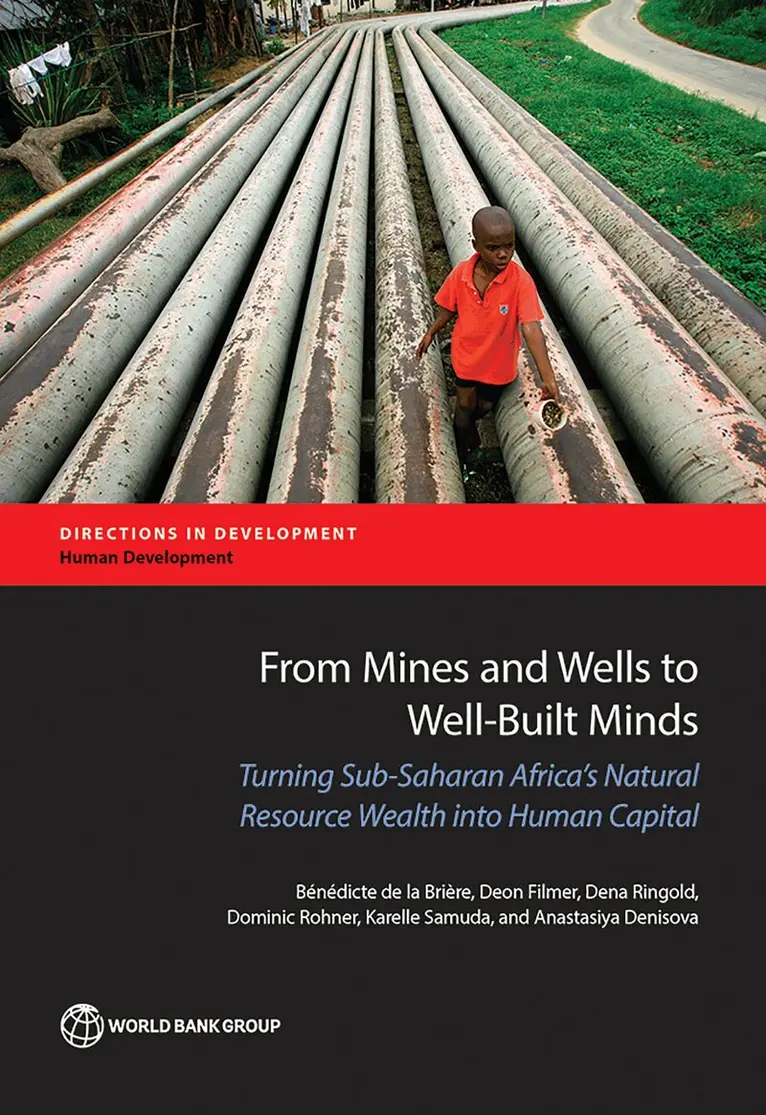
From Mines and Wells to Well-Built Minds
Turning Sub-Saharan Africa's Natural Resource Wealth Into Human Capital
Häftad, Engelska, 2017
337 kr
Skickas inom 10-15 vardagar
Sub-Saharan Africa's natural resource-rich countries have poor human development. This report shows how these countries should tackle the governance challenges in delivering services, invest in early child development, and use the cash generated by resource rents to support citizen investments in human capital.