Louise Fox - Böcker
Visar alla böcker från författaren Louise Fox. Handla med fri frakt och snabb leverans.
3 produkter
3 produkter
248 kr
Skickas inom 10-15 vardagar
Louise's childhood was a living nightmare.Repeatedly sexually abused by her mother's out-of-control boyfriend, the little five year old was surrounded by evil.Louise was beaten with leather belts, starved and neglected, as the family suffered at the hands of both their mother and her partner.Finally, her tormentor was arrested. But her mother stood by him and Louise was dragged to prison visits every week, forced to sit on her abuser's knee and tell him how much she loved him and wanted him to come home.The horror continued when her mother found a new partner even worse than the last. Within months he was assaulting and eventually raping Louise.Taken into care, Louise ended up addicted to drugs and selling her body. But the birth of her child saw Louise vow to turn her life around - and that is just what she did.She broke free, and MUMMY, MAKE IT STOP, is the true story of a brave spirit that refused to be crushed.
297 kr
Skickas inom 10-15 vardagar
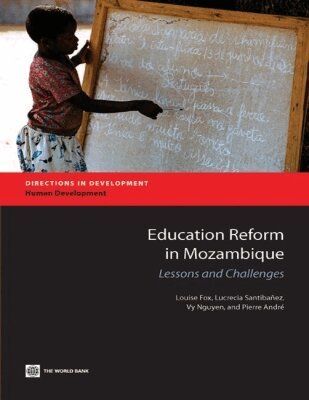
Coming out of civil war, Mozambique had an enormous education deficit. In 199, five years after the peace treaty, 80 percent of the labor force reported to have no education at all, and school enrollment outside the large cities was miserable. Since then, Mozambique has come a long way in improving access to lower and upper primary through sustained investments in education infrastructure and introduction of important reforms. The primary education reform programs implemented in 2004, combined with a continuing program of school construction and teacher training, resulted in a 70% increase in enrollment in EP1 over 4 years with the highest gains for the poorest and most vulnerable children. Yet there was only a slight increase in student/teacher ratios. How did Mozambique do this, and what are the lessons going foward? The most important part of the reform appears to be the removal of the national school fee for primary level and the provision of free textbooks. These reforms provided the boost that poorer households needed to get their children in school. Continued investments in school construction helped as well. However, despite these efforts, there is still an education deficit. In 2008, over 1 million children who should be attending primary school were not. Over half of the children who began grade 1 in 2000 did not complete grade 7 by 2008. One reason is that school costs remain high, especially for grades 6 and above (EP2+). And quality is still not adequate in many schools. As a result, the transformation of the labor force is slow, as over half of the females who entered the labor force in the decade since 1997 did not even complete EP1. Analysis of employment and livelihood opportunities indicates that the transition out of subsistence agriculture requires primary education. This means that to achieve inclusive growth, the key strategic objective of the education system needs to be ensuring that as many children as possible start and finish primary school with competency in the basic subjects, as well as the skills to allow them to find productive economic activities and make these activities pay This book is aimed at policy makers in the education field. .
274 kr
Skickas inom 10-15 vardagar
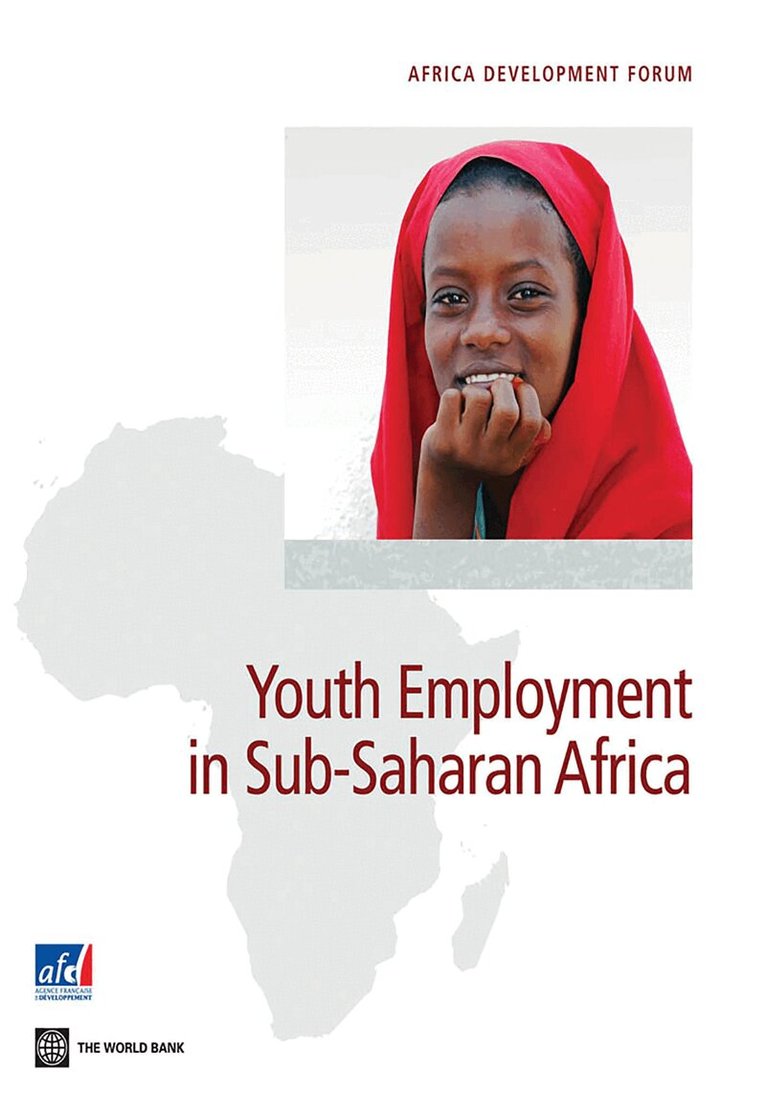
High fertility and declining mortality rates have led to a very young population in most Sub-Saharan African countries. The region's labour force is expected to increase by 11 million a year over the next 10 years. Most of this increase will be new entrants seeking their first job. While the younger generation is better educated than their parents, they often lack the means to translate that education into productive employment. Today, most work is in non-wage jobs in household farms and firms. Even if greater economic activity creates the conditions for robust growth and economic transformation, the private modern wage sector in low and lower-middle income countries cannot absorb all new entrants. The report focuses on how to improve the quality of all jobs with a view to meeting the aspirations of youth. It emphasises that building a strong foundation for human capital development can play an important role in boosting earnings and argues that a balanced approach that builds skills as well as the demand for labour is key.The report notes that many youth employment challenges are problems of employment in general. But, in addition, youth is a time of transitions and young people face particular constraints to accessing productive work. The report brings together original analysis of household and labour force surveys; it reviews the experience of a number of promising interventions across the continent; it draws from qualitative surveys in a number of countries; and it surveys the most up-to-date evidence from rigorous evaluations of policies and programmes. From this information base, the report provides guidance to policymakers on how to intervene along two dimensions - human capital and the business environment - and in three priority areas - agriculture, household enterprises and the modern wage sector. The ultimate goals are to increase productivity, improve livelihoods and multiply opportunities for young people.