Derek H. Aldcroft - Böcker
Visar alla böcker från författaren Derek H. Aldcroft. Handla med fri frakt och snabb leverans.
20 produkter
20 produkter
1 049 kr
Tillfälligt slut
551 kr
Skickas inom 10-15 vardagar
2 220 kr
Skickas inom 10-15 vardagar
Economic historians have perennially addressed the intriguing question of comparative development, asking why some countries develop much faster and further than others. Focusing primarily on Europe between 1914 and 1939, this present volume explores the development of thirteen countries that could be said to be categorised as economically backward during this period: Albania, Bulgaria, Estonia, Greece, Hungary, Latvia, Lithuania, Poland, Portugal, Romania, Spain, Turkey and Yugoslavia. These countries are linked, not only in being geographically on Europe's periphery, but all shared high agrarian components and income levels much lower than those enjoyed in western European countries. The study shows that by 1918 many of these countries had structural characteristics which either relegated them to a low level of development or reflected their economic backwardness, characteristics that were not helped by the hostile economic climate of the interwar period. It explores, region by region, how their progress was checked by war and depression, and how the effects of political and social factors could also be a major impediment to sustained progress and modernisation. For example, in many cases political corruption and instability, deficient administrations, ethnic and religious diversity, agrarian structures and backwardness, population pressures, as well as international friction, were retarding factors. In all this study offers a fascinating insight into many areas of Europe that are often ignored by economists and historians. It demonstrates that these countries were by no means a lost cause, and that their post-war performances show the latent economic potential that most harboured. By providing an insight into the development of Europe's 'periphery' a much more rounded and complete picture of the continent as a whole is achieved.
1 040 kr
Skickas inom 10-15 vardagar
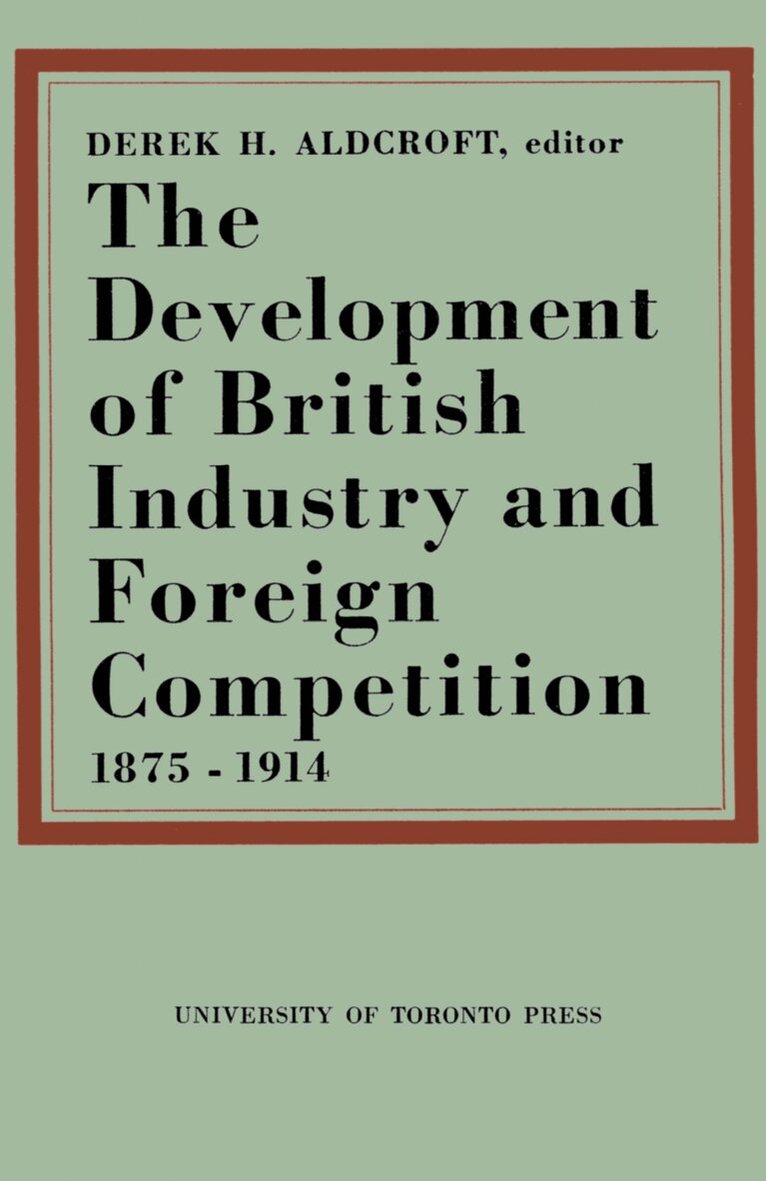
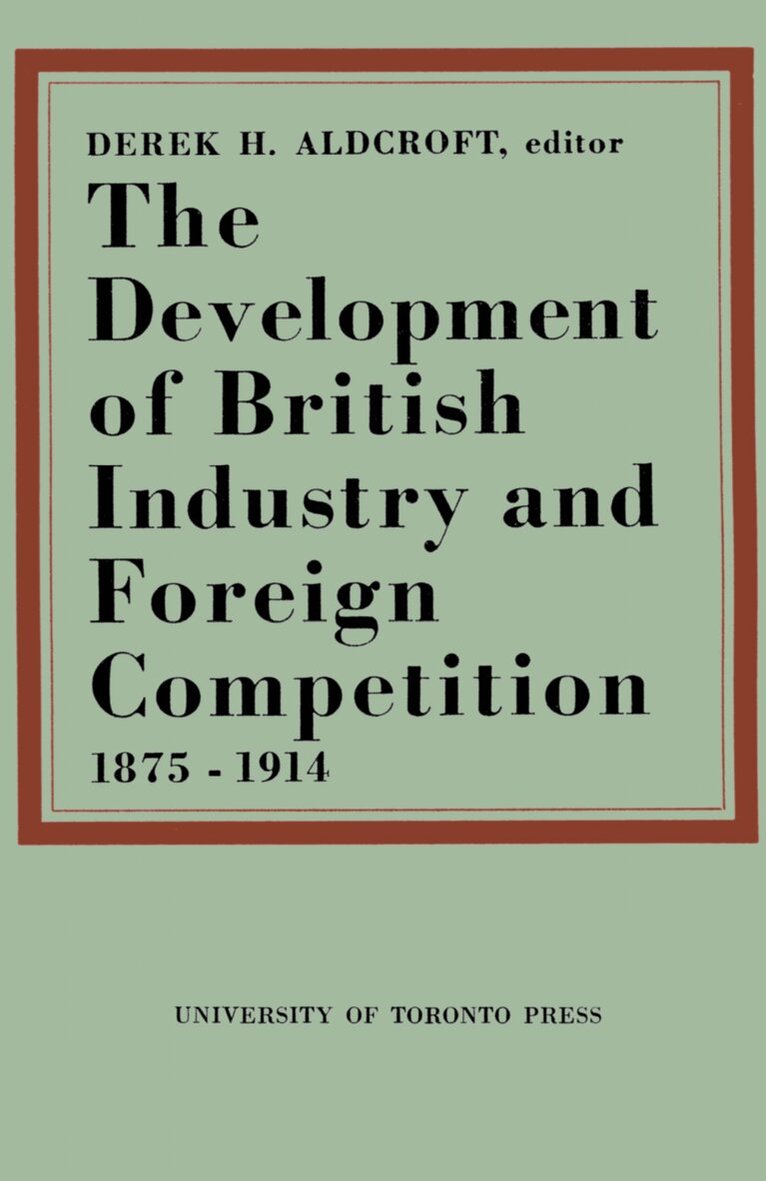
Originally published in 1968 this important work covers a crucial period in Britain’s economic history. In the three or four decades before the First World War British industry was subject to increasing foreign competition particularly from America and Germany. This book reviews the main developments in 10 industries, paying particular attention to the way in which they were affected by foreign competition, and the measures taken to combat it. Each case is analysed in terms of how progressive the British industrialists were and to what extent they were willing to innovate or alter their methods to meet the new conditions. In cases where a lack of enterprise was clear, the contributors have tried to determine what the major factors were which governed the pace of innovation. The book will be of interest to economists, economic historians and sociologists as well as those interested in industrial innovation.
1 040 kr
Skickas inom 10-15 vardagar
Originally published in 1968 this important work covers a crucial period in Britain’s economic history. In the three or four decades before the First World War British industry was subject to increasing foreign competition particularly from America and Germany. This book reviews the main developments in 10 industries, paying particular attention to the way in which they were affected by foreign competition, and the measures taken to combat it. Each case is analysed in terms of how progressive the British industrialists were and to what extent they were willing to innovate or alter their methods to meet the new conditions. In cases where a lack of enterprise was clear, the contributors have tried to determine what the major factors were which governed the pace of innovation. The book will be of interest to economists, economic historians and sociologists as well as those interested in industrial innovation.
649 kr
Skickas inom 10-15 vardagar
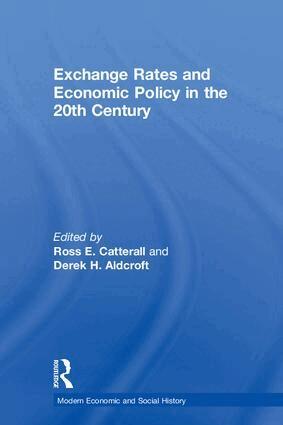
The themes of this study are the exchange rate regimes chosen by policy makers in the twentieth century, the means used to maintain these regimes, and the impact of these decisions on individual national economies and the world economy in general. The book draws heavily on new research showing the lessons and the legacy left for policy makers by the gold standard and the attempt at its resurrection in the 1920s. In examining issues such as the gold exchange standard, the gold bullion standard, the experience of floating exchange rates, the Bretton Woods arrangements, the EMS and the ERM, and the Currency Board approach, there is a conscious attempt to draw out the relevance of history for policy makers now.
705 kr
Skickas inom 10-15 vardagar
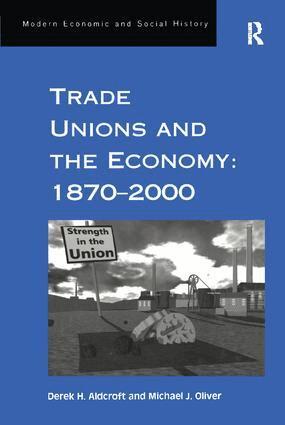
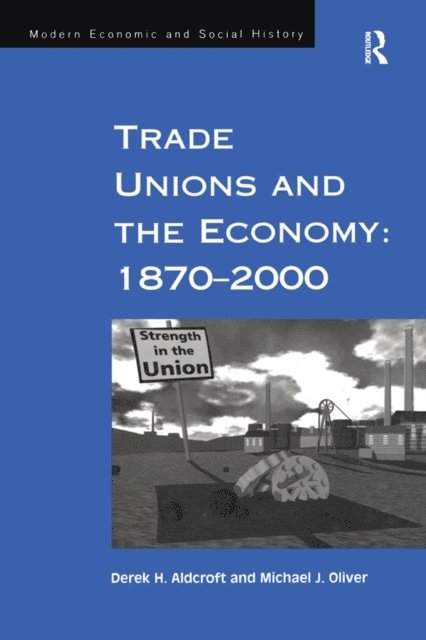
What do unions do and why do they do it? Do they seek to maximise profit for their members, or to obtain better working conditions that benefit society as a whole? Derek H. Aldcroft and Michael J. Oliver here provide one of the first sustained studies of the effects of union activities in terms of economic performance and the impact on the business world. From the rise of the British mass trade union movement in the 1870s to the present day, the book examines the main trends in union development and structure, and the core strategies unions have used to achieve their objectives: the use of strikes, work rules and restrictive practices; workers’ attitudes to innovation; the wage bargaining process. Important assessments are made of the influence of these strategies on investment, innovation, economic growth, and the cost of structure and competitiveness of the UK economy.
789 kr
Skickas inom 10-15 vardagar
Economic historians have perennially addressed the intriguing question of comparative development, asking why some countries develop much faster and further than others. Focusing primarily on Europe between 1914 and 1939, this present volume explores the development of thirteen countries that could be said to be categorised as economically backward during this period: Albania, Bulgaria, Estonia, Greece, Hungary, Latvia, Lithuania, Poland, Portugal, Romania, Spain, Turkey and Yugoslavia. These countries are linked, not only in being geographically on Europe's periphery, but all shared high agrarian components and income levels much lower than those enjoyed in western European countries. The study shows that by 1918 many of these countries had structural characteristics which either relegated them to a low level of development or reflected their economic backwardness, characteristics that were not helped by the hostile economic climate of the interwar period. It explores, region by region, how their progress was checked by war and depression, and how the effects of political and social factors could also be a major impediment to sustained progress and modernisation. For example, in many cases political corruption and instability, deficient administrations, ethnic and religious diversity, agrarian structures and backwardness, population pressures, as well as international friction, were retarding factors. In all this study offers a fascinating insight into many areas of Europe that are often ignored by economists and historians. It demonstrates that these countries were by no means a lost cause, and that their post-war performances show the latent economic potential that most harboured. By providing an insight into the development of Europe's 'periphery' a much more rounded and complete picture of the continent as a whole is achieved.
1 667 kr
Skickas inom 10-15 vardagar
First published in 1997, this book analyses some of the key economic issues facing Europe in the interwar period, against the uncertain international, political and economic background of the time. Among the subjects discussed are the legacy of the peace settlements, inflation, trade and reconstruction, international lending, depression and recovery, the position of Eastern and Central Europe, and the progress of the peripheral nations.The book contends that the peace treaties raised more problems than they solved, while the policy mistakes of the Allied powers after the First World War, and their failure to devise an adequate programme of economic and financial reconstruction, weakened the already divided continent, contributing to its disintegration.
510 kr
Skickas inom 10-15 vardagar
First published in 1997, this book analyses some of the key economic issues facing Europe in the interwar period, against the uncertain international, political and economic background of the time. Among the subjects discussed are the legacy of the peace settlements, inflation, trade and reconstruction, international lending, depression and recovery, the position of Eastern and Central Europe, and the progress of the peripheral nations.The book contends that the peace treaties raised more problems than they solved, while the policy mistakes of the Allied powers after the First World War, and their failure to devise an adequate programme of economic and financial reconstruction, weakened the already divided continent, contributing to its disintegration.
427 kr
Skickas inom 7-10 vardagar
In the three or four decades before the first world war British industry was subject to increasing foreign competition particularly from America and Germany. Frequent complainets have been made both by contemporaries and by later students of the peiod that British industrialists were slow to meet this challenge. This provides an admirable background for a series of case studies of the major British industries, each one of which has been written by a recognised authority. The chief aim has been to review the main developments in ten industries during the period 1875-1914, paying particular attention to the way in which they were affected by foreign competation, and the measures taken to combat it. As far as possible an attempt has been made in each case to ascertain how progressive British industrialists were, that is to what extent they were willing to innovate or alter their methods to meet the new conditions. Wherever it can be shown that a lack of enterprise was evident, the authors have tried to determine what were the major factors which governed the pace of innocation. This is an important book since it covers a crucial period in Britain's economic history. No conscientious teacher or student of industrial history can afford to ignore it. Not only will it be of great interest to economists, economic historians, sociologists and the informed layman, but it should be made compulsory reading for businessmen and managers who are at present struggling anew with the problems of industrial innovation. They may both take comfort and derive useful lessons from these studies. The contributors to the book are: A.J. Taylor, Professor of History, University of Leeds; P.L. Payne, Senior Lecturer in Economic History, University of Glasgow; R.E. Tyson, Lecturer in Economic History, University of Aberdeen; E.M. Sigsworth, Reader in Economic History, University of York; J.M. Blackman, Lecturer in Economic History, University of Hull; P. Head, Principal Planning Officer, Staffordshire County Council; S.B. Saul, Professor Economic History, University of Edinburgh; I.C.R. Byatt, Lecturer in Economics, London School of Economic and Political Science; H.W. Richardson, Senior Lecturer in Economics, University of Aberdeen; T.C. Barker, Professor of Economic History, University of Kent; Derek H. Aldcroft, Lecturer in Economic History, University of Glasgow, who edits the volume.
2 151 kr
Skickas inom 7-10 vardagar
The themes of this study are the exchange rate regimes chosen by policy makers in the twentieth century, the means used to maintain these regimes, and the impact of these decisions on individual national economies and the world economy in general. The book draws heavily on new research showing the lessons and the legacy left for policy makers by the gold standard and the attempt at its resurrection in the 1920s. In examining issues such as the gold exchange standard, the gold bullion standard, the experience of floating exchange rates, the Bretton Woods arrangements, the EMS and the ERM, and the Currency Board approach, there is a conscious attempt to draw out the relevance of history for policy makers now.
502 kr
Skickas inom 7-10 vardagar
This book provides the first comprehensive and accessible account of the evolution of exchange rate regimes in the twentieth century. It presents a chronological, non-technical history and in doing so manages to link the past with the present to shed new light on the merits of different exchange rate systems.Since the golden age before the First World War, the international monetary system has experienced several changes in exchange rate regimes, alternating between fixed and floating rate systems interspersed with managed or dirty floats. The authors examine and assess the evolution of exchange rate regimes since the First World War to the present day. They discuss the forces that have brought about change in order to determine how different regimes affected the economic environment. They consider the merits or otherwise of the respective regimes and assess the evidence and arguments for and against fixed and floating exchange rate systems.Exchange Rate Regimes in the Twentieth Century provides a coherent and manageable analysis of a complex subject. It will prove invaluable to both undergraduates and postgraduates studying economic history, international economics and international studies.
2 319 kr
Skickas inom 7-10 vardagar
How do we define an economic disaster? A difficult question. Most centuries would claim that they have had their share of disasters, but the twentieth century certainly seems to have been more prone to them than the previous one. A number of leading economists and economic historians assemble here to examine nine key disasters with international or global implications. The First and Second World Wars, the great depression, oil shocks, inflation, financial crises, stock market crashes, the collapse of the Soviet command economy and Third World disasters are discussed in this comprehensive book. The contributors subject these disasters to in-depth assessment, carefully considering their costs and impact on specific countries and regions, as well as assessing them in a global context. The book examines the legacy of economic disasters and asks whether economic disasters are avoidable or whether policymakers can learn from their mistakes. The book will appeal to a wide variety of social scientists, including those working in economic history, international relations, international political economy and geopolitics.
729 kr
Skickas inom 7-10 vardagar
This thorough and compelling book offers a long-run perspective on the European economy from 1500 to the present day, and compares Europe's position of world dominance in the nineteenth century with its vacillating fortunes in the twentieth century. Europe is set specifically within an international context to illustrate how it influenced the rest of the world and how in turn the latter helped to shape the pattern of European development. The authors explain why Europe overtook the formerly advanced Eastern civilizations and how this resulted in the growing inequality among the nations of the world which is such a marked feature in the present day. They then trace the development of the European economy within the context of the international economy and analyse the reasons for its rise to world dominance in the nineteenth century and then its collapse and revival in the twentieth century.Europe in the International Economy 1500 to 2000 will be of interest to students and scholars of economic history and international economics.
882 kr
Skickas inom 7-10 vardagar
How do we define an economic disaster? A difficult question. Most centuries would claim that they have had their share of disasters, but the twentieth century certainly seems to have been more prone to them than the previous one. A number of leading economists and economic historians assemble here to examine nine key disasters with international or global implications. The First and Second World Wars, the great depression, oil shocks, inflation, financial crises, stock market crashes, the collapse of the Soviet command economy and Third World disasters are discussed in this comprehensive book. The contributors subject these disasters to in-depth assessment, carefully considering their costs and impact on specific countries and regions, as well as assessing them in a global context. The book examines the legacy of economic disasters and asks whether economic disasters are avoidable or whether policymakers can learn from their mistakes. The book will appeal to a wide variety of social scientists, including those working in economic history, international relations, international political economy and geopolitics.
2 022 kr
Skickas inom 7-10 vardagar
Today the gap between rich and poor nations is larger than it has ever been in recorded history. Yet the economic hegemony of Europe was unanticipated in the fifteenth century when Europeans seemed no more advanced than their eastern counterparts.This distinguished collection of papers places present development problems in historical perspective, drawing on European experience to show what characterized the growth of the world's first industrialized continent. Topics discussed in this volume include the influence of late fertility on economic development, the roots of Latin American backwardness, economic growth in Central and Eastern Europe since 1870, macroeconomic populism and economic failure in Africa since 1960, trade and exchange rate liberalization, and the impact of technology and capital market development in a divided world.Rich Nations - Poor Nations offers a broad perspective on the development process in which authors relate historical work to the current problems of the Third World. While these papers are not anchored solely in the European past, they recognize that some positive things can be gleaned from Europe's historical experience which will be of value to developing nations.
1 840 kr
Skickas inom 7-10 vardagar
This book provides the first comprehensive and accessible account of the evolution of exchange rate regimes in the twentieth century. It presents a chronological, non-technical history and in doing so manages to link the past with the present to shed new light on the merits of different exchange rate systems.Since the golden age before the First World War, the international monetary system has experienced several changes in exchange rate regimes, alternating between fixed and floating rate systems interspersed with managed or dirty floats. The authors examine and assess the evolution of exchange rate regimes since the First World War to the present day. They discuss the forces that have brought about change in order to determine how different regimes affected the economic environment. They consider the merits or otherwise of the respective regimes and assess the evidence and arguments for and against fixed and floating exchange rate systems.Exchange Rate Regimes in the Twentieth Century provides a coherent and manageable analysis of a complex subject. It will prove invaluable to both undergraduates and postgraduates studying economic history, international economics and international studies.
2 038 kr
Skickas inom 7-10 vardagar
This thorough and compelling book offers a long-run perspective on the European economy from 1500 to the present day, and compares Europe's position of world dominance in the nineteenth century with its vacillating fortunes in the twentieth century. Europe is set specifically within an international context to illustrate how it influenced the rest of the world and how in turn the latter helped to shape the pattern of European development. The authors explain why Europe overtook the formerly advanced Eastern civilizations and how this resulted in the growing inequality among the nations of the world which is such a marked feature in the present day. They then trace the development of the European economy within the context of the international economy and analyse the reasons for its rise to world dominance in the nineteenth century and then its collapse and revival in the twentieth century.Europe in the International Economy 1500 to 2000 will be of interest to students and scholars of economic history and international economics.
2 012 kr
Skickas inom 10-15 vardagar
What do unions do and why do they do it? Do they seek to maximise profit for their members, or to obtain better working conditions that benefit society as a whole? Derek H. Aldcroft and Michael J. Oliver here provide one of the first sustained studies of the effects of union activities in terms of economic performance and the impact on the business world. From the rise of the British mass trade union movement in the 1870s to the present day, the book examines the main trends in union development and structure, and the core strategies unions have used to achieve their objectives: the use of strikes, work rules and restrictive practices; workers’ attitudes to innovation; the wage bargaining process. Important assessments are made of the influence of these strategies on investment, innovation, economic growth, and the cost of structure and competitiveness of the UK economy.