Desmond M. Clarke - Böcker
Visar alla böcker från författaren Desmond M. Clarke. Handla med fri frakt och snabb leverans.
12 produkter
12 produkter
713 kr
Skickas inom 7-10 vardagar
Desmond M. Clarke presents a thematic history of French philosophy from the middle of the sixteenth century to the beginning of Louis XIV's reign. While the traditional philosophy of the schools was taught throughout this period by authors who have faded into permanent obscurity, a whole generation of writers who were not professional philosophers--some of whom never even attended a school or college--addressed issues that were prominent in French public life. Clarke explores such topics as the novel political theory espoused by monarchomachs, such as Bèze and Hotman, against Bodin's account of absolute sovereignty; the scepticism of Montaigne, Charron, and Sanches; the ethical discussions of Du Vair, Gassendi, and Pascal; innovations in natural philosophy that were inspired by Mersenne and Descartes and implemened by members of the Académie royale des sciences; theories of the human mind from Jean de Silhon to Cureau de la Chambre and Descartes; and the novel arguments in support of women's education and equality that were launched by De Gournay, Du Bosc, Van Schurman and Poulain de la Barre. The writers involved were lawyers, political leaders, theologians, and independent scholars and they acknowledged, almost unanimously, the authority of the Bible as a source of knowledge that was claimed to be more reliable than the fragile powers of human understanding. Since they could not agree, however, on which books of the Bible were canonical or how that should be understood, their discussions raised questions about faith and reason that mirrored those involved in the infamous Galileo affair.
393 kr
Skickas inom 7-10 vardagar
Desmond M. Clarke presents a thematic history of French philosophy from the middle of the sixteenth century to the beginning of Louis XIV's reign. While the traditional philosophy of the schools was taught throughout this period by authors who have faded into permanent obscurity, a whole generation of writers who were not professional philosophers—some of whom never even attended a school or college—addressed issues that were prominent in French public life. Clarke explores such topics as the novel political theory espoused by monarchomachs, such as Bèze and Hotman, against Bodin's account of absolute sovereignty; the scepticism of Montaigne, Charron, and Sanches; the ethical discussions of Du Vair, Gassendi, and Pascal; innovations in natural philosophy that were inspired by Mersenne and Descartes and implemened by members of the Académie royale des sciences; theories of the human mind from Jean de Silhon to Cureau de la Chambre and Descartes; and the novel arguments in support of women's education and equality that were launched by De Gournay, Du Bosc, Van Schurman and Poulain de la Barre. The writers involved were lawyers, political leaders, theologians, and independent scholars and they acknowledged, almost unanimously, the authority of the Bible as a source of knowledge that was claimed to be more reliable than the fragile powers of human understanding. Since they could not agree, however, on which books of the Bible were canonical or how that should be understood, their discussions raised questions about faith and reason that mirrored those involved in the infamous Galileo affair.
1 757 kr
Skickas inom 5-8 vardagar
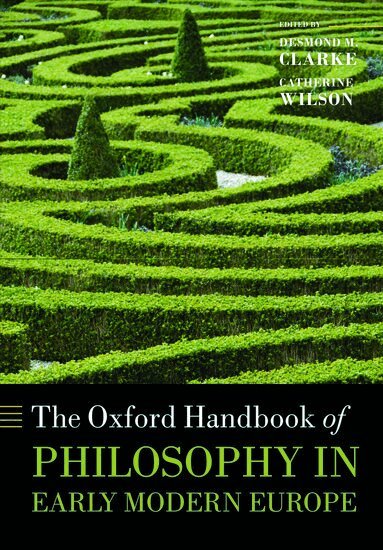
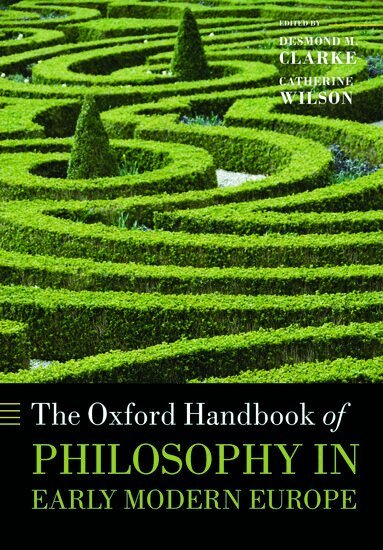
In this Handbook twenty-six leading scholars survey the development of philosophy between the middle of the sixteenth century and the early eighteenth century. The five parts of the book cover metaphysics and natural philosophy; the mind, the passions, and aesthetics; epistemology, logic, mathematics, and language; ethics and political philosophy; and religion.The period between the publication of Copernicus's De Revolutionibus and Berkeley's reflections on Newton and Locke saw one of the most fundamental changes in the history of our way of thinking about the universe. This radical transformation of worldview was partly a response to what we now call the Scientific Revolution; it was equally a reflection of political changes that were no less fundamental, which included the establishment of nation-states and some of the first attempts to formulate a theory of international rights and justice. Finally, the Reformation and its aftermath undermined the apparent unity of the Christian church in Europe and challenged both religious beliefs that had been accepted for centuries and the interpretation of the Bible on which they had been based.The Handbook surveys a number of the most important developments in the philosophy of the period, as these are expounded both in texts that have since become very familiar and in other philosophical texts that are undeservedly less well-known. It also reaches beyond the philosophy to make evident the fluidity of the boundary with science, and to consider the impact on philosophy of historical and political events--explorations, revolutions and reforms, inventions and discoveries. Thus it not only offers a guide to the most important areas of recent research, but also offers some new questions for historians of philosophy to pursue and to have indicated areas that are ripe for further exploration.
581 kr
Skickas inom 5-8 vardagar
In this Handbook twenty-six leading scholars survey the development of philosophy between the middle of the sixteenth century and the early eighteenth century. The five parts of the book cover metaphysics and natural philosophy; the mind, the passions, and aesthetics; epistemology, logic, mathematics, and language; ethics and political philosophy; and religion.The period between the publication of Copernicus's De Revolutionibus and Berkeley's reflections on Newton and Locke saw one of the most fundamental changes in the history of our way of thinking about the universe. This radical transformation of worldview was partly a response to what we now call the Scientific Revolution; it was equally a reflection of political changes that were no less fundamental, which included the establishment of nation-states and some of the first attempts to formulate a theory of international rights and justice. Finally, the Reformation and its aftermath undermined the apparent unity of the Christian church in Europe and challenged both religious beliefs that had been accepted for centuries and the interpretation of the Bible on which they had been based.The Handbook surveys a number of the most important developments in the philosophy of the period, as these are expounded both in texts that have since become very familiar and in other philosophical texts that are undeservedly less well-known. It also reaches beyond the philosophy to make evident the fluidity of the boundary with science, and to consider the impact on philosophy of historical and political events--explorations, revolutions and reforms, inventions and discoveries. Thus it not only offers a guide to the most important areas of recent research, but also offers some new questions for historians of philosophy to pursue and to have indicated areas that are ripe for further exploration.
1 801 kr
Skickas inom 5-8 vardagar
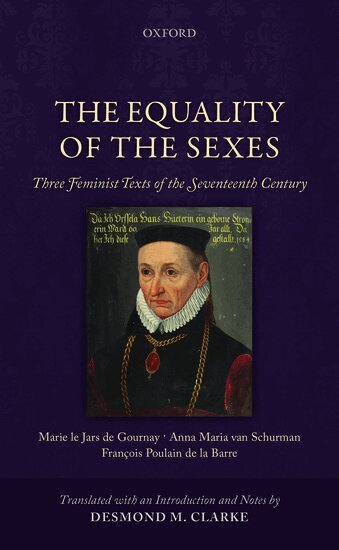
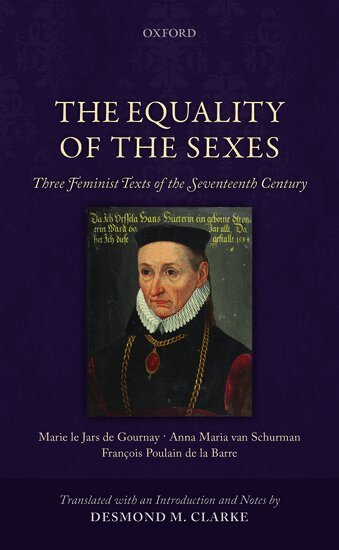
Desmond M. Clarke presents new translations of three of the first feminist tracts to support explicitly the equality of the sexes. The alleged inferiority of women's nature and the corresponding roles that women were (in)capable of exercising in society were debated in Western culture from the civilization of ancient Greece to the establishment of early Christian churches. There had also been some proponents of women's superiority (in comparison with men) prior to the early modern period. In contrast with both of these claims, the seventeenth century witnessed the first publications that argued for the equality of men and women. Among the most articulate and original defenders of that view were Marie le Jars de Gournay, Anna Maria van Schurman, and François Poulain de la Barre. Gournay published The Equality of Men and Women in Paris in 1622, while one of her Dutch correspondents, Van Schurman, published in Latin her Dissertation in support of women's education in 1641. Poulain wrote a radical Physical and Moral Discourse concerning the Equality of Both Sexes in 1673, which he also published in Paris. These three feminist tracts transformed the language and conceptual framework in which questions about women's equality or otherwise were subsequently discussed. During the eighteenth and nineteenth centuries, anonymous plagiarized editions and pirated translations of Poulain's work appeared in English, as 'vindications' of the rights of women. This edition includes new translations, from French and Latin, of these three key texts, and excerpts from the authors' related writings, together with an extensive introduction to the religious and philosophical context within which they argued against the traditional view of women's natural inferiority to men.
602 kr
Skickas inom 7-10 vardagar
Desmond M. Clarke presents new translations of three of the first feminist tracts to support explicitly the equality of the sexes. The alleged inferiority of women's nature and the corresponding roles that women were (in)capable of exercising in society were debated in Western culture from the civilization of ancient Greece to the establishment of early Christian churches. There had also been some proponents of women's superiority (in comparison with men) prior to the early modern period. In contrast with both of these claims, the seventeenth century witnessed the first publications that argued for the equality of men and women. Among the most articulate and original defenders of that view were Marie le Jars de Gournay, Anna Maria van Schurman, and François Poulain de la Barre. Gournay published The Equality of Men and Women in Paris in 1622, while one of her Dutch correspondents, Van Schurman, published in Latin her Dissertation in support of women's education in 1641. Poulain wrote a radical Physical and Moral Discourse concerning the Equality of Both Sexes in 1673, which he also published in Paris. These three feminist tracts transformed the language and conceptual framework in which questions about women's equality or otherwise were subsequently discussed. During the eighteenth and nineteenth centuries, anonymous plagiarized editions and pirated translations of their works appeared in English, as 'vindications' of the rights of women. This edition includes new translations, from French and Latin, of these three key texts, and excerpts from the authors' related writings, together with an extensive introduction to the religious and philosophical context within which they argued against the traditional view of women's natural inferiority to men.
487 kr
Skickas inom 7-10 vardagar
Condillac's Essay on the Origin of Human Knowledge, first published in French in 1746 and offered here in a new translation, represented in its time a radical departure from the dominant conception of the mind as a reservoir of innately given ideas. Descartes had held that knowledge must rest on ideas; Condillac turned this upside down by arguing that speech and words are the origin of mental life and knowledge. He argued, further, that language has its origin in human interaction and in our natural capacity to react spontaneously and instinctively to the expression of emotions and states of mind in others. The importance of this pointedly anti-Cartesian view, and its relevance to both aesthetics and epistemology, were quickly understood, and Condillac's work influenced many later philosophers including Herder, Rousseau, and Adam Smith. His conception also anticipated Wittgenstein's view of language, its usage, and its relation to mind and thought.
928 kr
Skickas inom 7-10 vardagar
Voltaire is widely known as the author of a literary masterpiece, Candide, while his reputation as a thinker rests largely on his Philosophical Letters and Philosophical Dictionary. He is equally renowned as a critic of the forces of superstition and fanaticism, and a champion of freedom of thought and belief. The works presented here, in a new English translation, are among the most important and characteristic texts of the Enlightenment, and bring together all three aspects of Voltaire: the writer, the doer and the philosophe. Originating in Voltaire's campaign to exonerate Jean Calas, they are works of polemical brilliance, informed by his deism and humanism and by Enlightenment values and ideals more generally. The issues which they raise, concerning questions of tolerance and human dignity, are still highly relevant to our own times. This volume presents them together with an introduction by Simon Harvey and useful notes on further reading.
410 kr
Skickas inom 7-10 vardagar
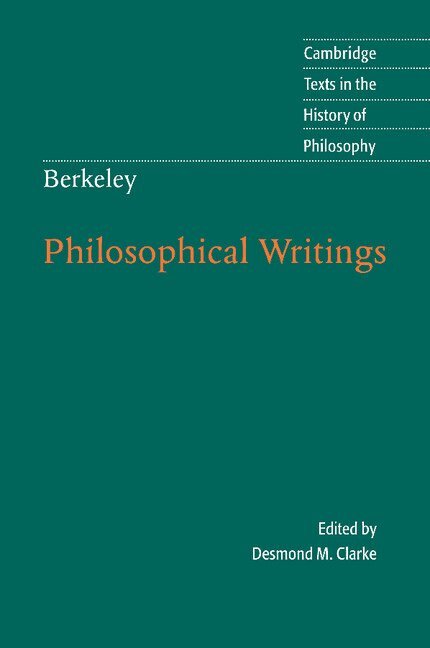
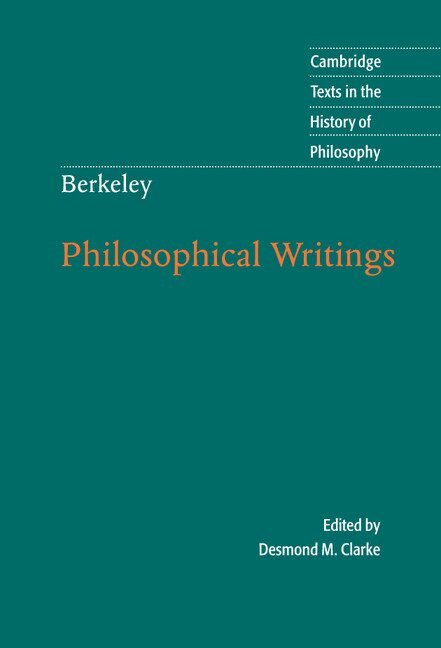
George Berkeley (1685-1753) was a university teacher, a missionary, and later a Church of Ireland bishop. The over-riding objective of his long philosophical career was to counteract objections to religious belief that resulted from new philosophies associated with the Scientific Revolution. Accordingly, he argued against scepticism and atheism in the Principles and the Three Dialogues; he rejected theories of force in the Essay on Motion; he offered a new theory of meaning for religious language in Alciphron; and he modified his earlier immaterialism in Siris by speculating about the body's influence on the soul. His radical empiricism and scientific instrumentalism, which rejected the claims of the sciences to provide a realistic interpretation of phenomena, are still influential today. This edition provides texts from the full range of Berkeley's contributions to philosophy, together with an introduction by Desmond M. Clarke that sets them in their historical and philosophical contexts.
639 kr
Skickas inom 7-10 vardagar
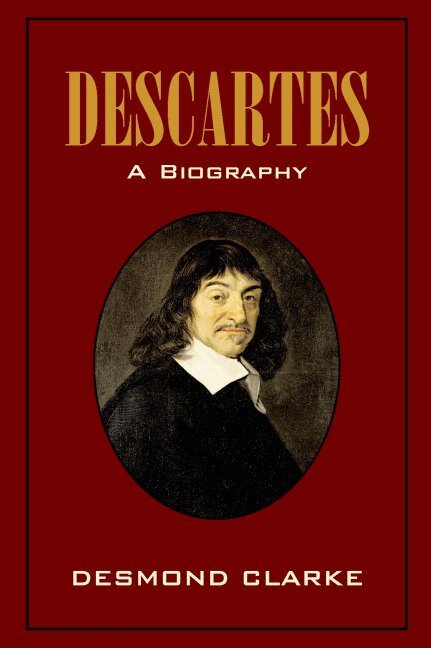
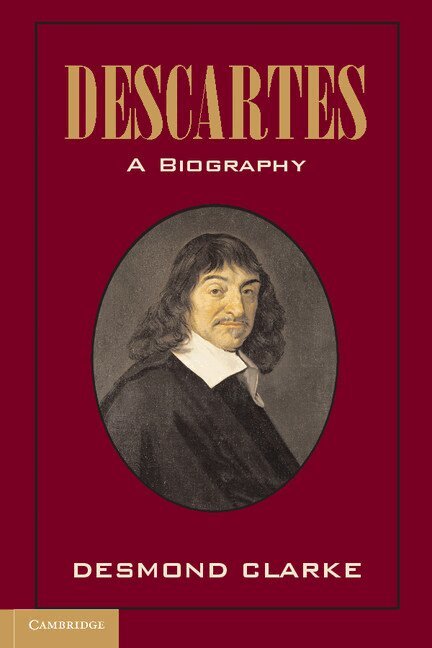
René Descartes is best remembered today for writing 'I think, therefore I am', but his main contribution to the history of ideas was his effort to construct a philosophy that would be sympathetic to the new sciences that emerged in the seventeenth century. To a great extent he was the midwife to the Scientific Revolution and a significant contributor to its key concepts. In four major publications, he fashioned a philosophical system that accommodated the needs of these new sciences and thereby earned the unrelenting hostility of both Catholic and Calvinist theologians, who relied on the scholastic philosophy that Descartes hoped to replace. His contemporaries claimed that his proofs of God's existence in the Meditations were so unsuccessful that he must have been a cryptic atheist and that his discussion of skepticism served merely to fan the flames of libertinism. This is the first biography in English that addresses the full range of Descartes' interest in theology, philosophy and the sciences and that traces his intellectual development through his entire career.
1 179 kr
Skickas inom 7-10 vardagar
George Berkeley (1685-1753) was a university teacher, a missionary, and later a Church of Ireland bishop. The over-riding objective of his long philosophical career was to counteract objections to religious belief that resulted from new philosophies associated with the Scientific Revolution. Accordingly, he argued against scepticism and atheism in the Principles and the Three Dialogues; he rejected theories of force in the Essay on Motion; he offered a new theory of meaning for religious language in Alciphron; and he modified his earlier immaterialism in Siris by speculating about the body's influence on the soul. His radical empiricism and scientific instrumentalism, which rejected the claims of the sciences to provide a realistic interpretation of phenomena, are still influential today. This edition provides texts from the full range of Berkeley's contributions to philosophy, together with an introduction by Desmond M. Clarke that sets them in their historical and philosophical contexts.
435 kr
Skickas inom 7-10 vardagar
René Descartes is best remembered today for writing 'I think, therefore I am', but his main contribution to the history of ideas was his effort to construct a philosophy that would be sympathetic to the new sciences that emerged in the seventeenth century. To a great extent he was the midwife to the Scientific Revolution and a significant contributor to its key concepts. In four major publications, he fashioned a philosophical system that accommodated the needs of these new sciences and thereby earned the unrelenting hostility of both Catholic and Calvinist theologians, who relied on the scholastic philosophy that Descartes hoped to replace. His contemporaries claimed that his proofs of God's existence in the Meditations were so unsuccessful that he must have been a cryptic atheist and that his discussion of skepticism served merely to fan the flames of libertinism. This is the first biography in English that addresses the full range of Descartes' interest in theology, philosophy and the sciences and that traces his intellectual development through his entire career.