Detlef Muller-Mahn - Böcker
Visar alla böcker från författaren Detlef Muller-Mahn. Handla med fri frakt och snabb leverans.
4 produkter
4 produkter
725 kr
Skickas inom 10-15 vardagar
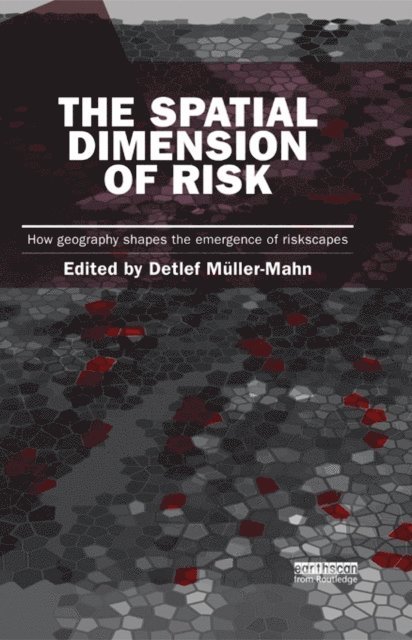
Through its exploration of the spatial dimension of risk, this book offers a brand new approach to theorizing risk, and significant improvements in how to manage, tolerate and take risks. A broad range of risks are examined, including natural hazards, climate change, political violence, and state failure. Case studies range from the Congo to Central Asia, from tsunami in Japan and civil war affected areas in Sri Lanka to avalanche hazards in Austria. In each of these cases, the authors examine the importance and role of space in the causes and differentiation of risk, in how we can conceptualize risk from a spatial perspective and in the relevance of space and locality for risk governance. This new approach – endorsed by Ragnar Löfstedt and Ortwin Renn, two of the world's leading and most prolific risk analysts – is essential reading for those charged with studying, anticipating and managing risks.
1 160 kr
Skickas inom 7-10 vardagar
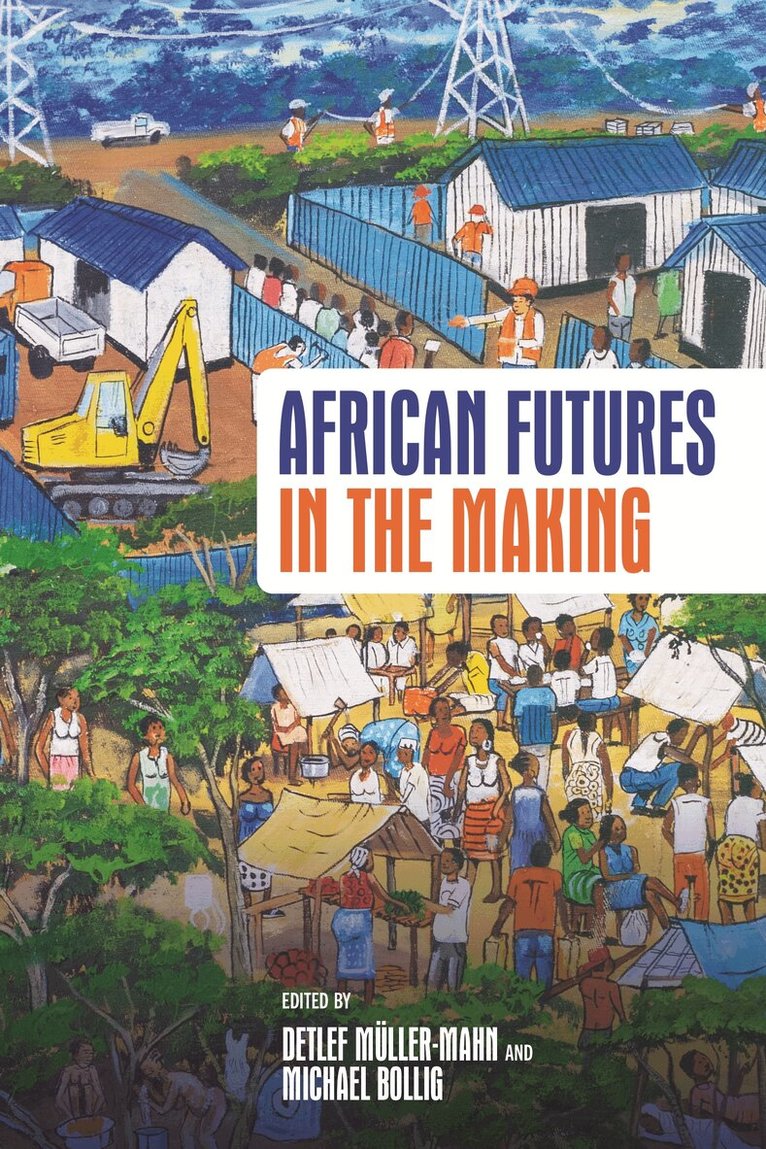
What lies ahead for rural Africa, given a rapidly increasing population, climate change, poverty, inequality and projections of an increasing vulnerability to natural hazards and food shortages?Bringing together scholars in ecology, agriculture, economics, human geography and cultural anthropology, from Ethiopia, Ghana, Kenya, South Africa, Tanzania, Uganda, Germany, The Netherlands and the UK, this book focusses on social-ecological transformation and future-making in rural Africa, especially in areas of rapid land-use change following the establishment of development corridors, conservation areas, and large-scale infrastructure projects. In Africa, discussions on the way forward are particularly conflict-ridden because people do not agree about desirable goals, because the gap between winners and losers seems to be bigger than elsewhere, and because the struggle for desirable futures is embedded in a problematic history of foreign domination and exploitation. Focussing on eastern and southern Africa, topics examined range from the history of conservation initiatives and wildlife protection to visions of green development, from the gender implications of extreme climate events on pastoral economies to the use of information and communication technologies on farms and mobile money in geographically remote territories, from large-scale energy infrastructure projects and growth corridors to local ways of managing risk. The volume opens with reflections on African utopic registers of the future and conceptual decolonization in African futurity.CONTRIBUTORS: Martin Ajei, Michael Bollig, Maxmillian Chuhila, Peter Dannenberg, Clemens Greiner, Prince K. Guma, Carolin Hulke, Linus Kalvelage, Eric Kioko, Britta Klagge, Uroš Kovač, Astrid Matejcek, Richard Mbunda, Kennedy Mkutu, Detlef Müller-Mahn, Frankline Ndi, Sabelo J. Ndlovu-Gatsheni, Rupert Neuhöfer, Anne Oketch, Dennis Ong'ech, Maggie Opondo, Gilbert Ouma, Javier Revilla Diez, Julian Rochlitz, Dorothea Schulz, Ian Scoones, Tahira Shariff Mohamed, Masresha Taye, Gideon Tups, Hauke-Peter Vehrs, Julia VernePublished in association with the Collaborative Research Centre FUTURE RURAL AFRICA, funded by the German Research Council (DFG).This book is available as Open Access under the Creative Commons license CC BY-NC-ND, funded by the German Research Foundation (DFG) through the collaborative research center "Future Rural Africa", funding code TRR 228/3.
525 kr
Skickas inom 10-15 vardagar
What lies ahead for rural Africa, given a rapidly increasing population, climate change, poverty, inequality and projections of an increasing vulnerability to natural hazards and food shortages?Bringing together scholars in ecology, agriculture, economics, human geography and cultural anthropology, from Ethiopia, Ghana, Kenya, South Africa, Tanzania, Uganda, Germany, The Netherlands and the UK, this book focusses on social-ecological transformation and future-making in rural Africa, especially in areas of rapid land-use change following the establishment of development corridors, conservation areas, and large-scale infrastructure projects. In Africa, discussions on the way forward are particularly conflict-ridden because people do not agree about desirable goals, because the gap between winners and losers seems to be bigger than elsewhere, and because the struggle for desirable futures is embedded in a problematic history of foreign domination and exploitation. Focussing on eastern and southern Africa, topics examined range from the history of conservation initiatives and wildlife protection to visions of green development, from the gender implications of extreme climate events on pastoral economies to the use of information and communication technologies on farms and mobile money in geographically remote territories, from large-scale energy infrastructure projects and growth corridors to local ways of managing risk. The volume opens with reflections on African utopic registers of the future and conceptual decolonization in African futurity.CONTRIBUTORS: Martin Ajei, Michael Bollig, Maxmillian Chuhila, Peter Dannenberg, Clemens Greiner, Prince K. Guma, Carolin Hulke, Linus Kalvelage, Eric Kioko, Britta Klagge, Uroš Kovač, Astrid Matejcek, Richard Mbunda, Kennedy Mkutu, Detlef Müller-Mahn, Frankline Ndi, Sabelo J. Ndlovu-Gatsheni, Rupert Neuhöfer, Anne Oketch, Dennis Ong'ech, Maggie Opondo, Gilbert Ouma, Javier Revilla Diez, Julian Rochlitz, Dorothea Schulz, Ian Scoones, Tahira Shariff Mohamed, Masresha Taye, Gideon Tups, Hauke-Peter Vehrs, Julia VernePublished in association with the Collaborative Research Centre FUTURE RURAL AFRICA, funded by the German Research Council (DFG).This book is available as Open Access under the Creative Commons license CC BY-NC-ND, funded by the German Research Foundation (DFG) through the collaborative research center "Future Rural Africa", funding code TRR 228/3.
2 155 kr
Skickas inom 10-15 vardagar
Through its exploration of the spatial dimension of risk, this book offers a brand new approach to theorizing risk, and significant improvements in how to manage, tolerate and take risks. A broad range of risks are examined, including natural hazards, climate change, political violence, and state failure. Case studies range from the Congo to Central Asia, from tsunami in Japan and civil war affected areas in Sri Lanka to avalanche hazards in Austria. In each of these cases, the authors examine the importance and role of space in the causes and differentiation of risk, in how we can conceptualize risk from a spatial perspective and in the relevance of space and locality for risk governance. This new approach – endorsed by Ragnar Löfstedt and Ortwin Renn, two of the world's leading and most prolific risk analysts – is essential reading for those charged with studying, anticipating and managing risks.