Devin Deweese - Böcker
Visar alla böcker från författaren Devin Deweese. Handla med fri frakt och snabb leverans.
7 produkter
7 produkter
128 kr
Skickas inom 10-15 vardagar
Papers on Inner Asia is a refereed occasional paper series focused on the history, language, literature, and culture of Inner Asia. Inner Asia is defined as the region that includes Islamic Central Asia (the areas sometimes called Western, Eastern, and Afghan Turkestan), Mongolia, Manchuria, and Tibet. The papers deal with various topics related to this vast region, in fields of history, philology, linguistics, anthropology, archeology, and economics, among others. Works on certain subjects that transcend the boundaries of Inner Asia in its strict sense, but are relevant for the study of its peoples, languages, history, and culture, are also included. The Papers were launched by Yuri Bregel in 1986. Beginning in 2020, the series is divided into six sub-series: (1) Islamic Central Asia; (2) Volga-Ural region and Western Siberia; (3) Mongolian and Manchu Studies; (4) Tibetan Studies; (5) Inner Asia through the Twelfth Century; and (6) The Mongol Empire, Thirteenth-Fourteenth Centuries. Papers on Inner Asia is designed to ensure prompt publication of scholarly papers and to facilitate the publication of longer papers, which are large enough not to be accepted by most scholarly journals.
Islamization and Native Religion in the Golden Horde
Baba Tükles and Conversion to Islam in Historical and Epic Tradition
Häftad, Engelska, 1994
816 kr
Skickas inom 5-8 vardagar
This book is the first substantial study of Islamization in any part of Inner Asia from any perspective and the first to emphasize conversion narratives as important sources for understanding the dynamics of Islamization. Challenging the prevailing notions of the nature of Islam in Inner Asia, it explores how conversion to Islam was woven together with indigenous Inner Asian religious values and thereby incorporated as a central and defining element in popular discourse about communal origins and identity. The book traces the many echoes of a single conversion narrative through six centuries, the previously unknown recounting of the dramatic "contest" in which the khan Özbek adopted Islam at the behest of a Sufi saint named Baba Tükles. DeWeese provides the English-language translation of this and another text as well as translations and analyses of a wide range of passages from historical sources and epic and folkloric materials. Not only does this study deepen our understanding of the peoples of Central Asia, involved in so much turmoil today, but it also provides a model for other scholars to emulate in looking at the process of Islamization and communal religious conversion in general as it occurred elsewhere in the world.
621 kr
Skickas inom 10-15 vardagar
Studies on Sufism in Central Asia reproduces 12 studies which explore previously unstudied sources with an eye to identifying prominent developments in the social and organizational history of the major Sufi groupings of the region; The chronological range reflected in the studies included here runs from the 13th century to the 17th, with a somewhat uneven distribution between the earlier half of the period (13th-15th centuries, with six articles, Nos. II, IV, V, VII, VIII, and XI) and the later half (16th-17th centuries, with four pieces, Nos. III, IX, X, XII), and two studies (Nos. I and VI) spanning the entire period. In terms of specific Sufi traditions, the studies included here reflect DeWeese’s attention to groups and individuals that might be identified (despite the focus of some of his more recent work on questioning the use and meaning of such labels) as KubravÄ«, YasavÄ«, and KhwÄjagÄnÄ«/NaqshbandÄ«, with four studies focused entirely on ’KubravÄ«’ circles (Nos. I, II, V, XI), five on ’YasavÄ«’ subjects (Nos. III, VII, IX, X, XII), and one on the KhwÄjagÄn (No. VIII), as well as one dealing with YasavÄ«-NaqshbandÄ« relations (No. VI) and another exploring a group that falls outside these labels (No. IV). KhwÄjagÄnÄ« and NaqshbandÄ« history has a strong ’background’ presence, nevertheless, in five other articles (Nos. I, III, IV, VII, and IX), reflecting the steady rise of the NaqshbandÄ«ya to predominance among Central Asian Sufi traditions.
561 kr
Skickas inom 10-15 vardagar
2 155 kr
Skickas inom 10-15 vardagar
Studies on Sufism in Central Asia reproduces 12 studies which explore previously unstudied sources with an eye to identifying prominent developments in the social and organizational history of the major Sufi groupings of the region; The chronological range reflected in the studies included here runs from the 13th century to the 17th, with a somewhat uneven distribution between the earlier half of the period (13th-15th centuries, with six articles, Nos. II, IV, V, VII, VIII, and XI) and the later half (16th-17th centuries, with four pieces, Nos. III, IX, X, XII), and two studies (Nos. I and VI) spanning the entire period. In terms of specific Sufi traditions, the studies included here reflect DeWeese’s attention to groups and individuals that might be identified (despite the focus of some of his more recent work on questioning the use and meaning of such labels) as KubravÄ«, YasavÄ«, and KhwÄjagÄnÄ«/NaqshbandÄ«, with four studies focused entirely on ’KubravÄ«’ circles (Nos. I, II, V, XI), five on ’YasavÄ«’ subjects (Nos. III, VII, IX, X, XII), and one on the KhwÄjagÄn (No. VIII), as well as one dealing with YasavÄ«-NaqshbandÄ« relations (No. VI) and another exploring a group that falls outside these labels (No. IV). KhwÄjagÄnÄ« and NaqshbandÄ« history has a strong ’background’ presence, nevertheless, in five other articles (Nos. I, III, IV, VII, and IX), reflecting the steady rise of the NaqshbandÄ«ya to predominance among Central Asian Sufi traditions.
Del 25 - Handbook of Oriental Studies. Section 8 Uralic & Central Asian Studies
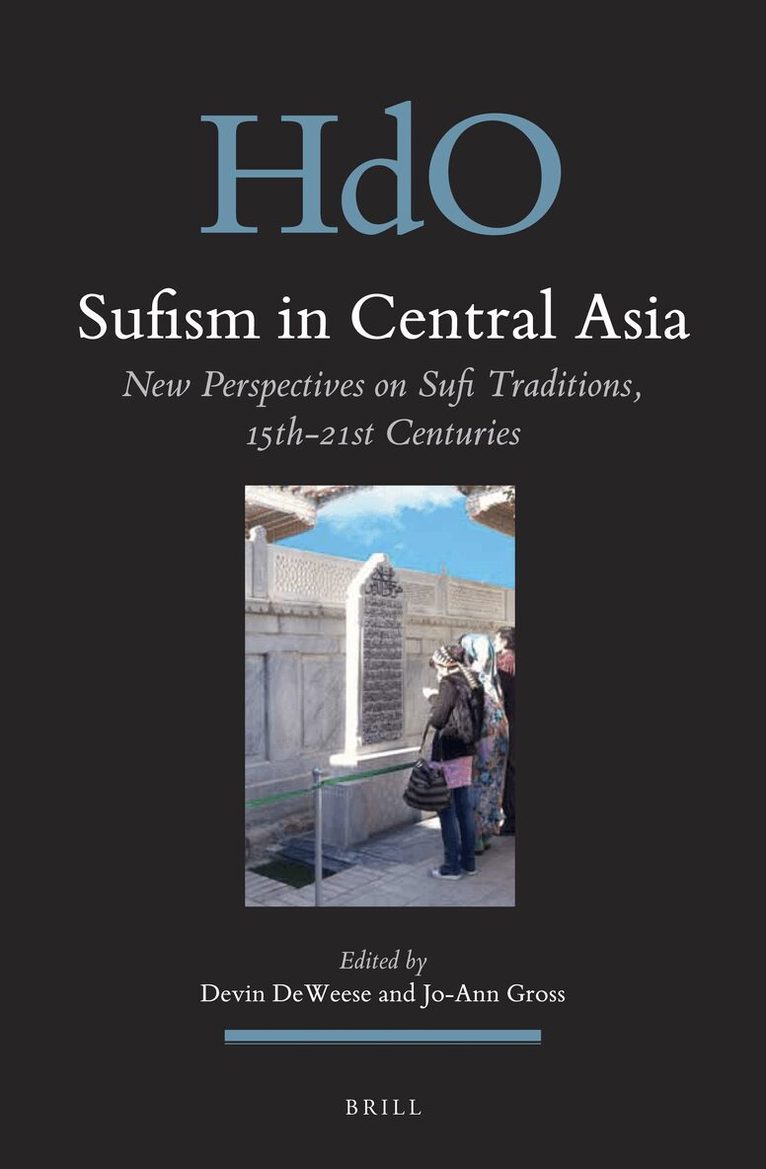
Sufism in Central Asia
New Perspectives on Sufi Traditions, 15th-21st Centuries
Inbunden, Engelska, 2018
1 834 kr
Skickas inom 5-8 vardagar
Sufism in Central Asia: New Perspectives on Sufi Traditions, 15th-21st Centuries brings together ten original studies on historical aspects of Sufism in this region. A central question, of ongoing significance, underlies each contribution: what is the relationship between Sufism as it was manifested in this region prior to the Russian conquest and the Soviet era, on the one hand, and the features of Islamic religious life in the region during the Tsarist, Soviet, and post-Soviet eras on the other? The authors address multiple aspects of Central Asian religious life rooted in Sufism, examining interpretative strategies, realignments in Sufi communities and sources from the Russian to the post-Soviet period, and social, political and economic perspectives on Sufi communities.Contributors include: Shahzad Bashir, Devin DeWeese, Allen Frank, Jo-Ann Gross, Kawahara Yayoi, Robert McChesney, Ashirbek Muminov, Maria Subtelny, Eren Tasar, and Waleed Ziad.
Del 43 - Brill's Inner Asian Library
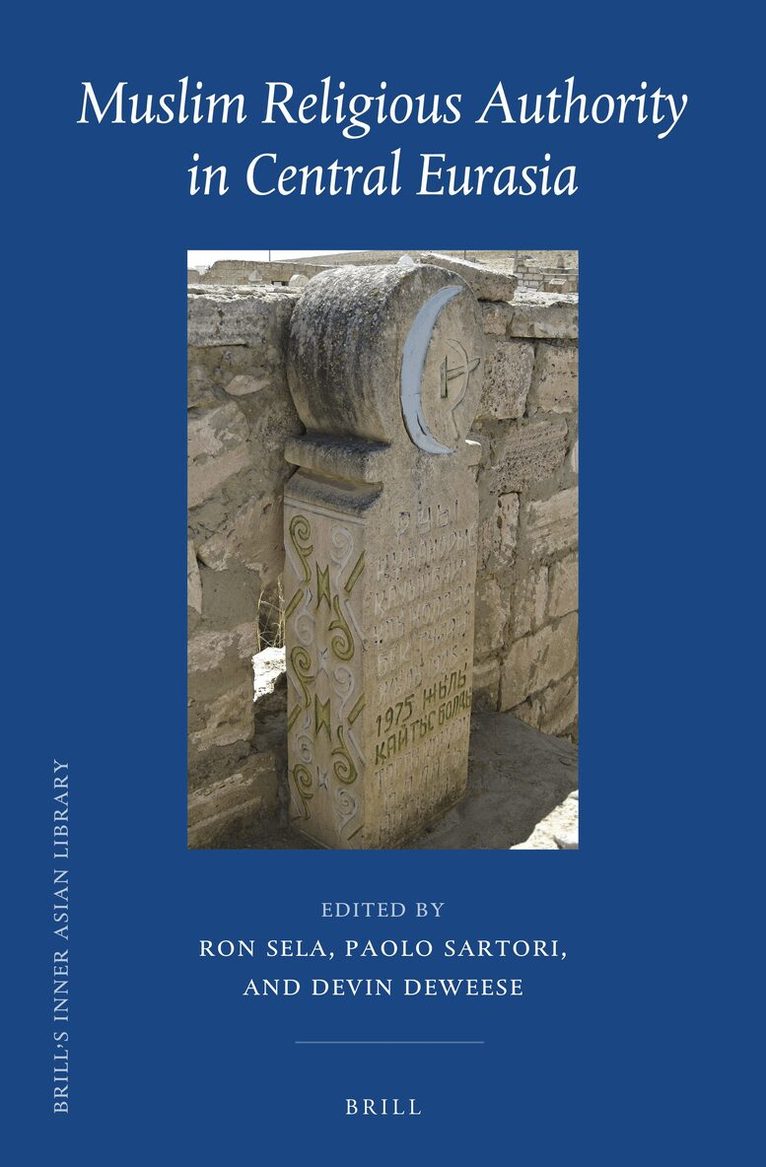
Muslim Religious Authority in Central Eurasia
Inbunden, Engelska, 2022
1 898 kr
Skickas inom 5-8 vardagar
Thirty years after the fall of Soviet power, we are beginning to understand that the experience of Muslims in the USSR continued patterns of adaptation and negotiation known from Muslim history in the lands that became the Soviet Union, and in other regions as well; we can also now understand that the long history of Muslims situating religious authority locally, in the various regions that came under Soviet rule, in fact continued through the Soviet era into post-Soviet times.The present volume is intended to historicize the question of religious authority in Muslim Central Eurasia, through historical and anthropological case studies about the exercise, negotiation, or institutionalization of authority, from the nineteenth to the early twenty-first century; it thus seeks to frame Islamic religious history in the areas shaped by Russian and Soviet rule in terms of issues relevant to Muslims themselves, as Muslims, rather than solely in terms of questions of colonial rule.Contributors are Sergei Abashin, Ulfat Abdurasulov, Bakhtiyar Babajanov, Devin DeWeese, Allen J. Frank, Benjamin Gatling, Agnès Kefeli, Paolo Sartori, Wendell Schwab, Pavel Shabley, Shamil Shikhaliev, and William A. Wood.