Dianne Cook - Böcker
Visar alla böcker från författaren Dianne Cook. Handla med fri frakt och snabb leverans.
3 produkter
3 produkter
528 kr
Skickas inom 10-15 vardagar
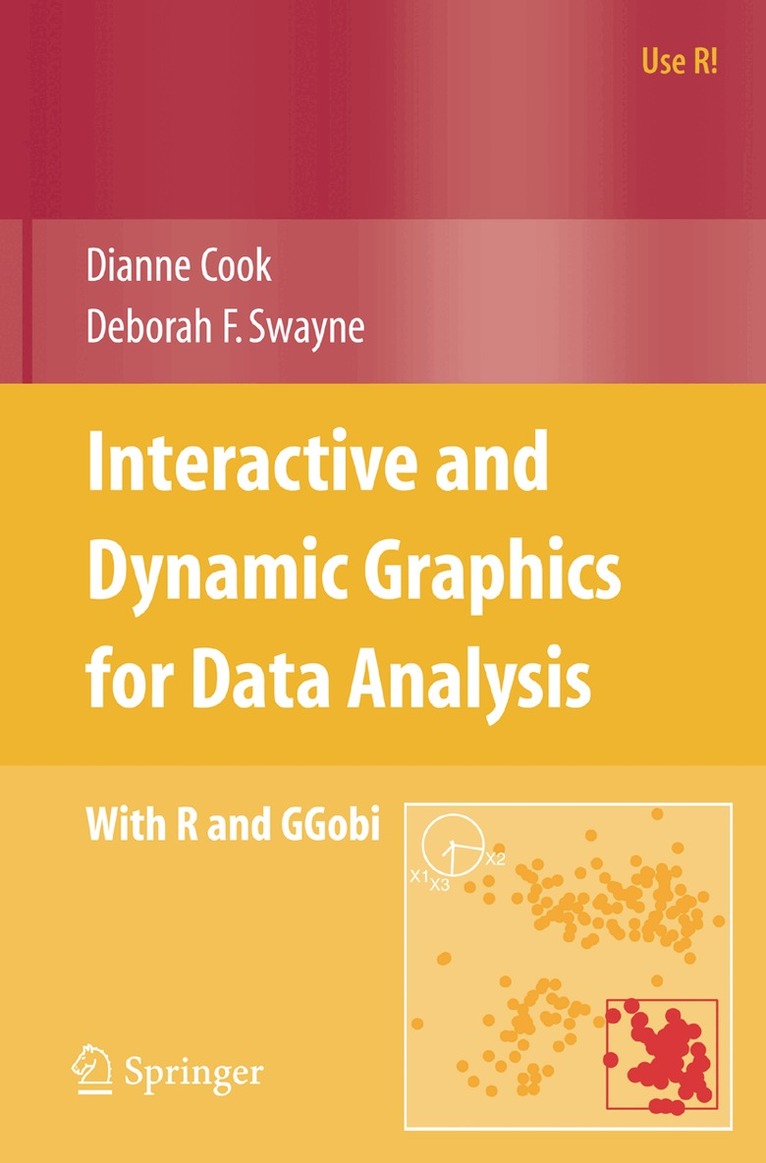
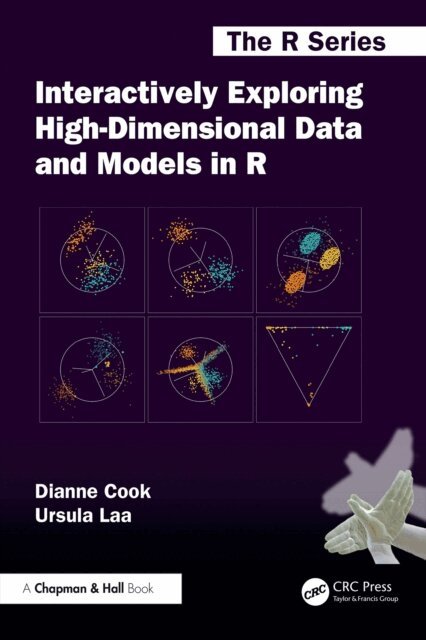
This book is about using interactive and dynamic plots on a computer screen as part of data exploration and modeling, both alone and as a partner with static graphics and non-graphical computational methods. The area of int- active and dynamic data visualization emerged within statistics as part of research on exploratory data analysis in the late 1960s, and it remains an active subject of research today, as its use in practice continues to grow. It now makes substantial contributions within computer science as well, as part of the growing ?elds of information visualization and data mining, especially visual data mining. The material in this book includes: • An introduction to data visualization, explaining how it di?ers from other types of visualization. • Adescriptionofourtoolboxofinteractiveanddynamicgraphicalmethods. • An approach for exploring missing values in data. • An explanation of the use of these tools in cluster analysis and supervised classi?cation. • An overview of additional material available on the web. • A description of the data used in the analyses and exercises. The book’s examples use the software R and GGobi. R (Ihaka & Gent- man 1996, RDevelopment CoreTeam2006) isafreesoftware environment for statistical computing and graphics; it is most often used from the command line, provides a wide variety of statistical methods, and includes high–quality staticgraphics.RaroseintheStatisticsDepartmentoftheUniversityofAu- land and is now developed and maintained by a global collaborative e?ort.
712 kr
Skickas inom 10-15 vardagar
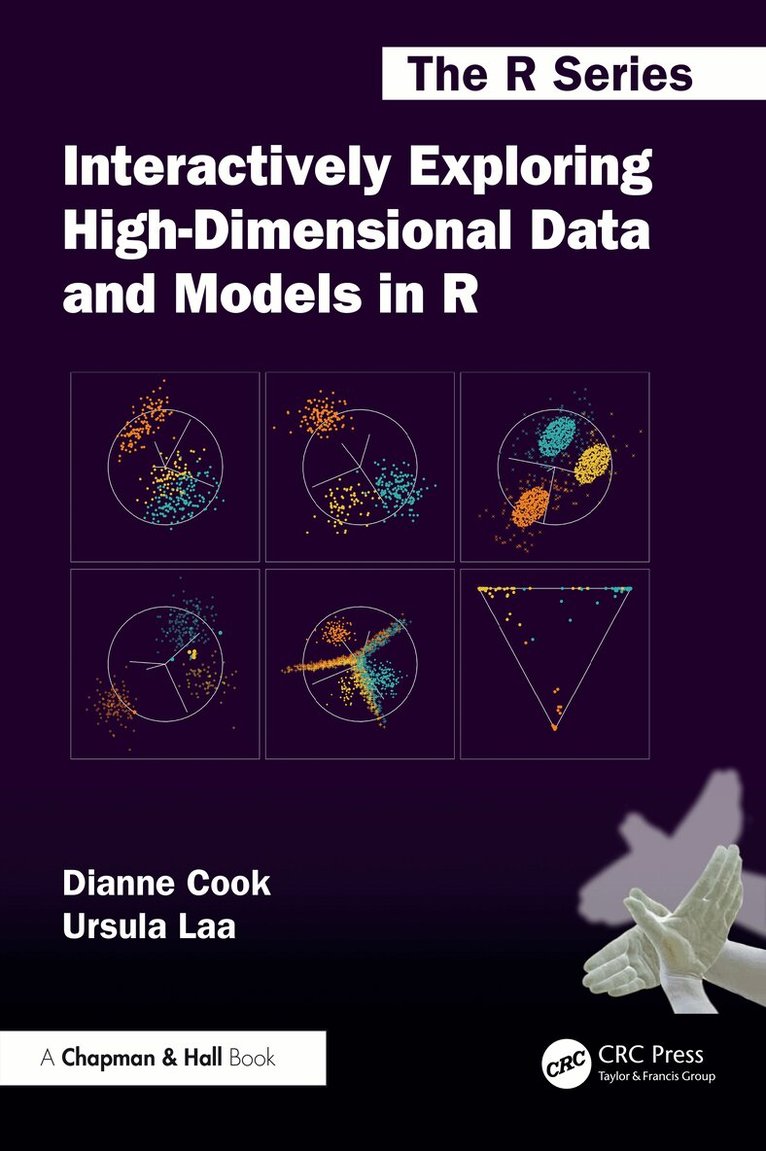
Most data arrive with more than two numeric variables which means that plotting it on a computer screen or printed page presents a challenge: how do you visually explore for associations between more than two variables? Visualising data provides the opportunity to discover what we never expected, because it requires fewer assumptions to be made. Visualising elements of a model fit is a primary way to diagnose whether the fit matches this data. Two of more numeric variables is considered to be multivariate data, and when there are substantially more we would consider it to be high-dimensional data. This book provides you with the tools to visually explore high dimensions, to uncover associations, clustering and anomalies that may be missed when only using common methods for plotting one or two variables. It also illustrates how to use visualisation to understand how your model is operating on the data, to be able to explain how it is arriving at decisions. To make effective use of this material the reader should have a basic working knowledge of R and some understanding of multivariate statistical methods or machine learning methods. The book could form an independent course on visualization or be used as part of courses on multivariate statistical methods or machine learning.High-dimensional data visualisation is valuable for understanding dimension reduction methods, unsupervised and supervised classification. This book is organised into these three topics, following overview and introductory chapters. The dimension reduction chapters cover principal component analysis and nonlinear dimension reduction. The chapters on cluster analysis cover hierarchical and k-means algorithms, model-based and self-organising maps, and finish with ways to communicate results and how to compare different results. The chapters on classification cover linear discriminant analysis, tree and forest algorithms, support vector machines and neural networks. We explain how to break down a neural network to examine the components, how to visualize predictive probabilities, and how to incorporate explainable AI metrics to develop a deeper understanding about how the model operates.
1 753 kr
Skickas inom 10-15 vardagar
Most data arrive with more than two numeric variables which means that plotting it on a computer screen or printed page presents a challenge: how do you visually explore for associations between more than two variables? Visualising data provides the opportunity to discover what we never expected, because it requires fewer assumptions to be made. Visualising elements of a model fit is a primary way to diagnose whether the fit matches this data. Two of more numeric variables is considered to be multivariate data, and when there are substantially more we would consider it to be high-dimensional data. This book provides you with the tools to visually explore high dimensions, to uncover associations, clustering and anomalies that may be missed when only using common methods for plotting one or two variables. It also illustrates how to use visualisation to understand how your model is operating on the data, to be able to explain how it is arriving at decisions. To make effective use of this material the reader should have a basic working knowledge of R and some understanding of multivariate statistical methods or machine learning methods. The book could form an independent course on visualization or be used as part of courses on multivariate statistical methods or machine learning.High-dimensional data visualisation is valuable for understanding dimension reduction methods, unsupervised and supervised classification. This book is organised into these three topics, following overview and introductory chapters. The dimension reduction chapters cover principal component analysis and nonlinear dimension reduction. The chapters on cluster analysis cover hierarchical and k-means algorithms, model-based and self-organising maps, and finish with ways to communicate results and how to compare different results. The chapters on classification cover linear discriminant analysis, tree and forest algorithms, support vector machines and neural networks. We explain how to break down a neural network to examine the components, how to visualize predictive probabilities, and how to incorporate explainable AI metrics to develop a deeper understanding about how the model operates.