Diego Javier Luis - Böcker
Visar alla böcker från författaren Diego Javier Luis. Handla med fri frakt och snabb leverans.
3 produkter
3 produkter
374 kr
Skickas inom 7-10 vardagar
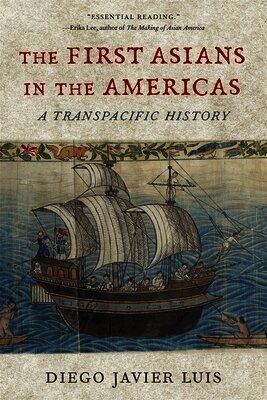
The definitive account of transpacific Asian movement through the Spanish empire—from Manila to Acapulco and beyond—and its implications for the history of race and colonization in the Americas.Between 1565 and 1815, the so-called Manila galleons enjoyed a near-complete monopoly on transpacific trade between Spain’s Asian and American colonies. Sailing from the Philippines to Mexico and back, these Spanish trading ships also facilitated the earliest migrations and displacements of Asian peoples to the Americas. Hailing from Gujarat, Nagasaki, and many places in between, both free and enslaved Asians boarded the galleons and made the treacherous transpacific journey each year. Once in Mexico, they became “chinos” within the New Spanish caste system.Diego Javier Luis chronicles this first sustained wave of Asian mobility to the early Americas. Uncovering how and why Asian peoples crossed the Pacific, he sheds new light on the daily lives of those who disembarked at Acapulco. There, the term “chino” officially racialized diverse ethnolinguistic populations into a single caste, vulnerable to New Spanish policies of colonial control. Yet Asians resisted these strictures, often by forging new connections across ethnic groups. Social adaptation and cultural convergence, Luis argues, defined Asian experiences in the Spanish Americas from the colonial invasions of the sixteenth century to the first cries for Mexican independence in the nineteenth.The First Asians in the Americas speaks to an important era in the construction of race, vividly unfolding what it meant to be “chino” in the early modern Spanish empire. In so doing, it demonstrates the significance of colonial Latin America to Asian diasporic history and reveals the fundamental role of transpacific connections to the development of colonial societies in the Americas.
194 kr
Skickas inom 7-10 vardagar
“Essential reading.” —Erika Lee, author of The Making of Asian America“A broadly thought-provoking book.” —Asian Review of Books“Fascinating…While expertly summarizing and engaging existing historical studies, the author also indicates new avenues of research…[This] book thus stands as a bellwether for shifting trajectories of analysis that invite micro-historical follow-up.” —H-Net Reviews“[This book] offers an invaluable perspective… [it] not only intellectually satisfies the reader with a necessary and innovative view . . . but also makes us want to learn more about this essential and still insufficiently explored topic...will become a fundamental pillar within the discipline.” —Colonial Latin American ReviewBetween 1565 and 1815, the so-called Manila galleons monopolized trade between Spain’s Asian and American colonies. Sailing from the Philippines to Mexico and back, these Spanish ships also facilitated the earliest migrations and displacements of Asian peoples to the Americas. Hailing from Gujarat, Nagasaki, and many places in between, both free and enslaved Asians made the treacherous transpacific journey each year.Diego Javier Luis chronicles this first sustained wave of Asian mobility to the Americas, shedding new light on the daily lives of those who disembarked at Acapulco. There, diverse ethnolinguistic populations officially became “chinos,” racialized as members of a single caste under colonial control. Luis shows how Asians resisted legal strictures, forging new connections across ethnic groups and continually adapting to adverse conditions.Detailing an important era in the construction of race, The First Asians in the Americas vividly unfolds what it meant to be “chino” in the early modern Spanish empire and reveals the significance of colonial Latin America to Asian diasporic history.
822 kr
Skickas inom 7-10 vardagar
Global Asias: Tactics & Theories is the inaugural volume in an exciting new series that explores critical concerns animating Global Asias scholarship. It challenges the silos of academic knowledge formation that currently make legible and organize the study of Asia and its multiple diasporas. Transits, Indigeneity, Epistemology, Language, and A/Geography: These keywords highlight potential overlaps and points of disagreement between area studies, ethnic studies, and diaspora studies. Through an inventive approach and structure, the book exemplifies how the collaborative ethos of Global Asias praxis can catalyze new methods of scholarship and pedagogy—and create innovative models of academic knowledge-production. Editors offer a substantive overview of the emergent multidisciplinary field of Global Asias followed by a set of collaboratively authored research forums and pedagogical materials by a varied group of scholars working across ranks, disciplines, fields, geographies, and languages. Global Asias: Tactics & Theories will be an indispensable guide for anyone interested in learning more about this emerging field. It is crafted to provide resources for a wide range of readers: researchers, teachers, students, and administrators. The diversity and originality of the materials and approaches reflect a broad understanding of scholarly work that resists mastery by building structures of intellectual experimentation that embrace disagreement and differences. Readers will discover provocative conversations that redefine what it means to work in, at, for, and around Global Asias—not as a settled object of knowledge but a dynamic praxis of engagement.