Dietmar Heinke – författare
Visar alla böcker från författaren Dietmar Heinke. Handla med fri frakt och snabb leverans.
6 produkter
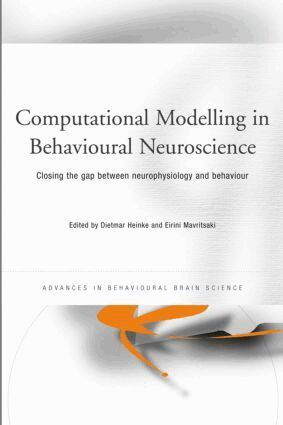
Computational Modelling in Behavioural Neuroscience
Closing the Gap Between Neurophysiology and Behaviour
Av Dietmar Heinke, Eirini Mavritsaki
Häftad, 2012
829 kr
Lägg i varukorg
Classically, behavioural neuroscience theorizes about experimental evidence in a qualitative way. However, more recently there has been an increasing development of mathematical and computational models of experimental results, and in general these models are more clearly defined and more detailed …
Computational Modelling in Behavioural Neuroscience
Closing the Gap Between Neurophysiology and Behaviour
Av Eirini Mavritsaki, Dietmar Heinke
E-bok, 2009
1004 kr
Lägg i varukorg
Classically, behavioural neuroscience theorizes about experimental evidence in a qualitative way. However, more recently there has been an increasing development of mathematical and computational models of experimental results, and in general these models are more clearly defined and more detailed …
Computational Modelling in Behavioural Neuroscience
Closing the Gap Between Neurophysiology and Behaviour
Av Eirini Mavritsaki, Dietmar Heinke
E-bok, 2009
983 kr
Lägg i varukorg
Classically, behavioural neuroscience theorizes about experimental evidence in a qualitative way. However, more recently there has been an increasing development of mathematical and computational models of experimental results, and in general these models are more clearly defined and more detailed …
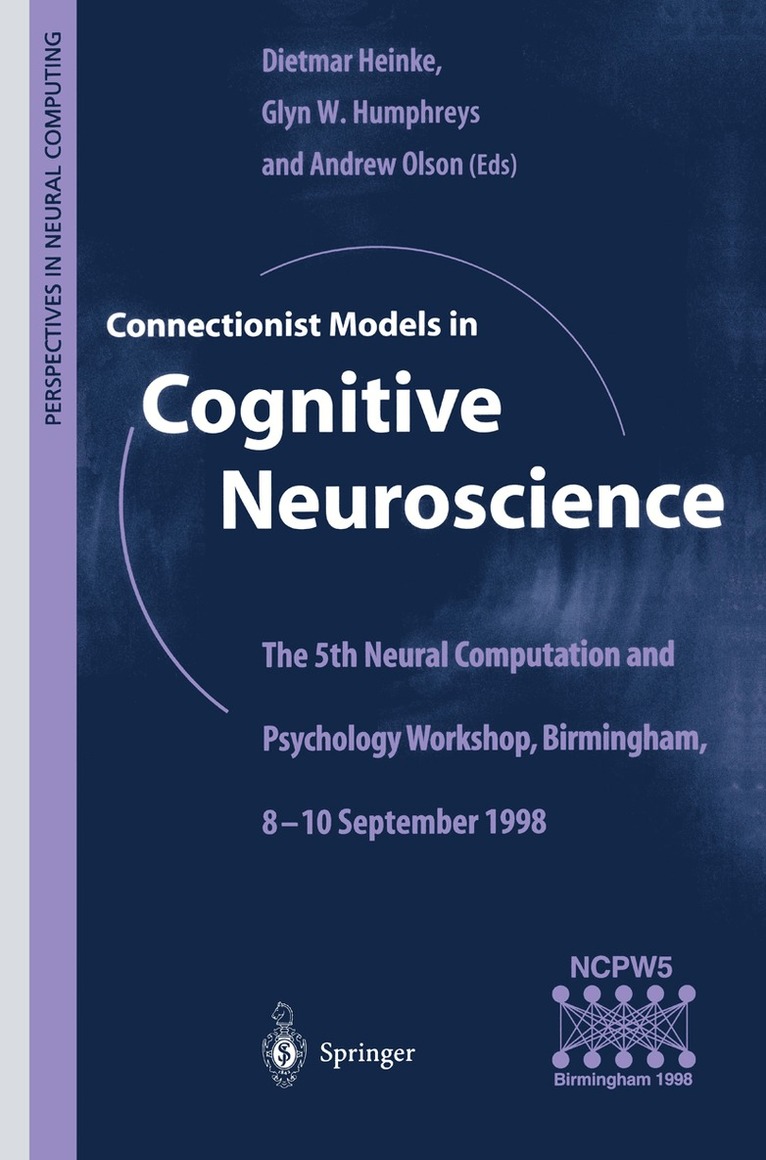
Connectionist Models in Cognitive Neuroscience
The 5th Neural Computation and Psychology Workshop, Birmingham, 8–10 September 1998
Av Andrew Olson, Glyn W. Humphreys m. fl.
E-bok, 2012
1502 kr
Lägg i varukorg
1. Introdudion This volume collects together the refereed versions of 25 papers presented at the 5th Neural Computation and Psychology Workshop (NCPW5), held at the University of Birmingham from the 8th until the lOth of September 1998. The NCPW is a well-established, lively forum, which brings …
Computational Modelling in Behavioural Neuroscience
Closing the Gap Between Neurophysiology and Behaviour
Av Dietmar Heinke, Eirini Mavritsaki
Inbunden, 2009
2450 kr
Lägg i varukorg
Classically, behavioural neuroscience theorizes about experimental evidence in a qualitative way. However, more recently there has been an increasing development of mathematical and computational models of experimental results, and in general these models are more clearly defined and more detailed …
Connectionist Models in Cognitive Neuroscience
The 5th Neural Computation and Psychology Workshop, Birmingham, 8–10 September 1998
Av Dietmar Heinke, Glyn W. Humphreys m. fl.
Häftad, 1999
1095 kr
Lägg i varukorg
1. Introdudion This volume collects together the refereed versions of 25 papers presented at the 5th Neural Computation and Psychology Workshop (NCPW5), held at the University of Birmingham from the 8th until the lOth of September 1998. The NCPW is a well-established, lively forum, which brings …