Dietmar von der Pfordten - Böcker
Visar alla böcker från författaren Dietmar von der Pfordten. Handla med fri frakt och snabb leverans.
7 produkter
7 produkter
993 kr
Tillfälligt slut
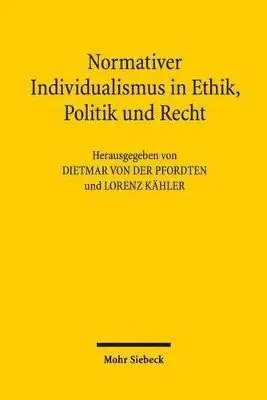
Menschliches Handeln gegenüber anderen bedarf der Rechtfertigung. Diese kann verschiedene Anknüpfungspunkte wählen, so etwa Interessen, Bedürfnisse, Werte. In normativer Hinsicht ist entscheidend, worauf man sie zurückführt. Sind es in letzter Instanz nur Individuen? Oder gelten in letzter Instanz auch Kollektive und Werte? Daran knüpft sich eine Vielzahl an Folgefragen. Zu klären gilt etwa, welche Individuen maßgeblich sind und ob diese auch sich selbst gegenüber Pflichten haben. Lässt sich ein normativer Individualismus mit der Verpflichtung des Einzelnen durch den Staat vereinbaren? Ist er auch dann noch überzeugend, wenn es um Kinder geht, für die andere entscheiden? Der Sammelband widmet sich diesen Fragen, indem er aus verschiedenen Perspektiven nach den Voraussetzungen wie Folgen eines normativen Individualismus fragt.
1 255 kr
Tillfälligt slut
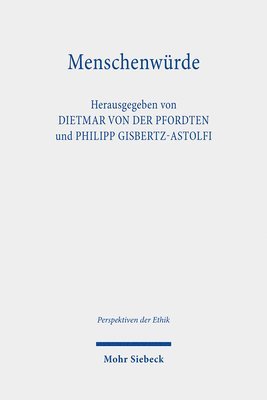
Die Menschenwürde nimmt in vielen nationalen Verfassungen und internationalen Vereinbarungen eine herausragende Stellung ein. Sie ist jedem einzelnen Menschen qua seines Menschseins inhärent und hängt nicht von der Disposition anderer ab, ist also unverfügbar. Die Einsicht in diese Unverfügbarkeit speist sich nicht zuletzt aus den Erfahrungen der ersten Hälfte des 20. Jahrhunderts. Sie ist eine Lehre aus Kollektivismus, Totalitarismus, verbrecherischer Kriegsführung und Genozid. Doch diese Unverfügbarkeit der Menschenwürde - obgleich von der vorherrschenden Meinung der Menschen sowie der Wissenschaften akzeptiert - ist weder ganz unumstritten noch in all ihren Details und Folgerungen klar und eindeutig erfasst. Eine Vertiefung ihres Verständnisses lässt sich nur im interdisziplinären Austausch zwischen Philosophie, Rechtswissenschaft, Politikwissenschaft, Theologie und Angewandter Ethik erreichen. Zu diesem Zweck versammelt der vorliegende Band Beiträge, welche die Unverfügbarkeit der Menschenwürde aus der Perspektive dieser verschiedenen Disziplinen untersuchen.
147 kr
Skickas inom 3-6 vardagar
886 kr
Skickas inom 3-6 vardagar
325 kr
Skickas inom 5-8 vardagar
1 059 kr
Skickas inom 10-15 vardagar
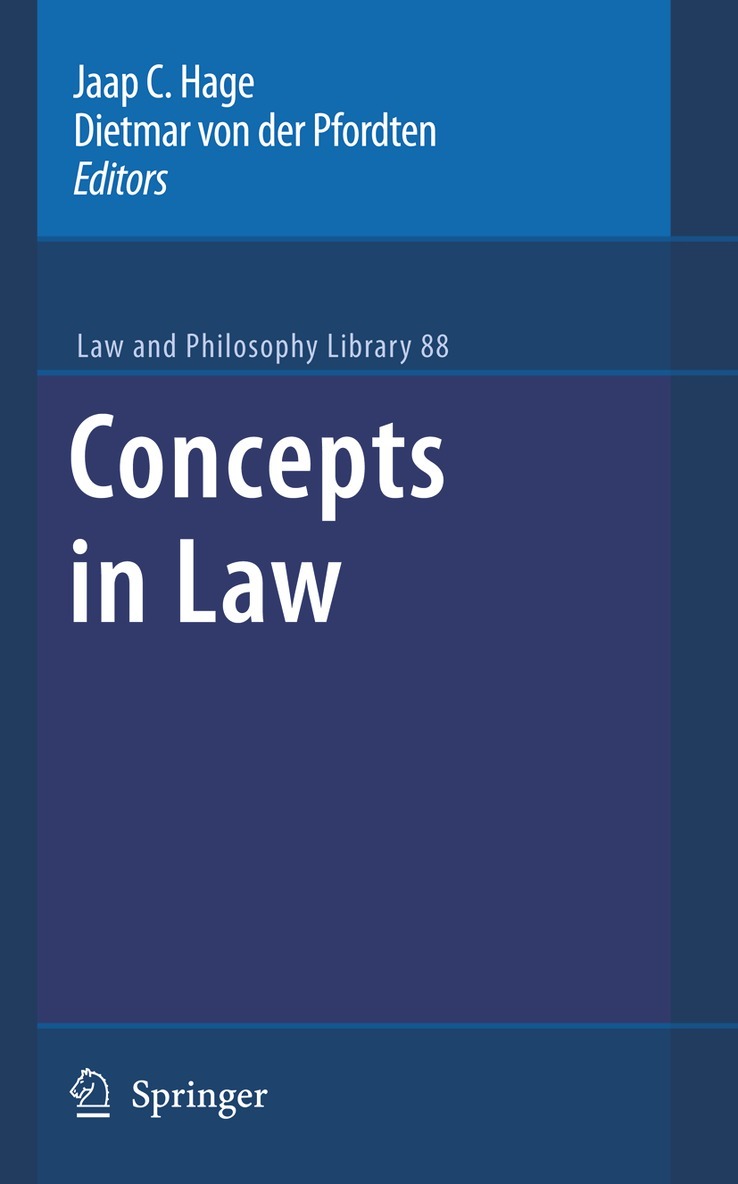
During the last decades, legal theory has focused almost completely on norms, rules and arguments as the constitutive elements of law. Concepts were mostly neglected. The contributions to this volume try to remedy this neglect by elucidating the role concepts play in law from different perspectives. A main aim of this volume is to initiate a debate about concepts in law. Åke Frändberg gives an overview of the many different uses of concepts in law and shows amongst others that concepts in the law should not be confused with the role of concepts in descriptions of the law. Dietmar von der Pfordten criticizes the restriction to norms as parts of the law in contemporary legal theory by questioning what concepts are and what their function is, both in general and in legal conceptual schemes. Giovanni Sartor assumes the inferential analysis of meaning proposed by Alf Ross in his ground breaking paper Tû-tû and addresses the question how possession of a concept, including the rules defining it, is possible without endorsing these rules. Jaap Hage argues that 1. legal status words such as 'owner' have a meaning because they denote things or relations in institutional reality, 2. the meaning of these words consists in this denotation relation, 3. knowledge of this meaning presupposes knowledge of the rules governing these words. Torben Spaak contributes to this volume with an exemplary analysis of one of the most central concepts of the law, namely that of a legal power. Lorenz Kähler discusses the role of concepts in determining the scope of application of legal rules and raises from this perspective the question to what extent legal concept formation can be arbitrary. Ralf Poscher argues that as soon as a concept is used in stating the law, the precise scope of application of this concept has become a legal matter. This means that the use of ‘moral’ concepts in the law does not automatically lead to a moral import into the law. Dennis Patterson holds thatHart’s concept of law can be understood as a so-called ‘practice theory’ and provides an overview of such a theory.
1 059 kr
Skickas inom 10-15 vardagar
During the last decades, legal theory has focused almost completely on norms, rules and arguments as the constitutive elements of law. Concepts were mostly neglected. The contributions to this volume try to remedy this neglect by elucidating the role concepts play in law from different perspectives. A main aim of this volume is to initiate a debate about concepts in law. Åke Frändberg gives an overview of the many different uses of concepts in law and shows amongst others that concepts in the law should not be confused with the role of concepts in descriptions of the law. Dietmar von der Pfordten criticizes the restriction to norms as parts of the law in contemporary legal theory by questioning what concepts are and what their function is, both in general and in legal conceptual schemes. Giovanni Sartor assumes the inferential analysis of meaning proposed by Alf Ross in his ground breaking paper Tû-tû and addresses the question how possession of a concept, including the rules defining it, is possible without endorsing these rules. Jaap Hage argues that 1. legal status words such as 'owner' have a meaning because they denote things or relations in institutional reality, 2. the meaning of these words consists in this denotation relation, 3. knowledge of this meaning presupposes knowledge of the rules governing these words. Torben Spaak contributes to this volume with an exemplary analysis of one of the most central concepts of the law, namely that of a legal power. Lorenz Kähler discusses the role of concepts in determining the scope of application of legal rules and raises from this perspective the question to what extent legal concept formation can be arbitrary. Ralf Poscher argues that as soon as a concept is used in stating the law, the precise scope of application of this concept has become a legal matter. This means that the use of ‘moral’ concepts in the law does not automatically lead to a moral import into the law. Dennis Patterson holds thatHart’s concept of law can be understood as a so-called ‘practice theory’ and provides an overview of such a theory.