Dilip Sarkar MBE - Böcker
Visar alla böcker från författaren Dilip Sarkar MBE. Handla med fri frakt och snabb leverans.
9 produkter
9 produkter
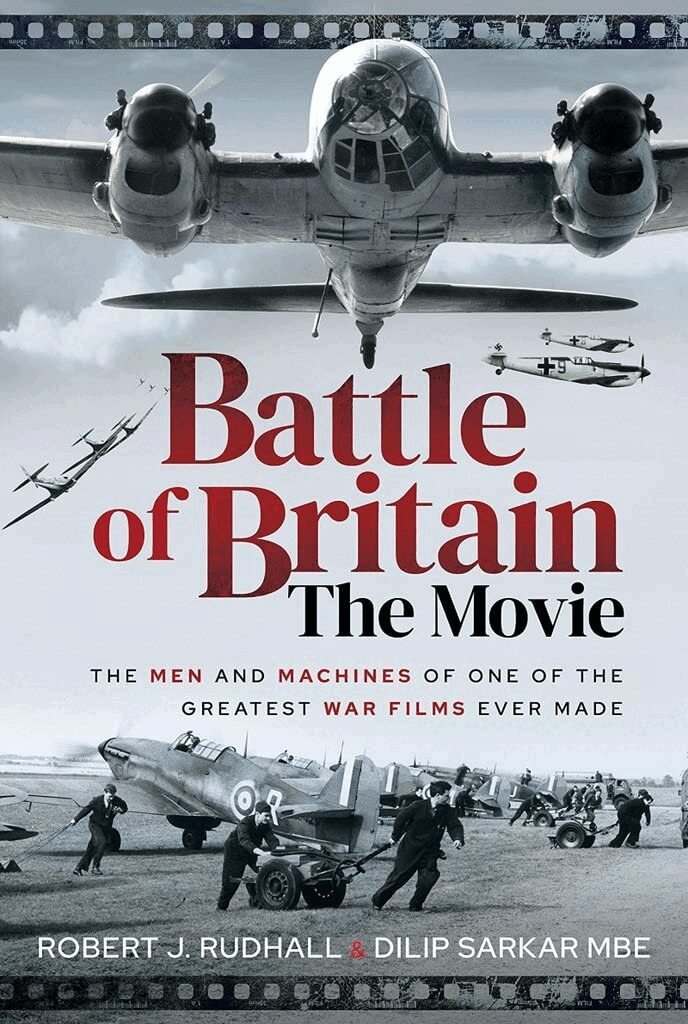
Battle of Britain The Movie
The Men and Machines of one of the Greatest War Films Ever Made
Inbunden, Engelska, 2023
266 kr
Skickas
Released in 1969, the film _Battle of Britain_ went on to become one of the most iconic war movies ever produced. The film drew many respected British actors to accept roles as key figures of the battle, including Sir Laurence Olivier as Hugh Dowding and Trevor Howard as Keith Park. It also starred Michael Caine, Christopher Plummer and Robert Shaw as squadron leaders. As well as its large all-star international cast, the film was notable for its spectacular flying sequences which were on a far grander scale than anything that had been seen on film before.At the time of its release, Battle of Britain was singled out for its efforts to portray the events of the summer of 1940 in great accuracy. To achieve this, Battle of Britain veterans such as Group Captain Tom Gleave, Wing Commander Robert Stanford Tuck, Wing Commander Douglas Bader, Squadron Leader Boles?aw Drobi?ski and Luftwaffe General Adolf Galland were all involved as consultants.This detailed description of the making of the film is supported by a mouth-watering selection of pictures that were taken during the production stages. The images cover not only the many vintage aircraft used in the film, but also the airfields, the actors, and even the merchandise which accompanied the film's release in 1969 - plus a whole lot more. There are numerous air-to-air shots of the Spitfires, Messerschmitts, Hurricanes and Heinkels that were brought together for the film. There are also images that capture the moment that Battle of Britain veterans, some of whom were acting as consultants, visited the sets. Interviews with people who worked on the film, such as Hamish Mahaddie, John Blake and Ron Goodwin, among others, bring the story to life.
266 kr
Skickas
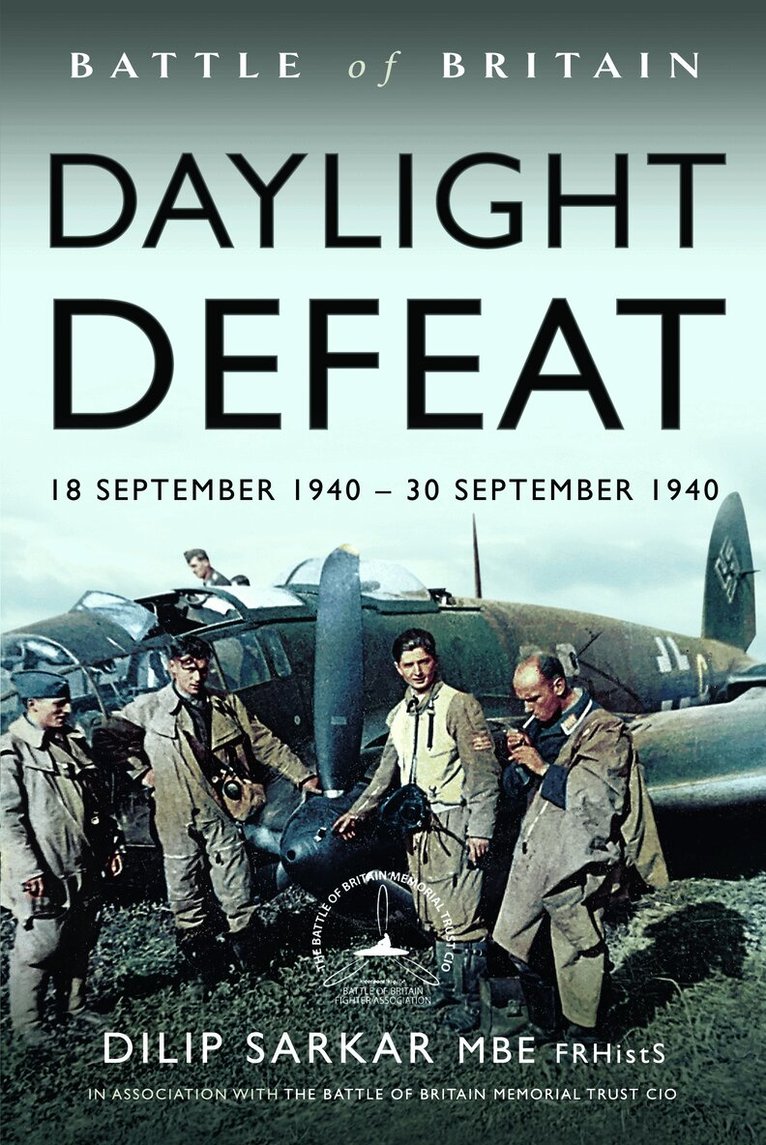
In this, the sixth of Dilip Sarkar’s unprecedented eight-volume series, the day-by-day events occurring in the fourth phase of the Battle of Britain are chronicled and set within a much wide context, including the operations of Bomber and Coastal Commands and the Home Front. Renowned for his evidence-based approach, the author has returned to primary sources, the analysis arising often challenging our previous understanding and the popular narrative.In Volume 5, Target London: 7 September 1940 – 17 September 1940, the beginning of the Blitz was explored at length. This illuminated the inescapable fact that Luftwaffe air intelligence completely failed to understand how Fighter Command was organised and controlled, nor that it was replacement pilots, not aircraft, that was Air Chief Marshal Dowding’s greatest concern. Indeed, on 15 September 1940, Luftwaffe aircrews were briefed to expect but a token resistance over London from the last handful of RAF fighters – their morale shattered when their first attack was met by over 300, the second by nearly as many. This convinced Hitler that the Luftwaffe could not achieve the aerial superiority needed for the invasion of Britain to proceed. Two days later Operation Seelöwe was postponed ‘indefinitely’.Reichsmarschall Herman Göring, however, still believed that the Luftwaffe could prevail – and so continued attacking the UK, changing tack, yet again. As London had proved it ‘could take it’, the Luftwaffe, whilst continuing to bomb the capital by night, now focussed its daylight attacks on the British aircraft industry. Naturally the Supermarine Spitfire factory at Southampton was a primary target; it was subsequently badly hit, with great loss of life. Other factories, in the West Country, were also targeted, and, owing to a navigation error due to cloud cover, the picturesque town of Sherborne was devasted on 30 September 1940.By that date, however, it was clear that Göring’s He 111 force was unable to continue absorbing such losses and the type was exclusively switched to night-bombing – thereby substantially reducing the German daylight bombing force. On 20 September 1940, Me 109 fighter-bombers attacked London, and going forward the next and final phase would see such attacks, and high-flying fighter sweeps, dominate the daytime arena.Such raids, though, were never going to defeat Britain, so it is fair to say that the period reviewed in this volume really did see the ‘Daylight defeat’ of the Luftwaffe over England in 1940 – and the events involved are interpreted and recounted in great detail.
266 kr
Skickas
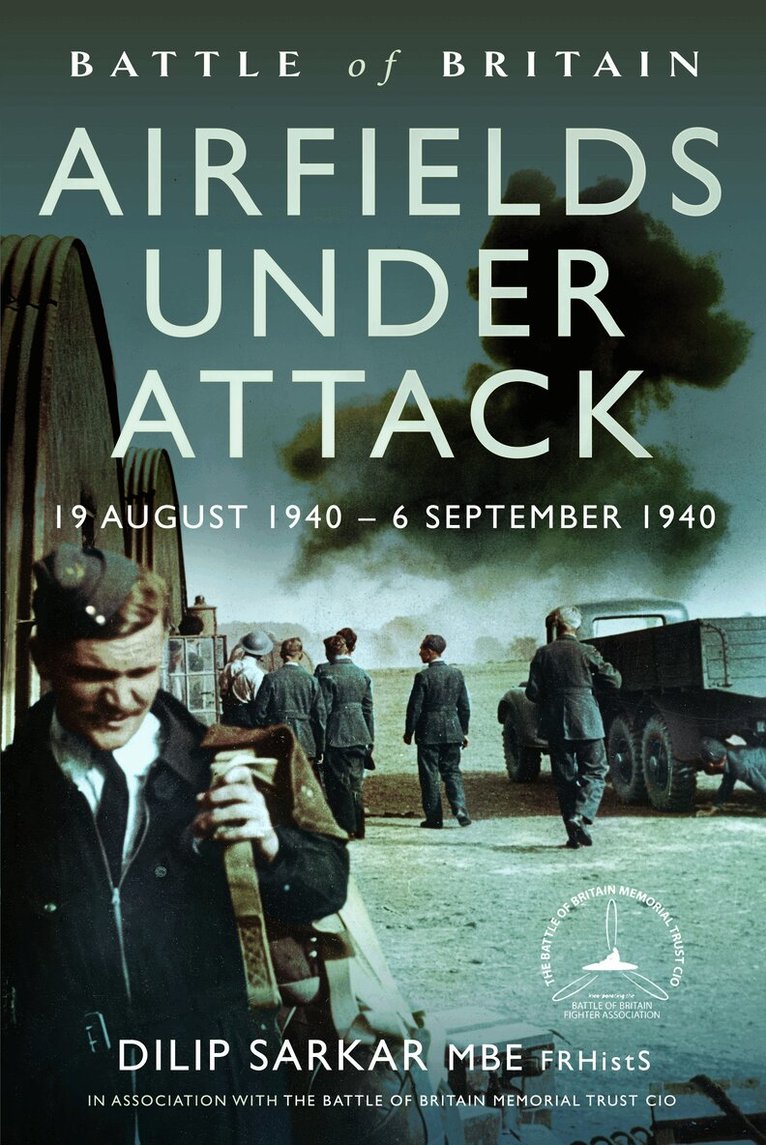
In this unprecedented series exploring the big story of the Battle of Britain, renowned historian Dilip Sarkar investigates the wider context and intimate details of the epic aerial conflict in the summer of 1940 from all sides. In so doing, he gives due acknowledgement to the roles of Bomber and Coastal Commands in addition to the fabled Few of Fighter Command.This unique narrative draws upon a lifetime of research, the author having enjoyed a long relationship with survivors and the relatives of casualties; his innumerable interviews and first-hand accounts collated, in addition to privileged access to personal papers, providing essential human interest to this inspirational story.In this the fourth volume, _Battle of Britain: Airfields Under Attack_, Dilip continues to examine the fighting on a day-by-day, combat-by-combat basis from 19 August until 6 September 1940\. It is a period in which we saw the Luftwaffe’s bombing of the all-important 11 Group airfields intensify, culminating in ‘The Hardest Day’ of 18 August 1940, which saw both sides lose more aircraft than any other day throughout the whole Battle of Britain.The tensions and problems between Fighter Command’s 11 and 12 Groups also intensified. It was a situation that eventually led to Squadron Leader Douglas Bader criticising Fighter Command tactics, proposing the use of ‘Big Wings’, contrary to the System of Air Defence and strategy involved, gaining the support of his 12 Group commander, Air Vice-Marshal Leigh-Mallory. Given its later significance, this is investigated in depth.Through diligent research, combined with crucial official primary sources and personal papers, Dilip unravels many myths, often challenging the accepted narrative. This is not simply another dull record of combat losses and claims – far from it. Drawing upon unique first-hand accounts from a wide-range of combatants and eyewitnesses, along with Daily Home Intelligence Reports and numerous other primary sources, this book forms part of what is likely to be the first and last such comprehensively woven account of this epic air battle.
318 kr
Skickas
In this unprecedented series exploring the big story of the Battle of Britain, renowned historian Dilip Sarkar investigates the wider context and intimate details of the epic aerial conflict in the summer of 1940 from all sides. In so doing, he gives due acknowledgement to the roles of Bomber and Coastal Commands in addition to the fabled Few of Fighter Command.This unique narrative draws upon a lifetime of research, the author having enjoyed a long relationship with survivors and the relatives of casualties; his innumerable interviews and first-hand accounts collated, in addition to privileged access to personal papers, providing essential human interest to this inspirational story.In this the fifth volume, Battle of Britain: Target London, Dilip continues to examine the fighting on a day-by-day, combat-by-combat basis from 7 September to 17 September 1940. It was on 7 September that the Luftwaffe changed tack, and instead of continuing its successful strikes on 11 Group and its airfields, switched its focus to the round-the-clock bombing of London. According to popular narrative, this move lost the Germans the Battle of Britain, providing Fighter Command an opportunity to recover. This, however, is not necessarily the opinion of certain German scholars – all of which is explored by the author.The events of 7 September also saw the 12 Group Duxford Wing go into action for the first time, the effects of which are analysed. This review confirms that the formation massively over claimed and was not, therefore, as successful as believed at the time by certain senior commanders and politicians. Likewise, the events of 15 September 1940, long accepted as ‘Battle of Britain Day’, are often stated to represent a great turning point in the aerial fighting of the summer of 1940 – but is this correct? Two days later, Hitler postponed Operation Sealion, the invasion of the United Kingdom, indefinitely. Could, therefore, this day be considered the date the Battle of Britain really ended?Through diligent research, combined with crucial official primary sources and personal papers, Dilip unravels many myths, often challenging the accepted narrative. This is not simply another dull record of combat losses and claims – far from it. Drawing upon unique first-hand accounts from a wide-range of combatants and eyewitnesses, along with Daily Home Intelligence Reports and numerous other primary sources, this book forms part of what is likely to be the first and last such comprehensively woven account of this epic air battle.
207 kr
Skickas
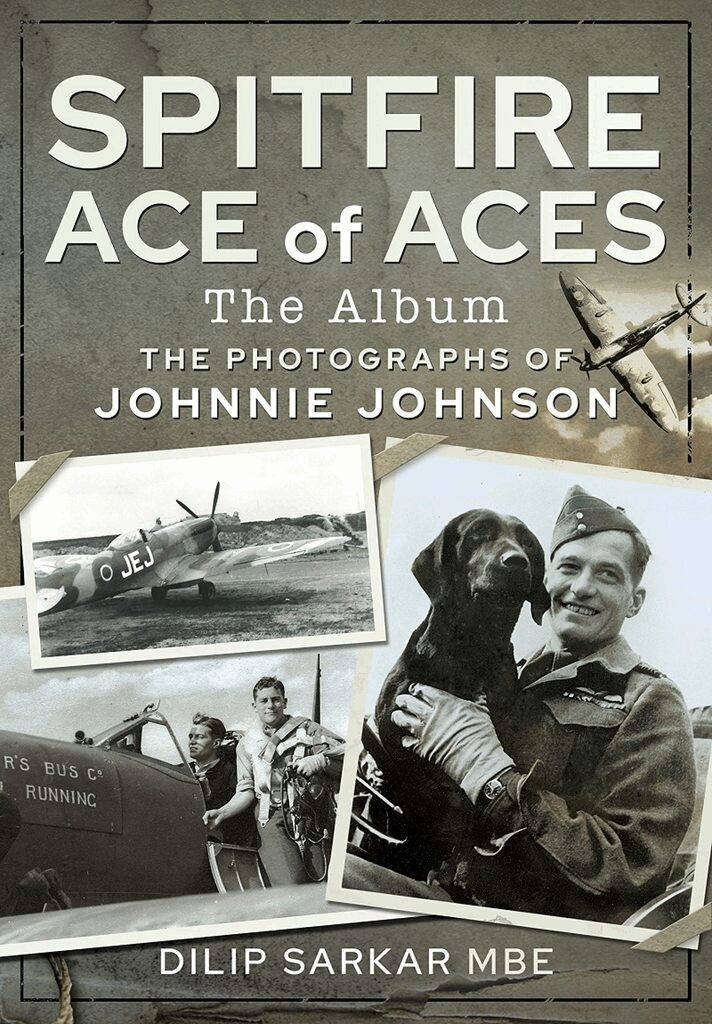
Air Vice-Marshal James Edgar 'Johnnie' Johnson CB, CBE, DSO & Two Bars, DFC & Bar, DL was a character literally from the pages of Boys' Own: an individual who became the RAF's top-scoring fighter pilot of the Second World War. A one-time household name synonymous with the superlative Spitfire, Johnnie's aerial combat successes inspired schoolboys for generations.As a 'lowly Pilot Officer', Johnnie Johnson learned his fighter pilot's craft as a protege of the legless Tangmere Wing Leader, Douglas Bader. After Bader was brought down over France and captured on 9 August 1941, Johnnie remained a member of 616 (South Yorkshire) Squadron, in which he became a flight commander and was awarded the DFC a month after Bader's devastating loss.In time, Johnnie came to command a Canadian wing in 1943, when the Spitfire Mk.IX at last outclassed the Fw 190, and participated in some of the most important battles of the defeat of Nazi Germany, including Operation _Overlord_ and the D-Day landings in 1944, Operation _Market Garden_ and the airborne assault at Arnhem, and the Rhine Crossings, throughout all of which Johnnie also commanded Canadian wings.Johnnie's remarkable career is revealed through this unparalleled collection of archive photographs, the majority of which are drawn from his own personal album or from other members of the Johnson family. Many have not been published before. Between them, they present a fascinating insight into the man himself, the machines he flew, and the men he served alongside.
266 kr
Skickas
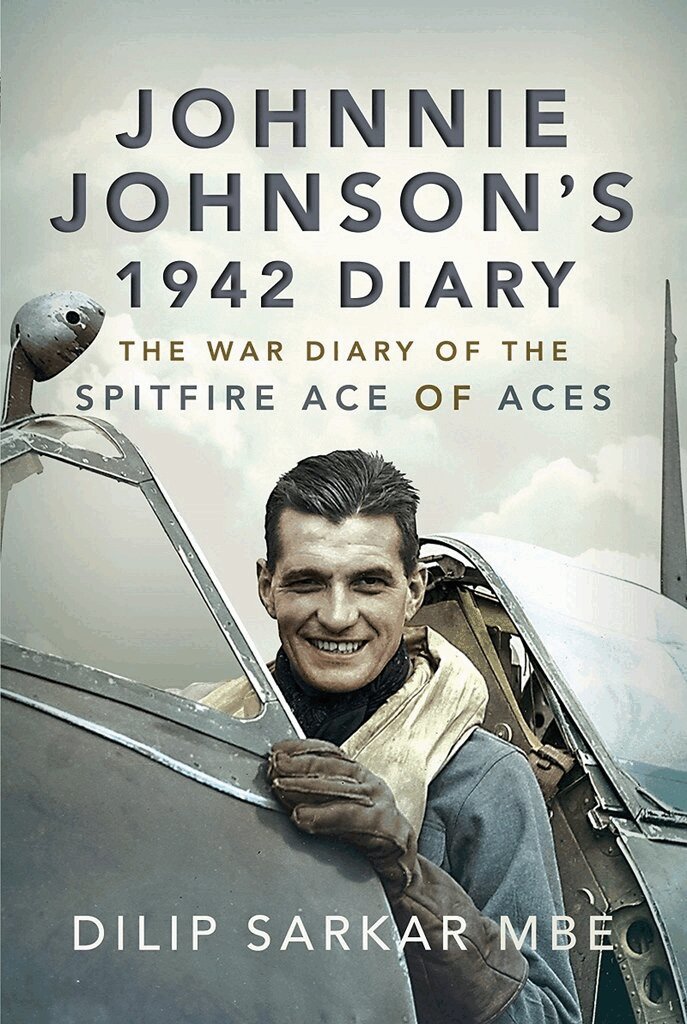
Air Vice-Marshal 'Johnnie' Johnson was a character literally from the pages of _Boys' Own_: an individual who became the RAF's top-scoring fighter pilot and wing leader par excellence of the Second World War. A one-time household name synonymous with the superlative Spitfire, Johnnie's aerial combat successes inspired schoolboys for generations.As a 'lowly Pilot Officer', Johnnie Johnson learned his fighter pilot's craft as a protege of the legless Tangmere Wing Leader, Douglas Bader. After Bader was brought down over France and captured on 9 August 1941, Johnnie remained a member of 616 (South Yorkshire) Squadron.By the beginning of 1942, when Johnnie's diary begins, Fighter Command was pursuing an offensive policy during daylight hours, 'reaching out' and taking the war to the Germans in France. It was also a period in which the Focke-Wulf Fw outclassed the Spitfire Mk.V. In Johnnie's words, the Fw 190 'drove us back to the coast and, for the first time, pilots lost confidence in the Spitfire'. As well as his participation in _Rhubarb_ and _Circus_ sorties, Johnnie was also involved in Operation _Jubilee_ on 19 August 1942. In this diary, published here for the first time, we get a glimpse of the real Johnnie, and what it was really like to live and breathe air-fighting during one of the European air war's most interesting years: 1942\. Presented on a day-by-day basis, each of Johnnie's entries is supported by an informative narrative written by the renowned aviation historian Dilip Sarkar, drawing upon official documents and his interviews and correspondence with the great man.As would be expected, Johnnie's diary also includes numerous personal references. This diary, therefore, is a unique insight into how fighter pilots lived, loved - and died.
266 kr
Skickas
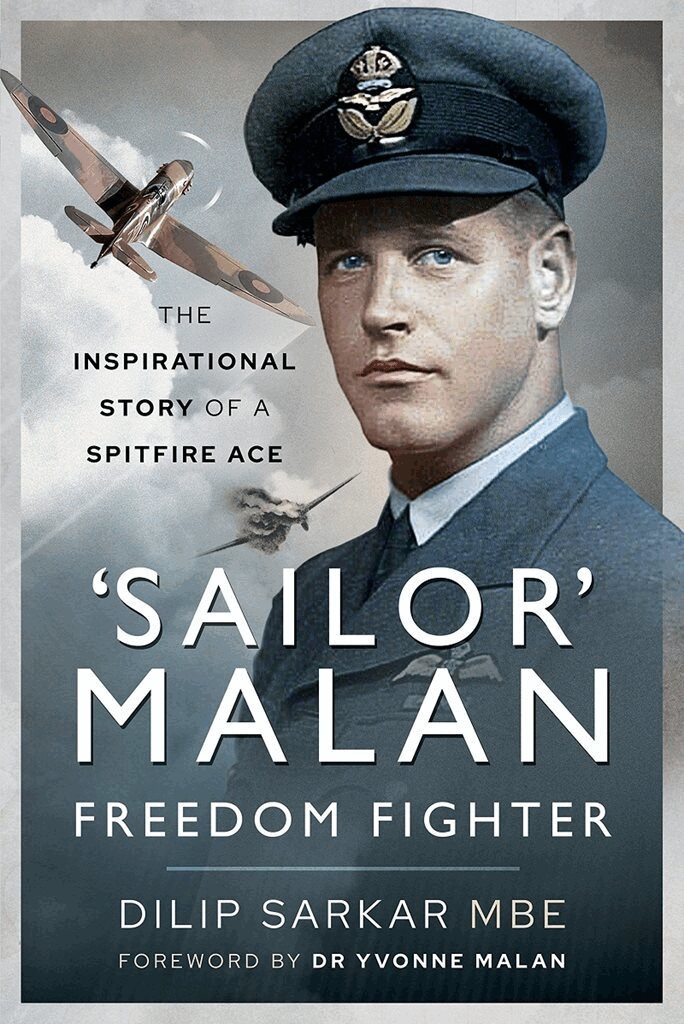
Adolph Gysbert Malan was born in Wellington, South Africa. A natural leader and driven individual with a totally positive outlook, aged fourteen Malan became an officer cadet in the South African Merchant Navy, before being commissioned into the Royal Navy Reserve. Well-travelled and worldly-wise, aged twenty-five the intrepid adventurer applied for a Short Service Commission in the RAF. Universally known as 'Sailor' in the RAF, Malan became a fighter pilot.Shortly after war was declared, Malan was involved in the infamous 'Battle of Barking Creek', in which 74 Squadron mistakenly destroyed friendly Hurricanes. Then, over Dunkirk in May 1940, Malan's exceptional ability was immediately demonstrated in combat and a string of confirmed aerial victories rapidly accumulated. The following month, Malan scored the Spitfire's first nocturnal kill. By August 1940 he was commanding 74 Squadron, which he led with great distinction during the Battle of Britain.In March 1941, Malan was promoted and became the first Wing Commander (Flying) at Biggin Hill, leading the three-squadron-strong Spitfire wing during operations over northern France. After a break from operations, Malan went on to command a succession of fighter training units, passing on his tactical genius and experience, and producing his famous 'Ten Rules of Air Fighting' which are still cited today. By the war's end, Group Captain Malan was the RAF's tenth top-scoring fighter pilot.Leaving the RAF in 1945 and returning to South Africa, he was disgusted by Apartheid and founded the 'Torch Commando' of ex-servicemen against this appalling racist policy. This part of Malan's life is equally as inspirational, in fact, as his wartime service, and actually tells us more about the man than just his RAF record. Tragically, in 1963, he died, prematurely, aged just fifty-two, of Parkinson's. Written with the support of the Malan family, this biography is the full story of a remarkable airman and politician.
168 kr
Kommande
Air Vice-Marshal Johnnie' Johnson was a character literally from the pages of Boys' Own: an individual who became the RAF's top-scoring fighter pilot and wing leader par excellence of the Second World War. A one-time household name synonymous with the superlative Spitfire, Johnnie's aerial combat successes inspired schoolboys for generations.As a lowly Pilot Officer', Johnnie Johnson learned his fighter pilot's craft as a prot g of the legless Tangmere Wing Leader, Douglas Bader. After Bader was brought down over France and captured on 9 August 1941, Johnnie remained a member of 616 (South Yorkshire) Squadron, in which he became a flight commander and was awarded the DFC a month after Bader's devastating loss.By the beginning of 1942, when Johnnie's diary begins, Fighter Command was pursuing an offensive policy during daylight hours, reaching out' and taking the war to the Germans in France. It was also a period in which the Focke-Wulf Fw outclassed the Spitfire Mk.V. In Johnnie's words, the Fw 190 drove us back to the coast and, for the first time, pilots lost confidence in the Spitfire'. As well as his participation in Rhubarb and Circus sorties, Johnnie was also involved in Operation Jubilee on 19 August 1942\. The air operations involved with the Dieppe Raid saw the greatest aerial battles since the Battle of Britain and it is therefore unsurprising that Johnnie's squadron was heavily engaged by over 100 190s and 109s', as he observed in his diary.In this diary, published here for the first time, we get a glimpse of the real Johnnie, and what it was really like to live and breathe air-fighting during one of the European air war's most interesting years: 1942\. Presented on a day-by-day basis, each of Johnnie's entries is supported by an informative narrative written by the renowned aviation historian Dilip Sarkar, drawing upon official documents and his interviews and correspondence with the great man.As would be expected, Johnnie's diary also includes numerous personal references. On 14 November 1942, for example, he married Paul Ingate, and much about the young couple's relationship is documented. This diary, therefore, is a unique insight into how fighter pilots lived, loved -and died.
388 kr
Kommande
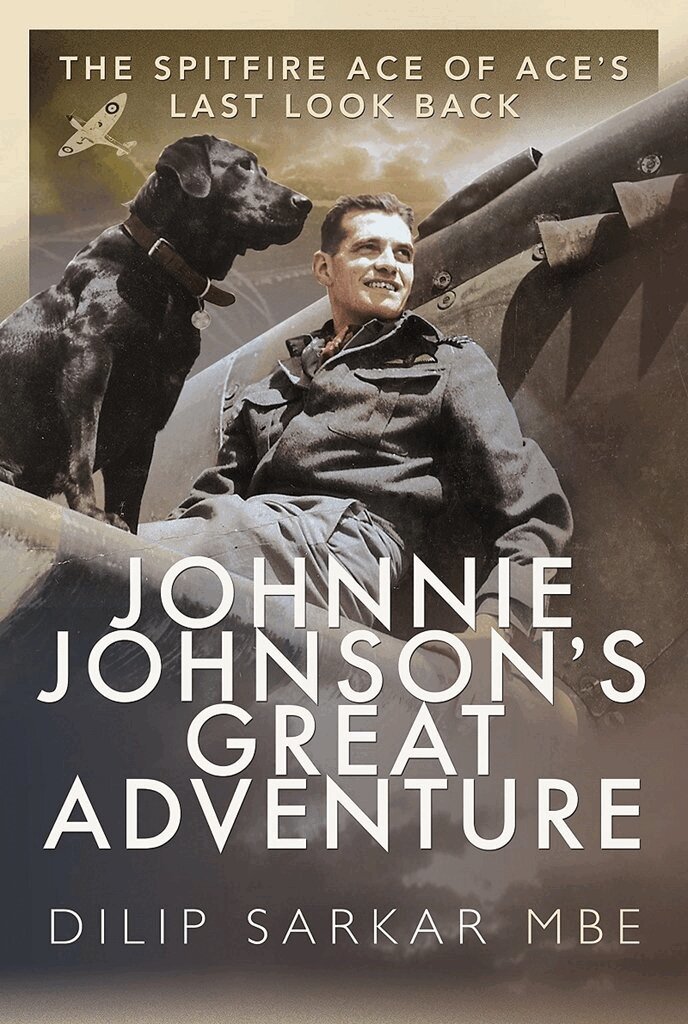
Air Vice-Marshal Johnnie Johnson -a policeman's son from Leicestershire -ended the Second World War as the RAF's top-scoring fighter pilot. Fearless, and an exceptional pilot and marksman, Johnnie was also highly intelligent and a gifted writer.Having published two of his own books, Wing Leader and The Circle of Air Fighting, during the 1980s and 1990s, Johnnie co-authored several more with another fighter ace, namely Wing Commander P.B. Laddie' Lucas. In 1997, the AVM' suggested to his friend, the prolific author Dilip Sarkar, that the pair should collaborate on The Great Adventure -a book that would, in effect, be Johnnie's account of the Long Trek' from Normandy across Northern Europe into the heart of the Third Reich itself.Greycap Leader' was to produce a draft, after which Dilip would add the historical detail and comment. Sadly, the project was unfulfilled, because Johnnie became ill and passed away, aged eighty-five, in 2001\. Years later, Johnnie's eldest son, Chris, discovered the manuscript among his august father's papers. In order to keep Johnnie's memory evergreen, Chris naturally turned to Dilip to finally see the project through to its natural conclusion.In this book Johnnie re-visits certain aspects of his wartime service, including the development of tactical air cooperation with ground forces; his time as a Canadian wing leader in 1943, when the Spitfire Mk.IX at last outclassed the Fw 190; and details his involvement in some of the most important battles of the defeat of Nazi Germany, including Operation Overlord and the D-Day landings in 1944, Operation Market Garden and the airborne assault at Arnhem, and the Rhine Crossings, throughout all of which Johnnie also commanded Canadian wings.Here, then, we have The Great Adventure - Greycap Leader's' previously unpublished last look back.