Dilys Roe - Böcker
Visar alla böcker från författaren Dilys Roe. Handla med fri frakt och snabb leverans.
3 produkter
3 produkter
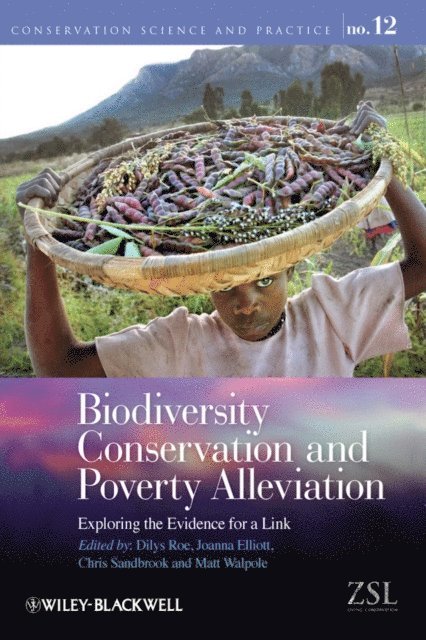
Biodiversity Conservation and Poverty Alleviation
Exploring the Evidence for a Link
Häftad, Engelska, 2012
680 kr
Tillfälligt slut
Biodiversity conservation and poverty alleviation are both important societal goals demanding increasing international attention. While they may seem to be unrelated, the international policy frameworks that guide action to address them make an explicit assumption that conserving biodiversity will help to tackle global poverty. Part of the Conservation Science and Practice Series published with the Zoological Society of London, this book explores the validity of that assumption. The book addresses a number of critical questions: Which aspects of biodiversity are of value to the poor?Does the relationship between biodiversity and poverty differ according to particular ecological conditions?How do different conservation interventions vary in their poverty impacts?How do distributional and institutional issues affect the poverty impacts of interventions?How do broader issues such as climate change and the global economic system affect the biodiversity – poverty relationship at different scales?This volume will be of interest to policy-makers, practitioners and researchers concerned with understanding the potential - and limitations - of integrated approaches to biodiversity conservation and poverty alleviation.
2 289 kr
Skickas inom 7-10 vardagar
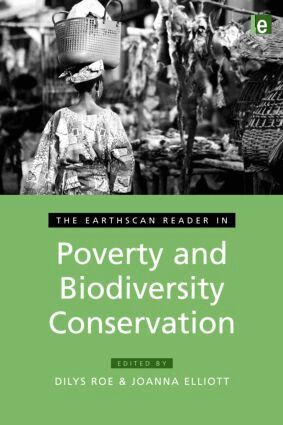
In the last decade biodiversity loss and persistent poverty in developing countries have been recognised as major international problems that require urgent attention. However, the nature and scale of the links between these two problems, and between efforts to address them, has been the subject of much heated debate. Understanding the different elements of this debate is critical if we are to move towards constructive solutions. This Reader provides a guide to, and commentary on, the different strands of the current conservation-poverty debate through a selection of key readings from both the conservation and development literature including policy documents, journal articles and reports. The breadth of material will help readers, including both students and professionals, to locate current debates within their wider contexts.Among the areas of debate covered are:' The lack of attention to biodiversity concerns in international development policy ' The social implications of protectionist conservation policy ' The roles and responsibilities of conservation NGOs towards local communities ' The links between climate change, biodiversity and poverty reduction, and in particular the implication of discussions around reduced emissions from deforestation (REDD) as a climate change mitigation strategy.
576 kr
Skickas inom 10-15 vardagar
In the last decade biodiversity loss and persistent poverty in developing countries have been recognised as major international problems that require urgent attention. However, the nature and scale of the links between these two problems, and between efforts to address them, has been the subject of much heated debate. Understanding the different elements of this debate is critical if we are to move towards constructive solutions. This Reader provides a guide to, and commentary on, the different strands of the current conservation-poverty debate through a selection of key readings from both the conservation and development literature including policy documents, journal articles and reports. The breadth of material will help readers, including both students and professionals, to locate current debates within their wider contexts.Among the areas of debate covered are:' The lack of attention to biodiversity concerns in international development policy ' The social implications of protectionist conservation policy ' The roles and responsibilities of conservation NGOs towards local communities ' The links between climate change, biodiversity and poverty reduction, and in particular the implication of discussions around reduced emissions from deforestation (REDD) as a climate change mitigation strategy.