Dimitris Sakellariou - Böcker
Visar alla böcker från författaren Dimitris Sakellariou. Handla med fri frakt och snabb leverans.
4 produkter
4 produkter
1 578 kr
Skickas inom 10-15 vardagar
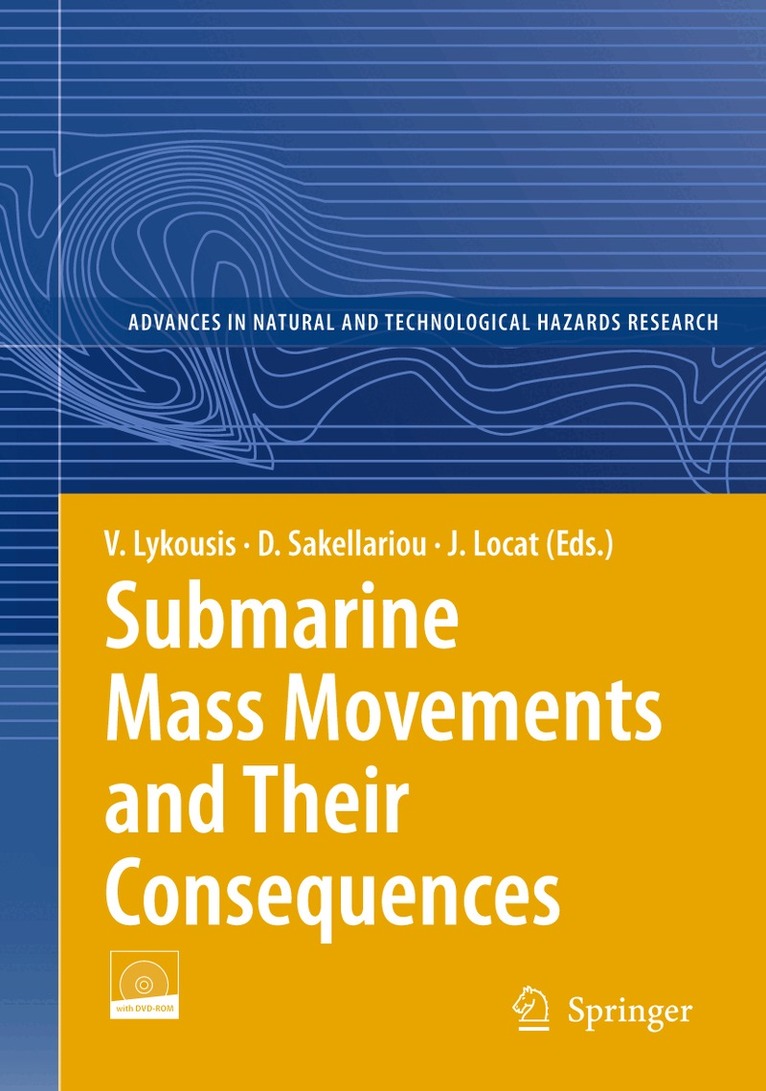
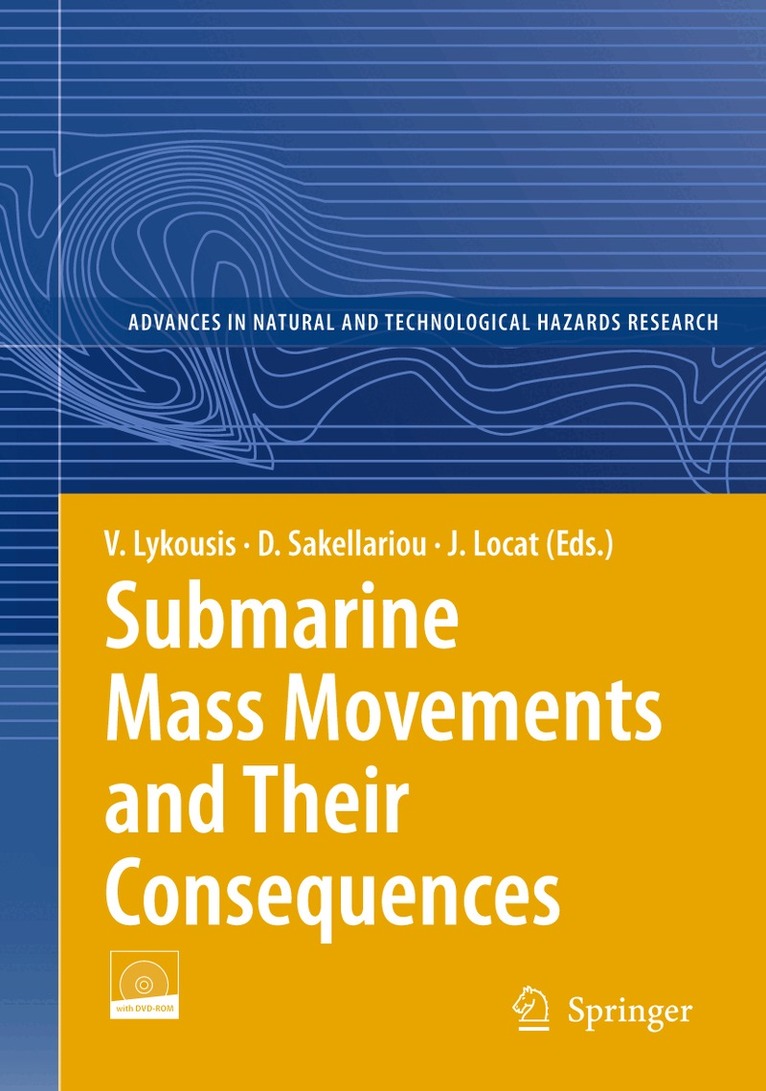
Submarine mass movements and their consequences are of major concern for coastal communities and infrastructures but also for the exploitation and the development of seafloor resources. A tragic example of the vulnerability of coastal communities has been provided by the Indonesian tsunami of December 2004. Since 2005, as part of the scientific community efforts to minimize the impact of such natural disasters, the International Union of Geological Science (IUGS) and the United Nation, Educational, Scientific, and Cultural Organization (UNESCO) have sponsored an International Geoscience Program on Submarine Mass Movements and Their Consequences (IGCP-511). One of the main objectives of IGCP-511 members is to hold bi-annual symposia on these types of marine and coastal geohazards. The first symposium of this series was held in Nice (2003) and the second in Oslo (2005). This 3rd Symposium on submarine Mass Movements and Their consequences provides an opportunity to review the state of the art in risk evaluation from submarine landslides, deposit characterization and its implication for coastal and offshore development. By bringing together professionals from the industry and academia with a range of different expertise, these proceedings hope to cover the full spectrum of aspects related to subaqueous mass movements and related consequences. The interdisciplinary views gathered in this book, arising from the conference, help identify future challenges, mitigation strategies and better management of the seafloor. To that effect, the Santorini is quite a unique venue for scientists and engineers interested in marine and coastal geohazards.
1 625 kr
Skickas inom 10-15 vardagar
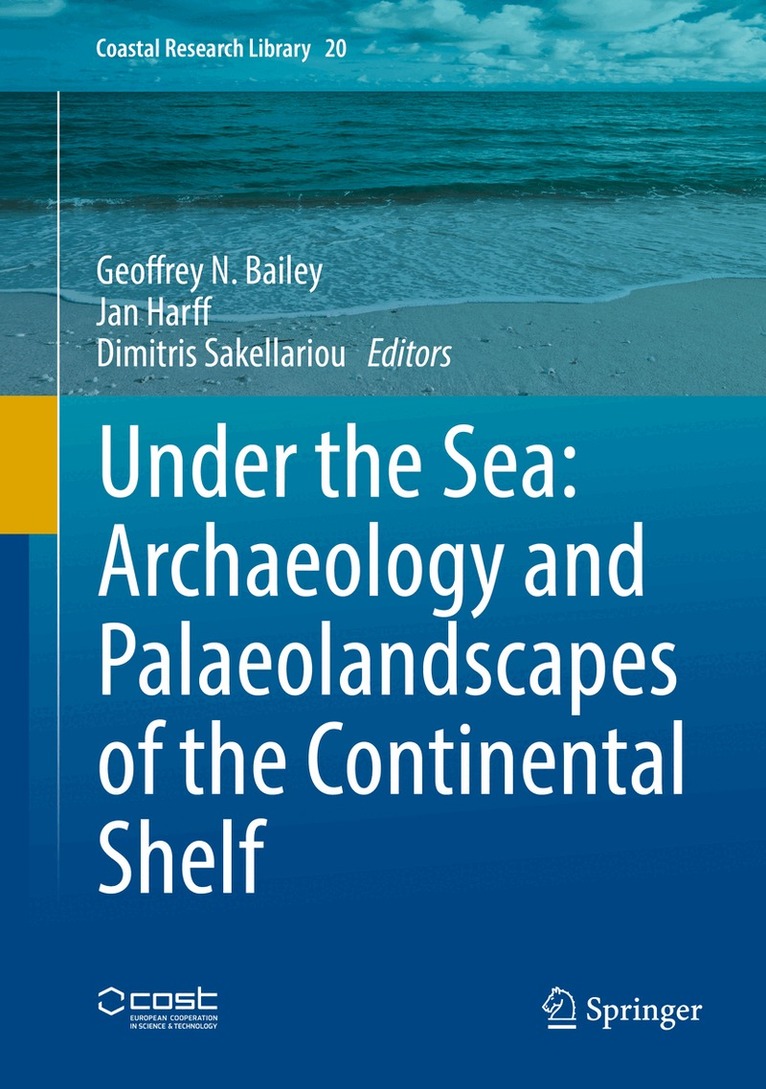
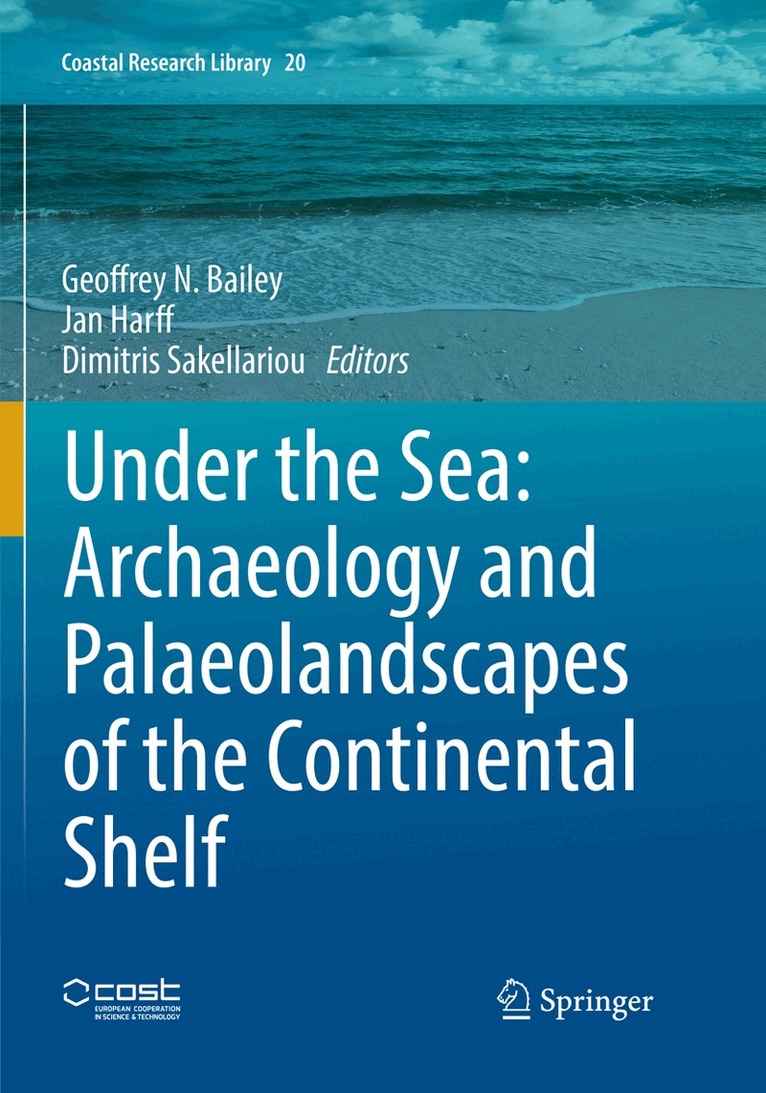
This book focuses on issues of method and interpretation in studies of submerged landscapes, concentrating on illustrations and case studies from around Europe with additional examples from other parts of the world. Such landscapes were once exposed as dry land during the low sea levels that prevailed during the glacial periods that occupied most of the past million years and provided extensive new territories for human exploitation. Their study today involves underwater investigation, using techniques and strategies which are clearly set out in these chapters. The underwater landscape provides a rich source of information about the archaeology of human settlement and long-term changes in environment, climate and sea-level. This book highlights how such information can be revealed and interpreted.The examples presented here and the focus on techniques make this book of worldwide relevance. Chapters describe examples of underwater archaeological investigation as well as collaboration with offshore industries and legal, management and training issues relating to underwater cultural heritage. Such studies point to the significance of this drowned landscape, and readers are invited to consider its human impact in terms of past settlement and population dispersal through palaeolandscape reconstruction and interpretation in relation to broader themes in human prehistory.This volume is based on work from COST Action SPLASHCOS, a four-year multi-disciplinary and multi-national research program supported by COST (European Cooperation in Science and Technology) and has something to benefit all those with an interest in the sea floor of the continental shelf and the archaeological and social impact of sea-level change, including archaeologists, marine scientists, geographers, cultural-heritage managers, commercial and governmental organisations, policy makers and interested members of the public.
1 625 kr
Skickas inom 10-15 vardagar
This book focuses on issues of method and interpretation in studies of submerged landscapes, concentrating on illustrations and case studies from around Europe with additional examples from other parts of the world. Such landscapes were once exposed as dry land during the low sea levels that prevailed during the glacial periods that occupied most of the past million years and provided extensive new territories for human exploitation. Their study today involves underwater investigation, using techniques and strategies which are clearly set out in these chapters. The underwater landscape provides a rich source of information about the archaeology of human settlement and long-term changes in environment, climate and sea-level. This book highlights how such information can be revealed and interpreted.The examples presented here and the focus on techniques make this book of worldwide relevance. Chapters describe examples of underwater archaeological investigation as well as collaboration with offshore industries and legal, management and training issues relating to underwater cultural heritage. Such studies point to the significance of this drowned landscape, and readers are invited to consider its human impact in terms of past settlement and population dispersal through palaeolandscape reconstruction and interpretation in relation to broader themes in human prehistory.This volume is based on work from COST Action SPLASHCOS, a four-year multi-disciplinary and multi-national research program supported by COST (European Cooperation in Science and Technology) and has something to benefit all those with an interest in the sea floor of the continental shelf and the archaeological and social impact of sea-level change, including archaeologists, marine scientists, geographers, cultural-heritage managers, commercial and governmental organisations, policy makers and interested members of the public.
1 578 kr
Skickas inom 10-15 vardagar
Submarine mass movements and their consequences are of major concern for coastal communities and infrastructures but also for the exploitation and the development of seafloor resources. A tragic example of the vulnerability of coastal communities has been provided by the Indonesian tsunami of December 2004. Since 2005, as part of the scientific community efforts to minimize the impact of such natural disasters, the International Union of Geological Science (IUGS) and the United Nation, Educational, Scientific, and Cultural Organization (UNESCO) have sponsored an International Geoscience Program on Submarine Mass Movements and Their Consequences (IGCP-511). One of the main objectives of IGCP-511 members is to hold bi-annual symposia on these types of marine and coastal geohazards. The first symposium of this series was held in Nice (2003) and the second in Oslo (2005). This 3rd Symposium on submarine Mass Movements and Their consequences provides an opportunity to review the state of the art in risk evaluation from submarine landslides, deposit characterization and its implication for coastal and offshore development. By bringing together professionals from the industry and academia with a range of different expertise, these proceedings hope to cover the full spectrum of aspects related to subaqueous mass movements and related consequences. The interdisciplinary views gathered in this book, arising from the conference, help identify future challenges, mitigation strategies and better management of the seafloor. To that effect, the Santorini is quite a unique venue for scientists and engineers interested in marine and coastal geohazards.