Dinda L. Gorlée - Böcker
Visar alla böcker från författaren Dinda L. Gorlée. Handla med fri frakt och snabb leverans.
4 produkter
4 produkter
2 040 kr
Kommande
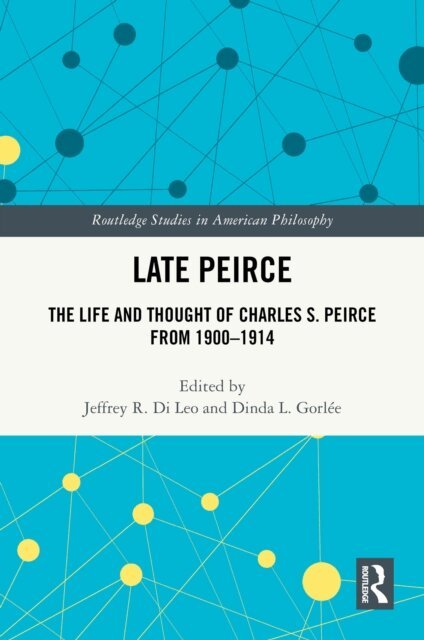
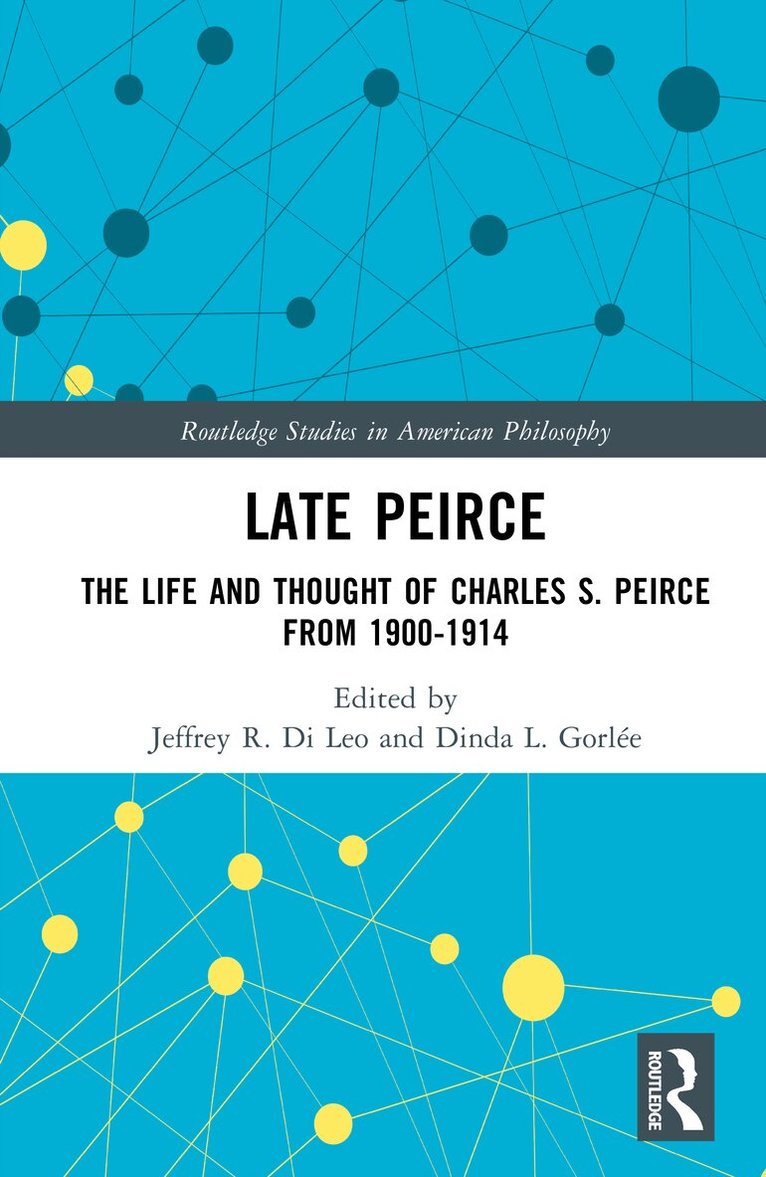
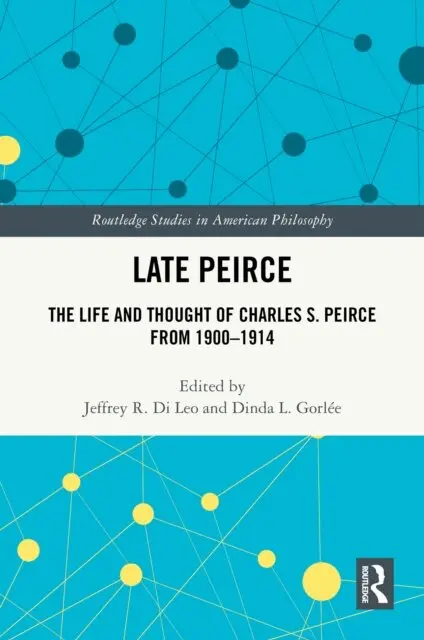
This volume explores the later life and thought of Charles S. Peirce, a 15-year period that spans from 1900 until his death in 1914. It is the first volume devoted to this period of Peirce’s philosophical work.Peirce moved to the house he named Arisbe in Milford, Pennsylvania, in 1888. Here, he lived in relative isolation and continued to work on his scientific and semiotic philosophy. Peirce developed a modern logic that was influenced by changes he saw in the interdisciplinary study of science and technology, transforming his Pragmatism into his Pragmaticism. This action regarding Pragmaticism was a reaction against the downfall of deductive logic, and led Peirce to believe in the vagueness (“would-be”) of logical realism in deduction and later abduction. In Peirce’s later phase, he situated the “new” mathematics as a labyrinth of semiotic signs through which the quasi-mind of the logician could find a specialized sense to intuit the evolutionary semiosis of reality. The chapters in this volume examine all major dimensions of his thought during this period.Late Peirce will appeal to scholars and graduate students interested in Peirce, American philosophy, pragmatism, logic, and semiotics.
1 754 kr
Skickas inom 10-15 vardagar
Ludwig Wittgenstein’s works encompass a huge number of published philosophical manuscripts, notebooks, lectures, remarks, and responses, as well as his unpublished private diaries. The diaries were written mainly in coded script to interpolate his writings on the philosophy of language with autobiographic passages, but were previously unknown to the public and impossible to decode without learning the coding system.This book deciphers the cryptography of the diary entries to examine what Wittgenstein’s personal idiom reveals about his public and private identities. Employing the semiotic doctrine of Charles S. Peirce, Dinda L. Gorlée argues that the style of writing reflects the variety of Wittgenstein’s emotional moods, which were profoundly affected by his medical symptoms. Bringing Peirce’s reasoning of abduction together with induction and deduction, the book investigates how the semiosis of the emotional, energetic, and logical interpretations of signs and objects reveal Wittgenstein’s psychological states in the coded diaries.
461 kr
Skickas inom 10-15 vardagar
Ludwig Wittgenstein’s works encompass a huge number of published philosophical manuscripts, notebooks, lectures, remarks, and responses, as well as his unpublished private diaries. The diaries were written mainly in coded script to interpolate his writings on the philosophy of language with autobiographic passages, but were previously unknown to the public and impossible to decode without learning the coding system.This book deciphers the cryptography of the diary entries to examine what Wittgenstein’s personal idiom reveals about his public and private identities. Employing the semiotic doctrine of Charles S. Peirce, Dinda L. Gorlée argues that the style of writing reflects the variety of Wittgenstein’s emotional moods, which were profoundly affected by his medical symptoms. Bringing Peirce’s reasoning of abduction together with induction and deduction, the book investigates how the semiosis of the emotional, energetic, and logical interpretations of signs and objects reveal Wittgenstein’s psychological states in the coded diaries.
2 206 kr
Skickas inom 5-8 vardagar
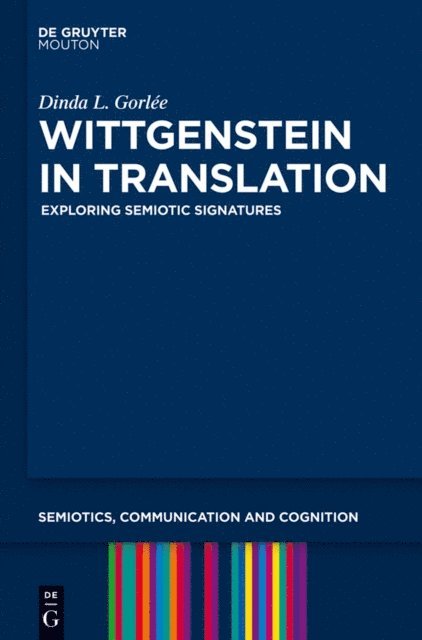
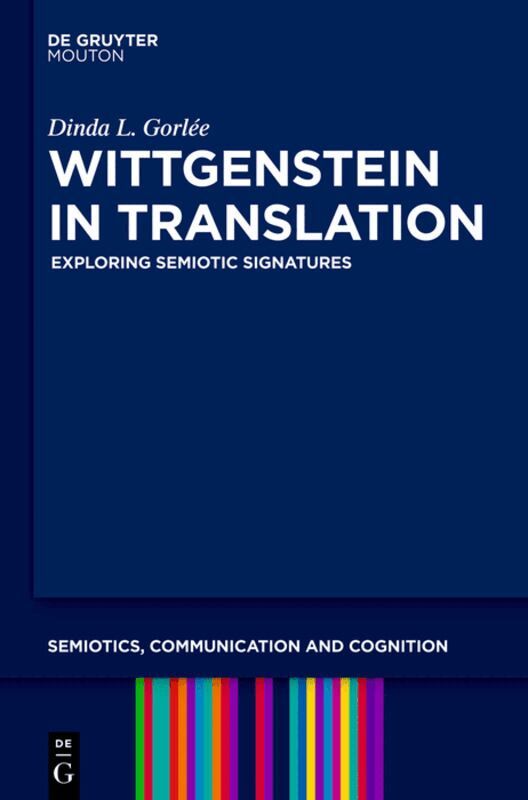
Apart from the Tractatus, Wittgenstein did not write whole manuscripts, but composed short fragments. The current volume reveals the depths of Wittgenstein's soul-searching writings - his "new" philosophy - by concentrating on ordinary language and using few technical terms. In so doing, Wittgenstein is finally given the accolade of a neglected figure in the history of semiotics. The volume applies Wittgenstein's methodological tools to the study of multilingual dialogue in philosophy, linguistics, theology, anthropology and literature. Translation shows how the translator's signatures are in conflict with personal or stylistic choices in linguistic form, but also in cultural content. This volume undertakes the "impossible task" of uncovering the reasoning of Wittgenstein's translated texts in order to construct, rather than paraphrase, the ideal of a terminological coherence.