Dino P. Christenson – författare
Visar alla böcker från författaren Dino P. Christenson. Handla med fri frakt och snabb leverans.
4 produkter
4 produkter
Inbunden, Engelska, 2026
2 380 kr
Kommande
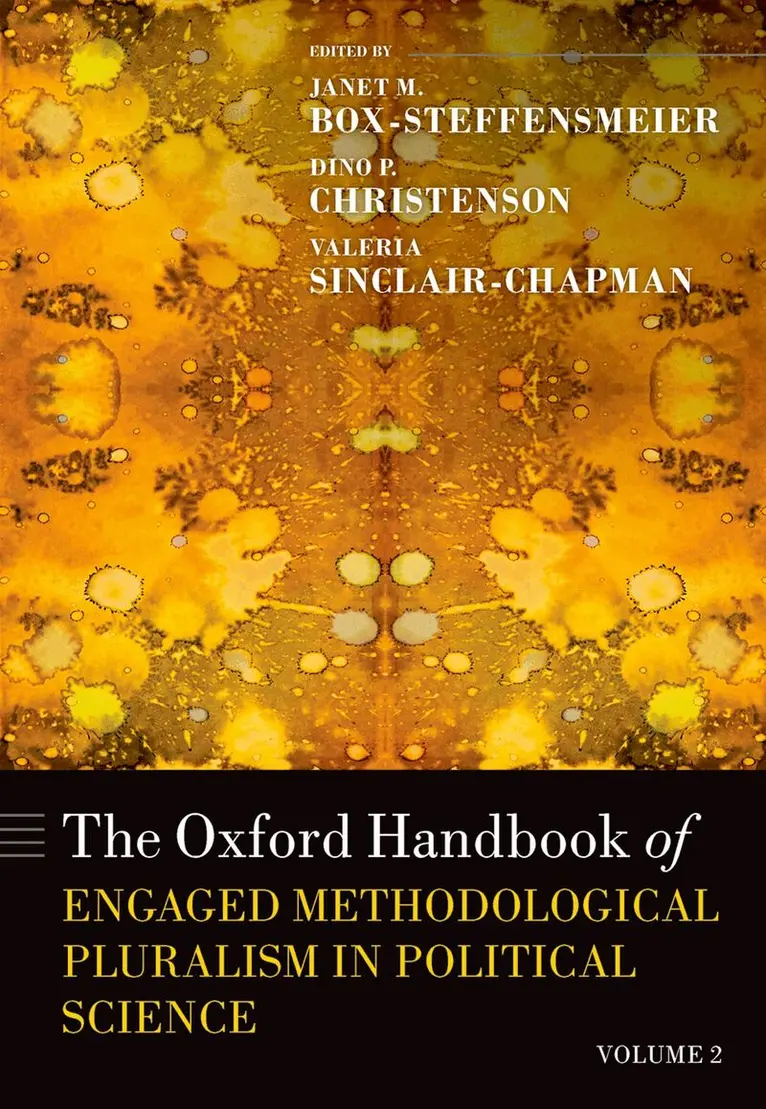
The Oxford Handbook of Engaged Methodological Pluralism in Political Science (Volume 2) is the second of twovolumes published as the result of the American Political Science Association’s 2021 Presidential Task Force on the state of methodology in political science. Methodology impacts every research project undertaken. These handbooks are a timely addition as the discipline is at a juncture in terms of debates around epistemology, quantitative, and qualitative methods. The chapter authors directly address and discuss these challengesfor scholars and students across the spectrum, with overviews, critiques, and applications. The handbooks are unique in looking at methods, methodology and epistemology, consideration of new data, and assessmentof diversity, equity, and inclusion that intersectswith them. Volume 2 is comprised of four sections: Data Possibilities, Replication, and Transparency; Controversies in Methods and Methodologies; Perspective Diversity in the Questions We Ask and the Answers We Offer; and The Value of Pluralism and the Future of Social Science. The annual meeting, task force, and resulting handbooks bridge disciplinary divides, championing a pluralistic approach where methodology and substantive inquiry are deeply intertwined. By showcasing a wide array of research strategies, the editors demonstrate that the discipline’s inherent diversity can be viewed as its most distinct intellectual advantage.
Inbunden, Engelska, 2020
836 kr
Skickas inom 5-8 vardagar
Throughout the history of the United States, the nation's presidents have shown a startling power to act independently of Congress and the courts. Using such tools as executive orders and memoranda, presidents have taken the country to war, abolished slavery, authorized widespread electronic surveillance, shielded undocumented immigrants from deportation, and more. As a result, executive authority has at times been accused of verging on the imperial. In this book, Dino P. Christenson and Douglas L. Kriner consider an oft-overlooked question: Given the strength of unilateral executive action and the steep barriers for Congress and the courts to successfully check it, what stops presidents from asserting control even more broadly than they already do? The answer, Christenson and Kriner argue, lies in the reactions of everyday Americans.With robust empirical data and compelling case studies, the authors reveal the extent to which domestic public opinion limits executive might. Presidents are emboldened to pursue their own agendas when they enjoy high levels of public support, and constrained when they are down in the polls, as unilateral action could jeopardize future initiatives and render presidents even more politically vulnerable. Although they find little evidence that the public instinctively recoils against the use of unilateral action, Congress and the courts can sway the public's view via their criticism of unilateral policies. Thus, other branches can still check the executive branch through political means. On the whole, as long as presidents are concerned with public opinion, Christenson and Kriner contend that fears of an imperial presidency are overblown. However, a president who responds only to the narrow base and ignores the mass public could pose a unique threat to checks and balances.
Häftad, Engelska, 2020
281 kr
Skickas inom 5-8 vardagar
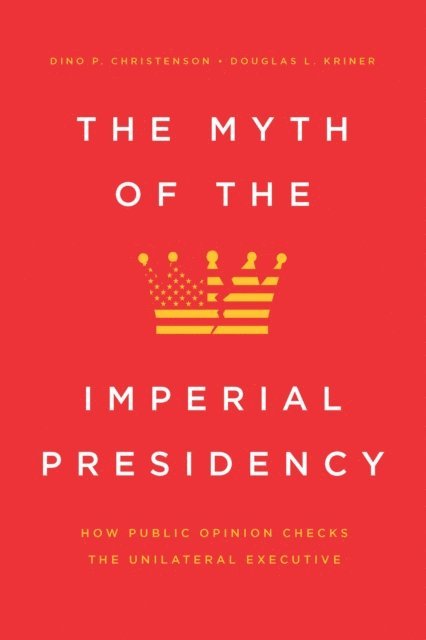
Throughout the history of the United States, the nation's presidents have shown a startling power to act independently of Congress and the courts. Using such tools as executive orders and memoranda, presidents have taken the country to war, abolished slavery, authorized widespread electronic surveillance, shielded undocumented immigrants from deportation, and more. As a result, executive authority has at times been accused of verging on the imperial. In this book, Dino P. Christenson and Douglas L. Kriner consider an oft-overlooked question: Given the strength of unilateral executive action and the steep barriers for Congress and the courts to successfully check it, what stops presidents from asserting control even more broadly than they already do? The answer, Christenson and Kriner argue, lies in the reactions of everyday Americans.With robust empirical data and compelling case studies, the authors reveal the extent to which domestic public opinion limits executive might. Presidents are emboldened to pursue their own agendas when they enjoy high levels of public support, and constrained when they are down in the polls, as unilateral action could jeopardize future initiatives and render presidents even more politically vulnerable. Although they find little evidence that the public instinctively recoils against the use of unilateral action, Congress and the courts can sway the public's view via their criticism of unilateral policies. Thus, other branches can still check the executive branch through political means. On the whole, as long as presidents are concerned with public opinion, Christenson and Kriner contend that fears of an imperial presidency are overblown. However, a president who responds only to the narrow base and ignores the mass public could pose a unique threat to checks and balances.
E-bok
Engelska, 2020526 kr
Läs direkt efter köp
Throughout American history, presidents have shown a startling power to act independently of Congress and the courts. On their own initiative, presidents have taken the country to war, abolished slavery, shielded undocumented immigrants from deportation, declared a national emergency at the border, and more, leading many to decry the rise of an imperial presidency. But given the steep barriers that usually prevent Congress and the courts from formally checking unilateral power, what stops presidents from going it alone even more aggressively? The answer, Dino P. Christenson and Douglas L. Kriner argue, lies in the power of public opinion. With robust empirical data and compelling case studies, the authors reveal the extent to which domestic public opinion limits executive might. Presidents are emboldened to pursue their own agendas when they enjoy strong public support, and constrained when they don’t, since unilateral action risks inciting political pushback, jeopardizing future initiatives, and further eroding their political capital. Although few Americans instinctively recoil against unilateralism, Congress and the courts can sway the public’s view via their criticism of unilateral policies. Thus, other branches can still check the executive branch through political means. As long as presidents are concerned with public opinion, Christenson and Kriner contend that fears of an imperial presidency are overblown.