Douglas L. Kriner - Böcker
Visar alla böcker från författaren Douglas L. Kriner. Handla med fri frakt och snabb leverans.
11 produkter
11 produkter
967 kr
Skickas inom 7-10 vardagar
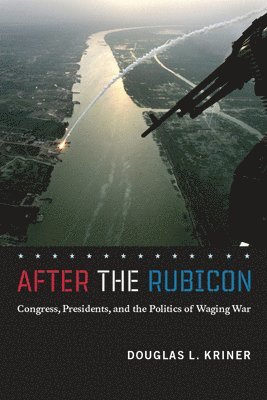
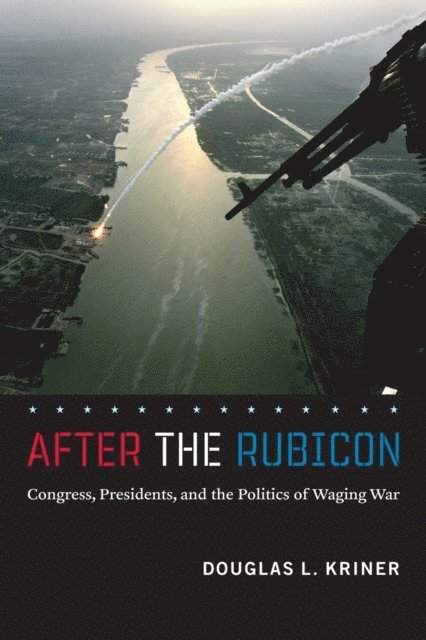
When the United States goes to war, the nation's attention focuses on the president. As commander in chief, a president reaches the zenith of power, while Congress is supposedly shunted to the sidelines once troops have been deployed abroad. Because of Congress' repeated failure to exercise its legislative powers to rein in presidents, many have proclaimed its irrelevance in military matters. After the Rubicon challenges this conventional wisdom by illuminating the diverse ways in which legislators influence the conduct of military affairs. Douglas L. Kriner reveals that even in politically sensitive wartime environments, individual members of Congress frequently propose legislation, hold investigative hearings, and engage in national policy debates in the public sphere. These actions influence the president's strategic decisions as he weighs the political costs of pursuing his preferred military course. Marshalling a wealth of quantitative and historical evidence, Kriner expertly demonstrates the full extent to which Congress materially shapes the initiation, scope, and duration of major military actions and sheds new light on the timely issue of interbranch relations.
327 kr
Skickas inom 7-10 vardagar
When the United States goes to war, the nation's attention focuses on the president. As commander in chief, a president reaches the zenith of power, while Congress is supposedly shunted to the sidelines once troops have been deployed abroad. Because of Congress's repeated failure to exercise its legislative powers to rein in presidents, many have proclaimed its irrelevance in military matters. After the Rubicon challenges this conventional wisdom by illuminating the diverse ways in which legislators influence the conduct of military affairs. Douglas L. Kriner reveals that even in politically sensitive wartime environments, individual members of Congress frequently propose legislation, hold investigative hearings, and engage in national policy debates in the public sphere. These actions influence the president's strategic decisions as he weighs the political costs of pursuing his preferred military course. Marshalling a wealth of quantitative and historical evidence, Kriner expertly demonstrates the full extent to which Congress materially shapes the initiation, scope, and duration of major military actions and sheds new light on the timely issue of interbranch relations.
Myth of the Imperial Presidency
How Public Opinion Checks the Unilateral Executive
Inbunden, Engelska, 2020
806 kr
Skickas inom 7-10 vardagar
Throughout the history of the United States, the nation's presidents have shown a startling power to act independently of Congress and the courts. Using such tools as executive orders and memoranda, presidents have taken the country to war, abolished slavery, authorized widespread electronic surveillance, shielded undocumented immigrants from deportation, and more. As a result, executive authority has at times been accused of verging on the imperial. In this book, Dino P. Christenson and Douglas L. Kriner consider an oft-overlooked question: Given the strength of unilateral executive action and the steep barriers for Congress and the courts to successfully check it, what stops presidents from asserting control even more broadly than they already do? The answer, Christenson and Kriner argue, lies in the reactions of everyday Americans.With robust empirical data and compelling case studies, the authors reveal the extent to which domestic public opinion limits executive might. Presidents are emboldened to pursue their own agendas when they enjoy high levels of public support, and constrained when they are down in the polls, as unilateral action could jeopardize future initiatives and render presidents even more politically vulnerable. Although they find little evidence that the public instinctively recoils against the use of unilateral action, Congress and the courts can sway the public's view via their criticism of unilateral policies. Thus, other branches can still check the executive branch through political means. On the whole, as long as presidents are concerned with public opinion, Christenson and Kriner contend that fears of an imperial presidency are overblown. However, a president who responds only to the narrow base and ignores the mass public could pose a unique threat to checks and balances.
Myth of the Imperial Presidency
How Public Opinion Checks the Unilateral Executive
Häftad, Engelska, 2020
271 kr
Skickas inom 7-10 vardagar
Throughout the history of the United States, the nation's presidents have shown a startling power to act independently of Congress and the courts. Using such tools as executive orders and memoranda, presidents have taken the country to war, abolished slavery, authorized widespread electronic surveillance, shielded undocumented immigrants from deportation, and more. As a result, executive authority has at times been accused of verging on the imperial. In this book, Dino P. Christenson and Douglas L. Kriner consider an oft-overlooked question: Given the strength of unilateral executive action and the steep barriers for Congress and the courts to successfully check it, what stops presidents from asserting control even more broadly than they already do? The answer, Christenson and Kriner argue, lies in the reactions of everyday Americans.With robust empirical data and compelling case studies, the authors reveal the extent to which domestic public opinion limits executive might. Presidents are emboldened to pursue their own agendas when they enjoy high levels of public support, and constrained when they are down in the polls, as unilateral action could jeopardize future initiatives and render presidents even more politically vulnerable. Although they find little evidence that the public instinctively recoils against the use of unilateral action, Congress and the courts can sway the public's view via their criticism of unilateral policies. Thus, other branches can still check the executive branch through political means. On the whole, as long as presidents are concerned with public opinion, Christenson and Kriner contend that fears of an imperial presidency are overblown. However, a president who responds only to the narrow base and ignores the mass public could pose a unique threat to checks and balances.
Checking the Costs of War
Sources of Accountability in Post-9/11 US Foreign Policy
Inbunden, Engelska, 2026
1 343 kr
Kommande
A thorough reassessment of how domestic factors do and do not constrain the use of American military force abroad in the early twenty-first century.More than two decades have passed since the September 11th terrorist attacks resuscitated debates about the “imperial presidency” within the United States. During that same time, the United States has fought costly and inconclusive wars in Iraq and Afghanistan, pivoted to the Pacific to counter China, and pulled its gaze back to Europe and the Middle East in response to wars in Ukraine and Gaza. Moreover, new technologies and ways of funding and staffing wars have made the costs of war less visible to the public while polarization has increased and a new legal doctrine of presidential power has gained force. Against this backdrop, Checking the Costs of War reassesses how domestic factors have both constrained and failed to constrain the use of military power across different contexts and over time. Richly empirical chapters explore the varying effects of different kinds of potential checks: legislative, public opinion, and bureaucratic. Collectively, chapters offer new insight into the prospects for war and peace today.
Checking the Costs of War
Sources of Accountability in Post-9/11 US Foreign Policy
Häftad, Engelska, 2025
287 kr
Skickas inom 7-10 vardagar
A thorough reassessment of how domestic factors do and do not constrain the use of American military force abroad in the early twenty-first century.More than two decades have passed since the September 11th terrorist attacks resuscitated debates about the “imperial presidency” within the United States. During that same time, the United States has fought costly and inconclusive wars in Iraq and Afghanistan, pivoted to the Pacific to counter China, and pulled its gaze back to Europe and the Middle East in response to wars in Ukraine and Gaza. Moreover, new technologies and ways of funding and staffing wars have made the costs of war less visible to the public while polarization has increased and a new legal doctrine of presidential power has gained force. Against this backdrop, Checking the Costs of War reassesses how domestic factors have both constrained and failed to constrain the use of military power across different contexts and over time. Richly empirical chapters explore the varying effects of different kinds of potential checks: legislative, public opinion, and bureaucratic. Collectively, chapters offer new insight into the prospects for war and peace today.
853 kr
Skickas inom 7-10 vardagar
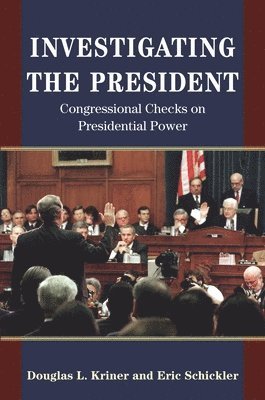
Although congressional investigations have provided some of the most dramatic moments in American political history, they have often been dismissed as mere political theater. But these investigations are far more than grandstanding. Investigating the President shows that congressional investigations are a powerful tool for members of Congress to counter presidential aggrandizement. By shining a light on alleged executive wrongdoing, investigations can exert significant pressure on the president and materially affect policy outcomes. Douglas Kriner and Eric Schickler construct the most comprehensive overview of congressional investigative oversight to date, analyzing nearly thirteen thousand days of hearings, spanning more than a century, from 1898 through 2014. The authors examine the forces driving investigative power over time and across chambers, identify how hearings might influence the president's strategic calculations through the erosion of the president's public approval rating, and uncover the pathways through which investigations have shaped public policy.Put simply, by bringing significant political pressure to bear on the president, investigations often afford Congress a blunt, but effective check on presidential power--without the need to worry about veto threats or other hurdles such as Senate filibusters. In an era of intense partisan polarization and institutional dysfunction, Investigating the President delves into the dynamics of congressional investigations and how Congress leverages this tool to counterbalance presidential power.
279 kr
Skickas inom 7-10 vardagar
Although congressional investigations have provided some of the most dramatic moments in American political history, they have often been dismissed as mere political theater. But these investigations are far more than grandstanding. Investigating the President shows that congressional investigations are a powerful tool for members of Congress to counter presidential aggrandizement. By shining a light on alleged executive wrongdoing, investigations can exert significant pressure on the president and materially affect policy outcomes. Douglas Kriner and Eric Schickler construct the most comprehensive overview of congressional investigative oversight to date, analyzing nearly thirteen thousand days of hearings, spanning more than a century, from 1898 through 2014. The authors examine the forces driving investigative power over time and across chambers, identify how hearings might influence the president's strategic calculations through the erosion of the president's public approval rating, and uncover the pathways through which investigations have shaped public policy.Put simply, by bringing significant political pressure to bear on the president, investigations often afford Congress a blunt, but effective check on presidential power--without the need to worry about veto threats or other hurdles such as Senate filibusters. In an era of intense partisan polarization and institutional dysfunction, Investigating the President delves into the dynamics of congressional investigations and how Congress leverages this tool to counterbalance presidential power.
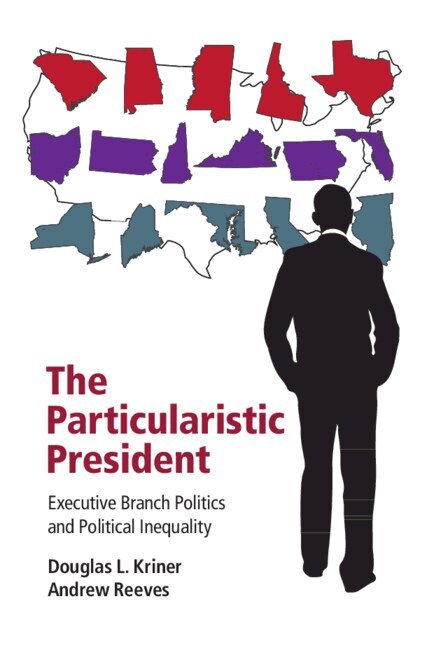
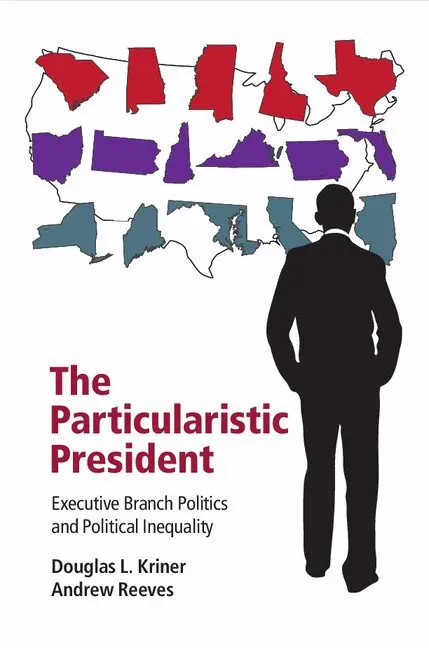
The Particularistic President
Executive Branch Politics and Political Inequality
Inbunden, Engelska, 2015
1 034 kr
Skickas inom 7-10 vardagar
As the holders of the only office elected by the entire nation, presidents have long claimed to be sole stewards of the interests of all Americans. Scholars have largely agreed, positing the president as an important counterbalance to the parochial impulses of members of Congress. This supposed fact is often invoked in arguments for concentrating greater power in the executive branch. Douglas L. Kriner and Andrew Reeves challenge this notion and, through an examination of a diverse range of policies from disaster declarations, to base closings, to the allocation of federal spending, show that presidents, like members of Congress, are particularistic. Presidents routinely pursue policies that allocate federal resources in a way that disproportionately benefits their more narrow partisan and electoral constituencies. Though presidents publicly don the mantle of a national representative, in reality they are particularistic politicians who prioritize the needs of certain constituents over others.
The Particularistic President
Executive Branch Politics and Political Inequality
Häftad, Engelska, 2015
385 kr
Skickas inom 7-10 vardagar
As the holders of the only office elected by the entire nation, presidents have long claimed to be sole stewards of the interests of all Americans. Scholars have largely agreed, positing the president as an important counterbalance to the parochial impulses of members of Congress. This supposed fact is often invoked in arguments for concentrating greater power in the executive branch. Douglas L. Kriner and Andrew Reeves challenge this notion and, through an examination of a diverse range of policies from disaster declarations, to base closings, to the allocation of federal spending, show that presidents, like members of Congress, are particularistic. Presidents routinely pursue policies that allocate federal resources in a way that disproportionately benefits their more narrow partisan and electoral constituencies. Though presidents publicly don the mantle of a national representative, in reality they are particularistic politicians who prioritize the needs of certain constituents over others.
607 kr
Skickas inom 7-10 vardagar
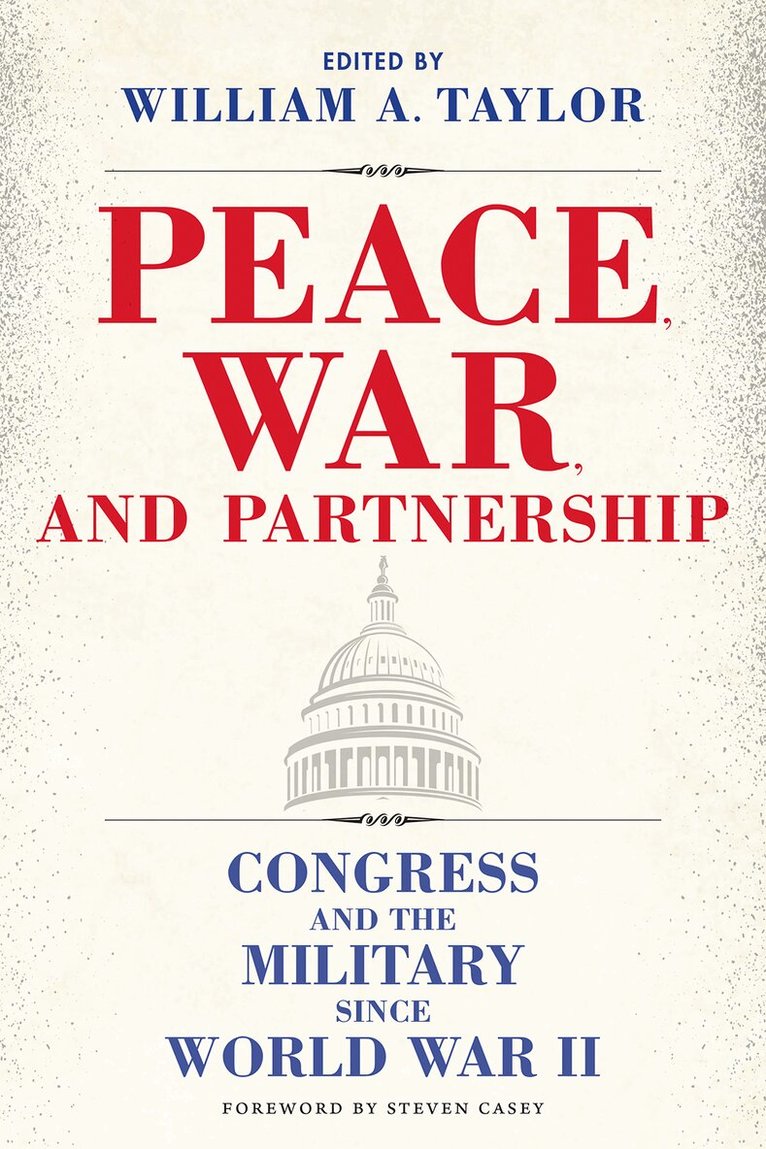
Covering the period from World War II through the Trump presidency, Peace, War, and Partnership: Congress and the Military Since World War II unpacks the vital and dynamic relationship between Congress and the military, two entities that have worked together, at times with different purposes, to solve myriad important issues impacting the United States in both peace and war. Congress and the military have had their periods of cooperation. However, they have also had alternating periods of resistance to each other, based on distinct conceptions of national interests and divergent strategies. Their partnership has been a symbiotic relationship in which one entity or the other has ebbed and flowed in power depending on the circumstances. They have altered each other in far-reaching ways and transformed American society as a result of their liaisons.Peace, War, and Partnership analyzes the significant, powerful, and central relationship between Congress and the military. It investigates intersections of policy, politics, and society to theorize the impact of this relationship on the United States in the modern era. This work also offers a better understanding of earlier attempts by policy makers in Congress and the military to provide national security, contextualizing highly relevant current issues such as military service, proliferation, foreign intervention, national security, joint operations, diplomacy, alliances, mobilization, post-conflict resolution, citizenship, and military innovation. It illuminates crucial questions involving military policies in American democracy, and their sway on America historically and today, sparking and informing public debate about its implications now and for the future.