Sarah E. Kreps - Böcker
Visar alla böcker från författaren Sarah E. Kreps. Handla med fri frakt och snabb leverans.
7 produkter
7 produkter
797 kr
Skickas
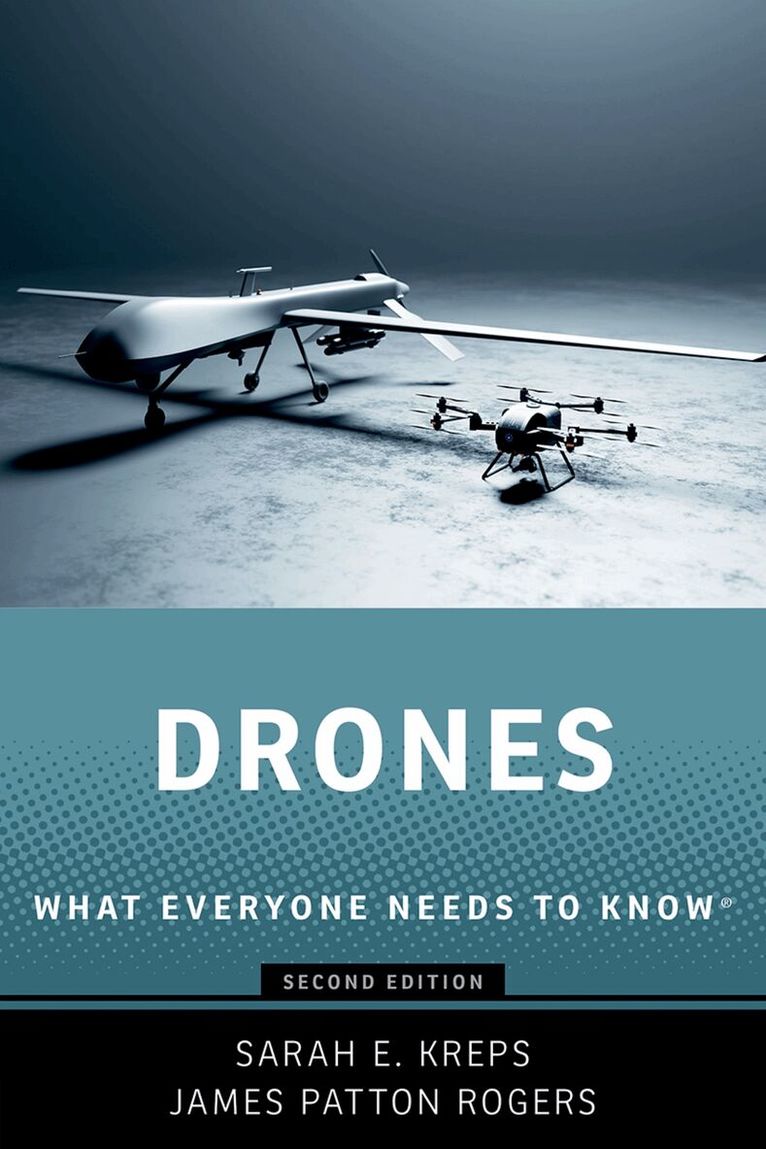
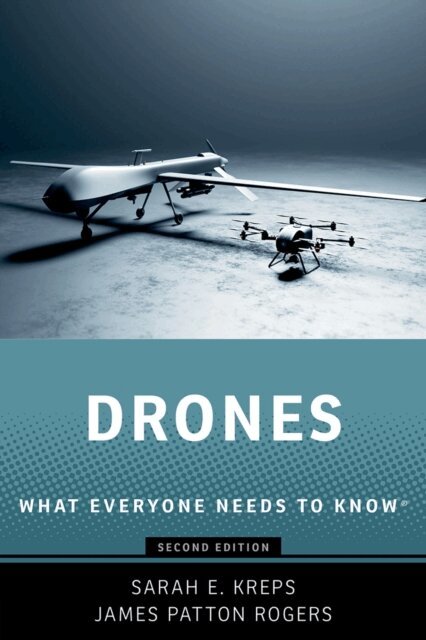
The second edition of Drones: What Everyone Needs to Know® provides a comprehensive and updated look at the rapidly evolving world of drones, otherwise known as unmanned or uncrewed aerial vehicles (UAVs). Covering the past, present, and future of military and civilian applications, this book explores how drones have transformed--and are transforming--industries and warfare. It delves into the ethical, legal, and safety concerns raised by their widespread use, examining issues from privacy violations to international security.While the US has historically been a dominant force in drone development, this fully updated volume addresses the global proliferation of drones. They quickly became one of the most effective weapons in the Russia-Ukraine War, and states like China, Iran, and Turkey are now supplying drones to states and violent non-state actors around the world. This book discusses the dramatic rise of commercial drones, from deliveries to emergency response, while analyzing the challenges of regulation and public perception. Drones also expands beyond the air to cover ground and maritime drones, and projects the future of drone technology across multiple domains with a focus on autonomous vehicles and lethal autonomous weapons. A must-read for anyone seeking a well-rounded understanding of this pivotal technology, Drones: What Everyone Needs to Know® provides crucial insights into how UAVs are reshaping modern warfare, domestic security, and civilian life.
138 kr
Skickas
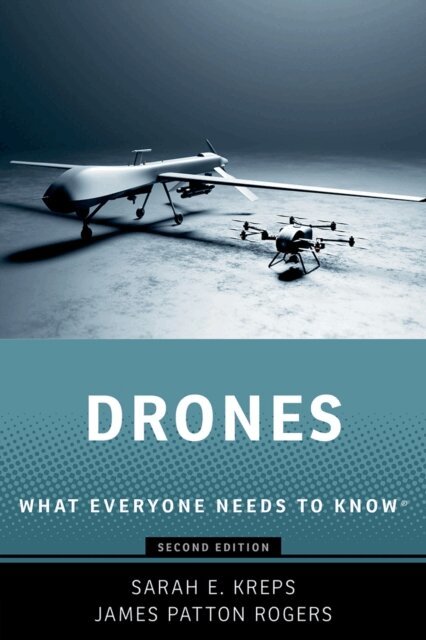
The second edition of Drones: What Everyone Needs to Know® provides a comprehensive and updated look at the rapidly evolving world of drones, otherwise known as unmanned or uncrewed aerial vehicles (UAVs). Covering the past, present, and future of military and civilian applications, this book explores how drones have transformed--and are transforming--industries and warfare. It delves into the ethical, legal, and safety concerns raised by their widespread use, examining issues from privacy violations to international security.While the US has historically been a dominant force in drone development, this fully updated volume addresses the global proliferation of drones. They quickly became one of the most effective weapons in the Russia-Ukraine War, and states like China, Iran, and Turkey are now supplying drones to states and violent non-state actors around the world. This book discusses the dramatic rise of commercial drones, from deliveries to emergency response, while analyzing the challenges of regulation and public perception. Drones also expands beyond the air to cover ground and maritime drones, and projects the future of drone technology across multiple domains with a focus on autonomous vehicles and lethal autonomous weapons. A must-read for anyone seeking a well-rounded understanding of this pivotal technology, Drones: What Everyone Needs to Know® provides crucial insights into how UAVs are reshaping modern warfare, domestic security, and civilian life.
308 kr
Kommande
A timely and thought-provoking exploration of technological disruption, drawing on history's most transformative innovations—from nuclear power to AI—to offer a vital roadmap for navigating the future of technology.In Harnessing Disruption, Sarah E. Kreps—a national security expert and military veteran—offers a fresh, clear-eyed framework for understanding the social and political dynamics that shape technological change. From nuclear weapons to AI, cryptocurrency, and social media, breakthrough innovations rarely arrive without backlash. Disruption is not collapse. History shows it is part of a recurring pattern.With unmatched insight and authority, Kreps traces a five-stage cycle that technologies follow: emergence, early warnings, crisis, agenda-setting, and institutional response. Drawing on decades of research and real-world policy experience, she argues that disruption is neither inherently dangerous nor inherently self-correcting. Rather, it's a process we can steer, if we learn to see the signs and act decisively.Harnessing Disruption challenges fatalistic narratives that cast AI and other technologies as uncontrollable forces. It makes the case for cautious optimism: that institutions can adapt, societies can recalibrate, and technologies can be governed in ways that protect both innovation and the public good. Timely, incisive, and grounded in both historical precedent and contemporary case studies, this book provides the tools for anyone, including policymakers, entrepreneurs, and citizens, to understand where we are in the cycle of disruption and how to shape what comes next.
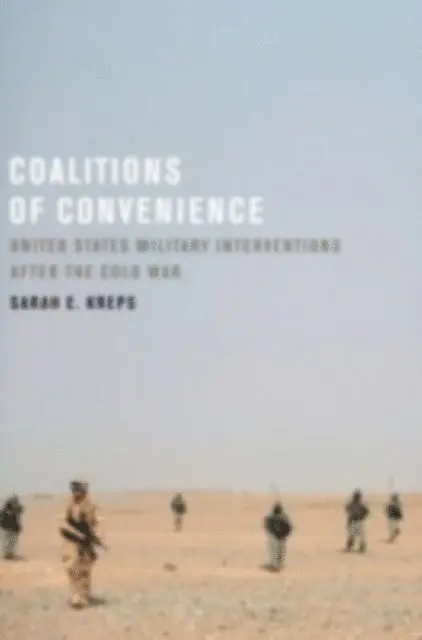
Coalitions of Convenience
United States Military Interventions after the Cold War
Inbunden, Engelska, 2011
929 kr
Skickas inom 7-10 vardagar
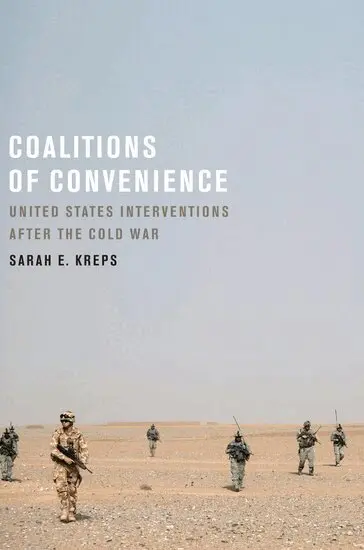
When the Clinton Administration sent the United States military into Haiti in 1994, it first sought United Nations authorization and assembled a large coalition of allies. With a defense budget 20 times the entire GDP of Haiti, why did the US seek multilateral support when its military could quickly and easily have overpowered the 7,600-soldier Haitian army? The US has enjoyed unrivaled military power after the Cold War and yet in eight out of ten post-Cold War military interventions, it has chosen to use force multilaterally rather than going alone. Why does the US seek allies when, as the case of Haiti so starkly illustrates, it does not appear to need their help? Why in other instances such as the 2003 Iraq War does it largely sidestep international institutions and allies and intervene unilaterally?In Coalitions of Convenience, Sarah E. Kreps answers these questions through a study of US interventions after the post-Cold War. She shows that even powerful states have incentives to intervene multilaterally. Coalitions and international organization blessing confer legitimacy and provide ways to share what are often costly burdens of war. But those benefits come at some cost, since multilateralism is less expedient than unilateralism. With long time horizons--in which threats are distant--states will welcome the material assistance and legitimacy benefits of multilateralism. Short time horizons, however, will make immediate payoffs of unilateralism more attractive, even if it means foregoing the longer-term benefits of multilateralism. Coalitions of Convenience ultimately shows that power may create more opportunities for states such as the US to act alone, but that the incentives are stacked against doing so. The implications of the argument go beyond questions of how the US uses force. They speak to questions about how the world works when power is concentrated in the hands of one state, how international institutions function, and what the rise of China and resurgence of Russia may mean for international cooperation and conflict.
Coalitions of Convenience
United States Military Interventions after the Cold War
Häftad, Engelska, 2011
425 kr
Skickas inom 5-8 vardagar
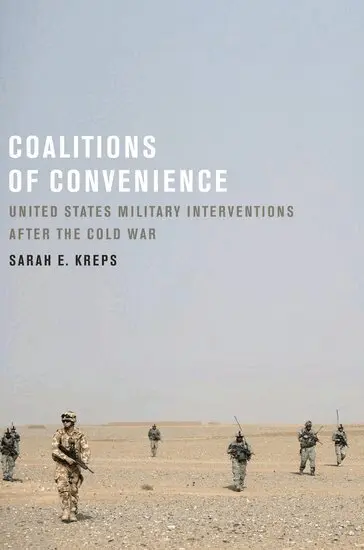
When the Clinton Administration sent the United States military into Haiti in 1994, it first sought United Nations authorization and assembled a large coalition of allies. With a defense budget 20 times the entire GDP of Haiti, why did the US seek multilateral support when its military could quickly and easily have overpowered the 7,600-soldier Haitian army? The US has enjoyed unrivaled military power after the Cold War and yet in eight out of ten post-Cold War military interventions, it has chosen to use force multilaterally rather than going alone. Why does the US seek allies when, as the case of Haiti so starkly illustrates, it does not appear to need their help? Why in other instances such as the 2003 Iraq War does it largely sidestep international institutions and allies and intervene unilaterally?In Coalitions of Convenience, Sarah E. Kreps answers these questions through a study of US interventions after the post-Cold War. She shows that even powerful states have incentives to intervene multilaterally. Coalitions and international organization blessing confer legitimacy and provide ways to share what are often costly burdens of war. But those benefits come at some cost, since multilateralism is less expedient than unilateralism. With long time horizons--in which threats are distant--states will welcome the material assistance and legitimacy benefits of multilateralism. Short time horizons, however, will make immediate payoffs of unilateralism more attractive, even if it means foregoing the longer-term benefits of multilateralism. Coalitions of Convenience ultimately shows that power may create more opportunities for states such as the US to act alone, but that the incentives are stacked against doing so. The implications of the argument go beyond questions of how the US uses force. They speak to questions about how the world works when power is concentrated in the hands of one state, how international institutions function, and what the rise of China and resurgence of Russia may mean for international cooperation and conflict.
Checking the Costs of War
Sources of Accountability in Post-9/11 US Foreign Policy
Inbunden, Engelska, 2026
1 343 kr
Kommande
A thorough reassessment of how domestic factors do and do not constrain the use of American military force abroad in the early twenty-first century.More than two decades have passed since the September 11th terrorist attacks resuscitated debates about the “imperial presidency” within the United States. During that same time, the United States has fought costly and inconclusive wars in Iraq and Afghanistan, pivoted to the Pacific to counter China, and pulled its gaze back to Europe and the Middle East in response to wars in Ukraine and Gaza. Moreover, new technologies and ways of funding and staffing wars have made the costs of war less visible to the public while polarization has increased and a new legal doctrine of presidential power has gained force. Against this backdrop, Checking the Costs of War reassesses how domestic factors have both constrained and failed to constrain the use of military power across different contexts and over time. Richly empirical chapters explore the varying effects of different kinds of potential checks: legislative, public opinion, and bureaucratic. Collectively, chapters offer new insight into the prospects for war and peace today.
Checking the Costs of War
Sources of Accountability in Post-9/11 US Foreign Policy
Häftad, Engelska, 2025
282 kr
Skickas inom 7-10 vardagar
A thorough reassessment of how domestic factors do and do not constrain the use of American military force abroad in the early twenty-first century.More than two decades have passed since the September 11th terrorist attacks resuscitated debates about the “imperial presidency” within the United States. During that same time, the United States has fought costly and inconclusive wars in Iraq and Afghanistan, pivoted to the Pacific to counter China, and pulled its gaze back to Europe and the Middle East in response to wars in Ukraine and Gaza. Moreover, new technologies and ways of funding and staffing wars have made the costs of war less visible to the public while polarization has increased and a new legal doctrine of presidential power has gained force. Against this backdrop, Checking the Costs of War reassesses how domestic factors have both constrained and failed to constrain the use of military power across different contexts and over time. Richly empirical chapters explore the varying effects of different kinds of potential checks: legislative, public opinion, and bureaucratic. Collectively, chapters offer new insight into the prospects for war and peace today.