Dionisio Nyaga - Böcker
Visar alla böcker från författaren Dionisio Nyaga. Handla med fri frakt och snabb leverans.
12 produkter
12 produkter
1 576 kr
Skickas inom 7-10 vardagar
This thought-provoking book outlines the pedagogical value of African storytelling. It demonstrates that African wisdom has historically been part of violent colonial elimination, leading to the ontological expendability of these stories and them being excluded, forgotten, and devalued in academic circles.George Dei, Dionisio Nyaga and Juliana Kami critically examine the industrialisation of knowledge and the fallacy of a singular epistemological truth. Using key examples and case studies, they represent storytelling as a necessary and ethical methodology of knowledge production. Chapters delineate how, in light of global expansion and transnational movement, formerly subjugated stories from across the continent are breaking boundaries beyond the colonial confinement of Africa. In doing so, the global education system is learning from African Indigenous education and departing from the Eurocentric belief that truth is singular. This inspiring book illustrates the multiple truths that are told through everyday African riddles, proverbs, teachings and songs in ways that give credence to African realities and values in a global village.Innovative and incisive, African Storytelling for Global Citizenship Education is an essential read for students and scholars at the intersection of educational philosophy, development and postcolonial studies. Teachers and professionals in policy and citizenship education will also benefit from its valuable insights.
281 kr
Skickas inom 5-8 vardagar
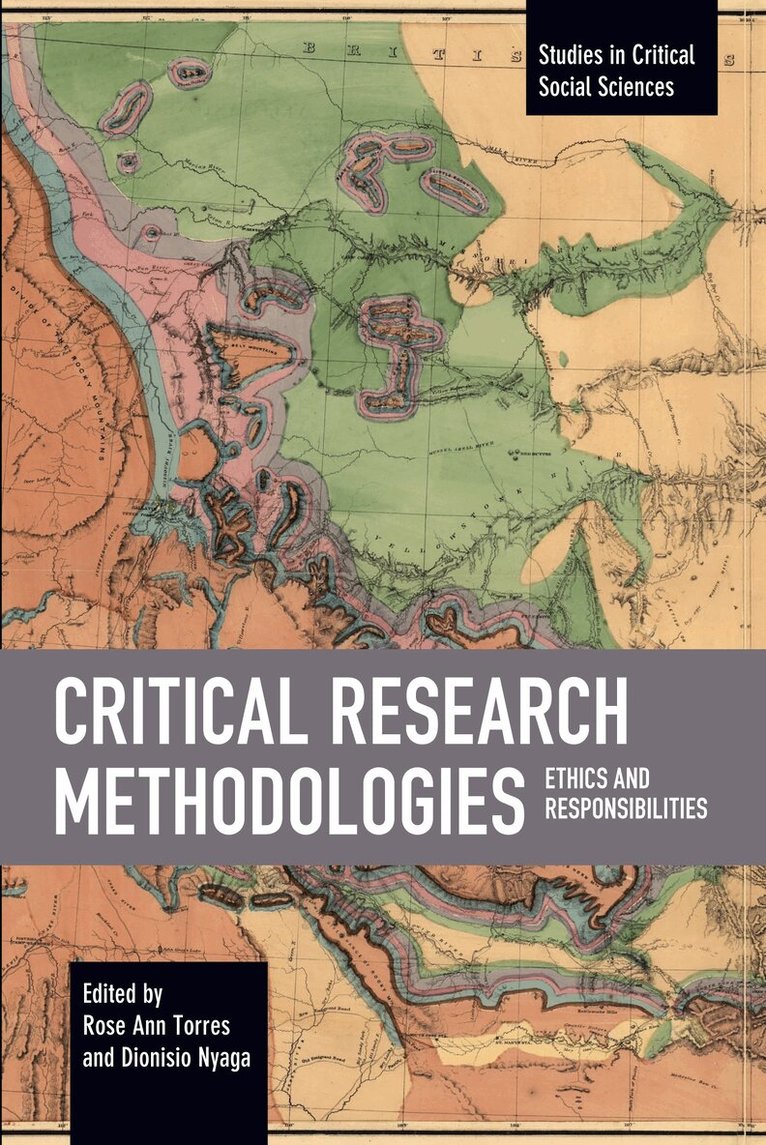
We live in a society that promotes the universal process of producing knowledge and truth as a fundamental social process. Such promotion of universality seems to subjugate others forms of knowing, rendering them invisible, unintelligible, and ineligible and subsequently outside the community of knowing. This has material and symbolic consequences in terms of how research informs policy and subsequent victimization of those who live, and experience subjugation meted out by Western truth making universalism. In the words of Foucault, this book is an insurrection of subterranean and clandestine knowledges in the ways it provides not just an alternative process of knowledge production but also affirms local knowledge as necessary in production of a just society.Critical Research Methodologies looks at research as a social justice and transformational process that should speak of people's ways of living without necessarily streamlining them into numbers. The book is a critically reflexive project in terms of returning processes of knowledge production to the local space rather than imagining them as entirely centred in the structure. To imagine this book as a reflexive exercise is to break boundaries of knowledge in ways that come to imagine how the local performs the global in very complicated and complex ways. This book is a resurrection of local knowledges, steeped in creative and imaginative reflexive methodologies that come to reorient how we know what we know, the values and realities that mark what we know, and the how of knowledge production. It centres subjugated voices and knowledges as fundamental in production of knowledge.Contributors include: Katie Bannon, Elizabeth Charles, Khulood Agha Khan, Dionisio Nyaga, Fritz Pino, and Rose Ann Torres.
Transversing and Translocating Spiritualities
Epistemological and Pedagogical Conversations
Häftad, Engelska, 2019
712 kr
Skickas inom 5-8 vardagar
Reimagining Mental Health and Addiction Under the Covid-19 Pandemic, Volume 1
The Covid-19 Pandemic, Mental Health, and Ethnicity
Häftad, Engelska, 2024
551 kr
Skickas inom 10-15 vardagar
This edited collection is a follow-up to Algoma University's inaugural conference on mental health and addiction held at the Brampton campus in Ontario, Canada. We live in a society where many marginalized communities continue to bear a historically disproportionate burden on their psychological, mental, and economic well-being, especially under the Covid-19 pandemic. Covid-19 has had a continuing impact on marginalized and racialized communities at all levels. We are now witnessing the compounded effects in the form of a worsening mental health and addiction crisis and its subsequent impact on children's education, service delivery, and overall psychosocial well-being.Covid-19 has widened the gap and increased poverty disparities between high-income and low-income individuals. Furthermore, it has affected the psychosocial resilience of people. As communities of scholars, practitioners, and researchers, we have a responsibility to address these existential issues in ways that are ethical and transformative. This type of engagement should help mitigate the consequences of the pandemic in an intersectional manner. These conversations should assist us in understanding and addressing the trauma and suffering that marginalized communities and individuals continue to endure. Together, we can work to find answers to mental health and addiction challenges, while valuing people's histories and realities within this intersectional engagement.This book aims to redefine psychiatric discourse in the age of the pandemic and encourage us to imagine how the world can be reformed in ways that are both ethical and political. It has the potential to shed light on the values and realities of communities in discussions of medical sociology, particularly concerning the impact of Covid-19 on marginalized communities.This book is structured into three volumes. Volume one delves into the repercussions of the COVID-19 pandemic on the mental health of various ethnic groups. Volume two specifically addresses the impact of the pandemic on the mental health of Afro-Black individuals. Volume three explores the connections between the COVID-19 pandemic, psychological well-being, and colonialism.
Reimagining Mental Health and Addiction Under the Covid-19 Pandemic, Volume 3
The Covid-19 Pandemic, Mental Health, and Colonialism
Häftad, Engelska, 2024
551 kr
Skickas inom 10-15 vardagar
This edited collection is a follow-up to Algoma University's inaugural conference on mental health and addiction held at the Brampton campus in Ontario, Canada. We live in a society where many marginalized communities continue to bear a historically disproportionate burden on their psychological, mental, and economic well-being, especially under the Covid-19 pandemic. Covid-19 has had a continuing impact on marginalized and racialized communities at all levels. We are now witnessing the compounded effects in the form of a worsening mental health and addiction crisis and its subsequent impact on children's education, service delivery, and overall psychosocial well-being.Covid-19 has widened the gap and increased poverty disparities between high-income and low-income individuals. Furthermore, it has affected the psychosocial resilience of people. As communities of scholars, practitioners, and researchers, we have a responsibility to address these existential issues in ways that are ethical and transformative. This type of engagement should help mitigate the consequences of the pandemic in an intersectional manner. These conversations should assist us in understanding and addressing the trauma and suffering that marginalized communities and individuals continue to endure. Together, we can work to find answers to mental health and addiction challenges, while valuing people's histories and realities within this intersectional engagement.This book aims to redefine psychiatric discourse in the age of the pandemic and encourage us to imagine how the world can be reformed in ways that are both ethical and political. It has the potential to shed light on the values and realities of communities in discussions of medical sociology, particularly concerning the impact of Covid-19 on marginalized communities.This book is structured into three volumes. Volume one delves into the repercussions of the COVID-19 pandemic on the mental health of various ethnic groups. Volume two specifically addresses the impact of the pandemic on the mental health of Afro-Black individuals. Volume three explores the connections between the COVID-19 pandemic, psychological well-being, and colonialism.
Reimagining Mental Health and Addiction Under the Covid-19 Pandemic, Volume 2
The Covid-19 Pandemic, Mental Health, and Black/Afro Identity
Häftad, Engelska, 2024
551 kr
Skickas inom 10-15 vardagar
This edited collection is a follow-up to Algoma University's inaugural conference on mental health and addiction held at the Brampton campus in Ontario, Canada. We live in a society where many marginalized communities continue to bear a historically disproportionate burden on their psychological, mental, and economic well-being, especially under the Covid-19 pandemic. Covid-19 has had a continuing impact on marginalized and racialized communities at all levels. We are now witnessing the compounded effects in the form of a worsening mental health and addiction crisis and its subsequent impact on children's education, service delivery, and overall psychosocial well-being. Covid-19 has widened the gap and increased poverty disparities between high-income and low-income individuals. Furthermore, it has affected the psychosocial resilience of people. As communities of scholars, practitioners, and researchers, we have a responsibility to address these existential issues in ways that are ethical and transformative. This type of engagement should help mitigate the consequences of the pandemic in an intersectional manner. These conversations should assist us in understanding and addressing the trauma and suffering that marginalized communities and individuals continue to endure. Together, we can work to find answers to mental health and addiction challenges, while valuing people's histories and realities within this intersectional engagement. This book aims to redefine psychiatric discourse in the age of the pandemic and encourage us to imagine how the world can be reformed in ways that are both ethical and political. It has the potential to shed light on the values and realities of communities in discussions of medical sociology, particularly concerning the impact of Covid-19 on marginalized communities. This book is structured into three volumes. Volume one delves into the repercussions of the COVID-19 pandemic on the mental health of various ethnic groups. Volume two specifically addresses the impact of the pandemic on the mental health of Afro-Black individuals. Volume three explores the connections between the COVID-19 pandemic, psychological well-being, and colonialism.
1 624 kr
Skickas inom 10-15 vardagar
This book explores theoretical, epistemological, methodological, and ontological conceptualization of mental health and addiction. This book is meant to dismantle and examine the discourse surrounding mental health and addiction in ways that pave the way for new perspectives on envisioning the world of mental health and addiction afresh. Imagining the world anew entails recognizing that the current world we inhabit is founded on the notion that individuals grappling with mental health issues and addiction are disposable and broken, requiring salvation from their emotions. Emotions serve as the basis for labeling individuals living with mental health issues and addiction as unworthy and readily disposable. This form of disposability is rooted in a colonial framework, asserting that individuals who experience emotions pose a threat to public life and therefore must be segregated from public spaces. The public sphere becomes reserved for rational thinkers, relegating individuals grappling with mental health issues to the status of private entities deemed unintelligible. This private/public divide must be questioned to explore how this gap could be utilized to acknowledge and account for the lives of individuals living with mental health issues and addiction in intersectional contexts. This book argues that mental health is intertwined with issues of power and influence, used to regulate populations living with mental health issues in violent and traumatizing ways. It examines colonialism's impact while implicating social work practice in the collective trauma faced by Indigenous communities and other marginalized groups in Canada and globally. Operating within a colonial mental health and addiction framework, the book engages mental health discourse in intersectional ways and reflexively, highlighting how gender, race, sexual orientation, immigration, and imperialism intersect to oppress marginalized communities. This book presents alternative approaches to mental health, envisioning it through new ethical lenses rooted in people's values, realities, and histories. Central to these conversations is the illumination of various manifestations of violence on people's lives.
557 kr
Skickas inom 5-8 vardagar
557 kr
Skickas inom 5-8 vardagar
557 kr
Skickas inom 5-8 vardagar
557 kr
Skickas inom 5-8 vardagar
557 kr
Skickas inom 5-8 vardagar