Dionysios Demetis - Böcker
Visar alla böcker från författaren Dionysios Demetis. Handla med fri frakt och snabb leverans.
2 produkter
2 produkter
461 kr
Skickas inom 10-15 vardagar
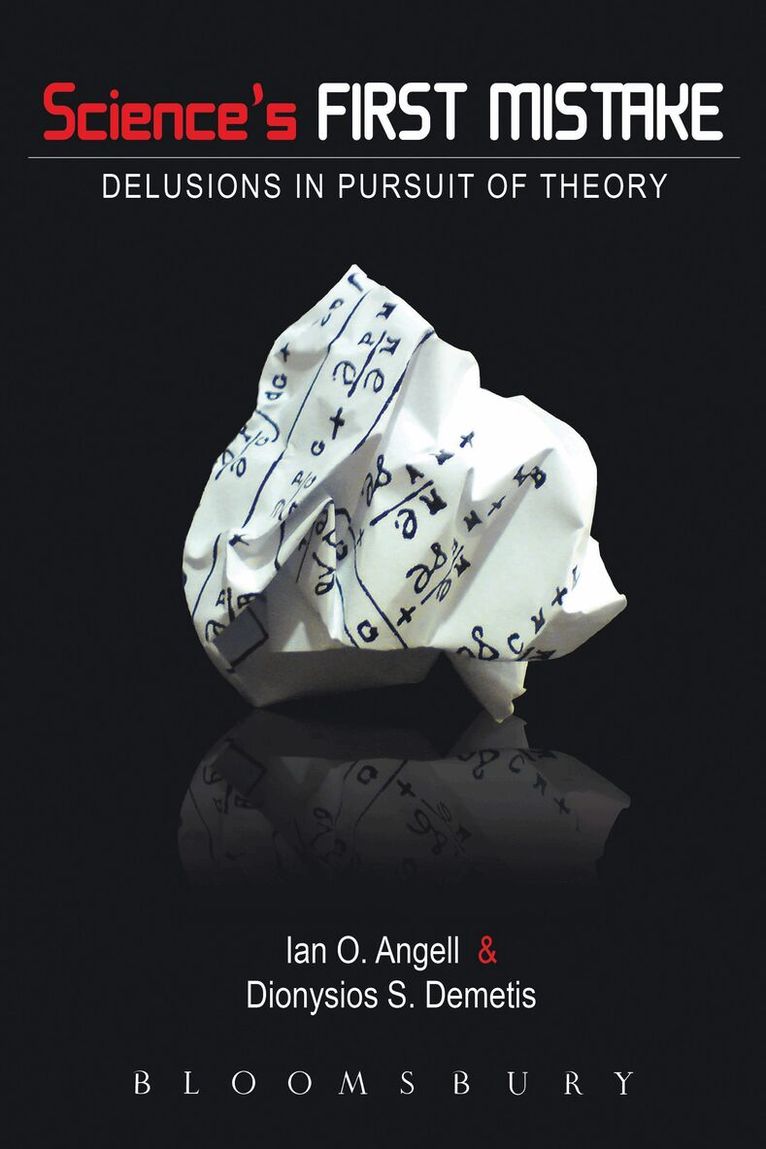
This book is available as open access through the Bloomsbury Open Access programme and is available on www.bloomsburycollections.com.Taking examples from across the natural and social sciences, this ambitious book examines the deep-seated assumptions that underpin the discovery of knowledge, and claims that all scientific methods are delusions in pursuit of theory. Using Systems Theory, in particular the concept of self-reference, the book argues that the process of observing tricks the human mind into developing a self-consistent description of itself; and a belief in the certainty of a causal 'reality'. Our theories and ways of thinking about the world around us are, in fact, distinct from the 'reality' being observed. This fresh, audacious work makes an important contribution to the study of scientific method, and takes readers out of the comfort zone of their perceived scientific certainty.
1 476 kr
Skickas inom 10-15 vardagar
The purpose of the book is to deconstruct the process of knowledge discovery and theory construction. Grounded in the tradition of second-order cybernetics, the concept of self-reference is used in the context of systems theory in order to examine the mode in which observation, paradox and delusion become 'structurally coupled' with cognition. To put this simply, physical scientists take it as a given that all the universe is explainable once we've discovered the underlying rules. Whereas social scientists and philosophers are more sensitive to the issues around how the observer actually impacts that which is being observed. The authors work in the fields of Information Studies, which is within the technical or physical realm, and Management Studies, which is about human behaviour. Their argument is that all scientists (physical and social) rely too much on the absolutism and certainty of the methods of traditional physical science and that we should acknowledge the limitations of how we know what we know.Rooted in information systems analysis this fresh and audacious examination of knowledge discovery and theory construction makes an important contribution to the understanding of how we employ scientific method.