Dittmer Lowell - Böcker
Visar alla böcker från författaren Dittmer Lowell. Handla med fri frakt och snabb leverans.
4 produkter
4 produkter
Del 49 - Series on Contemporary China
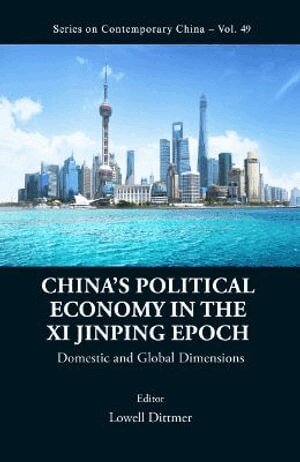
China's Political Economy In The Xi Jinping Epoch: Domestic And Global Dimensions
Inbunden, Engelska, 2021
1 752 kr
Skickas
This book takes a fresh look at Chinese political economy at a key inflection point. Facing a more competitive international environment, Chinese reform has shifted from its earlier focus on economic liberalization and political decentralization to a more tightly organized, centralized form of state socialism. The Party-state's vigorous fiscal reaction to the Global Financial Crisis (2008-2009) left the country with a much improved infrastructure and greater sense of national self-assurance. The more monocratic central leadership has redoubled efforts to fight poverty and pollution, push technological innovation, and at the same time rigorously enforce ideological consensus, political loyalty and anticorruption.This has been occurring in an international context of slowing trade and nationalist pushback against "globalization", prominently including bilateral Chinese-American polarization. While China has been among the staunchest advocates and beneficiaries of globalization, incipient trade war "decoupling" has spurred movement toward economic and technological self-reliance. Turning inward however vies with a rival impulse toward more vigorous engagement in the world. This is most consequentially represented by the Belt and Road Initiative, driving massive infrastructure construction through Central Asia and the South and Southeast Asian maritime periphery. Despite slowing growth and a large debt overhang, swift recovery from the Covid-19 epidemic leaves China in a relatively strong economic position.
1 367 kr
Skickas inom 5-8 vardagar
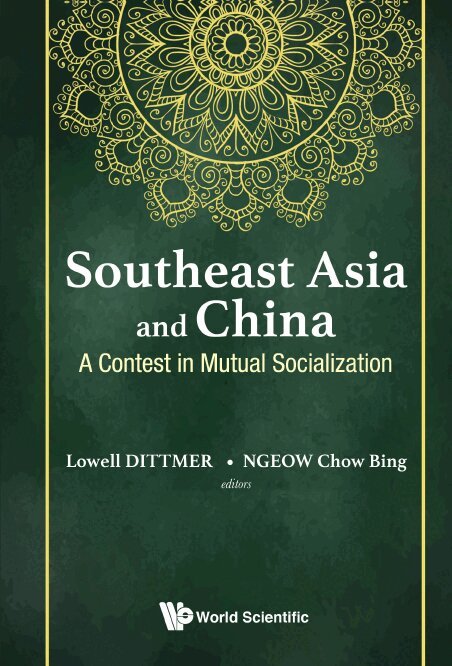
The recent uncertainties over the South China Sea have become one major issue in the relations between China and Southeast Asian countries. The South China Sea issue, however, is countered by the deepening economic integration between China and Southeast Asia, which is likely to continue should China's proposal for a 21st Century Maritime Silk Road is agreed and implemented. Yet the success or not of this proposal depends also on the interactions in the political-security sphere between both sides.Southeast Asia and China: A Contest in Mutual Socialization brings together experts from different disciplines to illuminate on the complex political, economic and normative interactions between China and the Southeast Asian countries. This book analyses key issues including the national identity discourse of China as a Great Power, China's civil-military interactions in its strategy in the South China Sea dispute, the different kinds of political and strategic strategies used by Southeast Asian countries in countering China, the past patterns and present trajectories of economic ties between China and Southeast Asian countries, as well as the strategic implications of China's 21st Century Maritime Silk Road initiative.
1 951 kr
Skickas inom 5-8 vardagar
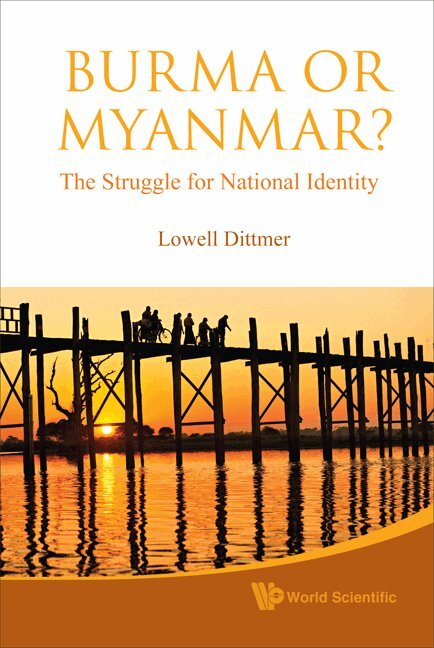
Burma, also known as Myanmar, strategically located between China and India, is one of the largest and most richly endowed states in Southeast Asia. Yet it remains both economically and politically underdeveloped. Why is this so? We argue that much of the reason has to do with an ongoing struggle for national identity. This struggle involves not only whether the state should be authoritarian or democratic, but how Burma's myriad ethnic minorities should be accommodated within it, what external reference national reference groups the country should identify and align with, and how it should move forward. Identity formation normally occurs much earlier in the national developmental process, but Burma has had unusually intransigent problems that were never successfully resolved during the colonial period and have simply been suppressed by force since then. This protracted divisiveness has stunted the nation's modernization and growth.Written from a unique perspective, this book on Myanmar deviates from the traditional authoritarian versus democratic rhetoric. Although that is certainly part of the picture, this multifaceted analysis focuses rather on the issue of identity formation — an issue that has all too often failed to make the headlines. Much can be learned from Myanmar's identity problems, making this book essential reading for all students and professionals interested in development studies or comparative politics. By whatever name, Burma is not only a fascinating country but one likely to play an increasingly vital role in Asia's future.
464 kr
Skickas inom 5-8 vardagar
Burma, also known as Myanmar, strategically located between China and India, is one of the largest and most richly endowed states in Southeast Asia. Yet it remains both economically and politically underdeveloped. Why is this so? We argue that much of the reason has to do with an ongoing struggle for national identity. This struggle involves not only whether the state should be authoritarian or democratic, but how Burma's myriad ethnic minorities should be accommodated within it, what external reference national reference groups the country should identify and align with, and how it should move forward. Identity formation normally occurs much earlier in the national developmental process, but Burma has had unusually intransigent problems that were never successfully resolved during the colonial period and have simply been suppressed by force since then. This protracted divisiveness has stunted the nation's modernization and growth.Written from a unique perspective, this book on Myanmar deviates from the traditional authoritarian versus democratic rhetoric. Although that is certainly part of the picture, this multifaceted analysis focuses rather on the issue of identity formation — an issue that has all too often failed to make the headlines. Much can be learned from Myanmar's identity problems, making this book essential reading for all students and professionals interested in development studies or comparative politics. By whatever name, Burma is not only a fascinating country but one likely to play an increasingly vital role in Asia's future.