Dmitri M. Bondarenko - Böcker
Visar alla böcker från författaren Dmitri M. Bondarenko. Handla med fri frakt och snabb leverans.
11 produkter
11 produkter
1 314 kr
Skickas inom 10-15 vardagar
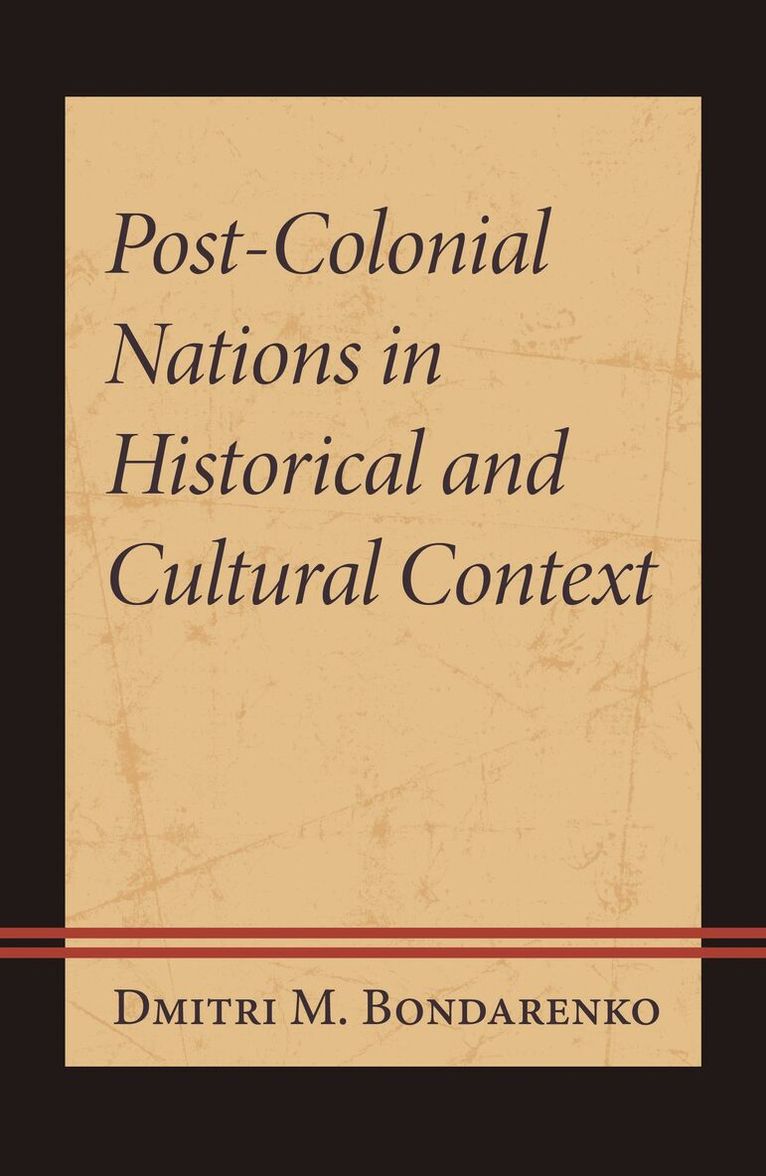
Using historical and anthropological analysis, in Post-Colonial Nations in Historical and Cultural Context, Dmitri M. Bondarenko examines nation-building in Tanzania, Uganda, and Zambia. He examines the nation and state as concepts and how these are changing globally, particularly in regard to the idea that the fundamental characteristic of a nation is a culturally homogeneous community. This feature became a cornerstone of the concept of the nation at its formation in the West by the end of the eighteenth century, but post-colonial migration flows from the Global South to the Global North are increasing multi-culturalism in the North. In contrast, liberated states of Asia and Africa have been multi-cultural from earlier on as they inherited the colonial borders in which typically many peoples were united. Throughout the book, Bondarenko argues that this history of multi-culturalism is an advantage to development in the Global South and that it’s necessary to depart from the classical, Western concept of the nation to simultaneously support citizen unity while preserving cultural diversity.
Principles and Forms of Sociocultural Organization
Historical Contexts of Interaction
Inbunden, Engelska, 2026
1 204 kr
Skickas
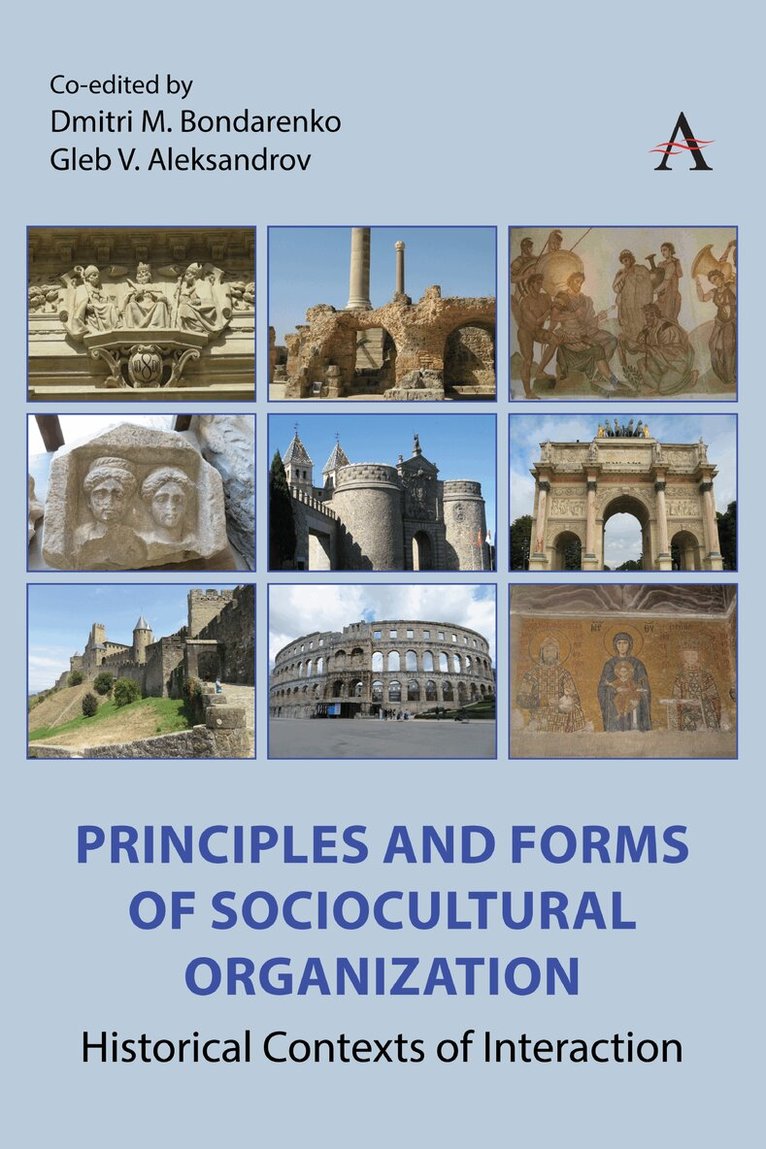
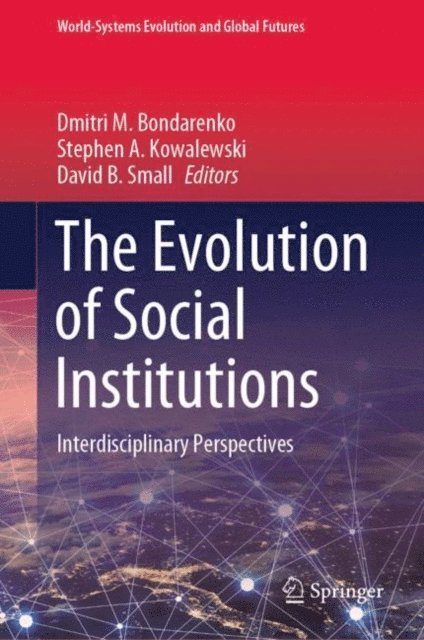
To show the non-linear nature of social evolution, it is crucially important to discuss cases from different cultural areas and different historical periods, including our time, as well as different levels of overall sociocultural complexity. This anthology includes chapters that explore case studies covering a wide range of societies of the Old and the New World ranging from ancient to modern contexts. Respectively, the chapters are based on different kinds of sources – archaeological, historical, anthropological (ethnographic), and sociological. This analysis of pre-modern and modern societies sheds valuable light on the variety of ways in which social institutions were developing through time and space and of how these institutions may have fostered social evolution. Therefore, this publication may enhance our understanding of social evolution at the world-system, regional, and local-culture levels via the integration of various kinds of evidence within a unified conceptual framework.Societies are systems composed of a great number of various social institutions. Societies change as a result of emergence, transformation, and interaction of institutions. As systems of social institutions, societies have a fundamental characteristic that can be called a “basic principle of societal organization.” The principle of organization a society embodies depends on the way its institutions are arranged with respect to one another. Two basic principles can be distinguished: heterarchical, at which institutions interact being unranked with respect to one another or can be ranked in different ways, and the opposite principle, homoarchical, at which institutions interact being rigidly ranked in the only way and have no or very limited potential for being unranked or ranked in other ways. Societies of the same level of overall cultural complexity and with the same basic principle of organization can take different specific forms, as alternativeness exists not only between but also within the heterarchical and homoarchical macrogroups of societies. The division of societies into predominantly heterarchical and homoarchical is a constant fact of human sociocultural history. The dichotomy of heterarchy and homoarchy has considerably determined the non-linear and alternative nature of the global sociocultural process.Transformations in the ways social institutions and their sets, societal subsystems, are ranked (homoarchically or heterarchically) on one hand and changes in the overall sociocultural complexity on the other are two different, largely unrelated processes. Homoarchy and heterarchy are not evolutionary lines: a society can pass from a predominantly heterarchical way of ranking institutions to predominantly homoarchical or vice versa, and can do it both with and without a change in level of complexity. At any level of overall cultural complexity, one can observe both heterarchical and homoarchical societies, because an equal level of complexity (which makes it possible to solve equally difficult problems societies face) can be achieved in various forms on essentially different (though intersecting in the history of many societies and regions) principles of societal organization.
Principles and Forms of Sociocultural Organization : Historical Contexts of Interaction
Engelska, 2026
466 kr
Tillfälligt slut
Principles and Forms of Sociocultural Organization : Historical Contexts of Interaction
Engelska, 2026
466 kr
Tillfälligt slut
African Americans & American Africans
Migration, History, Race and Identities
Inbunden, Engelska, 2019
867 kr
Skickas inom 5-8 vardagar
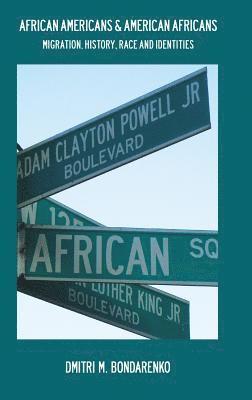
In America today, two communities with sub-Saharan African genetic origins exist side by side, though they have differing histories and positions within society. This book explores the relationship between African Americans, descendants of Africans brought to America as slaves, and migrants from sub-Saharan Africa, who have come to the United States of America voluntarily, mainly since the 1990s. Members of these groups have both a great deal in common and much that separates them, largely hidden in their assumptions about, and attitudes towards, each other.In a work grounded in extensive fieldwork Bondarenko and his research team interviewed African Americans, and migrants from twenty-three African States and five Caribbean nations, as well as non-black Americans involved with African Americans and African migrants. Seeking a wide range of perspectives, from different ages, classes and levels of education, they explored the historically rooted mutual images of African Americans and contemporary African migrants, so as to understand how these images influence the relationship between them. In particular, they examined conceptions of `black history' as a common history of all people and nations with roots in Africa.What emerges is a complex picture. While collective historical memory of oppression forges solidarity, lack of knowledge of each other's history can create distance between communities. African migrants tend to define their identities not by race, but on the basis of multiple layers of national, ethnic, religious and linguistic affinities (of which African Americans are often unaware). For African Americans, however, although national and regional identities are important, it is above all race that is the defining factor. While drawing on wider themes from anthropology and African studies, this in-depth study on a little-researched subject allows valuable new understandings of contemporary American society.
248 kr
Skickas inom 5-8 vardagar
Omnipresent Past
Historical Anthropology of Africa and African Disspora: Historical Anthropology of: HISTORICAL ANTHROPOLOGY OF AFRICA AND AFRICAN DIASPORA
Häftad, Engelska, 2023
705 kr
Skickas inom 5-8 vardagar
1 947 kr
Skickas inom 10-15 vardagar
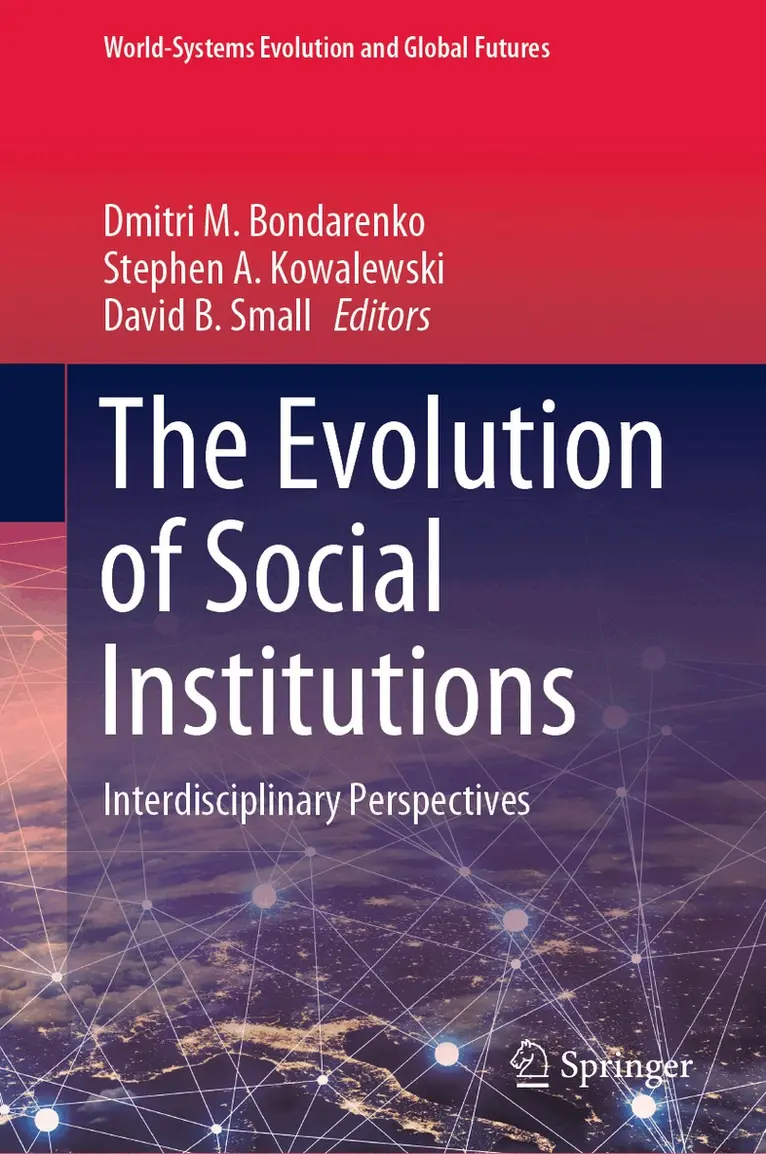
Further, the transformation of social institutions and relations between them is taking place not only within individual societies but also globally, as institutions may be trans-societal, and even institutions that operate in one society can arise as a reaction to trans-societal trends and demands.
1 947 kr
Skickas inom 10-15 vardagar
Further, the transformation of social institutions and relations between them is taking place not only within individual societies but also globally, as institutions may be trans-societal, and even institutions that operate in one society can arise as a reaction to trans-societal trends and demands.
1 051 kr
Skickas inom 5-8 vardagar
Up Close and From Afar
New World Anthropology from Russian and American Perspectives
Häftad, Engelska, 2023
538 kr
Skickas inom 5-8 vardagar