Doina Anca Cretu - Böcker
Visar alla böcker från författaren Doina Anca Cretu. Handla med fri frakt och snabb leverans.
3 produkter
3 produkter
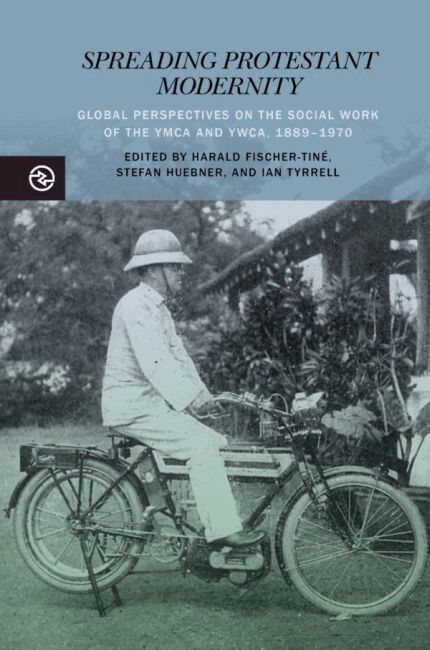
Spreading Protestant Modernity
Global Perspectives on the Social Work of the YMCA and YWCA, 1889-1970
Häftad, Engelska, 2022
282 kr
Skickas inom 7-10 vardagar
A half century after its founding in London in 1844, the Young Men’s Christian Association (YMCA) became the first NGO to effectively push a modernization agenda around the globe. Soon followed by a sister organization, the Young Women’s Christian Association (YWCA), founded in 1855, the Y movement defined its global mission in 1889. Although their agendas have been characterized as predominantly religious, both the YMCA and YWCA were also known for their new vision of a global civil society and became major agents in the worldwide dissemination of modern "Western" bodies of knowledge.The YMCA’s and YWCA’s "secular" social work was partly rooted in the Anglo-American notions of the "social gospel" that became popular during the 1890s. The Christian lay organizations’ vision of a "Protestant Modernity" increasingly globalized their "secular" social work that transformed notions of science, humanitarianism, sports, urban citizenship, agriculture, and gender relations. Spreading Protestant Modernity shows how the YMCA and YWCA became crucial in circulating various forms of knowledge and practices that were related to this vision, and how their work was co-opted by governments and rival NGOs eager to achieve similar ends.The studies assembled in this collection explore the influence of the YMCA’s and YWCA’s work on highly diverse societies in South, Southeast, and East Asia; North America; Africa; and Eastern Europe. Focusing on two of the most prominent representative groups within the Protestant youth, social service, and missionary societies (the so-called "Protestant International"), the book provides new insights into the evolution of global civil society in the nineteenth and twentieth centuries, and its multifarious, seemingly secular, legacies for today’s world.Spreading Protestant Modernity offers a compelling read for those interested in global history, the history of colonialism and decolonization, the history of Protestant internationalism, and the trajectories of global civil society. While each study is based on rigorous scholarship, the discussion and analyses are in accessible language that allows everyone from undergraduate students to advanced academics to appreciate the Y movement’s role in social transformations across the world.
763 kr
Skickas inom 7-10 vardagar
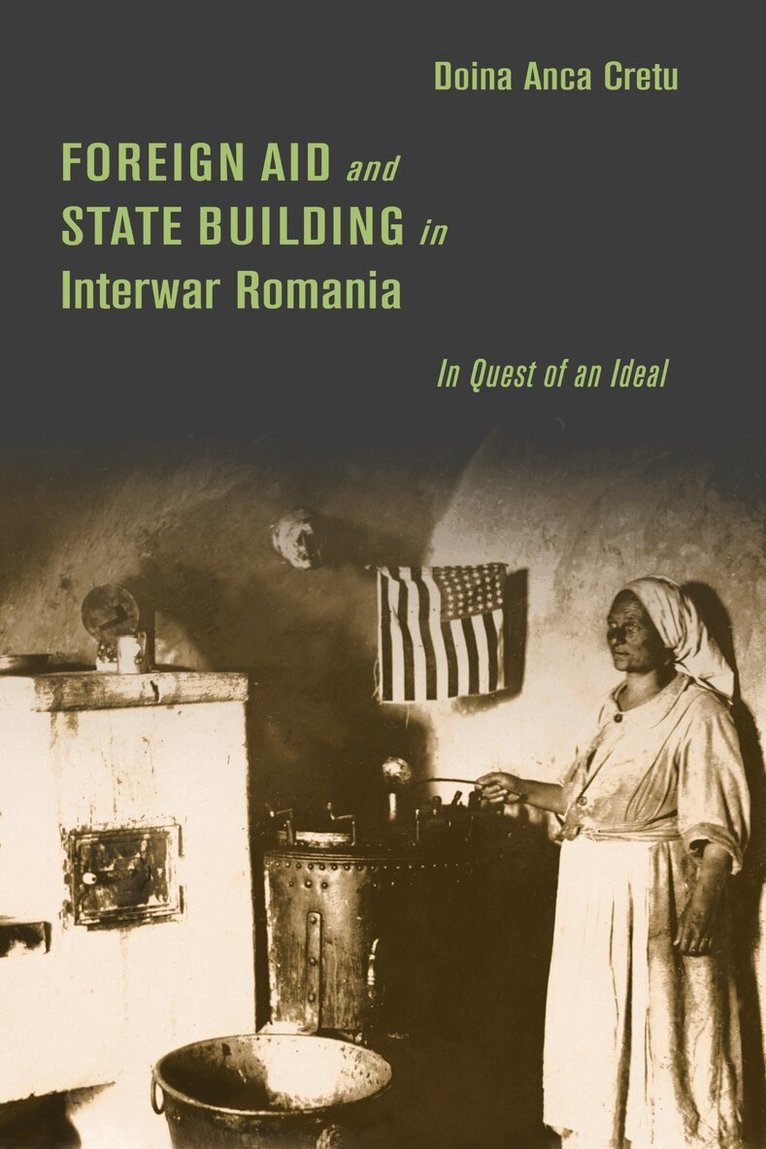
The decades following World War I were a period of political, social, and economic transformation for Central and Eastern Europe. This book considers the role of foreign aid in Romania between 1918 and 1940, offering a new history of the interrelation between state building and nongovernmental humanitarianism and philanthropy in the interwar period. Doina Anca Cretu argues that Romania was a laboratory for transnational intervention, as various state builders actively pursued, accessed, and often instrumentalized American assistance in order to accelerate reconstructive and modernizing projects after World War I. At its core, this is a study of how local views, ambitions, and practical agendas framed trajectories of humanitarian and philanthropic endeavors in postimperial Central and Eastern Europe. Conversely, it is a reflection on the ways that architects and practitioners of foreign aid sought to transfer notions of democracy, civilization, and modernity within shifting local and national contexts in the aftermath of the war and after the collapse of European empires. At the intersection of the history of interwar Europe and international philanthropy and humanitarianism, this book's innovative and explicitly transnational approach provides a new framework for understanding the contours of European nationalism in the twentieth century.
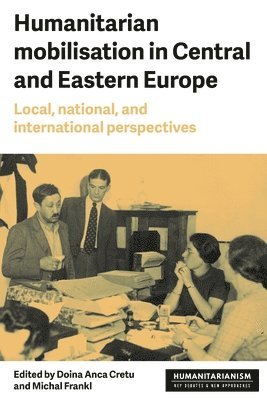
Humanitarian Mobilization in Central and Eastern Europe
Local, National and International Perspectives
Inbunden, Engelska, 2025
1 235 kr
Skickas inom 5-8 vardagar
By focusing on aid in Central and Eastern Europe, this volume adds to the existent scholarly explorations of modern humanitarianism, its actors and practices. In the twentieth century, aid workers assisted victims of war and earthquakes, delivered food, supported health care, provided childcare, or sheltered refugees. The contributors not only reconstruct these diverse histories and their protagonists, but also bring international, national, and local actors together: from grassroots activists to private associations to state-driven “socialist humanitarians” to large Western aid organizations. In doing so, they challenge the often unidirectional, from West-to-East, and asymmetrical perspective on donor-recipient relationships in humanitarian processes.