Dominic Afscharian - Böcker
Visar alla böcker från författaren Dominic Afscharian. Handla med fri frakt och snabb leverans.
4 produkter
4 produkter
1 173 kr
Kommande
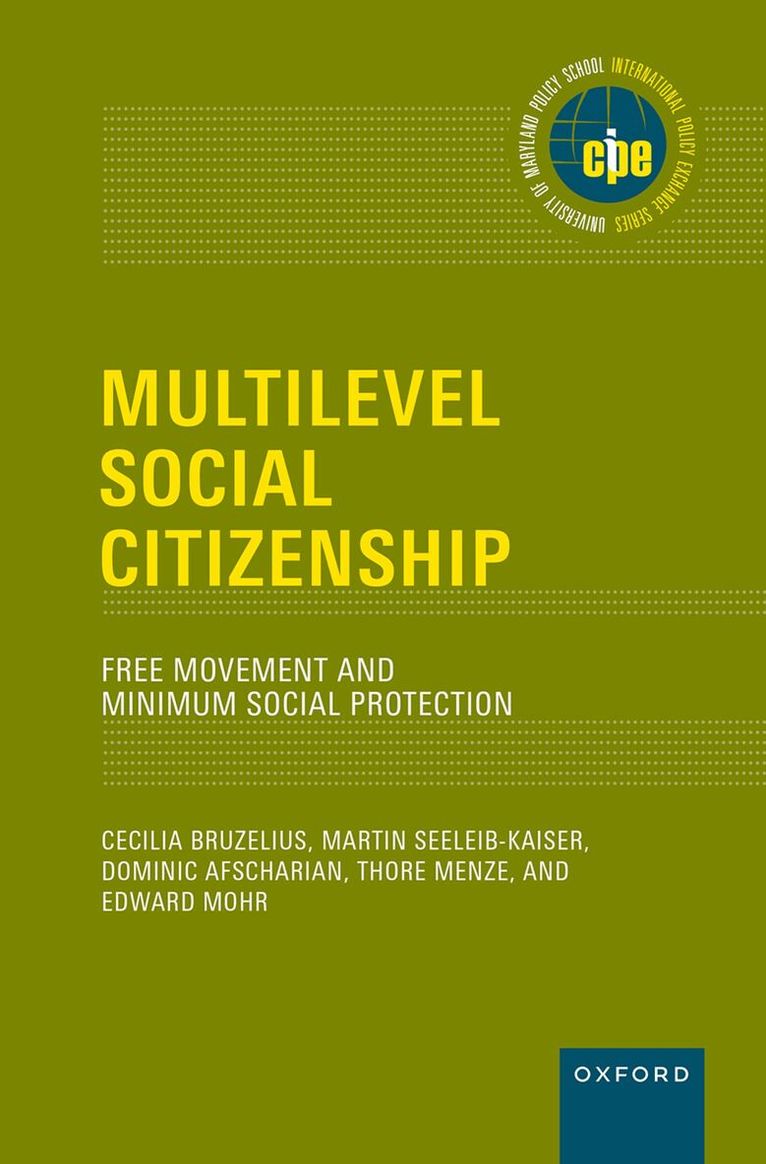
Access to minimum social rights for EU citizens who move across member state borders is highly contested in the EU. At the same time, these and other limits to EU social citizenship are often identified in relation to national citizenship. However, the EU and EU citizenship is in many ways comparable to federations and other multi-tiered jurisdictions, which is often overlooked.By comparing how internal migrants gain-or are denied-access to basic social benefits in multi-level political systems, Multilevel Social Citizenship: Free Movement and Minimum Social Protection reveals the political forces that shape who qualifies for help and why. It offers an account of the determinants of social citizenship in federal contexts where freedom of movement of persons is combined with sub-federal welfare provision. We understand social citizenship as the entitlement and access to minimum social benefits and therefore examine the political processes behind the extension and contraction of social assistance rights for internally migrating citizens across time and space, comparing 19th and early 20th century imperial Germany, 20th century United States of America, and the EU, with a focus on Germany.Multilevel Social Citizenship stands out for its use of detailed case studies, each undertaken by experts in their respective fields, and its historical and international comparative analyses. Archival data, policy documents, statistical data, and interviews allow for an original analysis of a broad range of issues from multiple perspectives. This solid empirical foundation permits for an in-depth analysis of a broad range of topics, from political debates at all levels of multi-tiered federal systems to the implementation of the resulting legislation on the ground.
1 460 kr
Skickas inom 7-10 vardagar
In this prescient book, Dominic Afscharian outlines the meaning and implications of ‘social Europe’, questioning why citizens do not see a European Union with a 'human face' in their everyday lives. Identifying the key political actors in the European Parliament and Commission, he explores the dominant ideologies that govern influential institutions and political parties and demonstrates how these inhibit political change.Afscharian analyses the main proponents and opponents of European social integration, examining policy frameworks, the welfare state and social policy principles. He provides insight into ideational struggles in the EU, covering party conflict and opposing political alliances within the European Commission. Chapters set an agenda for how stalemates in European integration can be overcome, presenting an in-depth exploration of the history of European unemployment insurance as a key example. The book lauds the individuals who are determined to realise a disruptive vision of a Europe that protects its citizens, considering what this means for the future of European integration at large. Ideas of Social Europe is an essential guide for scholars, academics and students in political science, social policy, sociology and economics. Its advocacy for a stronger social Europe, coupled with its theoretical and empirical approach, will also greatly benefit political strategists, policy organisations, think tanks and policy advisors.
1 142 kr
Skickas inom 10-15 vardagar
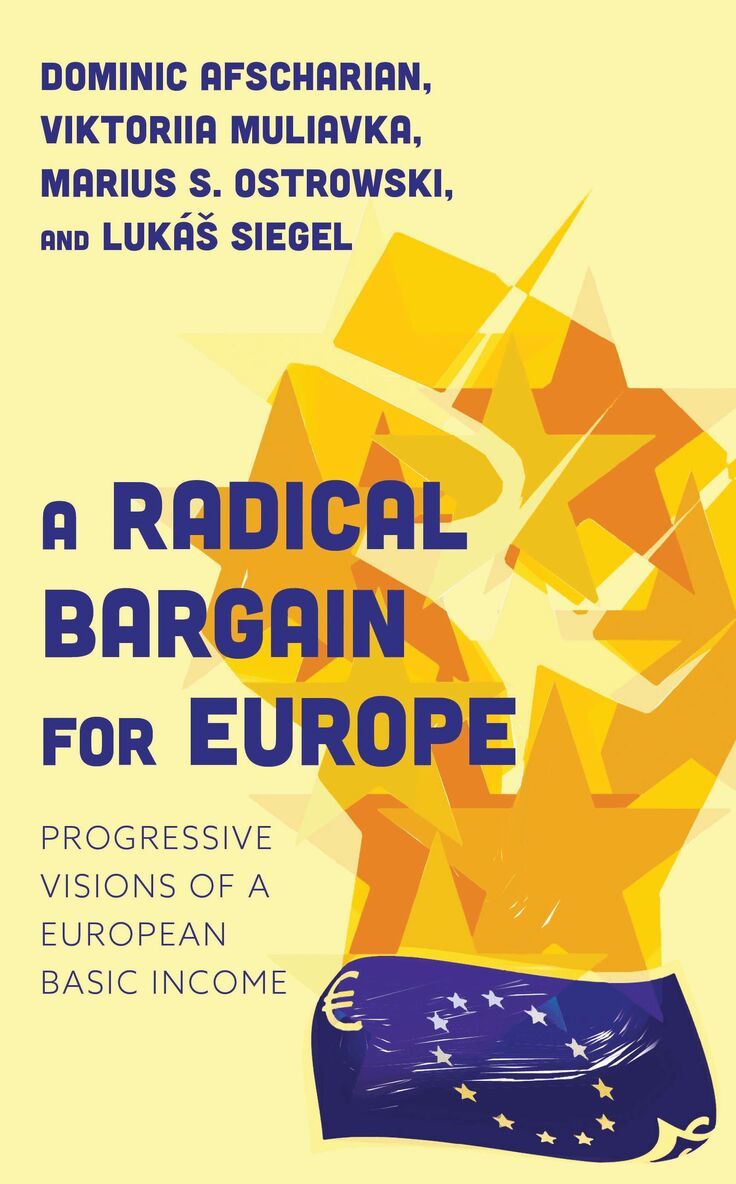
During the last two decades, the European Union has come under increasing existential threat. Successive historic crises have called into question the EU’s ability to meet the needs of its citizens, and effectively navigate the emerging challenges of the 21st century. From sovereign debt, Mediterranean migration, and Brexit to climate change, the Covid-19 pandemic, and spiralling conflicts just beyond its borders, the EU has struggled to carve out a meaningful path forward. Worse, through action or inaction, it has often failed to live up to the lofty ideals of its foundation. In response, the EU has faced a growing tide of Europhobic dissent, driven by insurgent populism and nationalism. Left unanswered, this tide promises to overwhelm the EU and irretrievably damage the legitimacy of its institutions—or see them coopted into the chauvinist projects of a new and emboldened ‘authoritarian international’. In light of this, progressive forces who value the positive role the EU can play in the world face a stark and urgent choice. They can give the EU a new fundamental vision, centred on elevating the situation of the worst-off in all corners of European society. Or they must reconcile themselves to losing it permanently as a force for freedom and equality, justice, solidarity, and pluralism across the European continent and beyond. A Radical Bargain for Europe makes an impassioned case for the first of these two choices. It argues that social policy is the site where this new vision must be developed, as the live frontier of the latest debates over the course of European integration. And it presents the concept of a basic income as a concrete step towards fulfilling the promise of a ‘social Europe’—folding in one of the greatest questions of modern social policy debates in many national contexts. This book presents an outline of what a European basic income (EUBI) would look like. It argues that, in its fundamental form, an EUBI has its attractions to a wide range of progressive ideologies, from the far left, greens, and social democracy to liberalism and Christian democracy. Each of these ideologies adds its own unique colour to the shape an EUBI could take, in principle and in practice. Yet all of them must work together in a broad ‘agenda coalition’ to take the next step towards European social integration, embrace an EUBI, and realise the EU’s radical potential.
635 kr
Kommande
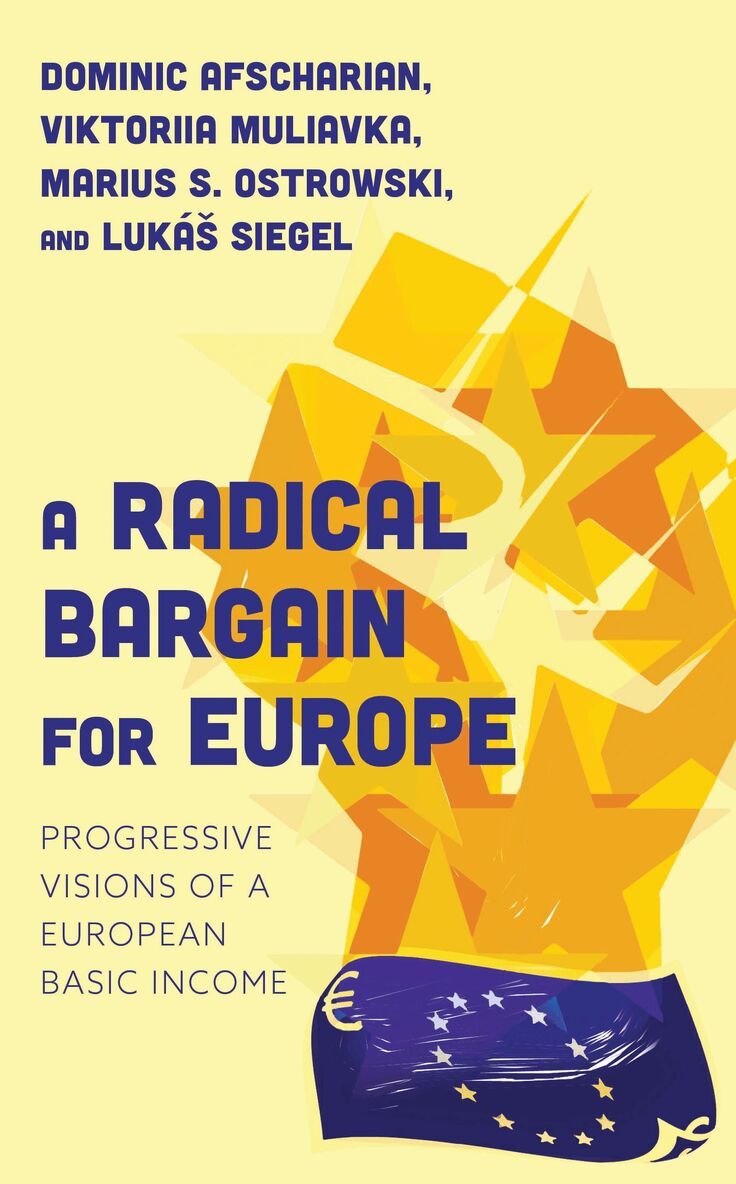
During the last two decades, the European Union has come under increasing existential threat. Successive historic crises have called into question the EU’s ability to meet the needs of its citizens, and effectively navigate the emerging challenges of the 21st century. From sovereign debt, Mediterranean migration, and Brexit to climate change, the Covid-19 pandemic, and spiralling conflicts just beyond its borders, the EU has struggled to carve out a meaningful path forward. Worse, through action or inaction, it has often failed to live up to the lofty ideals of its foundation. In response, the EU has faced a growing tide of Europhobic dissent, driven by insurgent populism and nationalism. Left unanswered, this tide promises to overwhelm the EU and irretrievably damage the legitimacy of its institutions—or see them coopted into the chauvinist projects of a new and emboldened ‘authoritarian international’. In light of this, progressive forces who value the positive role the EU can play in the world face a stark and urgent choice. They can give the EU a new fundamental vision, centred on elevating the situation of the worst-off in all corners of European society. Or they must reconcile themselves to losing it permanently as a force for freedom and equality, justice, solidarity, and pluralism across the European continent and beyond. A Radical Bargain for Europe makes an impassioned case for the first of these two choices. It argues that social policy is the site where this new vision must be developed, as the live frontier of the latest debates over the course of European integration. And it presents the concept of a basic income as a concrete step towards fulfilling the promise of a ‘social Europe’—folding in one of the greatest questions of modern social policy debates in many national contexts. This book presents an outline of what a European basic income (EUBI) would look like. It argues that, in its fundamental form, an EUBI has its attractions to a wide range of progressive ideologies, from the far left, greens, and social democracy to liberalism and Christian democracy. Each of these ideologies adds its own unique colour to the shape an EUBI could take, in principle and in practice. Yet all of them must work together in a broad ‘agenda coalition’ to take the next step towards European social integration, embrace an EUBI, and realise the EU’s radical potential.