Dominic Baker-Smith – författare
Visar alla böcker från författaren Dominic Baker-Smith. Handla med fri frakt och snabb leverans.
7 produkter
7 produkter
Häftad, Engelska, 2012
114 kr
Skickas
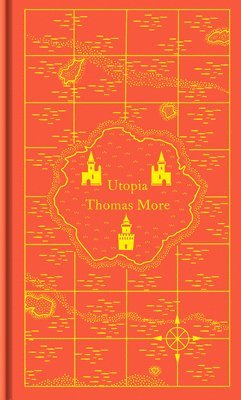
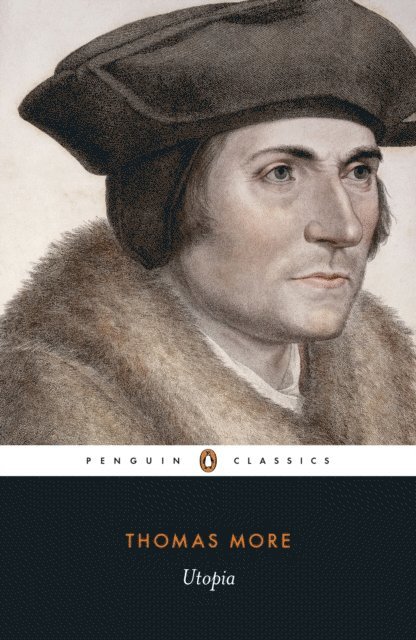
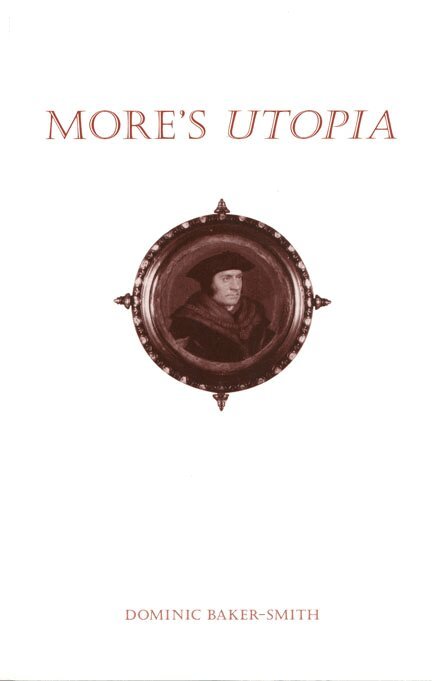
'It remains astonishingly radical ... one of Utopia's most striking aspects is its contemporaniety' Terry EagletonIn Utopia, Thomas More gives us a traveller's account of a newly-discovered island where the inhabitants enjoy a social order based on natural reason and justice, and human fulfilment is open to all. As the traveller describes the island, a bitter contrast is drawn between this rational society and the practices of Europe. How can the philosopher reform his society? In his discussion, More takes up a question first raised by Plato and which is still a challenge in the contemporary world. In the history of political thought few works have been more influential than Utopia, and few more misunderstood.Translated and introduced by Dominic Baker-Smith
E-bok
Engelska, 201278 kr
Läs direkt efter köp
'It remains astonishingly radical ... one of Utopia's most striking aspects is its contemporaniety' Terry EagletonIn Utopia, Thomas More gives us a traveller's account of a newly-discovered island where the inhabitants enjoy a social order based on natural reason and justice, and human fulfilment is open to all. As the traveller describes the island, a bitter contrast is drawn between this rational society and the practices of Europe. How can the philosopher reform his society? In his discussion, More takes up a question first raised by Plato and which is still a challenge in the contemporary world. In the history of political thought few works have been more influential than Utopia, and few more misunderstood.Translated and introduced by Dominic Baker-Smith
Inbunden, Engelska, 2020
196 kr
Skickas inom 3-6 vardagar
In Utopia, Thomas More gives us a traveller's account of a newly discovered island where the inhabitants enjoy a social order based on natural reason and justice, and human fulfilment is open to all. As the traveller, Raphael, describes the island to More, a bitter contrast is drawn between this rational society and the custom-driven practices of Europe. So how can the philosopher try to reform his society? In his fictional discussion, More takes up a question first raised by Plato and which is still a challenge in the contemporary world. In the history of political thought few works have been more influential than Utopia, and few more misunderstood.
E-bok
PDF, Engelska, 19981 598 kr
Läs direkt efter köp
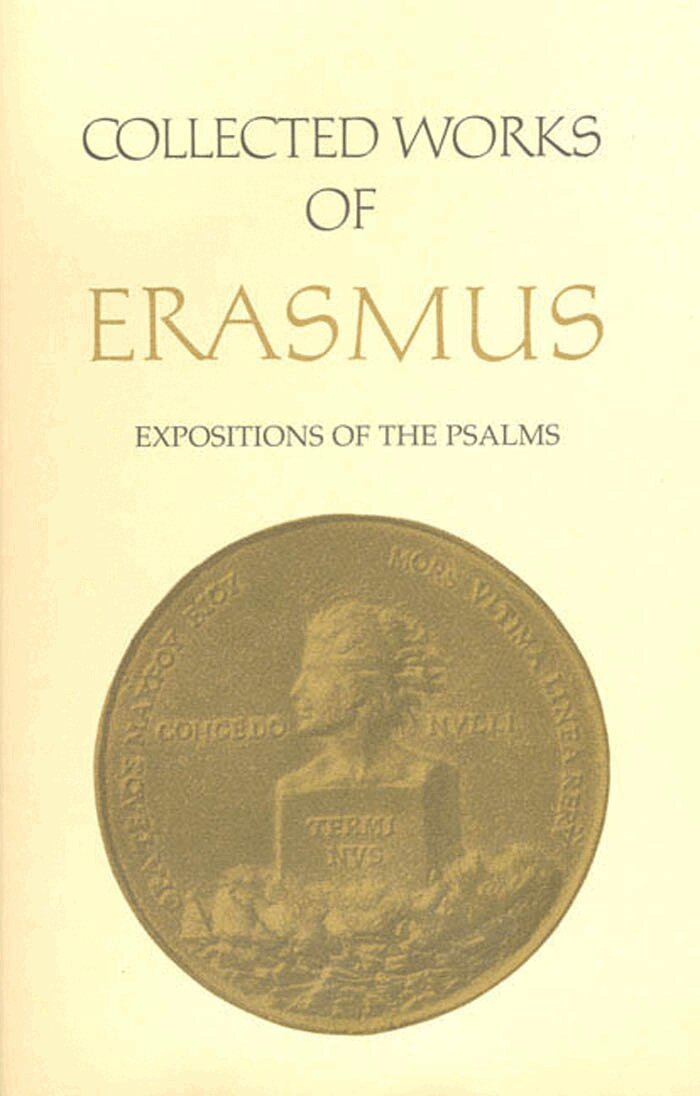
Between 1515 and 1533 Erasmus wrote commentaries on eleven psalms. His principal aim was, as in his Paraphrases, to contribute, through the exposition of the Bible, to the renewal of preaching and devotional literature. This is the first of three volumes of the Expositions of the Psalms in the Collected Works of Erasmus. It contains the commentaries 'Blessed the Man' / 'Beatus vir,' 'Why Did the Nations Rage?' / 'Quare fremuerunt gentes?,' 'O Lord, How Have My Tormentors Multiplied?' / 'Domine quid multiplicati?,' and 'A Sermon on the Fourth Psalm' / 'In psalmum quartum concio.'The commentaries in this volume recall many of Erasmus' favourite preoccupations and themes: his concern with Christian ethics; his constant exhortation to readers to practise the philosophia Christi and place their trust in God; the importance of exercising, in deeds rather than merely in words, charity towards those less fortunate than oneself, and the need to avoid vanity and falsehood at every turn. Erasmus stresses the role of the psalms as a comfort in tribulation and an exhortation to piety – in the very specific meaning that he gives to that word. He remains ever concerned about how the psalms relate to each individual in the conduct of his or her life.The introduction by Dominic Baker-Smith provides an important framework for the understanding and appreciation of all three volumes of the Expositions of the Psalms.Volume 63 of the Collected Works of Erasmus series.
E-bok
PDF, Engelska, 20052 674 kr
Läs direkt efter köp
Between 1515 and 1533 Erasmus wrote commentaries on eleven psalms, his only treatment of texts from the Old Testament. His principal aim was, as in his Paraphrases, to contribute, through the exposition of the Bible, to the renewal of preaching and devotional literature. This second of three volumes of the Expositions of the Psalms in the Collected Works of Erasmus, continues the chronological sequence of composition, containing commentaries on psalms 85, 22, 28 (the De bello Turcico), and 33.Erasmus wrote these expositions between August 1528 and February 1531, a time of growing anxiety for him as the bitterly contested issues of Reformation theology began to slip beyond hope for reconciliation. The expositions clarify his own fidelity to a moderate and conciliatory line of argument, and expose his constant preoccupation with the rediscovery of the spiritual dimension in Christian practice through ruminative meditation, which was the ultimate goal of these works. The expositions offer an absorbing range of nuances on the critical issues of the time, many of which have been neglected or obscured by partisan accounts of the Reformation crisis. Together, these three volumes open new sources for Erasmus scholars interested in humanist scriptural interpretation, the patristic heritage, and the religious and intellectual history of the Renaissance and Reformation.Volume 64 of the Collected Works of Erasmus series.
E-bok
PDF, Engelska, 2000692 kr
Läs direkt efter köp
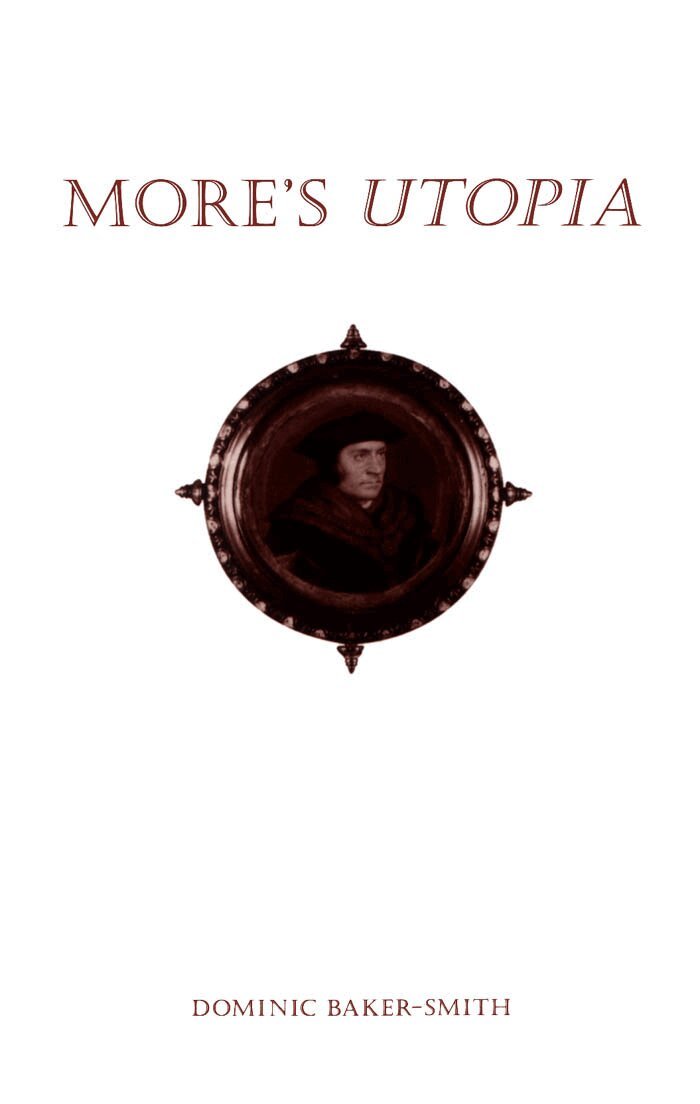
"Utopia" has a strong claim to be the most misunderstood book ever written; its name has been hijacked by countless idealistic schemes having little in common with More's own assessment of social possibilities. For although it contributes to a line of argument that can be traced from Plato to Marx, "Utopia" is first and foremost a literary work that appeals to the imagination and seeks to question us rather than to proffer answers.This study prepares the reader for these challenges, placing the work in the context of early sixteenth-century Europe and the intellectual preoccupations of More's own humanist circle, and clarifying those sources in classical and Christian political thought that provoked his writing."Utopia" is presented as a penetrating reflection on political idealism, one that has lost none of its relevance in an age that has witnessed the collapse of Marxists aspirations to social control. Dominic Baker-Smith also surveys the varied critical reception accorded to "Utopia" over the last four centuries, providing an intriguing look at "Utopia's" role in cultural history.
E-bok
PDF, Engelska, 20101 693 kr
Läs direkt efter köp
Consisting of Erasmus' commentary on psalms 38, 83, and 14, this is the third and final volume of the Expositions of the Psalms in the Collected Works of Erasmus. Dating from the last years of Erasmus' life, they represent his mature thoughts on the great crisis facing western Christendom.During the early 1530s, Erasmus explored disputed issues in the Church and attempted to reconcile the warring parties of the Reformation. His characteristic emphasis on the inner experience of faith, rather than outer conformity to a doctrinal checklist, allowed him to be receptive to the insights of reform while refusing to compromise on the essentials of received tradition. By stressing the subjective experience at the heart of religious practice, he sought to reduce the tension of institutional conflict. The exposition of Psalm 38 is here translated into English for the first time, and that of Psalm 14 for the first time since 1537; together with Psalm 83, the three expositions in this collection offer the student of Erasmus an important access to his legacy.Volume 65 of the Collected Works of Erasmus series.