Don Baker - Böcker
Visar alla böcker från författaren Don Baker. Handla med fri frakt och snabb leverans.
10 produkter
10 produkter
1 007 kr
Skickas inom 7-10 vardagar
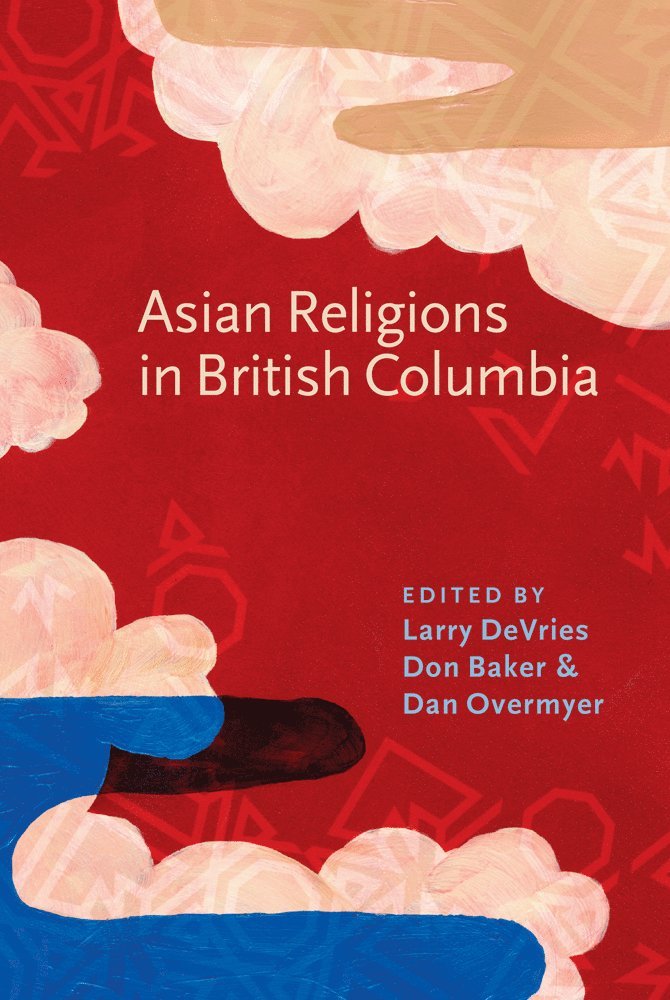
British Columbia is Canada’s most ethnically diverse province. Although the presence of Asian religions is felt and discussed in many regions, we know little about the religions that accompanied immigrants from Asia or how they are practised today.Asian Religions in British Columbia brings together fourteen religious studies scholars who offer intimate portraits of local religious groups, including Hindus and Sikhs from South Asia; Buddhist organizations from Southeast Asia; and Tibetan, Japanese, and Chinese religions from East and Central Asia. Although the geographical focus is particular, the conceptual focus is broad – the authors explore each religious tradition in the larger context of Canadian multiculturalism.As the first comprehensive and comparative examination of Asian religions in British Columbia, this book is mandatory reading for teachers, policy makers, scholars of British Columbia history and Asian Canadian studies, or anyone who wants to be well informed about this province and nation.
522 kr
Skickas inom 7-10 vardagar
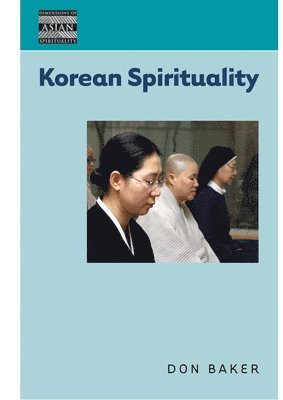
Korea has one of the most dynamic and diverse religious cultures of any nation on earth. Koreans are highly religious, yet no single religious community enjoys dominance. Buddhists share the Korean religious landscape with both Protestant and Catholic Christians as well as with shamans, Confucians, and practitioners of numerous new religions. As a result, Korea is a fruitful site for the exploration of the various manifestations of spirituality in the modern world. At the same time, however, the complexity of the country's religious topography can overwhelm the novice explorer.Emphasizing the attitudes and aspirations of the Korean people rather than ideology, Don Baker has written an accessible aid to navigating the highways and byways of Korean spirituality. He adopts a broad approach that distinguishes the different roles that folk religion, Buddhism, Confucianism, Christianity, and indigenous new religions have played in Korea in the past and continue to play in the present while identifying commonalities behind that diversity to illuminate the distinctive nature of spirituality on the Korean peninsula.
179 kr
Skickas inom 7-10 vardagar
Korea has one of the most dynamic and diverse religious cultures of any nation on earth. Koreans are highly religious, yet no single religious community enjoys dominance. Buddhists share the Korean religious landscape with both Protestant and Catholic Christians as well as with shamans, Confucians, and practitioners of numerous new religions. As a result, Korea is a fruitful site for the exploration of the various manifestations of spirituality in the modern world. At the same time, however, the complexity of the country's religious topography can overwhelm the novice explorer.Emphasizing the attitudes and aspirations of the Korean people rather than ideology, Don Baker has written an accessible aid to navigating the highways and byways of Korean spirituality. He adopts a broad approach that distinguishes the different roles that folk religion, Buddhism, Confucianism, Christianity, and indigenous new religions have played in Korea in the past and continue to play in the present while identifying commonalities behind that diversity to illuminate the distinctive nature of spirituality on the Korean peninsula.
284 kr
Skickas inom 7-10 vardagar
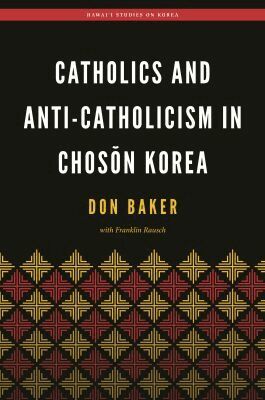
Korea's first significant encounter with the West occurred in the last quarter of the eighteenth century when a Korean Catholic community emerged on the peninsula. Decades of persecution followed, resulting in the deaths of thousands of Korean Catholics. Don Baker provides an invaluable analysis of late-Chosŏn (1392–1897) thought, politics, and society to help readers understand the response of Confucians to Catholicism and of Korean Catholics to years of violent harassment. His analysis is informed by two remarkable documents expertly translated with the assistance of Franklin Rausch and annotated here for the first time: an anti-Catholic essay written in the 1780s by Confucian scholar Ahn Chongbok (1712–1791) and a firsthand account of the 1801 anti-Catholic persecution by one of its last victims, the religious leader Hwang Sayong (1775–1801).Confucian assumptions about Catholicism are revealed in Ahn's essay, Conversation on Catholicism. The work is based on the scholar's exchanges with his son-in-law, who joined the small group of Catholics in the 1780s. Ahn argues that Catholicism is immoral because it puts more importance on the salvation of one's soul than on what is best for one's family or community. Conspicuously absent from his Conversation is the reason behind the conversions of his son-in-law and a few other young Confucian intellectuals. Baker examines numerous Confucian texts of the time to argue that, in the late eighteenth century, Korean Confucians were tormented by a growing concern over human moral frailty. Some among them came to view Catholicism as a way to overcome their moral weakness, become virtuous, and, in the process, gain eternal life. These anxieties are echoed in Hwang's Silk Letter, in which he details for the bishop in Beijing his persecution and the decade preceding it. He explains why Koreans joined (and some abandoned) the Catholic faith and their devotion to the new religion in the face of torture and execution. Together the two texts reveal much about not only Korean beliefs and values of two centuries ago, but also how Koreans viewed their country and their king as well as China and its culture.
327 kr
Skickas inom 7-10 vardagar
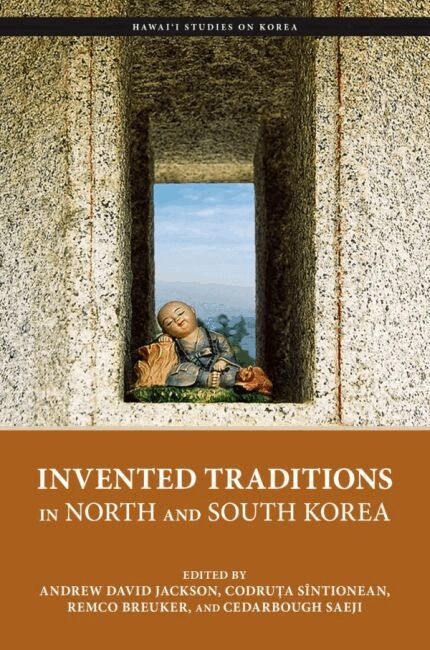
Almost forty years after the publication of Hobsbawm and Ranger’s The Invention of Tradition, the subject of invented traditions—cultural and historical practices that claim a continuity with a distant past but which are in fact of relatively recent origin—is still relevant, important, and highly contentious. Invented Traditions in North and South Korea examines the ways in which compressed modernity, Cold War conflict, and ideological opposition has impacted the revival of traditional forms in both Koreas. The volume is divided thematically into sections covering: (1) history, religions, (2) language, (3) music, food, crafts, and finally, (4) space. It includes chapters on pseudo-histories, new religions, linguistic politeness, literary Chinese, p’ansori, heritage, North Korean food, architecture, and the invention of children’s pilgrimages in the DPRK. As the first comparative study of invented traditions in North and South Korea, the book takes the reader on a journey through Korea’s epic twentieth century, examining the revival of culture in the context of colonialism, decolonization, national division, dictatorship, and modernization. The book investigates what it describes as "monumental" invented traditions formulated to maintain order, loyalty, and national identity during periods of political upheaval as well as cultural revivals less explicitly connected to political power. Invented Traditions in North and South Korea demonstrates that invented traditions can teach us a great deal about the twentieth-century political and cultural trajectories of the two Koreas. With contributions from historians, sociologists, folklorists, scholars of performance, and anthropologists, this volume will prove invaluable to Koreanists, as well as teachers and students of Korean and Asian studies undergraduate courses.
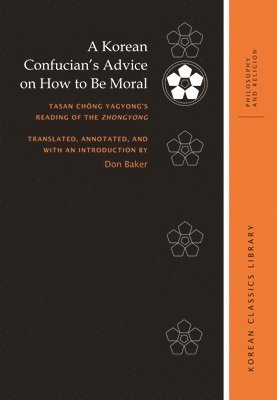
Korean Confucian’s Advice on How to Be Moral
Tasan Chŏng Yagyong’s Reading of the Zhongyong
Inbunden, Engelska, 2023
734 kr
Skickas inom 7-10 vardagar
Tasan Chŏng Yagyong (1762–1836) is one of the most creative thinkers Korea has ever produced, one of the country’s first Christians, and a leading scholar in Confucian philosophy. Born in a staunchly Neo-Confucian society, in his early twenties he encountered writings by Catholic missionaries in China and was fascinated. However, when he later learned that the Catholic Church condemned the Confucian practice of placing a spirit tablet on a family altar to honor past generations, he left the small Catholic community he had helped found and ostensibly returned to the Neo-Confucian fold. Nevertheless, the Christian ideas he studied in his youth influenced his thinking for the rest of his life, stimulating him to look at Neo-Confucianism with a critical eye and suggest new solutions to problems Confucian scholars had been addressing for centuries. A Korean Confucian’s Advice on How to Be Moral is an annotated translation of Tasan’s commentaries on the Confucian classic Zhongyong (usually translated as The Doctrine of the Mean) in which he applies both Confucianism and Christianity to the question of how to best develop a moral character.Written as a dialogue with King Chŏngjo, (r. 1776–1800) these texts reveal how Tasan interpreted his Confucian tradition, particularly its understanding of how human beings could cultivate morality, while the king’s questions illustrate the mainstream Neo-Confucianism Tasan was reacting against. Tasan challenged the non-theistic standard, insisting that living a moral life is not easy and that we need to be motivated to exert the effort necessary to overcome our selfish tendencies. He had abandoned his faith by the time he wrote these commentaries but, influenced by Catholic works and determined to find a more effective way to live a moral life than non-theistic Neo-Confucianism provided, Tasan constructed a Confucian philosophy of moral improvement centered on belief in God. This translation, helpfully annotated for context and analysis, is an exploration of early Korean engagement with the West and a powerful guide to all those interested in Confucianism, Christianity, and morality.
731 kr
Skickas inom 7-10 vardagar
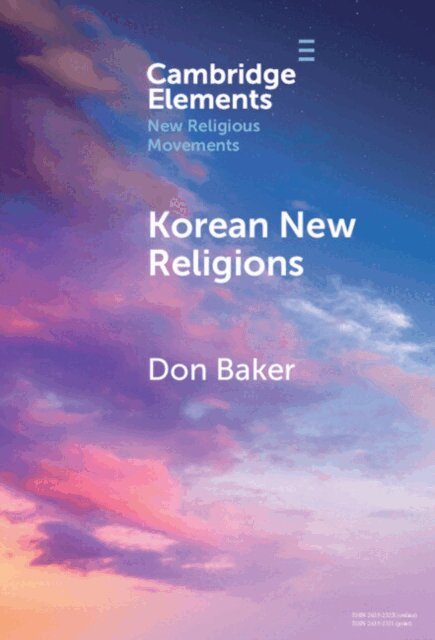
Korea has an unusually diverse religious culture. In the north, Juche, which has taken on religious overtones, monopolizes articulations of beliefs and values as well as ritual practice. In the south, no single religion dominates, with over half saying that they have no specific religious affiliation. The remainder report being Protestant, Buddhist, and Catholic. Smaller in number but nonetheless noticeable are members of Korea's many home-grown new religious movements. Reflecting South Korea's religious diversity, some of those new religions have Buddhist roots, some have Christian origins, some draw on Confucian beliefs and practices, and some have emerged from Indigenous religious traditions such as shamanism. This Element examines the most noticeable of Korea's new religions to discover what they can tell us about distinctive traits of religion in Korea, and how Koreans have responded to the challenge posed by modernity to their traditional beliefs and values.
244 kr
Skickas inom 7-10 vardagar
Korea has an unusually diverse religious culture. In the north, Juche, which has taken on religious overtones, monopolizes articulations of beliefs and values as well as ritual practice. In the south, no single religion dominates, with over half saying that they have no specific religious affiliation. The remainder report being Protestant, Buddhist, and Catholic. Smaller in number but nonetheless noticeable are members of Korea's many home-grown new religious movements. Reflecting South Korea's religious diversity, some of those new religions have Buddhist roots, some have Christian origins, some draw on Confucian beliefs and practices, and some have emerged from Indigenous religious traditions such as shamanism. This Element examines the most noticeable of Korea's new religions to discover what they can tell us about distinctive traits of religion in Korea, and how Koreans have responded to the challenge posed by modernity to their traditional beliefs and values.
210 kr
Skickas inom 5-8 vardagar
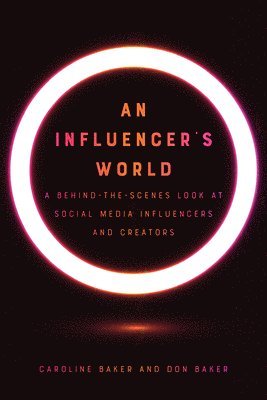
Influencer's World
A Behind-the-Scenes Look at Social Media Influencers and Creators
Häftad, Engelska, 2023
203 kr
Skickas inom 7-10 vardagar