Don C. Price - Böcker
Visar alla böcker från författaren Don C. Price. Handla med fri frakt och snabb leverans.
3 produkter
3 produkter
1 522 kr
Kommande
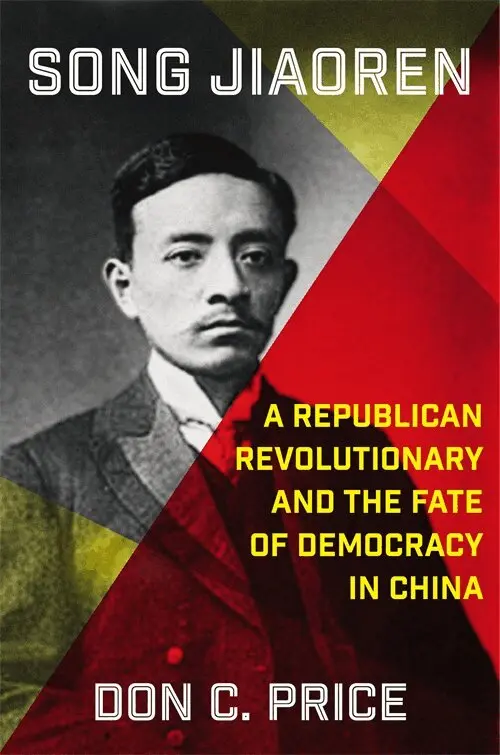
Song Jiaoren (1882–1913) was early-twentieth-century China’s greatest champion of constitutional democracy. Fleeing the police after a failed plot in 1904, the young revolutionary found refuge in Japan, where his eyes were opened to new political possibilities. Along with Sun Yatsen, he was one of the founders of the Nationalist Party, turning an underground organization into a nationwide force. After the 1911 revolution, Song campaigned for a truly democratic constitution guaranteeing a representative government. Following parliamentary elections in 1913, he was on the verge of becoming prime minister—but he was struck down by an assassin’s bullet on a Shanghai railway platform, and China began its descent into chaos and authoritarianism.Don C. Price provides the definitive biography of Song Jiaoren, recounting his remarkable career and illuminating a period of epochal change. Drawing on a wide variety of sources—especially his revealing diary—this book chronicles Song’s life and times, interweaving his personal relationships with his revolutionary activities and intellectual development. From his early life in a rural interior province to his Japanese exile through his meteoric ascent and tragic death, it explores how Song became an unwavering advocate for democracy—and why antidemocratic forces sought to eliminate him. By detailing Song’s legacy, this book sheds light on the roots of democratic aspirations in China and on the path not taken in the country’s tumultuous history.
396 kr
Kommande
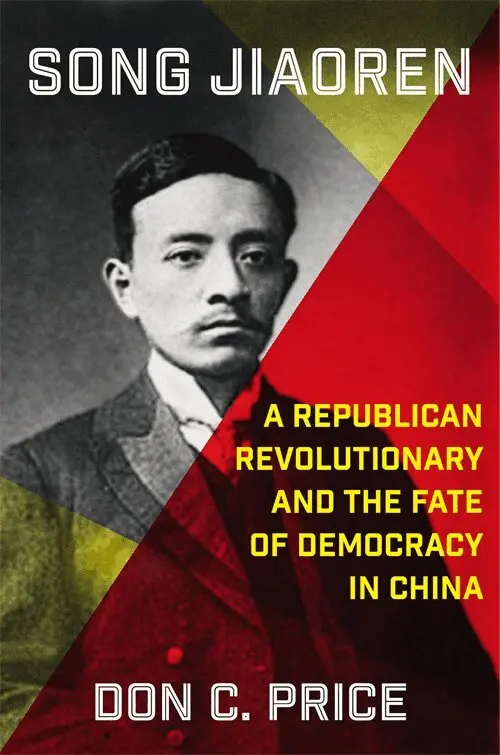
Song Jiaoren (1882–1913) was early-twentieth-century China’s greatest champion of constitutional democracy. Fleeing the police after a failed plot in 1904, the young revolutionary found refuge in Japan, where his eyes were opened to new political possibilities. Along with Sun Yatsen, he was one of the founders of the Nationalist Party, turning an underground organization into a nationwide force. After the 1911 revolution, Song campaigned for a truly democratic constitution guaranteeing a representative government. Following parliamentary elections in 1913, he was on the verge of becoming prime minister—but he was struck down by an assassin’s bullet on a Shanghai railway platform, and China began its descent into chaos and authoritarianism.Don C. Price provides the definitive biography of Song Jiaoren, recounting his remarkable career and illuminating a period of epochal change. Drawing on a wide variety of sources—especially his revealing diary—this book chronicles Song’s life and times, interweaving his personal relationships with his revolutionary activities and intellectual development. From his early life in a rural interior province to his Japanese exile through his meteoric ascent and tragic death, it explores how Song became an unwavering advocate for democracy—and why antidemocratic forces sought to eliminate him. By detailing Song’s legacy, this book sheds light on the roots of democratic aspirations in China and on the path not taken in the country’s tumultuous history.
1 929 kr
Skickas inom 5-8 vardagar
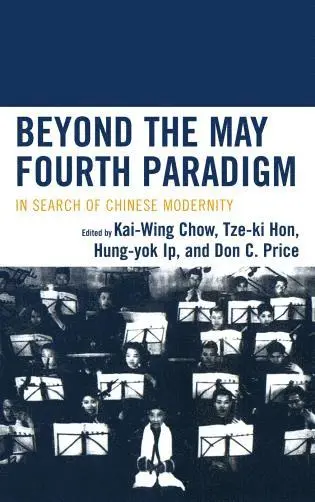
When did China make the decisive turn from tradition to modernity? For decades, the received wisdom would have pointed to the May Fourth movement, with its titanic battles between the champions of iconoclasm and the traditionalists, and its shift to more populist forms of politics. A growing body of recent research has, however, called into question how decisive the turn was, when it happened, and what relation the resulting modernity bore to the agendas of people who might have considered themselves representatives of such an iconoclastic movement. Having thus explicitly or implicitly 'decentered' the May Fourth, such research (augmented by contributions in the present volume) leaves us with the task of accounting for the shape Chinese modernity took, as the product of dialogues and debates between, and the interplay of, a variety of actors and trends, both within and (certainly no less importantly) without the May Fourth camp.