Donald A. Ritchie - Böcker
Visar alla böcker från författaren Donald A. Ritchie. Handla med fri frakt och snabb leverans.
16 produkter
16 produkter
398 kr
Skickas inom 5-8 vardagar
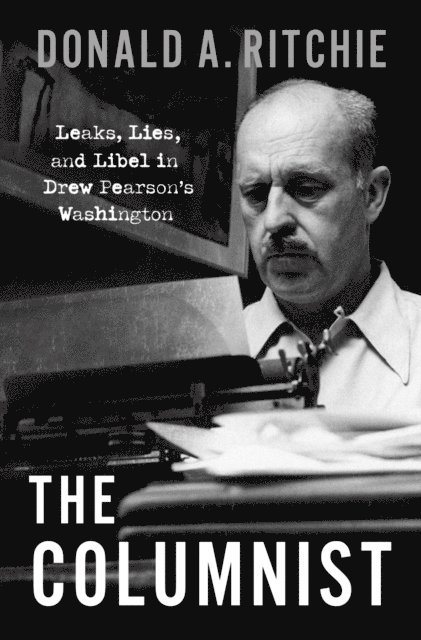
Long before Wikileaks and social media, the journalist Drew Pearson exposed to public view information that public officials tried to keep hidden. A self-professed "keyhole peeper", Pearson devoted himself to revealing what politicians were doing behind closed doors. From 1932 to 1969, his daily "Washington Merry-Go-Round" column and weekly radio and TV commentary broke secrets, revealed classified information, and passed along rumors based on sources high and low in the federal government, while intelligence agents searched fruitlessly for his sources.For forty years, this syndicated columnist and radio and television commentator called public officials to account and forced them to confront the facts. Pearson's daily column, published in more than 600 newspapers, and his weekly radio and television commentaries led to the censure of two US senators, sent four members of the House to prison, and undermined numerous political careers. Every president from Franklin Roosevelt to Richard Nixon--and a quorum of Congress--called him a liar. Pearson was sued for libel more than any other journalist, in the end winning all but one of the cases.Breaking secrets was the heartbeat of Pearson's column. His ability to reveal classified information, even during wartime, motivated foreign and domestic intelligence agents to pursue him. He played cat and mouse with the investigators who shadowed him, tapped his phone, read his mail, and planted agents among his friends. Yet they rarely learned his sources. The FBI found it so fruitless to track down leaks to the columnist that it advised agencies to simply do a better job of keeping their files secret. Drawing on Pearson's extensive correspondence, diaries, and oral histories, The Columnist reveals the mystery behind Pearson's leaks and the accuracy of his most controversial revelations.
108 kr
Skickas inom 5-8 vardagar
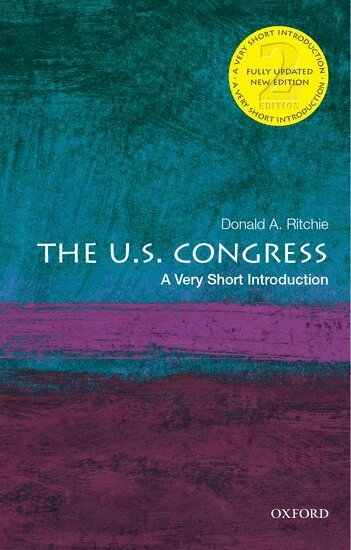
In the second edition of The U.S. Congress, Donald A. Ritchie, a congressional historian for more than thirty years, takes readers on a fascinating, behind-the-scenes tour of Capitol Hill, pointing out the key players, explaining their behavior, and translating parliamentary language into plain English. No mere civics lesson, this eye-opening book provides an insider's perspective on Congress, matched with a professional historian's analytical insight. After a swift survey of the creation of Congress by the constitutional convention, he begins to unscrew the nuts and pull out the bolts. What is it like to campaign for Congress? To attract large donors? To enter either house with no seniority? He answers these questions and more, explaining committee assignments and committee work, the role of staffers and lobbyists, floor proceedings, parliamentary rules, and coalition building. Ritchie explores the great effort put into constituent service-as representatives and senators respond to requests from groups and individuals-as well as media relations and news coverage. He also explores how the grand concepts we all know from civics class--checks and balances, advise and consent, congressional oversight--work in practice in an age of strong presidents and a muscular Senate minority.
448 kr
Skickas inom 5-8 vardagar
The Oxford Guide to the United States Government is the ultimate resource for authoritative information on the U.S. Presidency, Congress, and Supreme Court. Compiled by three top scholars, its pages brim with the key figures, events, and structures that have animated U.S. government for more than 200 years.In addition to coverage of the 2000 Presidential race and election, this Guide features biographies of all the Presidents, Vice Presidents, and Supreme Court Justices, as well as notable members of Congress, including current leadership; historical commentary on past elections, major Presidential decisions, international and domestic programs, and the key advisors and agencies of the executive branch; in-depth analysis of Congressional leadership and committees, agencies and staff, and historic legislation; and detailed discussions of 100 landmark Supreme Court cases and the major issues facing the Court today. In addition to entries that define legal terms and phrases and others that elaborate on the wide array of government traditions, this invaluable book includes extensive back matter, including tables of Presidential election results; lists of Presidents, Vice Presidents, Congresses, and Supreme Court Justices with dates of service; lists of Presidential museums, libraries, and historic sites; relevant websites; and information on visiting the White House, the Capitol, and Supreme Court buildings.A one-stop, comprehensive guide that will assist students, educators, and anyone curious about the inner workings of government, The Oxford Guide to the United States Government will be a valued addition to any home library.
1 170 kr
Skickas inom 3-6 vardagar
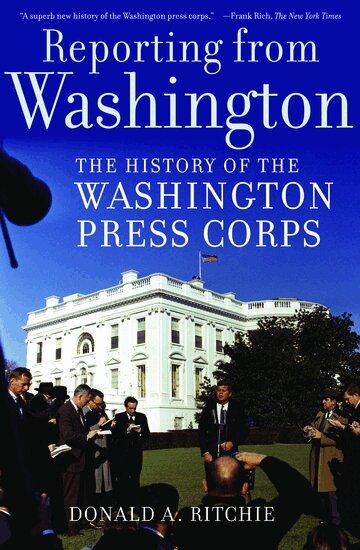
Donald Ritchie here offers a vibrant chronicle of news coverage in our nation's capital, from the early days of radio and print reporting and the heyday of the wire services to the brave new world of the Internet. Beginning with 1932, when a newly elected FDR energized the sleepy capital, Ritchie highlights the dramatic changes in journalism that have occurred in the last seven decades. We meet legendary columnists--including Walter Lippmann, Joseph Alsop, and Drew Pearson (voted "the best ratcatching reporter in town")--as well as the great investigative reporters, from Paul Y. Anderson (who broke the Teapot Dome scandal) to the two green Washington Post reporters who launched the political story of the decade--Woodward and Bernstein. We read of the rise of radio news--fought tooth and nail by the print barons--and of such pioneers as Edward R. Murrow, H. V. Kaltenborn, and Elmer Davis. Ritchie also offers a vivid history of TV news, from the early days of Meet the Press, to Huntley and Brinkley and Walter Cronkite, to the cable revolution led by C-SPAN and CNN. In addition, he compares political news on the Internet to the alternative press of the '60s and '70s; describes how black reporters slowly broke into the white press corps (helped mightily by FDR's White House); discusses path-breaking woman reporters such as Sarah McClendon and Helen Thomas, and much more.From Walter Winchell to Matt Drudge, the people who cover Washington politics are among the most colorful and influential in American news. Reporting from Washington offers an unforgettable portrait of these figures as well as of the dramatic changes in American journalism in the twentieth century.
841 kr
Skickas inom 3-6 vardagar
175 kr
Skickas inom 5-8 vardagar
Donald Ritchie here offers a vibrant chronicle of news coverage in our nation's capital, from the early days of radio and print reporting and the heyday of the wire services to the brave new world of the Internet. Beginning with 1932, when a newly elected FDR energized the sleepy capital, Ritchie highlights the dramatic changes in journalism that have occurred in the last seven decades. We meet legendary columnists--including Walter Lippmann, Joseph Alsop, and Drew Pearson (voted "the best ratcatching reporter in town")--as well as the great investigative reporters, from Paul Y. Anderson (who broke the Teapot Dome scandal) to the two green Washington Post reporters who launched the political story of the decade--Woodward and Bernstein. We read of the rise of radio news--fought tooth and nail by the print barons--and of such pioneers as Edward R. Murrow, H. V. Kaltenborn, and Elmer Davis. Ritchie also offers a vivid history of TV news, from the early days of Meet the Press, to Huntley and Brinkley and Walter Cronkite, to the cable revolution led by C-SPAN and CNN. In addition, he compares political news on the Internet to the alternative press of the '60s and '70s; describes how black reporters slowly broke into the white press corps (helped mightily by FDR's White House); discusses path-breaking woman reporters such as Sarah McClendon and Helen Thomas, and much more.From Walter Winchell to Matt Drudge, the people who cover Washington politics are among the most colorful and influential in American news. Reporting from Washington offers an unforgettable portrait of these figures as well as of the dramatic changes in American journalism in the twentieth century.
790 kr
Skickas inom 3-6 vardagar
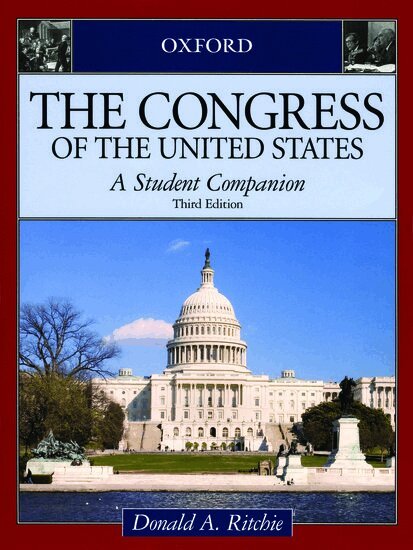
This completely revised and updated third edition to the Young Oxford Companion to the Congress of the United States (1994) and The Congress of the United States: A Student Companion, second edition (2001) contains more than 200 articles, arranged alphabetically, that provide a concise and easy-to-use guide to the people, issues, vocabulary, and activities of the U.S. Senate and House of Representatives. In this third edition, there are new articles on 4 House and Senate leaders: Tom DeLay, Bill Frist, Nancy Pelosi, and Harry Reid. There are also 5 new articles on the Capitol Visitors Center, Homeland Security, Nuclear option, Recess appointments (including a chart of recent statistics), and Association of the Centers for Congressional Studies. There are updates to 24 articles: Advice and consent; African Americans in Congress; Appropriations; Campaign financing; Chisholm, Shirley; Commemoratives, Constituent services; Constitutional amendments; Daschle, Tom; Dress; Ethics; Filibuster; Hastert, Dennis; Hispanic Americans; Lott, Trent; Mansfield, Mike; Media coverage; Nominations; Reapportionment; Records of Congress; Reporters of Debate; Salaries; Voting; War Powers. Several of the tables are also revised: Apportionment of the House of Representatives; Committees; Lame duck sessions; Longest serving members; Majority leaders; Vetoes; and the Congresses list in the appendix.All of the back matter is thoroughly updated. Visiting Congress has information on new security procedures; Doing Research is expanded to include new books and a new section on websites. The bibliographies both at the back of the book and for each of the entries are thoroughly updated. This book serves not only students in middle school and high school American history courses, but will also be suitable for the public library market and online applications.
519 kr
Skickas inom 3-6 vardagar
328 kr
Skickas inom 5-8 vardagar
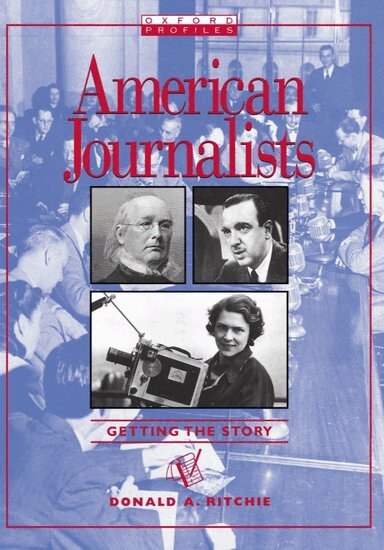
In 60 essays, this volume profiles American journalists from colonial times to the present--reporters, editors, publishers, photographers, and broadcasters--whose careers reflected major developments in their profession and in the history of the United States. In a speech to Newsweek correspondents in 1963, publisher Philip Graham described journalism as "the first rough draft of history." These journalists confronted and helped to shape the discussion of major issues and events in American history, from the American revolution through abolition, westward expansion, the Civil War, the civil rights movement, immigration, and the women's movement, as well as major constitutional issues involving the First Amendment protection of freedom of the press. Biographies of well-known journalists, from Benjamin Franklin and Thomas Paine to Walter Cronkite and Rupert Murdoch, appear alongside some who may be less familiar, such as Elias Boudinot, founder of the first Cherokee language newspaper; Abraham Cahan, editor of the Jewish Daily Forward; and Daniel Craig, who in the 1830s used carrier pigeons to ferry the news. Other subjects include Margaret Green Draper, the revolutionary printer; Claude Barnett, founder of the Associated Negro Press; photojournalist Margaret Bourke-White; war correspondent Ernie Pyle; and Allen Neuharth, founder of USA Today. Illustrations, fact boxes, and quotations from the subjects themselves make this volume an indispensable reference for students of American history as well as a fascinating read. Journalists profiled include:Horace GreeleyFrederick DouglassMark TwainThomas NastJoseph PulitzerNellie BlyWilliam Randolph HearstIda Wells-BarnettH. L. MenckenDorothy ThompsonWalter WinchellRed SmithEdward R. MurrowWalter CronkiteBernard ShawCokie RobertsManuel de Dios Unanueand many more
2 617 kr
Skickas inom 5-8 vardagar
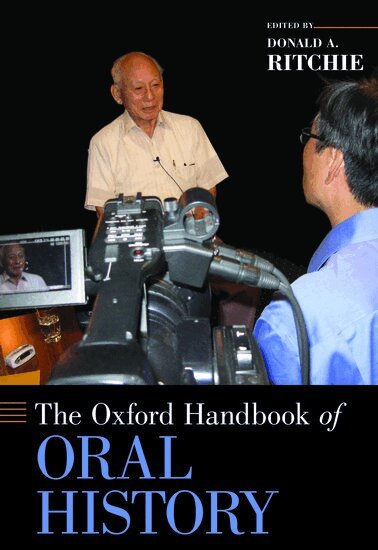
In the past sixty years, oral history has moved from the periphery to the mainstream of academic studies, being employed as a research tool by historians, anthropologists, sociologists, medical therapists, documentary film makers, and educators at all levels. The Oxford Handbook of Oral History brings together forty authors on five continents to address the evolution of oral history, the impact of digital technology, the most recent methodological and archival issues, and the application of oral history to both scholarly research and public presentations. The volume is addressed to seasoned practitioners as well as to newcomers, offering diverse perspectives on the current state of the field and its likely future developments. Some of its articles survey large areas of oral history research and examine how they developed; others offer case studies that deal with specific projects, issues, and applications of oral history. From the Holocaust, the South African Truth and Reconciliation Commissions, the Falklands War in Argentina, the Velvet Revolution in Eastern Europe, to memories of September 11, 2001 and of Hurricane Katrina, the creative and essential efforts of oral historians worldwide are examined and explained in this multipurpose handbook.
111 kr
Skickas inom 5-8 vardagar
Donald A. Ritchie, a congressional historian for forty years , takes readers on a fascinating, behind-the-scenes tour of Capitol Hill, pointing out the key players, explaining their behavior, and translating parliamentary language into plain English. He also explores the essential necessity of compromise to accomplish anything significant in the legislative arena. However, recent events show that political polarization has hardened and produced gridlock, as Ritchie explains in this new edition. The 2020 election also produced a more diverse membership in terms of gender, ethnicity, religion, and ideology, with primary elections resulting in the defeat of moderate candidates by opponents ranging from socialists on the left to conspiracy theorists on the right, making bipartisan compromise harder to achieve. Among the most significant events since the last edition, the Senate ignored President Obama's last nomination to the Supreme Court and then adopted a "nuclear option" to streamline future Supreme Court confirmations. The House also twice impeached President Trump, processes that starkly expose the differences between the majority-rule requirements of the House and the super-majority requirements of the Senate. This new edition explains how the parties have changed in light of the unprecedented politics of the past four years, culminating in the mob attack on the U.S. Capitol on January 6, 2021, and how this development has affected both the House and the Senate.
473 kr
Skickas inom 5-8 vardagar
Doing Oral History: A Practical Guide is considered the premier guidebook to oral history, used by professional oral historians, public historians, archivists, and genealogists as a core text in college courses and throughout the public history community. Over the past decades, the development of digital audio and video recording technology has continued to alter the practice of oral history, making it even easier to produce quality recordings and to disseminate them on the Internet. This basic manual offers detailed advice on setting up an oral history project, conducting interviews, making video recordings, preserving oral history collections in archives and libraries, and teaching and presenting oral history.Using the existing Q&A format, the third edition asks new questions and augments previous answers with new material, particularly in these areas:1. Technology: As before, the book avoids recommending specific equipment, but weighs the merits of the types of technology available for audio and video recording, transcription, preservation, and dissemination. Information about web sites is expanded, and more discussion is provided about how other oral history projects have posted their interviews online. 2. Teaching: The new edition addresses the use of oral history in online teaching. It also expands the discussion of Institutional Review Boards (IRBs) with the latest information about compliance issues.3. Presentation: Once interviews have been conducted, there are many opportunities for creative presentation. There is much new material available on innovative forms of presentation developed over the last decade, including interpretive dance and other public performances.4. Legal considerations: The recent Boston College case, in which the courts have ruled that Irish police should have access to sealed oral history transcripts, has re-focused attention on the problems of protecting donor restrictions. The new edition offers case studies from the past decade.5. Theory and Memory: As a beginner's manual, Doing Oral History has not dealt extensively with theoretical issues, on the grounds that these emerge best from practice. But the third edition includes the latest thinking about memory and provides a sample of some of the theoretical issues surrounding oral sources. It will include examples of increased studies into catastrophe and trauma, and the special considerations these have generated for interviewers.6. Internationalism: Perhaps the biggest development in the past decade has been the spreading of oral history around the world, facilitated in part by the International Oral History Association. New oral history projects have developed in areas that have undergone social and political upheavals, where the traditional archives reflect the old regimes, particularly in Eastern Europe, the Middle East, Asia, Africa, and Latin America. The third edition includes many more references to non-U.S. projects that will still be relevant to an American audience.These changes make the third edition of Doing Oral History an even more useful tool for beginners, teachers, archivists, and all those oral history managers who have inherited older collections that must be converted to the latest technology.
1 343 kr
Skickas inom 5-8 vardagar
Doing Oral History: A Practical Guide is considered the premier guidebook to oral history, used by professional oral historians, public historians, archivists, and genealogists as a core text in college courses and throughout the public history community. Over the past decades, the development of digital audio and video recording technology has continued to alter the practice of oral history, making it even easier to produce quality recordings and to disseminate them on the Internet. This basic manual offers detailed advice on setting up an oral history project, conducting interviews, making video recordings, preserving oral history collections in archives and libraries, and teaching and presenting oral history.Using the existing Q&A format, the third edition asks new questions and augments previous answers with new material, particularly in these areas:1. Technology: As before, the book avoids recommending specific equipment, but weighs the merits of the types of technology available for audio and video recording, transcription, preservation, and dissemination. Information about web sites is expanded, and more discussion is provided about how other oral history projects have posted their interviews online. 2. Teaching: The new edition addresses the use of oral history in online teaching. It also expands the discussion of Institutional Review Boards (IRBs) with the latest information about compliance issues.3. Presentation: Once interviews have been conducted, there are many opportunities for creative presentation. There is much new material available on innovative forms of presentation developed over the last decade, including interpretive dance and other public performances.4. Legal considerations: The recent Boston College case, in which the courts have ruled that Irish police should have access to sealed oral history transcripts, has re-focused attention on the problems of protecting donor restrictions. The new edition offers case studies from the past decade.5. Theory and Memory: As a beginner's manual, Doing Oral History has not dealt extensively with theoretical issues, on the grounds that these emerge best from practice. But the third edition includes the latest thinking about memory and provides a sample of some of the theoretical issues surrounding oral sources. It will include examples of increased studies into catastrophe and trauma, and the special considerations these have generated for interviewers.6. Internationalism: Perhaps the biggest development in the past decade has been the spreading of oral history around the world, facilitated in part by the International Oral History Association. New oral history projects have developed in areas that have undergone social and political upheavals, where the traditional archives reflect the old regimes, particularly in Eastern Europe, the Middle East, Asia, Africa, and Latin America. The third edition includes many more references to non-U.S. projects that will still be relevant to an American audience.These changes make the third edition of Doing Oral History an even more useful tool for beginners, teachers, archivists, and all those oral history managers who have inherited older collections that must be converted to the latest technology.
787 kr
Skickas inom 5-8 vardagar
In the past sixty years, oral history has moved from the periphery to the mainstream of academic studies and is now employed as a research tool by historians, anthropologists, sociologists, medical therapists, documentary film makers, and educators at all levels. The Oxford Handbook of Oral History brings together forty authors on five continents to address the evolution of oral history, the impact of digital technology, the most recent methodological and archival issues, and the application of oral history to both scholarly research and public presentations. The volume is addressed to seasoned practitioners as well as to newcomers, offering diverse perspectives on the current state of the field and its likely future developments. Some of its chapters survey large areas of oral history research and examine how they developed; others offer case studies that deal with specific projects, issues, and applications of oral history. From the Holocaust, the South African Truth and Reconciliation Commissions, the Falklands War in Argentina, the Velvet Revolution in Eastern Europe, to memories of September 11, 2001 and of Hurricane Katrina, the creative and essential efforts of oral historians worldwide are examined and explained in this multipurpose handbook.
306 kr
Skickas inom 10-15 vardagar
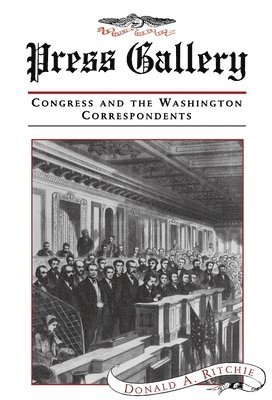
Donald Ritchie examines the lives of early, self-styled congressional journalists such as Horace Greeley, Emily Briggs, Benjamin Perley Poore, Jane Grey Swisshelm, Horace White, James G. Blaine, and others who were positioned in the hub of government when the Civil War, the purchase of Alaska, the Crédit Mobilier scandal, and the Johnson impeachment hearings were making front-page news. Rich in anecdote, this lively book illuminates an important era of journalism and American history. The nascent issues of censorship, right to privacy, and conflict of interest that it describes are still very much with us.
323 kr
Skickas inom 10-15 vardagar
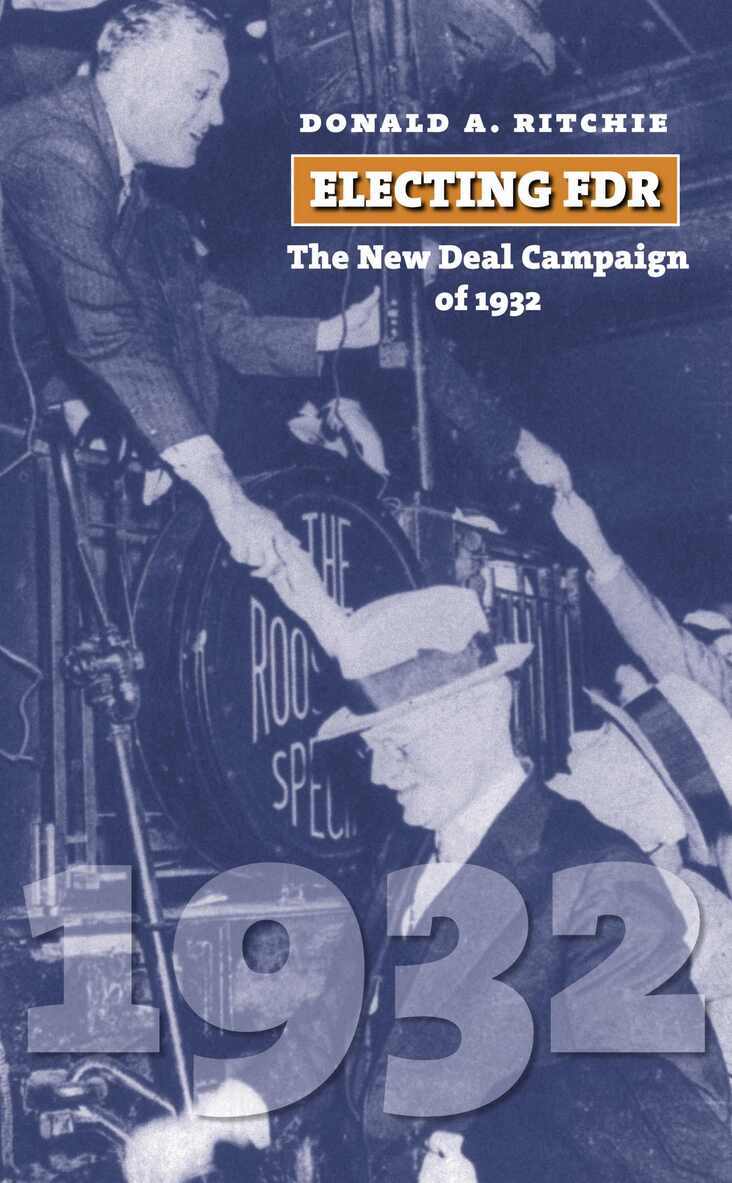
With the landmark election of Franklin Delano Roosevelt in 1932, decades of Republican ascendancy gave way to a half century of Democratic dominance. It was nothing less than a major political realignment, as the direction of federal policy shifted from conservative to liberal—and liberalism itself was redefined in the process.Electing FDR is the first book in seventy years to examine in its entirety the 1932 presidential election that ushered in the New Deal. Award-winning historian Donald Ritchie looks at how candidates responded to the nation's economic crisis and how voters evaluated their performance. More important, he explains how the Democratic Party rebuilt itself after three successive Republican landslides: where the major shifts in party affiliation took place, what contingencies contributed to FDR's victory, and why the new coalition persisted as long as it did.Ritchie challenges prevailing assumptions that the Depression made Roosevelt's election inevitable. He shows that FDR came close to losing the nomination to contenders who might have run to the right of Hoover, and discusses the role of newspapers and radio in presenting the candidates to voters. He also analyzes Roosevelt's campaign strategies, recounting his attempts to appeal to disaffected voters of all ideological stripes, often by altering his positions to broaden his popularity.With the advent of the New Deal, Americans came to enjoy a wide federal safety net that provided everything from old age pensions to rural electricity-government innovations so embraced by voters that even later conservative presidents recognized their importance. Ritchie traces this legacy through the Reagan and Bush years, but he relates how FDR in 1932 was often vague about the specifics of his program and questions whether voters really knew what they were in for with the New Deal.As pundits, politicians, and citizens eye the upcoming 2008 campaign, Electing FDR reminds incumbents not to take their party support for granted or to underestimate their opponents-and reminds students of history that understanding the New Deal begins with the 1932's transformative election.