Donald Bundy - Böcker
Visar alla böcker från författaren Donald Bundy. Handla med fri frakt och snabb leverans.
5 produkter
5 produkter
473 kr
Skickas inom 10-15 vardagar
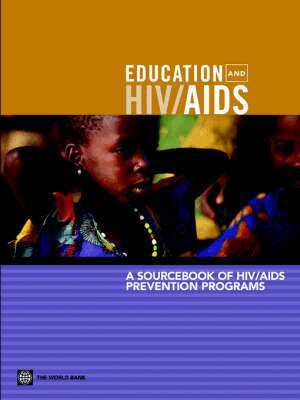
This Sourcebook aims to support efforts by countries to strengthen the role of the education sector in the prevention of HIV/AIDS. It was developed in response to numerous requests for a simple forum to help countries share their practical experiences of designing and implementing programs that are targeted at school-age children. The Sourcebook seeks to fulfill this role by providing concise summaries of programs, using a standard format that highlights the main elements of the programs and makes it easier to compare the programs with each other. A Sourcebook of HIV/AIDS Prevention Programs documents 13 education based HIV/AIDS prevention programs targeting children and youth from 7 sub-Saharan African countries. It is sponsored by UNAIDS, UNICEF, UNESCO, UNFPA, DFID, USAID, Ireland Aid and the World Bank. The Sourcebook represents the work of many contributors (acknowledged in the book), and was developed by the Partnership for Child Development with the World Bank, with principal support from Ireland Aid and the Norwegian Education Trust Fund.
274 kr
Skickas inom 10-15 vardagar
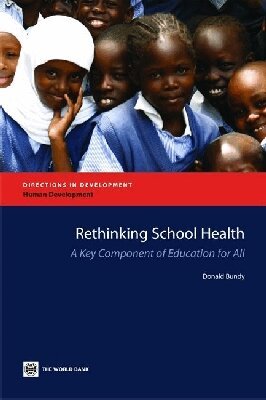
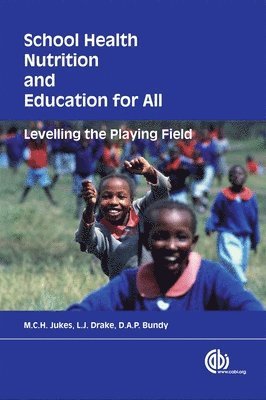
School health and nutirion programs can contribue to achieving the goals of the Education for All initiative (EFA) by helping children enroll on time, complete their education, and realize their cognitive potential. Achieving these goals depends on reaching the children most in need. One strong feature of school health and nutrition programs is that they benefit the poor, sick, and hungry children far more that better-off children. However, poor children can only benefit if the programs reach them. This book describes how schools have been used as a platform for delivering safe and simple health and nutrition programs to even hard-to-reach children in low-income countries.
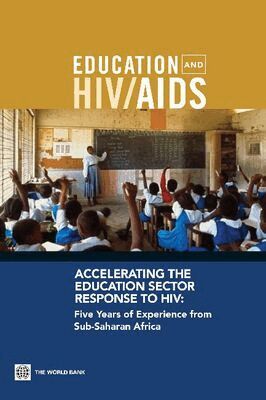
Accelerating the Education Sector Response to HIV
Five Years of Experience from Sub-Saharan Africa
Häftad, Engelska, 2010
162 kr
Skickas inom 10-15 vardagar
This Review was undertaken by the Networks of Ministry of Education HIV&AIDS Focal Point from countries in sub-Saharan Africa participating in the Accelerate Initiative, together with stakeholder and partner representatives. The education sector has become increasingly recognized as playing a key 'external' role in prevention and in reducing stigma, and an important 'internal' role in providing access to care, treatment and support for teachers and staff, a group that in many countries represents more than 60% of the public sector workforce. In 2002, the Joint United Nations Programme on HIV&AIDS (UNAIDS) Inter-Agency Task Team (IATT) on Education established the 'Accelerate Initiative Working Group' to support countries in sub-Saharan Africa as they 'accelerate their education sector responses to HIV&AIDS' through the establishment of programs with strong local ownership, capable of accessing suitable funding and implementation at all levels of the education sector.The Networks of Ministry of Education HIV&AIDS Focal Points, established through the Initiative under the auspices of the Africa Union Regional Economic Communities, have rapidly taken ownership of the Accelerate Initiative. This Review explores the experiences of education sectors across sub-Saharan Africa as they accelerate their response to HIV&AIDS within the Accelerate Initiative. It demonstrates that leadership by Ministries of Education has been crucial in mobilizing activities, and that full participation of all stakeholders is needed for effective implementation. Since 2002: 37 countries have participated; 4 Networks have been established; 1,350 education staff members and 76 development partners have participated in 120 training days; 75% of participating countries are now accessing funds through their National AIDS Committees; 76% have an HIV&AIDS education sector strategy and plan; 91% train teachers to protect themselves; all countries are now implementing HIV prevention education; 74% are training teachers in the life skills approach; and 71% provide free education for orphans and vulnerable children.
162 kr
Skickas inom 10-15 vardagar
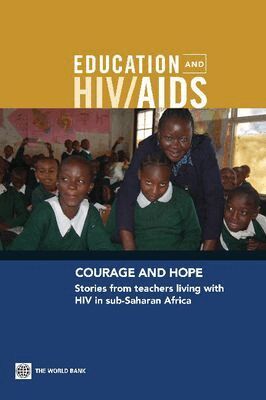
Courage and Hope gives voice to the real life experiences of 12 HIV-positive teachers, five of whom are women, from Burkina Faso, Cameroon, Ghana, Kenya, Mozambique, Rwanda, Senegal, Tanzania (both Mainland and Zanzibar) and Zambia. The teachers recount their experiences of discovering their HIV-positive status and how this has affected them in their families, their communities, and their professional lives. Their stories are documented by journalists, emphasizing the human dimension. The voices of these teachers suggest that a number of obstacles are commonly faced by teachers living with HIV. Paramount among them are stigma and discrimination, both within their families and communities as well as their workplaces and in society more generally. The difficulties of overcoming stigma and discrimination are further exacerbated by a failure to ensure confidentiality in the workplace. The voices of these teachers also suggest that these obstacles could be usefully addressed by: * Fully implementing existing national and institutional policies. * Increasing involvement of teachers living with HIV in setting policies and giving practical advice.* Providing universal access to voluntary counselling and testing, care and support. * Addressing HIV issues during teacher training activities to reduce stigma among teachers and to equip teachers with the skills to avoid infection and teach young people about HIV, including avoiding infection and focusing on stigma and discrimination reduction. Each teacher presents a unique story demonstrating a wide range of challenges as well as insights and successes and, individually as well as collectively, displaying extraordinary courage and hope.
535 kr
Tillfälligt slut
Providing good quality education to all children in the poorest countries of the world is not a simple task. However, improving children’s health and nutrition is one simple step that can be taken towards achieving this goal. Health and nutrition programmes offer substantial benefits to children’s education, helping them to attend school and learn while there. What is more, the education of the poorest in society benefits the most from such programmes because the poor are more likely to suffer from ill health or poor nutrition and are also more likely to experience a disruption in their learning as a result. School health and nutrition programmes make use of the education system to deliver simple treatments for common conditions. The result is a highly cost-effective way to reduce inequalities in education and to help all children around the world reach their educational potential. This argument is examined through a discussion of the challenges to child health and nutrition and the impact of these on education and an analysis of the costs, benefits and policy options involved in the implementation of health and nutrition programmes in schools. Providing a simple and achievable solution to improving access, gender equity and the quality of basic education, this book will be essential to policy makers, educational and health organizations and researchers in international development, public health, psychology and education.