Alexandria Valerio - Böcker
Visar alla böcker från författaren Alexandria Valerio. Handla med fri frakt och snabb leverans.
7 produkter
7 produkter
476 kr
Skickas inom 10-15 vardagar
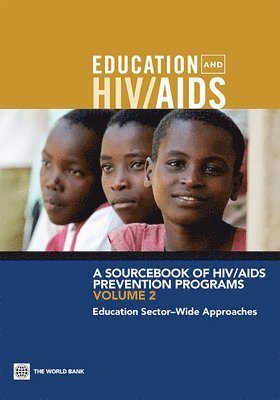
This Sourcebook aims to support efforts by countries to strengthen the role of the education sector in the prevention of HIV/AIDS. It was developed in response to numerous requests for a simple forum to help countries share their practical experiences of designing and implementing programs that are targeted at school-age children. The Sourcebook seeks to fulfill this role by providing concise summaries of programs, using a standard format that highlights the main elements of the programs and makes it easier to compare the programs with each other. A Sourcebook of HIV/AIDS Prevention Programs documents 13 education based HIV/AIDS prevention programs targeting children and youth from 7 sub-Saharan African countries. It is sponsored by UNAIDS, UNICEF, UNESCO, UNFPA, DFID, USAID, Ireland Aid and the World Bank. The Sourcebook represents the work of many contributors (acknowledged in the book), and was developed by the Partnership for Child Development with the World Bank, with principal support from Ireland Aid and the Norwegian Education Trust Fund.
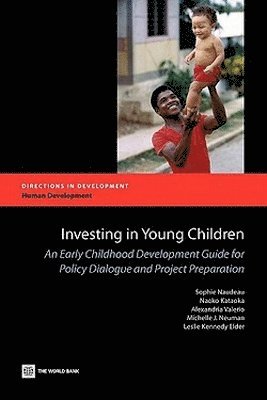
Investing in Young Children
An Early Childhood Development Guide for Policy Dialogue and Project Preparation
Häftad, Engelska, 2010
338 kr
Skickas inom 10-15 vardagar
The World Bank created this Early Child Development (ECD) Guide in response to a growing demand from Task Team Leaders (TTLs) for advice and support to facilitate the policy dialogue on the topic of ECD and to help policy makers make and implement relevant choices on how to best invest in ECD in the context of their country’s economy and national priorities. This Guide fills a gap in the literature by (i) distilling existing information in a user-friendly format, (ii) providing practical information on topics that have recently become particularly relevant in ECD (e.g., measuring child development outcomes through the identification and adaptation of relevant instruments, conditional cash transfers for families with young children, etc.), and (iii) assessing the quality of the latest evidence on each topic and identifying the knowledge gaps/remaining questions for which additional experimentation and evaluation are required. This Guide is designed as a series of short notes (approximately 6-8 pages each), clustered into thematic sections: (i) Initiating the policy dialogue: Why invest in ECD? (3 notes); (ii) Assessing needs, measuring outcomes, and establishing policy frameworks (2 notes); (iii) “Strategic entry points” for ECD investments (4 notes); and (iv) Costing and financing (2 notes). The notes are summarize the main debates in the field. Each note is designed to be read independently, so information is sometimes repeated or cross-referenced across notes.
Investing in Young Children
An Early Childhood Development Guide for Policy Dialogue and Project Preparation
Häftad, Engelska, 2012
319 kr
Skickas inom 10-15 vardagar
La Banque mondiale a redige ce guide du developpement de la petite enfance (DPE) pour repondre a la demande croissante de conseil et d'appui des responsables de programmes en matiere de dialogue politique sur le theme du DPE, et pour aider les clients a prendre et a mettre en oeuvre des decisions pertinentes sur la meilleure maniere d'investir dans le DPE dans le cadre de leur economie et de leurs priorites nationales. Ce guide comble un manque dans la litterature actuelle sur le sujet (1) en distillant l'information existante sous la forme de notes concises et faciles a utiliser;(2) en fournissant une information pratique sur les dernieres questions pertinentes relatives au DPE, telles que la mesure des resultats du developpement des enfants grace a l'identification et l'adaptation d'instruments efficaces, aux transferts monetaires conditionnels destines aux familles de jeunes enfants, et autres; et (3) en evaluant la qualite des derniers faits rapportes pour chaque sujet et en identifiant les lacunes en matiere de connaissances pour lesquelles des experimentations et evaluations complementaires sont necessaires.
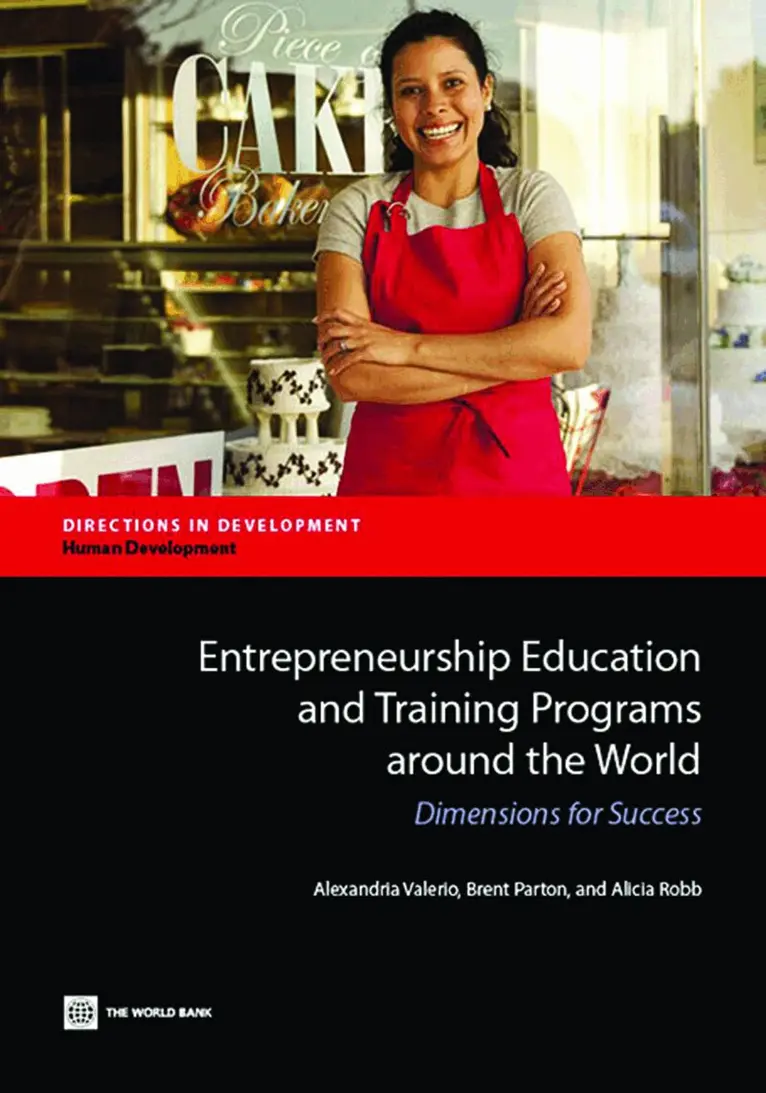
Entrepreneurship Education and Training Programs Around the World
Dimensions for Success
Häftad, Engelska, 2014
318 kr
Skickas inom 10-15 vardagar
Entrepreneurship has attracted global interest for its potential to catalyse economic and social development. Research suggesting that certain entrepreneurial mindsets and skills can be learned has given rise to the field of entrepreneurship education and training (EET). Despite the growth of EET, global knowledge about these programmes and their impact remains thin. In response, this study surveys the available literature and programme evaluations to propose a Conceptual Framework for understanding the EET programme landscape.The study finds that EET today consists of a heterogeneous mix of programmes that can be broken into two groups: entrepreneurship education and entrepreneurship training. These programmes target a range of participants: secondary and post-secondary education students, as well as potential and practicing entrepreneurs. The outcomes measured by programme evaluations are equally diverse but generally fall under the domains of entrepreneurial mindsets and capabilities, entrepreneurial status, and entrepreneurial performance. The dimensions of EET programmes vary according the particular target group. Programs targeting secondary education students focus on the development of foundational skills linked to entrepreneurship, while post-secondary education programmes emphasise skills related to strategic business planning. Programmes targeting potential entrepreneurs generally are embedded within broader support programmes and tend to target vulnerable populations for whom employment alternatives may be limited. While programmes serving practising entrepreneurs focus on strengthening entrepreneurs' knowledge, skills and business practices, which while unlikely to transform an enterprise in the near term, may accrue benefits to entrepreneurs over time.The study also offers implications for policy and programme implementation, emphasising the importance of clarity about target groups and desired outcomes when making programme choices, and sound understanding of extent to which publicly-supported programmes offer a broader public good, and compare favourably to policy alternatives for supporting the targeted individuals as well as the overall economic and social objectives.
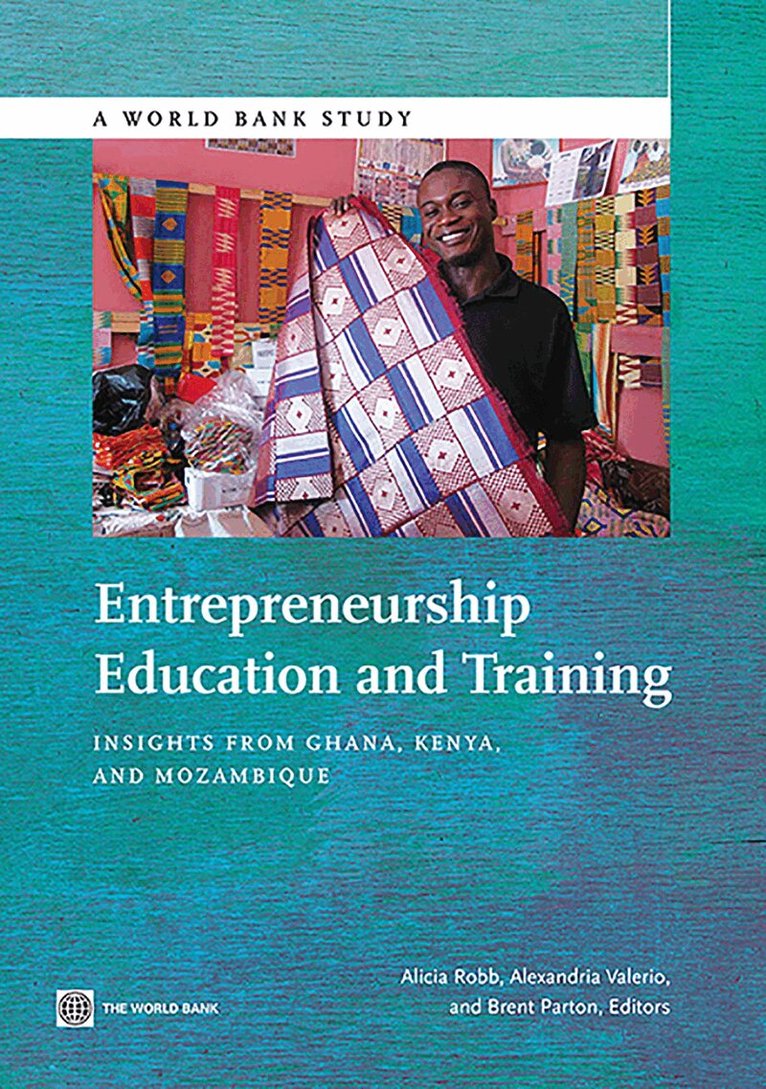
Entrepreneurship Education and Training
Insights from Ghana, Kenya, and Mozambique
Häftad, Engelska, 2014
266 kr
Skickas inom 10-15 vardagar
Empirical research has found that entrepreneurial activity correlates positively with innovation and job creation, and governments around the world have shown a growing interest in interventions that promote entrepreneurial success. However, research on whether entrepreneurial success can be taught has reached mixed conclusions, and even the landscape of what is being taught is poorly known. This study looks closely at entrepreneurial education and training (EET) programs in three case study countries in Africa - Kenya, Ghana, and Mozambique - which are all experiencing sustained economic growth and diversification in their private sectors. It draws on both global and country-specific research and on the experience of stakeholders in the case countries. The study identifies practical insights relevant to various target groups, intended outcomes, and social and economic contexts.Overall, it paints a comprehensive picture of both the context for entrepreneurship and the landscape of programs in the case countries. Among its key findings are these: (i) Key macroeconomic trends give reason for optimism about the trajectory of private sector development, but serious barriers to entrepreneurship remain in each country. Corruption, prohibitively high taxes, and burdensome regulatory regimes remain impediments, along with crime. Stakeholders interviewed (potential and practicing entrepreneurs) also cite cultural disincentives and lack of access to finance. (ii) The EET program landscape is highly varied. The programs often emerge as responses to urgent challenges, such as urban youth unemployment, but in the aggregate they target a wide range of learners, from secondary students to university business majors to rural women, and their focus ranges from poverty reduction to attitudinal change. (iii) Too many programs are insufficiently tailored to their participants’ backgrounds and needs, attempting to use a single curriculum with participants of varying ages, educational backgrounds, and expectations. (iv) Whereas stakeholders believe business acumen and an entrepreneurial mindset are key to business success, few programs address this. (v) Finally, stakeholders express a strong desire for more business community mentorship and for better access to finance; these are areas that some programs do address, and with positive results, but much more is needed.The findings in this report can inform EET policy and program dialogue at multiple levels, guiding the investment decisions that policymakers and government institutions must make and more clearly indicating where further research in the EET realm is most needed.
Taking Stock of Programs to Develop Socio-Emotional Skills
A Systematic Review of Program Evidence
Häftad, Engelska, 2016
318 kr
Skickas inom 10-15 vardagar
This review provides an overview of the impacts of socio-emotional skill development programs in developed and developing countries, including findings from evaluations of early childhood, in-school, and out of school programs. Findings highlight characteristics and impacts of successful (and less successful) programs.
Accounting for Education Mismatch in Developing Countries
Measurement, Magnitudes, and Explanations
Häftad, Engelska, 2016
318 kr
Skickas inom 10-15 vardagar
This publication uses data from the World Bank's STEP Household Skills Survey to explore patterns of educational mismatch in 12 developing countries. Workers are considered 'mismatched' if their personal education is different than that required by their jobs. The report finds that over-education is common across diverse developing contexts.