Donald E. Green - Böcker
Visar alla böcker från författaren Donald E. Green. Handla med fri frakt och snabb leverans.
3 produkter
3 produkter
349 kr
Skickas inom 10-15 vardagar
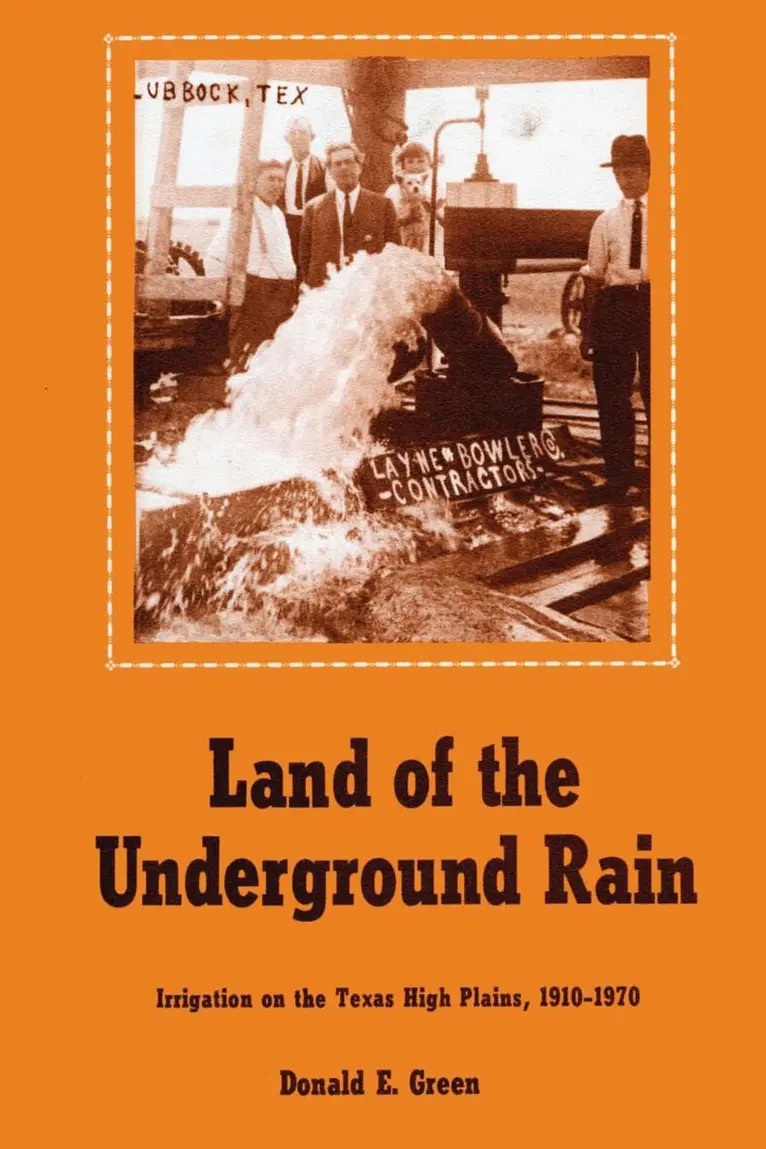
The scarcity of surface water which has so marked the Great Plains is even more characteristic of its subdivision, the Texas High Plains. Settlers on the plateau were forced to use pump technology to tap the vast ground water resources-the underground rain-beneath its flat surface. The evolution from windmills to the modern high-speed irrigation pumps took place over several decades. Three phases characterized the movement toward irrigation. In the period from 1910 to 1920, large-volume pumping plants first appeared in the region, but, due to national and regional circumstances, these premature efforts were largely abortive. The second phase began as a response to the drouth of the Dust Bowl and continued into the 1950s. By 1959, irrigation had become an important aspect of the flourishing High Plains economy. The decade of the 1960s was characterized chiefly by a growing alarm over the declining ground water table caused by massive pumping, and by investigations of other water sources. Land of the Underground Rain is a study in human use and threatened exhaustion of the High Plains' most valuable natural resource. Ground water was so plentiful that settlers believed it flowed inexhaustibly from some faraway place or mysteriously from a giant underground river. Whatever the source, they believed that it was being constantly replenished, and until the 1950s they generally opposed effective conservation of ground water. A growing number of weak and dry wells then made it apparent that Plains residents were "mining" an exhaustible resource. The Texas High Plains region has been far more successful in exploiting its resource than in conserving it. The very success of its pump technology has produced its environmental crisis. The problem brought about by the threatened exhaustion of this resource still awaits a solution. This study is the first comprehensive history of irrigation on the Texas High Plains, and it is the first comprehensive treatment of the development of twentieth-century pump irrigation in any area of the United States.
247 kr
Skickas inom 10-15 vardagar
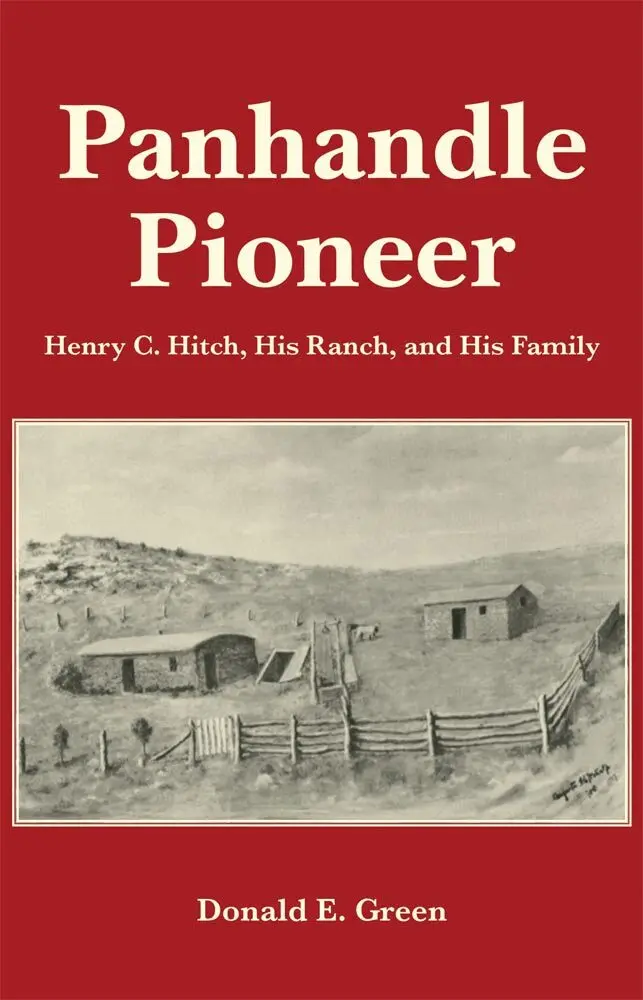
In the history of the tristate Panhandle region - the three corners of Oklahoma, Texas, and Kansas - the saga of Henry C. Hitch and his ranch is also the story of the social, cultural, and economic fortunes of the region.Late in the nineteenth century James Kerrick Hitch left his home in Tennessee for the High Plains and fortune. After ten years spent working as a cowboy, he rode in to the Coldwater Creek region of No Man's Land, the fertile subirrigated valley that was to be his Promised Land. It was Henry Charles Hitch, James's son, who was to turn the valley and its uplands into an empire - raising cattle, borrowing money, going broke several times, then flourishing. Henry's genius and hard work paid off, and in time the family owned 30,000 acres of land in three states.After building their cattle empire, the Hitches moved into farming. By 1930 they had become the largest wheat producer in Oklahoma. After World War II they drilled irrigation wells and by the 1950s they had one of the first large feedlots in the region. Always willing to adopt new technology, the Henry C. Hitch Ranch became an agribusiness empire.This book is economic history - and more: it is also the absorbing story of a pioneer family. Today, Hitch Enterprises is owned and operated by the Hitch Family of Guymon, Oklahoma - the fifth generation of a family that made indelible tracks across the Panhandle.
50 Years of Service to West Texas Agriculture
A History of Texas Tech University's College of Agricultural Sciences, 1925-1975
Häftad, Engelska, 2025
204 kr
Skickas inom 7-10 vardagar
Republished fifty years after its initial release, Fifty Years of Service has gone beyond the political and organizational focus that often dominates histories of institutions. The central theme of this volume is the close working relationship between the College of Agricultural Sciences at Texas Tech University and its grassroots constituency, the men and movements responsible for the realization of the vast potential of West Texas agriculture. The coordination and cooperation between the college and the interests of West Texans are traced through its first half-century, which spanned the cotton boom of the early years, the development of the super feedlots of the 1960s, and the expanding research efforts that will continue to help provide not only West Texas but other parts of the world with vital technology.In relating the development of the College of Agricultural Sciences and, necessarily, of Texas Tech University, Green provides the reader with a rich supply of absorbing and candid detail. The struggle of West Texans for their own center of higher education was long and hard, and the period of the Depression presented hardships and challenged the wills of those who staunchly defended the institution and its growth. The honest accounts of conflict lend particular insights into the character of the rapidly growing university, and the book as a whole is largely a narrative of human nature, citing anecdotes, letters, and newspaper reports that provide the volume with an unmistakable West Texas flavor.