Donald Fyson – författare
Visar alla böcker från författaren Donald Fyson. Handla med fri frakt och snabb leverans.
6 produkter
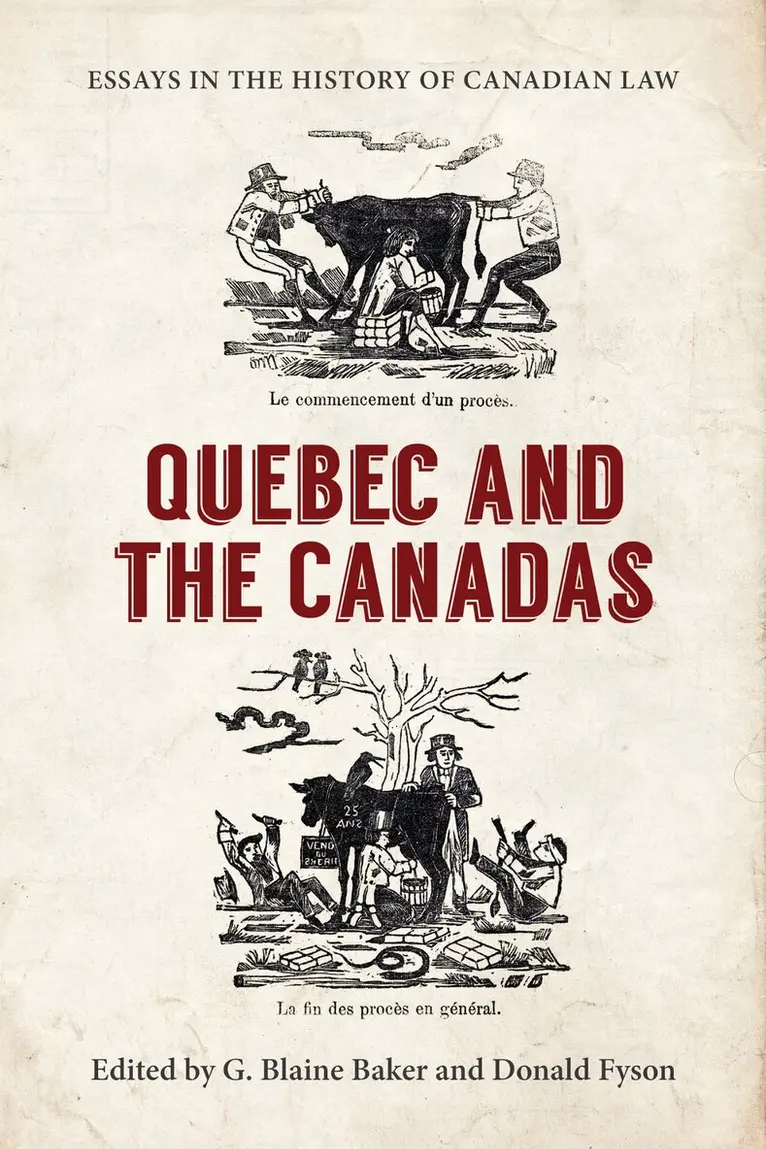
Essays in the History of Canadian Law, Volume XI
Quebec and the Canadas
Av George Blaine Baker, Donald Fyson
Inbunden, 2013
969 kr
Lägg i varukorg
The essays in this volume deal with the legal history of the Province of Quebec, Upper and Lower Canada, and the Province of Canada between the British conquest of 1759 and confederation of the British North America colonies in 1867. The backbone of the modern Canadian provinces of Ontario and …
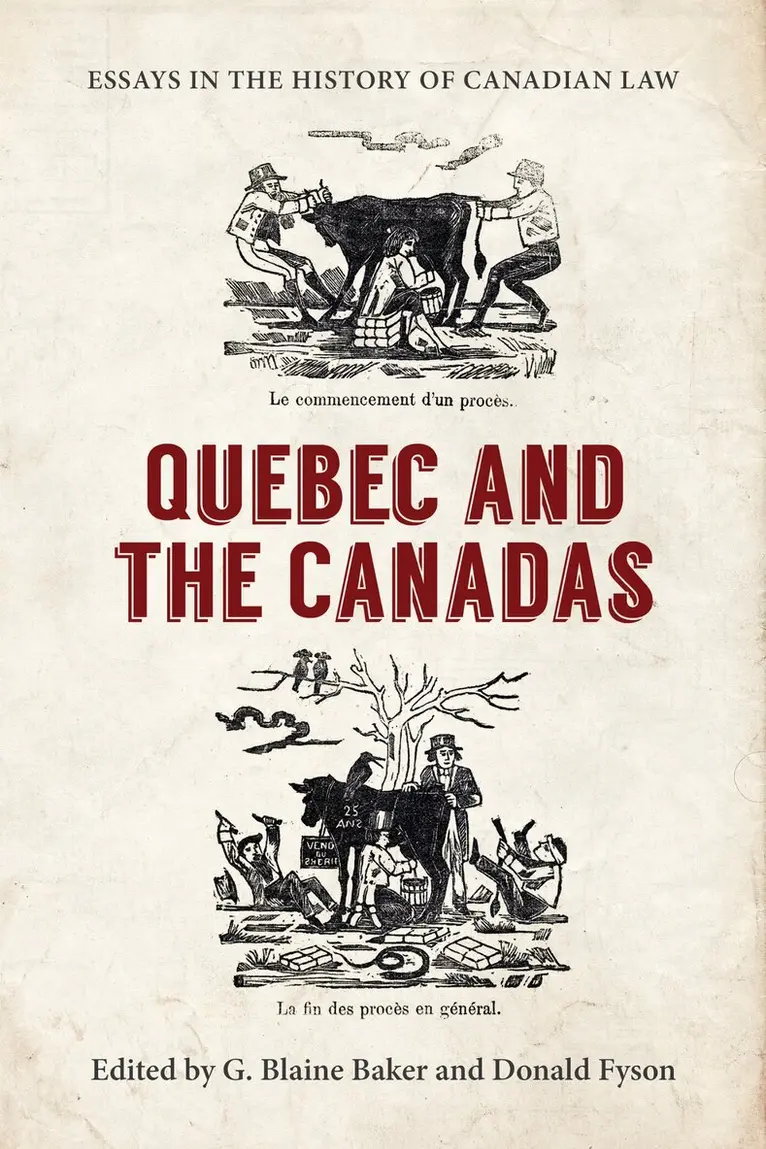
Essays in the History of Canadian Law, Volume XI
Quebec and the Canadas
Av George Blaine Baker, Donald Fyson
E-bok, 2013
1259 kr
Lägg i varukorg
The essays in this volume deal with the legal history of the Province of Quebec, Upper and Lower Canada, and the Province of Canada between the British conquest of 1759 and confederation of the British North America colonies in 1867. The backbone of the modern Canadian provinces of Ontario and …
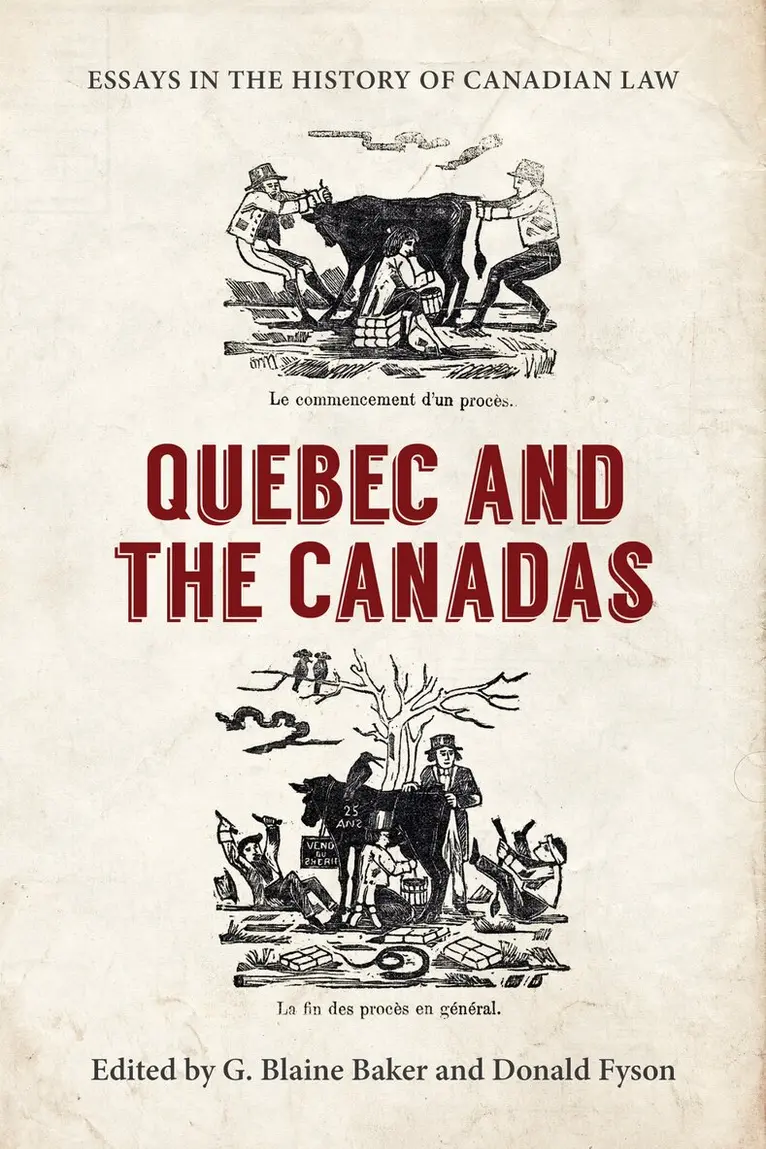
Essays in the History of Canadian Law, Volume XI
Quebec and the Canadas
Av George Blaine Baker, Donald Fyson
E-bok, 2013
1245 kr
Lägg i varukorg
The essays in this volume deal with the legal history of the Province of Quebec, Upper and Lower Canada, and the Province of Canada between the British conquest of 1759 and confederation of the British North America colonies in 1867. The backbone of the modern Canadian provinces of Ontario and …
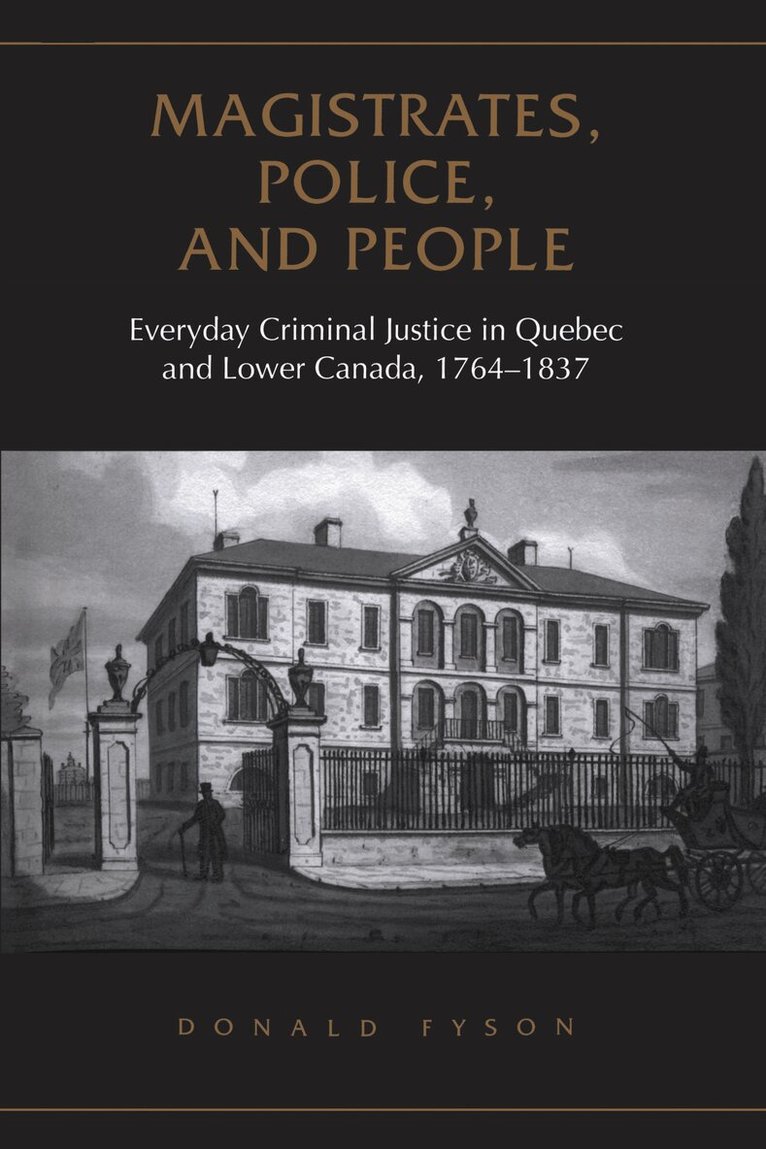
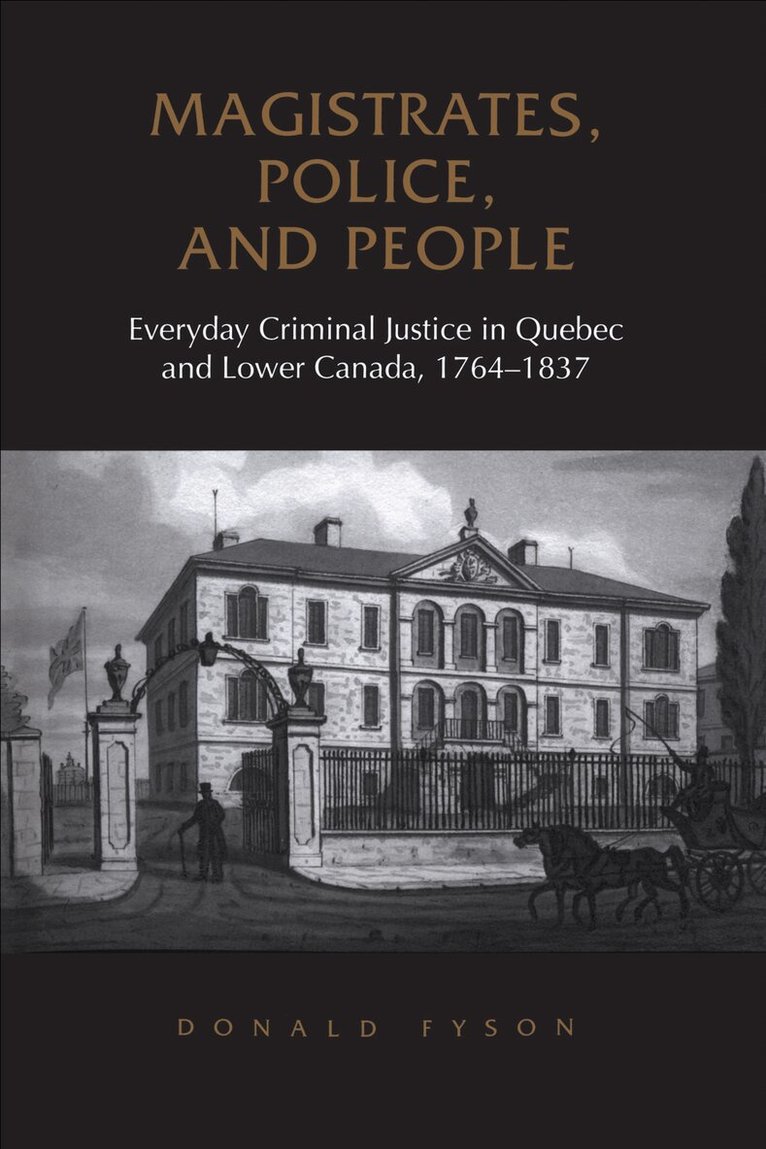
Magistrates, Police, and People
Everyday Criminal Justice in Quebec and Lower Canada, 1764-1837
Av Donald Fyson
E-bok, 2006
722 kr
Lägg i varukorg
The role and function of criminal justice in a conquered colony is always problematic, and the case of Quebec is no exception. Many historians have suggested that, between the Conquest and the Rebellions (1760s-1830s), Quebec''s ''Canadien'' inhabitants both boycotted and were excluded from the …
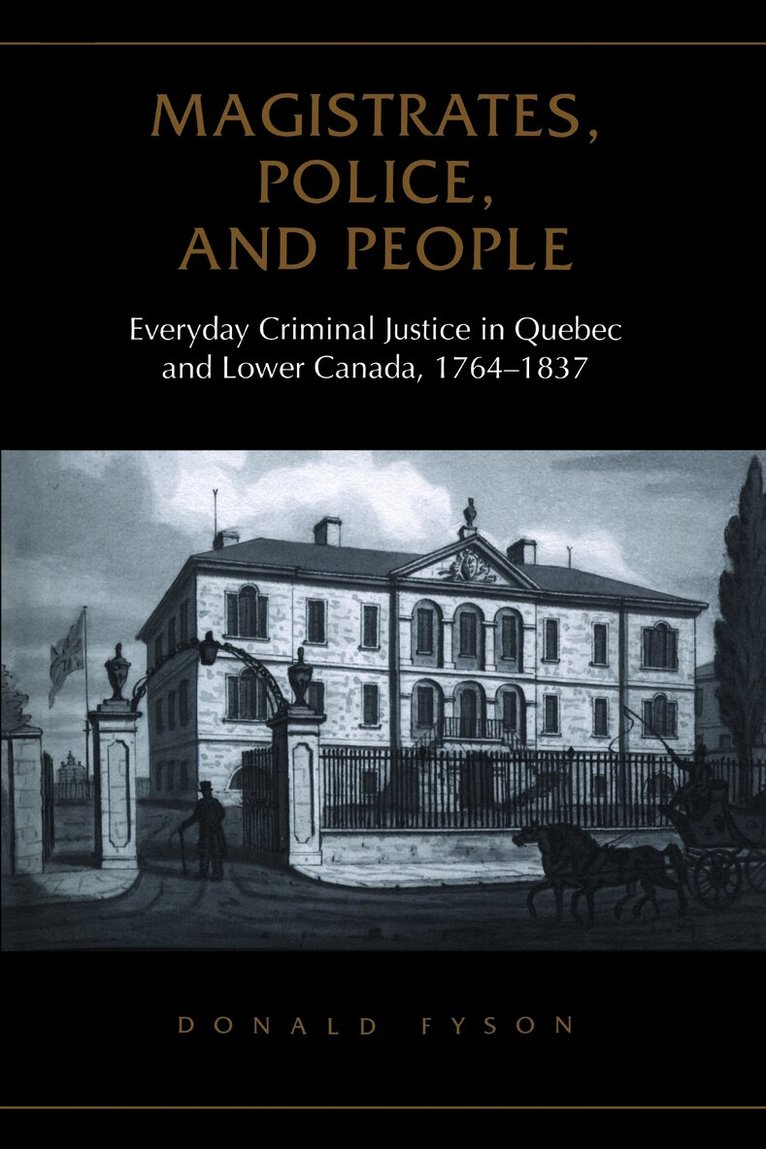
Magistrates, Police, and People
Everyday Criminal Justice in Quebec and Lower Canada, 1764-1837
Av Donald Fyson
E-bok, 2006
722 kr
Lägg i varukorg
The role and function of criminal justice in a conquered colony is always problematic, and the case of Quebec is no exception. Many historians have suggested that, between the Conquest and the Rebellions (1760s-1830s), Quebec''s ''Canadien'' inhabitants both boycotted and were excluded from the …
Magistrates, Police, and People
Everyday Criminal Justice in Quebec and Lower Canada, 1764-1837
Av Donald Fyson
Häftad, 2006
553 kr
Lägg i varukorg
The role and function of criminal justice in a conquered colony is always problematic, and the case of Quebec is no exception. Many historians have suggested that, between the Conquest and the Rebellions (1760s-1830s), Quebec's 'Canadien' inhabitants both boycotted and were excluded from the …