Donald L. Carveth - Böcker
Visar alla böcker från författaren Donald L. Carveth. Handla med fri frakt och snabb leverans.
6 produkter
6 produkter
1 898 kr
Skickas inom 10-15 vardagar
Whereas Freud himself viewed conscience as one of the functions of the superego, in The Still Small Voice: Psychoanalytic Reflections on Guilt and Conscience, the author argues that superego and conscience are distinct mental functions and that, therefore, a fourth mental structure, the conscience, needs to be added to the psychoanalytic structural theory of the mind. He claims that while both conscience and superego originate in the so-called pre-oedipal phase of infant and child development they are comprised of contrasting and often conflicting identifications. The primary object, still most often the mother, is inevitably experienced as, on the one hand, nurturing and soothing and, on the other, as frustrating and persecuting. Conscience is formed in identification with the nurturer; the superego in identification with the aggressor. There is a principle of reciprocity at work in the human psyche: for love received one seeks to return love; for hate, hate (the talion law).
309 kr
Skickas inom 10-15 vardagar
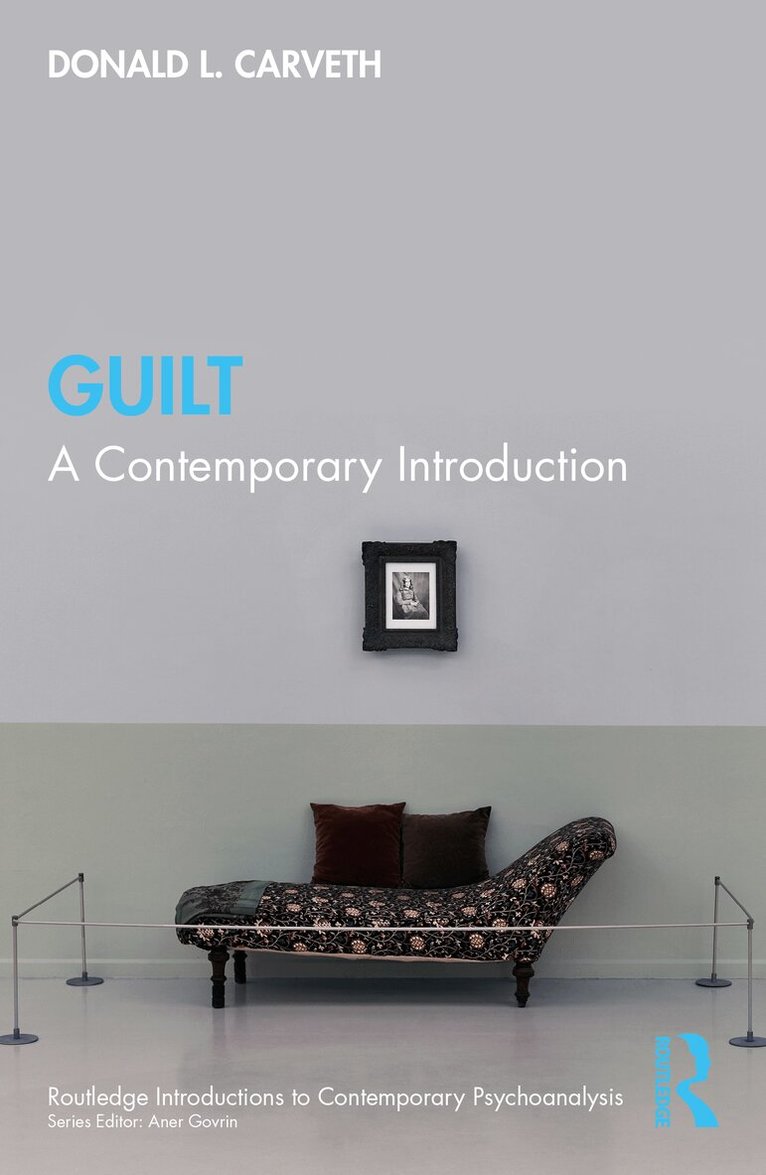
This insightful and innovative book sheds light on the complexity of the concept of guilt, while exploring aspects of guilt that have previously been overlooked in psychoanalytic theory and discourse.Offering original insights on the topic, Donald Carveth looks at Freud's failure to distinguish persecutory guilt from reparative guilt, and the superego from the conscience. The significance of these distinctions for both psychosocial theory and clinical practice is explored throughout the volume. Carveth distinguishes varieties of punitive guilt, such as justified, unjustified, "borrowed" or induced, existential and collective. He expertly describes patterns of self-punishment and self-sabotage, while also addressing the widespread use of persecutory guilt and self-punishment as a defence against and evasion of reparative guilt, contrition, and reparation. Throughout the volume, Carveth critically reviews a range of recent contributions to psychoanalytic literature to support his theories.Part of the Routledge Introductions to Contemporary Psychoanalysis series, this book will be of interest to psychoanalysts, psychotherapists, social scientists, and social philosophers, as well as to those studying ethics and theology.
1 964 kr
Skickas inom 10-15 vardagar
This insightful and innovative book sheds light on the complexity of the concept of guilt, while exploring aspects of guilt that have previously been overlooked in psychoanalytic theory and discourse.Offering original insights on the topic, Donald Carveth looks at Freud's failure to distinguish persecutory guilt from reparative guilt, and the superego from the conscience. The significance of these distinctions for both psychosocial theory and clinical practice is explored throughout the volume. Carveth distinguishes varieties of punitive guilt, such as justified, unjustified, "borrowed" or induced, existential and collective. He expertly describes patterns of self-punishment and self-sabotage, while also addressing the widespread use of persecutory guilt and self-punishment as a defence against and evasion of reparative guilt, contrition, and reparation. Throughout the volume, Carveth critically reviews a range of recent contributions to psychoanalytic literature to support his theories.Part of the Routledge Introductions to Contemporary Psychoanalysis series, this book will be of interest to psychoanalysts, psychotherapists, social scientists, and social philosophers, as well as to those studying ethics and theology.
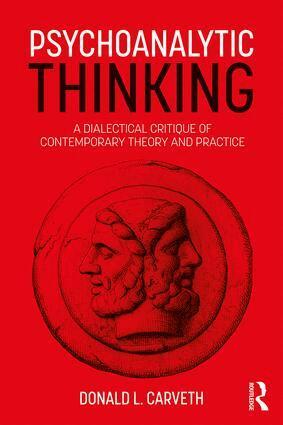
Psychoanalytic Thinking
A Dialectical Critique of Contemporary Theory and Practice
Inbunden, Engelska, 2018
2 012 kr
Skickas inom 10-15 vardagar
A video of Don Carveth discussing the book and its subject matter can be accessed using the following web URL: https://www.youtube.com/watch?v=yW7tGq0uEtUSince the classical Freudian and ego psychology paradigms lost their position of dominance in the late 1950s, psychoanalysis became a multi-paradigm science with those working in the different frameworks increasingly engaging only with those in the same or related intellectual "silos." Beginning with Freud’s theory of human nature and civilization, Psychoanalytic Thinking: A Dialectical Critique of Contemporary Theory and Practice proceeds to review and critically evaluate a series of major post-Freudian contributions to psychoanalytic thought.In response to the defects, blind spots and biases in Freud’s work, Melanie Klein, Wilfred Bion, Jacques Lacan, Erich Fromm, Donald Winnicott, Heinz Kohut, Heinrich Racker, Ernest Becker amongst others offered useful correctives and innovations that are, nevertheless, themselves in need of remediation for their own forms of one-sidedness. Through Carveth’s comparative exploration, readers will acquire a sense of what is enduringly valuable in these diverse psychoanalytic contributions, as well as exposure to the dialectically deconstructive method of critique that Carveth sees as central to psychoanalytic thinking at its best. Carveth violates the taboo against speaking of the Imaginary, Symbolic and the Real unless one is a Lacanian, or the paranoid-schizoid and depressive positions unless one is a Kleinian, or id, ego, superego, ego-ideal and conscience unless one is a Freudian ego psychologist, and so on.Out of dialogue and mutual critique, psychoanalysis can over time separate the wheat from the chaff, collect the wheat, and approach an ever-evolving synthesis. Psychoanalytic Thinking: A Dialectical Critique of Contemporary Theory and Practice will be of great interest to psychoanalysts and psychoanalytic psychotherapists and, more broadly, to readers in philosophy, social science and critical social theory.
Psychoanalytic Thinking
A Dialectical Critique of Contemporary Theory and Practice
Häftad, Engelska, 2018
537 kr
Skickas inom 10-15 vardagar
A video of Don Carveth discussing the book and its subject matter can be accessed using the following web URL: https://www.youtube.com/watch?v=yW7tGq0uEtUSince the classical Freudian and ego psychology paradigms lost their position of dominance in the late 1950s, psychoanalysis became a multi-paradigm science with those working in the different frameworks increasingly engaging only with those in the same or related intellectual "silos." Beginning with Freud’s theory of human nature and civilization, Psychoanalytic Thinking: A Dialectical Critique of Contemporary Theory and Practice proceeds to review and critically evaluate a series of major post-Freudian contributions to psychoanalytic thought.In response to the defects, blind spots and biases in Freud’s work, Melanie Klein, Wilfred Bion, Jacques Lacan, Erich Fromm, Donald Winnicott, Heinz Kohut, Heinrich Racker, Ernest Becker amongst others offered useful correctives and innovations that are, nevertheless, themselves in need of remediation for their own forms of one-sidedness. Through Carveth’s comparative exploration, readers will acquire a sense of what is enduringly valuable in these diverse psychoanalytic contributions, as well as exposure to the dialectically deconstructive method of critique that Carveth sees as central to psychoanalytic thinking at its best. Carveth violates the taboo against speaking of the Imaginary, Symbolic and the Real unless one is a Lacanian, or the paranoid-schizoid and depressive positions unless one is a Kleinian, or id, ego, superego, ego-ideal and conscience unless one is a Freudian ego psychologist, and so on.Out of dialogue and mutual critique, psychoanalysis can over time separate the wheat from the chaff, collect the wheat, and approach an ever-evolving synthesis. Psychoanalytic Thinking: A Dialectical Critique of Contemporary Theory and Practice will be of great interest to psychoanalysts and psychoanalytic psychotherapists and, more broadly, to readers in philosophy, social science and critical social theory.
599 kr
Skickas inom 10-15 vardagar
Whereas Freud himself viewed conscience as one of the functions of the superego, in The Still Small Voice: Psychoanalytic Reflections on Guilt and Conscience, Carveth argues that superego and conscience are distinct mental functions and that, therefore, a fourth mental structure, the conscience, needs to be added to the psychoanalytic structural theory of the mind. He claims that while both conscience and superego originate in the so-called pre-oedipal phase of infant and child development they are comprised of contrasting and often conflicting identifications. The primary object, still most often the mother, is inevitably experienced as, on the one hand, nurturing and soothing and, on the other, as frustrating and persecuting. Conscience is formed in identification with the nurturer; the superego in identification with the aggressor. There is a principle of reciprocity at work in the human psyche: for love received one seeks to return love; for hate, hate (the talion law).Like Franz Alexander and Sandor Ferenczi before him, Carveth views the therapeutic task as the disempowerment of the superego. But unlike his forebears he does not propose its replacement by the rational ego for, in his view, rationality cannot serve as the source of values. Following Jean-Jacques Rousseau, he finds the roots of morality not in reason but in feeling, in sympathetic identification or "pity." With Pascal, he holds that "the heart has reasons reason cannot know." Such "reasons of the heart" form the core of conscience. Unlike the torments inflicted by the demonic superego that merely uses transgression as an excuse to do what it wants-punish and torment the ego-the conscience, what Winnicott called "the capacity for concern," is genuinely troubled by failures to love. The author claims we must face our bad conscience, acknowledge and bear genuine (depressive) guilt, and through contrition, repentance and reparation come to accept reconciliation and forgiveness, or be forced to suffer the torments of the damned-persecutory guilt inflicted by the sadistic internal persecutor and saboteur, the superego.It is the author's view that in human history the damage done by id-driven psychopaths amounts to nothing compared to that brought about by superego-driven ideologists. Freud and subsequent psychoanalysis has largely whitewashed the superego while demonising the id, the alleged "beast" in man, when in reality animals are seldom beastly, at least not in the ways humans often are. While aware of its destructiveness in the clinical realm, psychoanalysts have largely ignored the ideologies of domination-the sexism, racism, heterosexism, classism and childism-that are internalised from unconscionable societies into the unconscionable superego.In the penultimate chapter, drawing on the work of Hannah Arendt, Terry Eagleton and others, Carveth critically reviews the concepts of psychopathy and evil. In the final chapter, he advocates a demythologising, deliteralising or deconstructive approach to the Bible as metaphor, but one that escapes Freud's derogation of this approach by acknowledging, with Hegel at his most honest, that its result is a humanistic ethic no longer to be equated with religion.